Does Coffee Break a Fast? Black Coffee and Fasting Rules
By Coffee Studies Editorial·Published July 15, 2026·7 min read
Quick answer
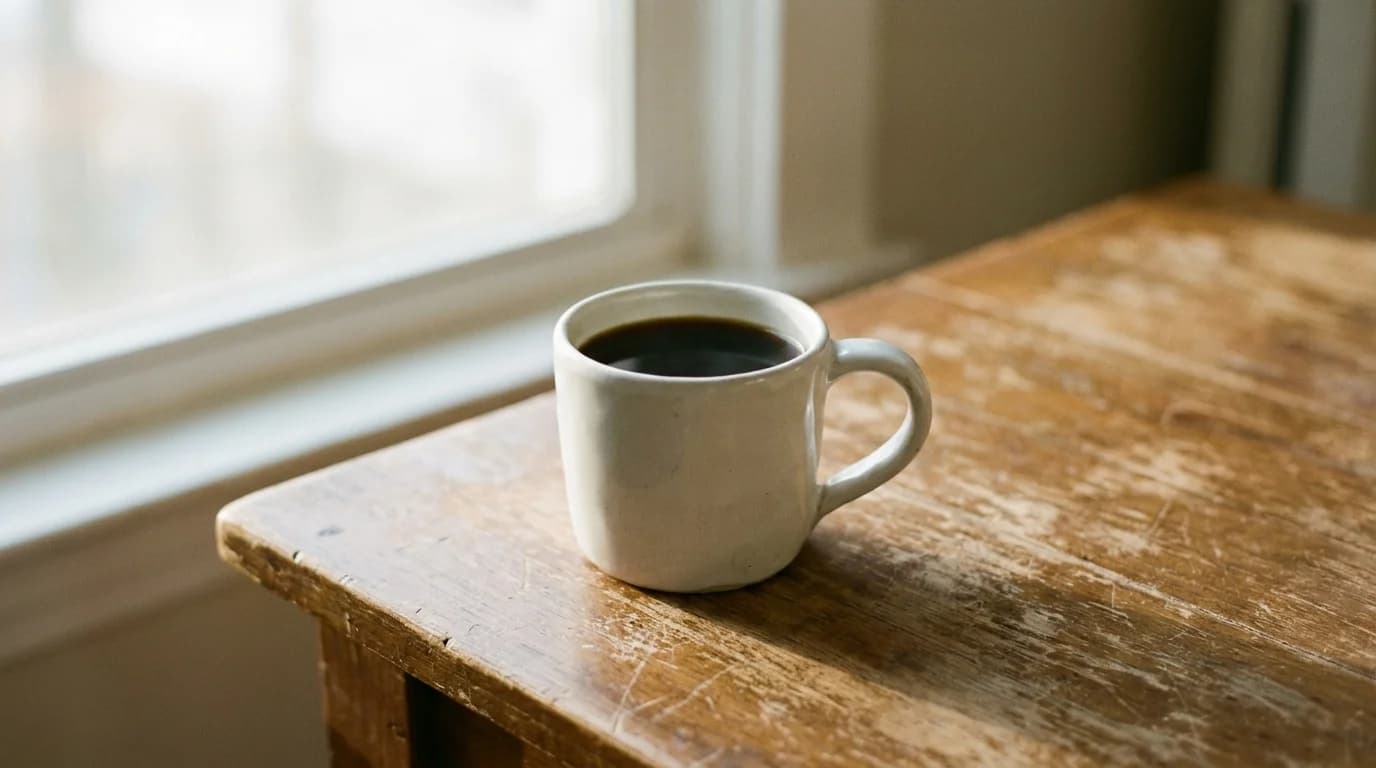
"Does coffee break a fast?" is one of the more genuinely complicated questions in modern nutrition — the answer depends entirely on what you mean by "fast" and what you're fasting for. The most useful framing isn't a single yes-or-no but a compound picture: what black coffee actually contains, what caffeine does physiologically, and how strict your specific fasting goal is.
~2 kcal
calories in an 8 oz cup of black coffee per USDA data — essentially negligible caloric intake[4]
Insulin effect
caffeine can acutely reduce insulin sensitivity in controlled studies — a physiological effect, not a caloric break[2]
Depends on goal
autophagy-focused, calorie-restriction, and time-restricted fasts have different tolerances for coffee[3]
What "breaking a fast" actually means
Fasting means different things depending on the goal:
Time-restricted eating (16:8, 18:6, OMAD): Focused on when you eat, not exactly zero-calorie during the fasting window. The concern is caloric restriction, insulin management, and giving the digestive system a break. Black coffee almost universally accepted.
Calorie restriction / weight-loss fasts: Focused on total daily caloric intake. Black coffee at 2 kcal per cup is negligible — 3-4 cups adds up to less than a stick of gum. Widely considered compatible.
Insulin-focused fasts: The goal is minimising insulin response. Caffeine can acutely affect insulin — see below. But black coffee doesn't produce a food-derived insulin response the way carbohydrates or protein do.
Autophagy fasts: Autophagy is the cellular self-cleaning process activated by prolonged fasting. Strict autophagy proponents argue anything metabolically active — including caffeine — may partially suppress autophagy. Evidence here is preclinical and animal- based, not conclusive in humans.
Medical/preparatory fasts: Pre-blood-test, pre-surgery, pre-procedure fasts have their own rules. Follow specific medical guidance — some allow black coffee, some don't.
Religious fasts: Rules vary widely by tradition — some allow coffee, some don't.
The single answer "coffee breaks a fast" or "coffee doesn't break a fast" isn't wrong — it's just too general to be useful without knowing which type of fast you mean.
What's actually in black coffee
Per USDA FoodData Central data[4]:
- Water: ~99% of the cup
- Caffeine: 80-100 mg per 8 oz (drip)
- Chlorogenic acids and other polyphenols: 70-350 mg
- Trigonelline, melanoidins, various trace compounds
- Calories: ~2 kcal per 8 oz cup
- Protein: 0.3 g
- Fat: 0.05 g
- Carbohydrates: 0 g
The caloric contribution is functionally zero. The active compounds are bioactive but not caloric in any meaningful sense.
Figure
Calories added by common coffee modifications
Values in kcal per serving
What caffeine does to insulin during a fast
A 2002 Diabetes Care randomised controlled trial specifically tested caffeine's acute effect on insulin sensitivity. Healthy volunteers received caffeine or placebo, then were given a glucose tolerance test. Caffeine acutely decreased insulin sensitivity — the same glucose challenge required more insulin to clear[2].
But two things temper this:
1. It's a short-term effect that doesn't stack. Habitual coffee drinkers still show reduced type 2 diabetes risk in large cohort studies[1]. The 2004 Diabetes Care paper on coffee, fasting glucose, and insulin confirmed the epidemiological finding — habitual coffee consumption is inversely associated with insulin resistance markers.
2. Coffee is not just caffeine. Coffee's chlorogenic acids and other polyphenols have effects on glucose metabolism that partially offset caffeine's acute insulin effect. This is one reason the long-term picture is favourable even though acute caffeine studies look otherwise[1].
For fasting purposes: caffeine does affect insulin sensitivity briefly, but doesn't add caloric intake and doesn't produce a food-like insulin surge. Most intermittent-fasting protocols consider it acceptable.
The autophagy question
Autophagy is the cellular process by which cells break down and recycle old proteins, damaged organelles, and other components. Prolonged fasting (12-16+ hours) triggers autophagy — a plausibly health-beneficial process linked to longevity and cellular resilience in animal studies.
The autophagy-and-coffee question:
- Preclinical evidence: Some animal studies suggest caffeine can trigger autophagy through independent mechanisms. Some polyphenol research suggests CGAs may also stimulate autophagy pathways.
- Human evidence: Very limited. Autophagy is difficult to measure directly in humans, so most claims are extrapolated from cellular or animal work.
- Strict autophagy fasting proponents argue anything metabolically active (including caffeine) might partially suppress autophagy. This is theoretical — not proven in humans.
If your primary reason for fasting is autophagy-specific and you want the most conservative interpretation, water-only is the safest choice. For most people, black coffee is fine.
What clearly breaks a fast
The moment you add caloric substrates to your coffee, you're clearly consuming food:
Broken:
- Any milk or cream — significant lactose (~5 g/cup for cow milk) triggers a meaningful insulin response.
- Any sugar or syrup — obvious.
- Non-dairy creamers — most contain vegetable oils, sugars, or milk derivatives; check the label.
- Butter or MCT oil (bulletproof coffee) — 100-200 kcal; activates digestion.
- Bone broth "coffee mix" powders — protein and fat break the fast.
Grey area (depends on strictness):
- Non-caloric sweeteners (stevia, erythritol, monk fruit, sucralose) — no calories, no strong insulin response for most people. Most intermittent-fasting protocols accept these; autophagy-strict protocols may exclude them.
- A splash of milk (under 5 mL / half teaspoon) — micronutrient intake so small it likely doesn't matter for most fasting goals but breaks strict fasts.
What the research says
The relevant human research picture:
Black coffee's caloric contribution is documented as ~2 kcal per 8 oz cup — functionally negligible[4].
Caffeine's acute effect on insulin sensitivity is a short-term physiological finding from RCTs that doesn't translate to long-term diabetes risk elevation — the epidemiology consistently shows the opposite associations at habitual moderate intake[2][1].
Long-term coffee consumption and metabolic outcomes: cohort studies consistently show favourable associations, including for type 2 diabetes and cardiovascular outcomes at moderate intake. This holds across the fasting-relevant end of the intake range (2-4 cups per day)[3].
The FDA and Health Canada 400 mg/day caffeine ceiling for healthy adults applies regardless of fasting context[5].
Autophagy research in humans is limited enough that firm recommendations about coffee-and-autophagy interactions can't be made from current evidence. Animal and cellular work suggests plausible mechanisms in both directions.
Practical answers for common fasting protocols
16:8 intermittent fasting:
- Black coffee: fine
- Splash of unsweetened plant milk: technically breaks it, practically fine
- Sugar/syrup/cream: breaks it
24-hour fast:
- Black coffee: generally fine
- Any additions: breaks it
Extended fast (48-72+ hours):
- Black coffee: acceptable to most practitioners at low doses
- Watch caffeine tolerance — bodies handle caffeine differently during prolonged fasting
5:2 diet (500-600 cal on fast days):
- Black coffee: doesn't count against calorie budget
- Milk in coffee: counts
Pre-blood-test fasting:
- Follow your specific test instructions
- When in doubt: water only
Ramadan or other religious fasts:
- Follow tradition-specific guidance; coffee is generally broken by the sunset-to-sunrise structure of Ramadan regardless of caffeine
What actually matters for fasting
The details of "does coffee break a fast" matter less than whether your fasting protocol is working for your goals:
- For weight loss: black coffee during the fasting window doesn't undermine caloric restriction. It may help with appetite suppression.
- For metabolic health: coffee is favourable at habitual moderate intake regardless of fasting timing.
- For sleep quality: don't drink coffee late in the day regardless of fasting. Caffeine at 4 PM during a 16:8 fast affects sleep the same as 4 PM caffeine any other day.
- For strict autophagy: water only is the conservative choice. But the strictness may not be evidence-supported.
Common misconceptions
- "Any caffeine breaks a fast." No — caffeine isn't caloric. Whether it affects a fast depends on what you count as breaking one.
- "Coffee spikes insulin like food." Not to the same degree. Caffeine acutely reduces insulin sensitivity in the short term, but doesn't produce a food-derived insulin release.
- "Bulletproof coffee is fasting-compatible." No — the butter and MCT oil provide substantial calories and clearly break most fasts.
- "You must drink coffee before a fasting blood test to suppress hunger." This risks affecting the test. Follow your test instructions.
The honest summary
For most intermittent fasting protocols, black coffee is compatible — it's essentially calorie-free and doesn't trigger a food-like insulin response. Caffeine does briefly affect insulin sensitivity in controlled studies, but this hasn't translated to negative long-term metabolic outcomes at habitual intake. Adding milk, cream, sugar, or butter clearly breaks the fast. For autophagy-specific or medical fasts, water-only is the safest interpretation. For everyone else, your morning black coffee is fine.
Frequently asked questions
- Does black coffee break intermittent fasting?
- For most intermittent fasting goals — insulin sensitivity, calorie restriction, autophagy in a general sense — black coffee is widely considered compatible with fasting because it contributes ~2 kcal per 8 oz cup and doesn't trigger a meaningful insulin response. For very strict interpretations focused on maximal autophagy or specific medical fasts, even trace calories may technically break the fast.
- Does coffee raise insulin during a fast?
- Caffeine can transiently affect insulin sensitivity in controlled studies — a 2002 Diabetes Care RCT showed caffeine acutely decreases insulin sensitivity in humans. But this is a physiological response, not a nutritional break of the fast. Long-term cohort studies still show habitual coffee drinkers have reduced type 2 diabetes risk despite this acute effect.
- Can I add anything to my coffee while fasting?
- Zero-calorie additions (no-sugar sweeteners in most cases) are generally considered fasting-compatible for most purposes. Milk, cream, non-dairy creamers, sugar, syrups, and butter (bulletproof-style) all provide calories and clearly break most fasts. If you're following a specific fasting protocol, check its rules — some accept small amounts of fat, most don't.
- Is coffee OK before a blood test that requires fasting?
- It depends on the test. For a fasting glucose test, black coffee often isn't allowed because caffeine can transiently affect glucose readings. For a lipid panel, some clinicians allow black coffee, others don't. Always follow your specific test instructions — when in doubt, water only.
References
Every factual claim in this article is drawn from the sources below. See the source library for how we grade evidence.
- [1]Effects of Coffee Consumption on Fasting Blood Glucose and Insulin ConcentrationsDiabetes Care · 2004 · Observational study · Tier 2 · Moderate
- [2]Caffeine Can Decrease Insulin Sensitivity in HumansDiabetes Care · 2002 · Controlled trial · Tier 2 · Moderate
- [3]Coffee — The Nutrition SourceHarvard T.H. Chan School of Public Health · Reference work · Tier 2 · Moderate
- [4]FoodData CentralU.S. Department of Agriculture · Official dataset · Tier 1 · Strong
- [5]Spilling the Beans: How Much Caffeine Is Too Much?U.S. Food and Drug Administration · 2024 · Agency guidance · Tier 1 · Strong
Related reading
- Caffeine & HealthIs Coffee Healthy? What Large Studies Actually Show→
- Caffeine & HealthCoffee and Diabetes: What Studies Show About Risk→
- Caffeine & HealthBlack Coffee Benefits: What Large Studies Actually Show→
- Caffeine & HealthCoffee Before a Workout: Timing, Dose, and Performance→
- Caffeine & HealthCoffee on an Empty Stomach: Is It Bad for You?→
- Caffeine & HealthCaffeine Tolerance: How It Builds and How to Reset It→