Does Coffee Raise Blood Sugar?
By Coffee Studies Editorial·Published July 18, 2026·7 min read
Quick answer
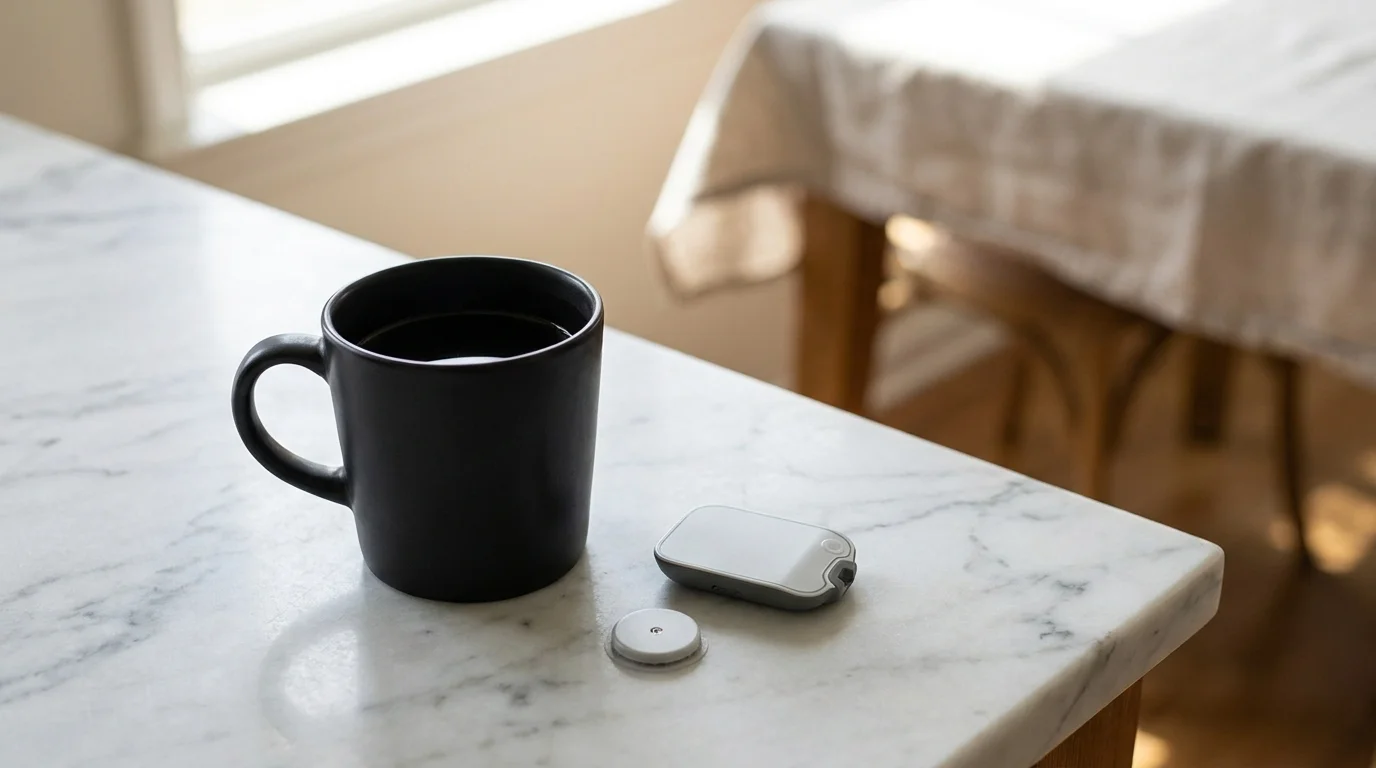
Black coffee has no carbohydrates, no sugar, and almost no calories. By the standard framework for how food raises blood sugar — glucose or sugar content — black coffee should have essentially zero effect.
The picture is more nuanced. Caffeine acts on the adrenal system in ways that do affect blood glucose and insulin sensitivity, through a pathway that has nothing to do with dietary carbohydrates. Whether that matters depends heavily on who is asking.
Caffeine, not carbs
black coffee has no glucose or sugar — any blood glucose effect is indirect, through caffeine's action on epinephrine and cortisol, not through dietary carbohydrate[1]
15–35% reduced insulin sensitivity
acute caffeine equivalent to 2–4 cups of coffee has been shown to temporarily reduce insulin sensitivity in some individuals — the effect varies widely by person and habitual intake[1]
Decaf: different response
the acute blood glucose effect of coffee is attributable to caffeine — decaffeinated coffee does not produce the same response and may have a modestly favourable glucose profile[3]
How caffeine affects blood glucose
Caffeine is not a carbohydrate. It does not directly add glucose to the bloodstream. Its effect on blood sugar operates through a hormonal pathway:
Step 1 — Epinephrine and cortisol release: Caffeine blocks adenosine receptors in the brain and nervous system. One consequence is increased sympathetic nervous system activation, which stimulates the adrenal glands to release epinephrine (adrenaline) and cortisol — the classic "fight or flight" stress hormones[1].
Step 2 — Hepatic glucose release: Epinephrine and cortisol signal the liver to break down stored glycogen and release glucose into the bloodstream (glycogenolysis). This is the acute "blood sugar raise" that can follow caffeine consumption — not from eating glucose, but from the liver releasing it in response to hormonal signals.
Step 3 — Reduced insulin sensitivity: The same hormonal cascade temporarily reduces the sensitivity of muscle and fat cells to insulin — the cells respond less efficiently to insulin's signal to absorb glucose from the blood. This means blood glucose remains elevated for longer than it otherwise would after eating.
In a controlled RCT, caffeine equivalent to approximately 2–4 cups of coffee reduced insulin sensitivity by 15–35% in some participants in the hours after ingestion[1].
What research shows: healthy adults
In people without metabolic disease, the acute caffeine- glucose effect is real but modest. Two key findings from the research:
Fasting blood glucose: observational studies have not found consistent evidence that regular coffee drinkers have higher fasting blood glucose compared to non-drinkers — in fact, some studies find the opposite. This suggests that caffeine tolerance reduces the chronic impact of the acute hormonal response[2].
Post-meal glucose: the acute effect shows up more clearly after meals. In experimental settings where participants consume caffeine before a glucose challenge or mixed meal, blood glucose peaks are slightly higher and insulin response is somewhat blunted compared to placebo. The effect is real in a controlled setting but modest in absolute glucose terms for metabolically healthy individuals.
Caffeine tolerance: habitual coffee drinkers develop tolerance to many of caffeine's sympathetic effects, including the cortisol-glucose pathway. This is a key reason why the acute experimental findings (using caffeine-naïve or abstinent participants) often do not translate into elevated long-term fasting glucose in observational cohorts of habitual coffee drinkers[6].
What research shows: people with type 2 diabetes
The effect is more clinically significant in people with type 2 diabetes:
- In people with established T2D, caffeine has been shown to increase post-meal glucose to a greater degree than in healthy controls.
- Because baseline insulin sensitivity is already impaired in T2D, a caffeine-driven further reduction in insulin sensitivity has a more pronounced impact on blood glucose levels.
- Some diabetes clinicians and researchers suggest that people with T2D who use continuous glucose monitors (CGMs) may observe a noticeable glucose rise after coffee that healthy adults would not see.
This does not mean people with T2D must avoid coffee. It means the context matters, and individual monitoring is informative[1].
Decaf: a cleaner picture
Studies that directly compared caffeinated coffee to decaffeinated coffee using the same participants provide a useful control:
Figure
Caffeine vs. decaf coffee: acute glucose/insulin effect (schematic)
Values in relative index (not absolute units)
Decaf coffee, tested acutely, shows minimal or no significant effect on insulin sensitivity or blood glucose — confirming that caffeine is the active agent in the acute glucose response, not other coffee compounds[3].
This distinction matters: it means the acute blood glucose effect of coffee and the long-term T2D protective association are mediated by different compounds in coffee.
The paradox: habitual coffee drinking is associated with lower T2D risk
One of the most robust findings in coffee research is that habitual coffee drinking is associated with a significantly lower risk of developing type 2 diabetes — a finding replicated across dozens of studies and summarised in multiple systematic reviews and the 2017 BMJ umbrella review[4].
This creates an apparent contradiction: caffeine acutely raises blood glucose and impairs insulin sensitivity, yet coffee drinkers have lower T2D incidence over time.
The resolution involves two factors:
1. Tolerance: regular caffeine consumers develop tolerance to the cortisol/epinephrine response that drives the acute glucose effect. The hormonal surge from a morning coffee in a habitual drinker is blunted compared to the same dose in a caffeine-naïve person.
2. Chlorogenic acids: coffee is one of the richest dietary sources of chlorogenic acids (CGAs) — a class of polyphenols that have, in multiple studies, been associated with improved insulin sensitivity, reduced hepatic glucose output, and lower post-meal glucose responses. CGAs are present in both caffeinated and decaf coffee[5].
The long-term epidemiological signal appears to be driven primarily by CGAs and other non-caffeine phenolic compounds, which outweigh caffeine's acute glycemic effect over the long run — particularly once tolerance to caffeine develops.
What this means in practice
For healthy adults without metabolic disease: The acute blood glucose effect of black coffee is real but modest and likely offset by caffeine tolerance in regular drinkers. The additives in your coffee (sugar, flavoured syrups, sweetened milks) have a far larger effect on blood glucose than the coffee itself. Habitual black coffee drinking is, if anything, associated with lower long-term diabetes risk.
For people with type 2 diabetes or impaired fasting glucose: The effect of caffeine on insulin sensitivity may be clinically meaningful. CGM data (if available) is informative — some people with T2D observe noticeable glucose spikes from coffee, others do not. Switching to decaf eliminates the caffeine-driven acute effect while preserving most of the coffee compounds associated with long-term metabolic benefit. Individual variation is high; this is worth discussing with a healthcare provider rather than applying a blanket rule.
For people doing intermittent fasting: Black coffee does not contain significant glucose or carbohydrates, so it does not "break" a fast in the conventional dietary sense. The caffeine-driven cortisol response may cause a brief, modest glucose rise without any dietary carbohydrate — how much this matters depends on the fasting goal.
Common misconceptions
- "Black coffee spikes blood sugar like a sugary drink." No — black coffee has no sugar or carbohydrates. Any glucose effect is indirect and far smaller than a sugary drink.
- "Coffee is bad for blood sugar." The acute caffeine effect is real but modest in healthy adults and may diminish with tolerance. Long-term habitual coffee intake is associated with lower T2D risk.
- "All coffee affects blood sugar the same way." Decaf produces a different (smaller) acute response than caffeinated coffee. Milk, sugar, and flavoured syrups add direct carbohydrate load — a much larger glycemic effect than caffeine's indirect action.
- "If you're diabetic, you can't drink coffee." This is not established evidence. People with T2D may see a more pronounced response, warranting attention to timing, amount, and what's added to the coffee — but coffee elimination is not the default recommendation.
The honest summary
Black coffee does not raise blood sugar by providing glucose or sugar — it contains neither. Caffeine can cause a modest, temporary reduction in insulin sensitivity and trigger the liver to release stored glucose via epinephrine and cortisol, producing a small acute blood glucose elevation in some people. In healthy adults, this effect is modest and blunts with habitual use. In people with type 2 diabetes, the effect can be more pronounced. Decaf coffee does not produce the same acute response. Over the long term, habitual coffee drinking — including the caffeinated variety — is associated with reduced type 2 diabetes risk, an effect driven by chlorogenic acids and other polyphenols rather than caffeine. The additives in coffee (sugar, syrups, sweetened milks) have a larger direct blood glucose impact than the coffee itself.
Frequently asked questions
- Does black coffee raise blood sugar?
- It can, modestly, in some people. Black coffee itself contains no carbohydrates and no sugar — so it does not raise blood sugar by providing glucose. However, caffeine triggers epinephrine and cortisol release, which signals the liver to release stored glucose (glycogenolysis) and temporarily decreases insulin sensitivity. In healthy adults, this effect is small and transient. In people with type 2 diabetes or impaired insulin sensitivity, the effect can be larger and last longer. Decaf coffee does not produce the same acute response.
- Does caffeine raise blood sugar?
- Yes, through indirect mechanisms. Caffeine stimulates the adrenal glands to release epinephrine (adrenaline) and cortisol, which signal the liver to release stored glucose into the bloodstream and temporarily impair insulin's ability to move glucose into cells. Research has shown that caffeine equivalent to 2–4 cups of coffee can reduce insulin sensitivity by 15–35% acutely in some individuals. The effect varies by individual, habitual caffeine intake, and metabolic state.
- Does coffee raise blood sugar in diabetics?
- Research suggests the effect is more pronounced in people with type 2 diabetes than in healthy adults. Studies of people with type 2 diabetes have found that caffeine can cause significantly higher post-meal blood glucose levels than the same meal without caffeine. The mechanism is the same — caffeine-driven cortisol/epinephrine release reducing insulin sensitivity — but the blunted baseline insulin function in people with T2D makes the same impairment more consequential. Individuals with diabetes who use continuous glucose monitors often observe this effect directly.
- Does decaf coffee raise blood sugar?
- No, or not measurably so in the same way. Studies comparing caffeinated versus decaffeinated coffee show that the acute blood glucose-raising effect is attributable to caffeine, not to other coffee compounds. Decaf coffee actually has a slightly favorable profile: chlorogenic acids in coffee (present in both regular and decaf) may improve insulin sensitivity over time. Some research suggests decaf coffee is associated with modest improvements in fasting glucose markers.
- Why is habitual coffee drinking associated with lower diabetes risk if caffeine raises blood sugar?
- The apparent paradox resolves when you separate short-term acute effects from long-term adaptation. Caffeine causes an acute, temporary reduction in insulin sensitivity that diminishes with tolerance over time — regular coffee drinkers develop caffeine tolerance, blunting the acute glycemic response. Meanwhile, other compounds in coffee — particularly chlorogenic acids — have been associated in observational studies with improved insulin sensitivity and reduced long-term type 2 diabetes risk. The long-term epidemiological signal (lower T2D risk associated with habitual coffee drinking) operates through different mechanisms than the acute caffeine-glucose effect.
- Does adding milk or sugar to coffee affect blood sugar more?
- Yes. Black coffee's effect on blood sugar is indirect (via caffeine's hormonal signalling). Adding sugar or a sweetened flavour syrup directly adds glucose/sucrose to the bloodstream — a different and more direct mechanism. A flavoured latte with 30–40g of added sugar has a much larger blood glucose effect than black coffee. Whole milk adds modest carbohydrates (lactose) but far less than flavoured creamers or syrups. From a blood glucose standpoint, additives matter more than the coffee itself.
References
Every factual claim in this article is drawn from the sources below. See the source library for how we grade evidence.
- [1]Caffeine Can Decrease Insulin Sensitivity in HumansDiabetes Care · 2002 · Controlled trial · Tier 2 · Moderate
- [2]Effects of Coffee Consumption on Fasting Blood Glucose and Insulin ConcentrationsDiabetes Care · 2004 · Observational study · Tier 2 · Moderate
- [3]Decaffeinated Coffee and Glucose Metabolism in Young MenDiabetes Care · 2009 · Controlled trial · Tier 2 · Moderate
- [4]Coffee consumption and health: umbrella review of meta-analyses of multiple health outcomesBMJ · 2017 · Umbrella review · Tier 1 · Strong
- [5]Coffee chlorogenic acids: a reviewPMC / NIH · 2022 · Review · Tier 2 · Moderate
- [6]Coffee — The Nutrition SourceHarvard T.H. Chan School of Public Health · Reference work · Tier 2 · Moderate
Related reading
- Caffeine & HealthCoffee and Diabetes: What Studies Show About Risk→
- Caffeine & HealthCoffee and Blood Pressure: What the Research Shows→
- Caffeine & HealthCoffee and Cortisol: When to Drink for Your Hormones→
- Caffeine & HealthDoes Coffee Break a Fast? Black Coffee and Fasting Rules→
- Caffeine & HealthDoes Caffeine Raise Your Heart Rate? What Trials Measured→
- Caffeine & HealthCoffee and Weight Loss: What the Research Actually Shows→