How to Become a Barista: Skills, Training, First Jobs
By Coffee Studies Editorial·Published July 18, 2026·5 min read
Quick answer
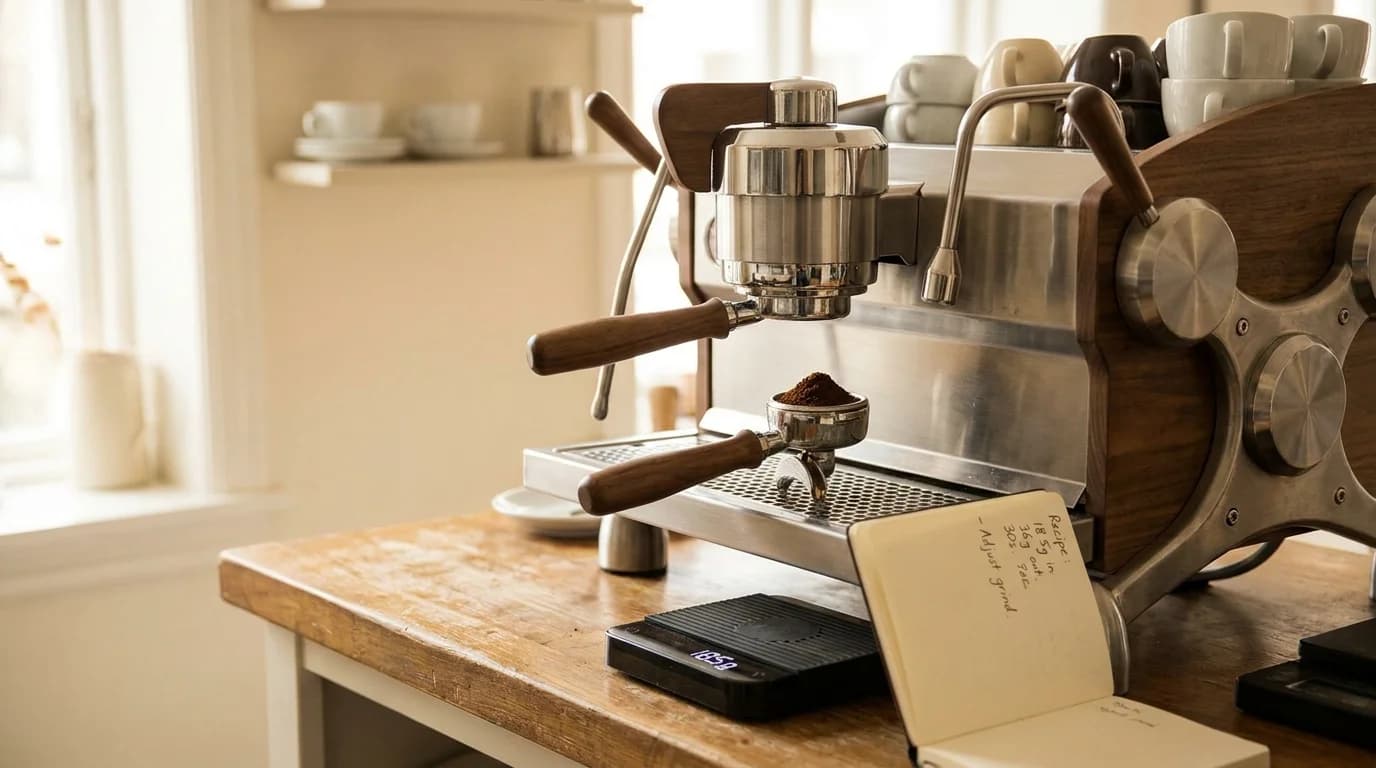
Becoming a barista is one of the more accessible paths into hospitality — most cafés hire without prior experience, pay is entry-level but grows with skill, and the work is genuinely craft-based in a way that not all service jobs are. The learning curve is also steeper than most people expect from the outside. Making espresso drinks that taste consistently good, quickly, while keeping up with a morning rush and managing customers, takes real skill.
Most baristas train on the job
the majority of cafés hire without requiring prior espresso experience and train in-house — a formal barista course is useful but not a standard entry requirement[3]
4–8 weeks to basic competence
new baristas typically take four to eight weeks to reach consistent basic proficiency — full speed and confidence on a busy bar takes three to six months of daily practice[1]
Soft skills matter more at hire
reliability, composure under pressure, and customer service instincts are harder to find than espresso knowledge — most experienced café managers hire for attitude and teach technique[3]
Two paths to becoming a barista
Path 1: Apply and learn on the job
The most common path. Apply to cafés near you, including specialty cafés that take quality seriously — they often invest more in training precisely because they need consistent results. Be honest about your experience level. Most cafés prefer a trainable, enthusiastic beginner to someone with bad habits from a previous poorly-run café.
What to expect in week one: learning the POS system, drink recipes, milk steaming basics, and how the specific espresso machine is operated. By week four: working the bar during slower periods with some supervision. By month three: covering rushes independently.
Advantage: you get paid while you learn, and you learn in a real production environment under real pressure — faster development than classroom instruction alone.
Disadvantage: the quality of training depends entirely on the café you join. Some have structured programmes and experienced trainers; others hand you an apron and say good luck.
Path 2: Take a barista course first
A one or two-day barista course ($200–$800 in most Canadian cities) gives you hands-on instruction in espresso extraction, milk steaming, and basic drink preparation before you apply for your first job. Courses are run by specialty roasters, private coffee schools, and the SCA through certified training partners.
Advantage: can ease the anxiety of starting with zero knowledge, gives you terminology and a framework before your first shift, and signals commitment to employers who see it on your CV.
Disadvantage: a weekend course does not produce a trained barista — it produces someone with a foundation. The speed, consistency, and sensory calibration required at a real bar still takes months of practice. Do not expect a course certificate to replace café experience[2].
What cafés are actually hiring for
The skills that matter most at the hiring stage, in order:
1. Reliability and professionalism. Showing up on time, every shift, is more valuable to a café manager than any technical skill. Turnover in hospitality is high; a barista who shows up is already ahead of the curve.
2. Composure under pressure. The morning rush at a busy café involves making drinks fast, remembering multiple orders, managing the queue, and not making mistakes — simultaneously. Managers look for evidence that you can stay calm and focused under load.
3. Customer warmth. Regular customers drive café revenue. The barista who remembers names and orders builds the relationship. Friendliness and genuine interest in people are not skills everyone has.
4. Basic coffee knowledge (helpful but not essential). Understanding the difference between espresso and Americano, or knowing what a flat white is, is helpful. But a quick learner without this knowledge will outperform a disorganised person who knows the terminology[1].
The skills you will actually learn
Over your first six months behind a café bar, you will learn:
Espresso: how the grinder and machine interact, what extraction looks like when it is right vs wrong, how to adjust the grind when the shot is running too fast or slow (dialling in), dose consistency, and how to read the shot as it pulls.
Milk technique: how to steam milk to the correct temperature (60–65°C) and texture (microfoam with fine bubbles, not stiff froth), which matters for both texture and latte art.
Recipes: the drink menu — all cafés have a house version of each drink, and the proportions and sequence matter for both quality and speed.
Bar flow: how to sequence drinks efficiently during a rush, how to keep the station clean, how to manage the queue.
Latte art: the visible skill — pours a heart, tulip, or rosetta into the microfoam. Typically takes two to four months to produce consistently.
Formal course options in Canada
SCA Coffee Skills Programme (Barista Skills module): the most internationally recognised structured pathway. The Foundation level covers the essentials in one day and includes a practical exam. Available through SCA-certified training centres in most major Canadian cities. Cost: $200–$400 CAD for Foundation including materials and exam.
Specialty roaster training programmes: many specialty roasters in Toronto, Vancouver, Montreal, Calgary, and other cities offer barista courses — typically one-day or weekend-format. Quality varies; look for courses with hands-on espresso time, not just lectures.
Community college hospitality programmes: some offer coffee modules within broader food and hospitality programmes. These are longer (weeks to months) and more structured but less focused on espresso craft specifically.
Online courses: useful for concepts and theory but cannot replace hands-on practice with a real espresso machine and steam wand. Treat online content as supplementary[2].
Career progression
The typical barista career ladder:
| Stage | Timeline | What changes |
|---|---|---|
| New barista | 0–3 months | Learning the bar, supervised |
| Barista | 3–12 months | Working independently on all shifts |
| Experienced barista | 1–2 years | Trusted on all positions, training new staff informally |
| Lead barista | 2–4 years | Opening/closing responsibilities, team oversight |
| Head barista / trainer | 3–5+ years | Full bar management, staff training, recipe development |
| Café manager | 4+ years | Business operations, hiring, P&L responsibility |
Many baristas remain at the barista level by choice — it is a skilled trade role, not a stepping stone to management for everyone. Others use it as entry to roasting, green coffee buying, competition, or café ownership.
Written for the bar, not the kitchen
 Bar technique, written for the tradeThe Professional Barista's Handbook: An Expert Guide to Preparing Espresso, Coffee, and TeaAimed at someone working a bar rather than a home machine, which is what makes it useful if you are heading for a cafe job: dose, distribution, milk and the workflow between them, in the order a shift actually demands.amazon.com $45.00 USDamazon.ca $65.00 CADPrice and availability as of View on Amazon
Product prices and availability are accurate as of the date/time indicated and are subject to change. Any price and availability information displayed on Amazon at the time of purchase will apply to the purchase of this product. Certain content that appears on this site comes from Amazon. This content is provided ‘as is’ and is subject to change or removal at any time.
The honest summary
Most people become baristas by applying to a café and learning on the job — formal training is useful but not required for entry. The real skills (speed, consistency, sensory calibration, latte art) take three to six months of daily practice to develop properly, regardless of how you start. A barista course is worth doing if you want to build a foundation before your first job or signal commitment to employers who value it. The SCA Barista Skills programme is the most credentialled option and is worth pursuing if you plan to work in specialty coffee long-term. What matters most at hiring is attitude, reliability, and composure — technique is the part cafés are prepared to teach.
Frequently asked questions
- Do you need a barista course to get a barista job?
- No — most cafés will hire you without any formal training and teach you their system in-house. A barista course demonstrates initiative and can give you a head start on technique, but it is not a standard requirement. What most cafés look for in hiring is reliability, a good attitude, and the ability to handle a fast-paced environment. Espresso technique is teachable; the right disposition is harder to train.
- How long does barista training take?
- On the job, most new baristas reach basic competence — taking orders, making standard drinks consistently, keeping up with a rush — in four to eight weeks. Full proficiency (dialling in espresso independently, consistent latte art, working the bar solo during a busy shift) typically takes three to six months. A formal barista course compresses the initial learning into one or two days of focused instruction, but real-world speed comes from repetition in a working café.
- What skills do you need to be a barista?
- The core technical skills: espresso extraction basics (dose, grind, yield), milk steaming for microfoam, basic drink recipes, and cash handling. The soft skills: ability to work quickly and consistently under pressure, memory for regular customers and their orders, patience in customer interactions, and reliability. Most cafés weight attitude and reliability heavily in hiring — technique is trainable, attitude is not.
- What is an SCA barista certification?
- The Specialty Coffee Association offers a Coffee Skills Programme with a Barista Skills module at Foundation, Intermediate, and Professional levels. The Foundation level (around $200–$400 CAD including exam) covers espresso extraction basics, milk technique, and café workflow. Intermediate and Professional levels go deeper into sensory evaluation, recipe development, and business skills. SCA certification is well-regarded in specialty coffee and is useful for baristas aiming at senior or training roles. It is not required to work as a barista.
- How do you become a head barista or coffee trainer?
- Head barista and coffee trainer roles typically require two to four years of café experience, strong technical knowledge across all bar skills, and some demonstrated ability to teach others. In specialty cafés, SCA Intermediate or Professional barista certification is often expected for senior roles. Trainers additionally need communication skills and patience. The path is usually: barista → experienced barista → lead barista → head barista or trainer, with each step taking one to two years.
References
Every factual claim in this article is drawn from the sources below. See the source library for how we grade evidence.
- [1]Job Bank Wage Report — Food Counter Attendants and Baristas (NOC 65201)Government of Canada / Employment and Social Development Canada · 2024 · Government data · Tier 3 · Contextual
- [2]SCA Coffee Skills Programme — Module Descriptions and Assessment StandardsSpecialty Coffee Association (SCA) · 2024 · Reference work · Tier 3 · Contextual
- [3]Coffee & Snack Shops — US Industry Report (IBISWorld, NAICS 722515)IBISWorld · 2024 · Industry report · Tier 3 · Contextual
Related reading
- Barista SkillsBarista Salary in Canada: What Baristas Actually Earn→
- Barista SkillsSCA Barista Certification: Is the Programme Worth It?→
- Barista SkillsHow to Steam and Froth Milk for Coffee→
- Barista SkillsHow to Make Latte Art: Beginner's Guide to Milk Pouring→
- Barista SkillsDialing In Espresso: How to Adjust Your Shot→
- Coffee BusinessCoffee Shop Franchise vs. Independent: Cost and Trade-offs→