SCA Barista Certification: Is the Programme Worth It?
By Coffee Studies Editorial·Published July 18, 2026·5 min read
Quick answer
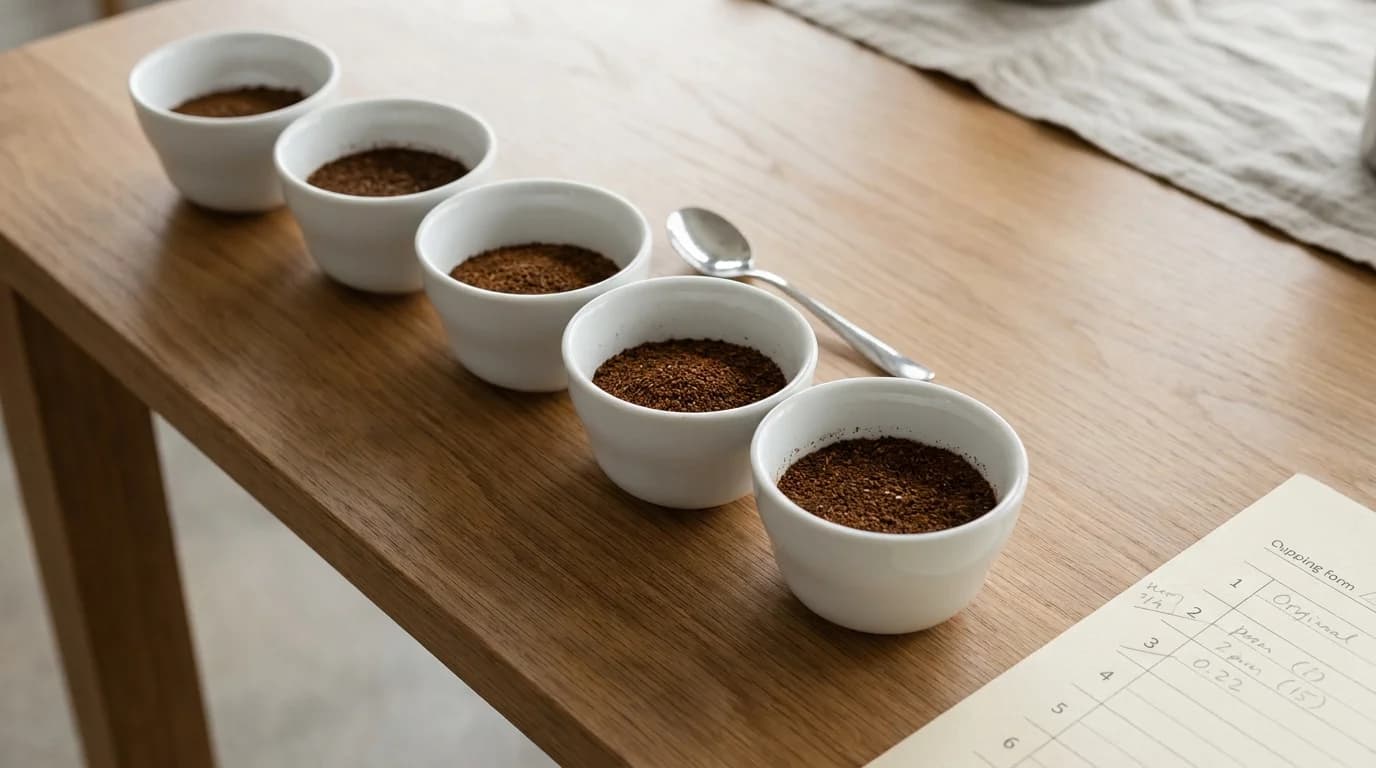
The SCA Coffee Skills Programme is the closest thing to a standardised professional credential in the coffee industry. It is not the only certification, and it is not required to work in coffee — but among specialty coffee professionals globally, it is the most commonly referenced framework for assessing skill level.
Understanding what it covers, what it costs, and when it is worth pursuing requires some context about how coffee careers actually work.
6 modules, 3 levels each
the SCA Coffee Skills Programme covers Introduction, Barista Skills, Brewing, Sensory Skills, Green Coffee, and Roasting — each (except Introduction) at Foundation, Intermediate, and Professional levels[1]
$200–$400 CAD for Foundation
Foundation-level modules are the most accessible entry point — one or two days of instruction plus a practical exam at an SCA Authorised Training Centre; cost varies by provider and location[1]
Most valued for senior roles
SCA certification is not required for barista jobs but is increasingly expected for head barista, coffee trainer, roaster, and green buyer positions at quality-focused employers[3]
The programme structure
The SCA Coffee Skills Programme has one entry point and six specialist tracks:
Introduction to Coffee: a one-day foundation module covering coffee basics — history, plant botany, origin, processing, roasting, and brewing fundamentals. No practical exam. Recommended as a first step for anyone new to specialty coffee. Low cost ($100–$200 CAD at most centres).
Barista Skills: espresso extraction, milk steaming, workflow, and sensory evaluation. The module most directly relevant to working behind a café bar[1].
Brewing: filter coffee extraction — pour-over, batch brew, AeroPress, French press, and other methods. Covers brew ratios, extraction theory, and how to evaluate and adjust filter coffee quality.
Sensory Skills: coffee tasting — aroma, flavour, acidity, sweetness, body. Includes calibration exercises, defect identification, and the SCA flavour wheel vocabulary. Useful for quality control roles.
Green Coffee: coffee before it is roasted — botanical variety, processing methods, grading systems, defect sorting, and the logistics of green coffee trade. Relevant for buyers, importers, and roasters.
Roasting: heat transfer, roast development, drum dynamics, and how to develop and evaluate roast profiles. Directly relevant to production roasters.
The three levels
Each module (except Introduction) has three levels:
Foundation: the essentials. Practical skills at a basic professional level. One to two days of instruction plus a practical exam. Suitable for baristas with six months to one year of café experience (or less with natural aptitude).
Intermediate: deeper technical knowledge, more complex practical skills, and some understanding of how to apply knowledge professionally. Requires genuine competence at Foundation level — you cannot pass Intermediate by attending a course without the underlying skill. Typically pursued after one to two years of relevant experience.
Professional: expert level. The Professional assessment requires demonstrating skills to an SCA examiner at a high standard and articulating how you would teach or manage the subject. Most people who complete the Professional level are experienced trainers, senior roasters, or quality managers.
Barista Skills: what the exam covers
The Barista Skills Foundation practical exam typically involves:
- Preparing a specified number of espresso drinks (usually cappuccinos and/or lattes) to a time standard
- Demonstrating correct milk steaming technique and producing microfoam
- Calibrating and adjusting the grinder
- Correctly weighting and dosing
- Sensory evaluation: tasting an espresso and describing it using appropriate vocabulary
- Cleaning and maintenance of bar equipment
The pass mark requires consistent, professional-quality execution — not perfection, but demonstrable competence. A barista who has worked in a specialty café for six months with good training should be able to pass Foundation[1].
Intermediate adds:
- Dialling in from a blank grinder setting
- Creating a defined espresso recipe
- Evaluating milk textures across plant milks
- More complex sensory tasks
Professional adds:
- Teaching and evaluating others
- Developing an espresso recipe and justifying it
- Advanced troubleshooting scenarios
Is it worth it?
For someone starting out in coffee: the Introduction module is worth doing for orientation ($100–$200 CAD). The Foundation Barista Skills module is worth doing once you have three to six months of café experience — the structure helps cement what you have been learning by doing, and the credential is recognised by quality-focused employers.
For someone aiming at specialty coffee long-term: the Barista Skills pathway (Foundation through Intermediate) is a legitimate investment in your career. Most head barista and coffee trainer roles at respected specialty cafés expect some SCA credentials or equivalent demonstrated competence. The credential signals that your skill has been externally evaluated, not just self-reported[2].
For someone in roasting or buying: the Roasting and Green Coffee modules are specifically valuable — these specialisations have fewer alternative credentialling pathways.
For the casual coffee enthusiast: the Brewing and Sensory modules can be genuinely interesting and educational, though the cost is hard to justify purely for personal use. Home coffee enthusiast communities often provide similar learning at much lower cost.
Alternatives and comparisons
Barista Guild training events: the SCA's Barista Guild chapter runs events, workshops, and competitions that provide professional development outside the formal certification track. Lower cost, more community-oriented.
Private roaster training programmes: many specialty roasters run their own barista training courses, sometimes more practically focused than SCA courses for their specific equipment and approach. These do not result in a transferable credential but may be more directly applicable.
On-the-job mentorship: working under a skilled head barista or coffee trainer for two to three years provides practical skill comparable to SCA Intermediate level. The difference is the credential — the skills may be equivalent, but the SCA certification verifies them to an external standard[3].
Written for the bar, not the kitchen
 Bar technique, written for the tradeThe Professional Barista's Handbook: An Expert Guide to Preparing Espresso, Coffee, and TeaAimed at someone working a bar rather than a home machine, which is what makes it useful if you are heading for a cafe job: dose, distribution, milk and the workflow between them, in the order a shift actually demands.amazon.com $45.00 USDamazon.ca $65.00 CADPrice and availability as of View on Amazon
Product prices and availability are accurate as of the date/time indicated and are subject to change. Any price and availability information displayed on Amazon at the time of purchase will apply to the purchase of this product. Certain content that appears on this site comes from Amazon. This content is provided ‘as is’ and is subject to change or removal at any time.
The honest summary
The SCA Coffee Skills Programme is the most internationally recognised professional coffee certification. The Barista Skills module (Foundation level) is worth doing for anyone planning a specialty coffee career — it provides structured learning, verifiable credentials, and recognition from quality-focused employers. Higher levels require genuine skill and experience to pass, and are most appropriate for those pursuing senior or specialised roles (head barista, trainer, roaster, buyer). The full Diploma (all modules at all levels) represents years of professional development and is pursued by people building careers at the top of the specialty coffee industry. SCA certification is not required to work as a barista, but it is increasingly expected at senior levels in quality-focused cafés and roasteries.
Frequently asked questions
- What is the SCA Coffee Skills Programme?
- The SCA (Specialty Coffee Association) Coffee Skills Programme is a structured professional development pathway for people working in coffee. It covers six modules: Introduction to Coffee, Barista Skills, Brewing, Sensory Skills, Green Coffee, and Roasting. Each module (except Introduction) has three levels — Foundation, Intermediate, and Professional — representing increasing depth and skill. Completing all modules at all levels leads to the SCA Coffee Skills Diploma, the most comprehensive professional coffee credential available.
- How much does SCA certification cost?
- Costs vary by training centre and location. In Canada, the Foundation level of most modules costs approximately $200–$400 CAD including course instruction and exam fees. Intermediate levels run $400–$700; Professional levels $600–$1,200. Retakes are typically charged separately. Prices are set by authorised SCA training partners rather than the SCA itself, so they vary. The SCA Diploma (all modules at all levels) represents a total investment of several thousand dollars and multiple years of work.
- Is SCA certification required to work as a barista?
- No. SCA certification is not required to get a barista job — most cafés, including many specialty cafés, do not require it for standard barista positions. It is most valued for senior roles (head barista, coffee trainer, roaster, green buyer) and at quality-focused employers where it signals a specific level of professional commitment and verified skill. Think of it as comparable to a trade certification — valuable for career advancement and professional credibility, not required for entry.
- What is covered in SCA Barista Skills?
- The Barista Skills module covers espresso extraction (the recipe, the variables, how to dial in), milk technique (steaming, microfoam), workflow (efficiency, sequencing, cleaning), and sensory evaluation (tasting and describing espresso). Foundation covers the essentials; Intermediate goes deeper into recipe development, advanced milk work, and quality management; Professional covers training others, developing espresso menus, and complex quality systems. All levels include a practical exam.
- How do I find an SCA-authorised training centre in Canada?
- The SCA maintains a directory of Authorised Training Centres (ATCs) on its website at sca.coffee. In Canada, ATCs are concentrated in Toronto, Vancouver, Montreal, Calgary, and Edmonton — most major cities have at least one. Some specialty roasters run SCA courses in-house. Course schedules and availability vary by location and season.
References
Every factual claim in this article is drawn from the sources below. See the source library for how we grade evidence.
- [1]SCA Coffee Skills Programme — Module Descriptions and Assessment StandardsSpecialty Coffee Association (SCA) · 2024 · Reference work · Tier 3 · Contextual
- [2]Job Bank Wage Report — Food Counter Attendants and Baristas (NOC 65201)Government of Canada / Employment and Social Development Canada · 2024 · Government data · Tier 3 · Contextual
- [3]Coffee & Snack Shops — US Industry Report (IBISWorld, NAICS 722515)IBISWorld · 2024 · Industry report · Tier 3 · Contextual
Related reading
- Barista SkillsHow to Become a Barista: Skills, Training, First Jobs→
- Barista SkillsBarista Salary in Canada: What Baristas Actually Earn→
- Barista SkillsDialing In Espresso: How to Adjust Your Shot→
- Barista SkillsHow to Make Latte Art: Beginner's Guide to Milk Pouring→
- Barista SkillsHow to Steam and Froth Milk for Coffee→
- Beans, Roasts & OriginsWhat Is Specialty Coffee? The 80-Point Standard→