What Is Specialty Coffee? The 80-Point Standard
By Coffee Studies Editorial·Published July 18, 2026·7 min read
Quick answer
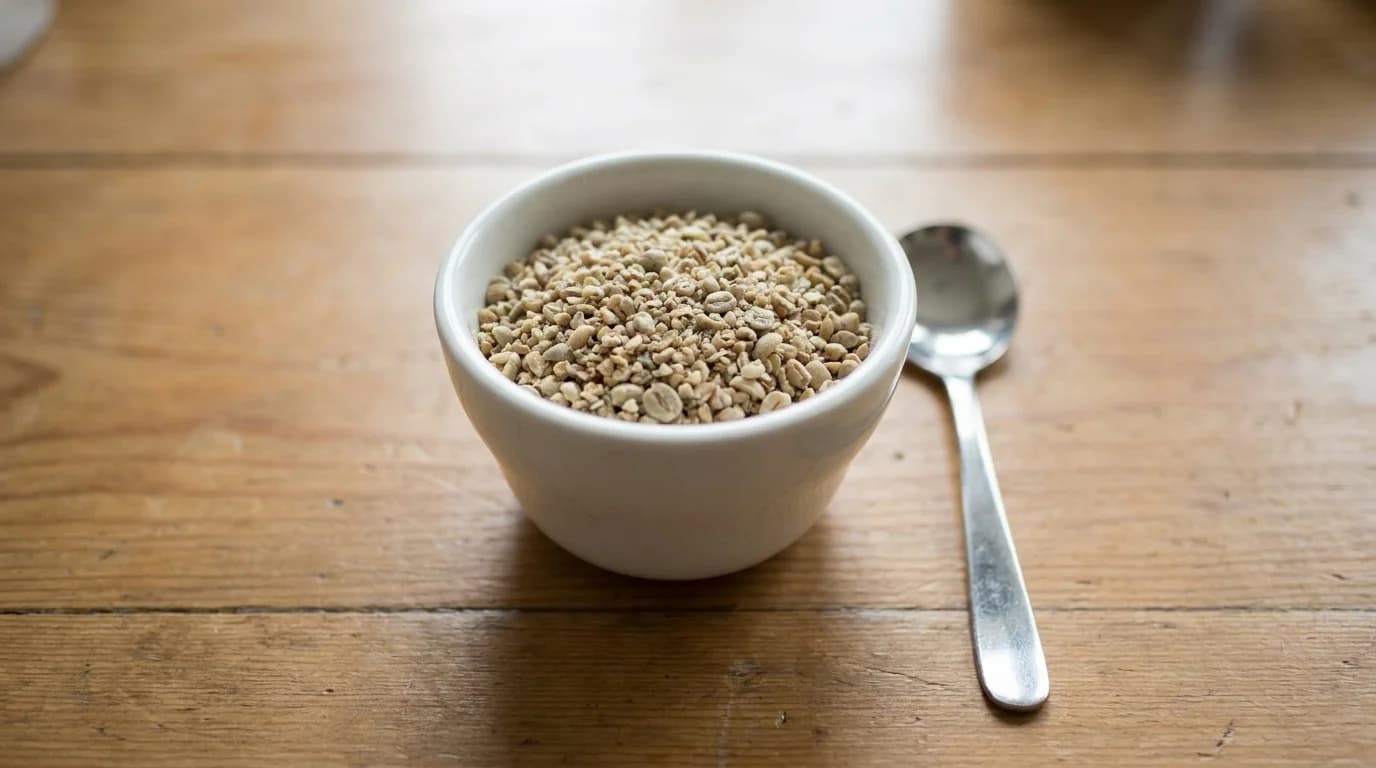
Most coffee is a commodity: traded in bulk at market prices, blended to consistency, roasted for shelf life. Specialty coffee is the category defined as something else — coffee evaluated to a specific quality standard, scored by certified tasters, and found to clear a measurable threshold. The threshold is 80 points on a 100-point scale. About 10% of global production gets there.
That's the whole definition. "Specialty coffee" is not a marketing term, a roast style, a café aesthetic, or a price bracket. It is a score. Understanding what the score measures, who does the measuring, and what clearing 80 points actually implies — and doesn't imply — is most of what there is to know about the category.
80+ points
the SCA cupping threshold that defines specialty grade — scored by certified Q Graders on a 100-point scale assessing ten sensory attributes[1]
~10% of global production
specialty coffee is a small fraction of total world output; most global supply is commodity grade used in blends, instant, and mass-market brands[2]
1974
the year Erna Knutsen coined 'specialty coffee' to describe microlots with distinct terroir and exceptional cup character[4]
The 100-point scale
The SCA cupping protocol assigns scores across ten attributes, each evaluated by a trained Q Grader using standardised methodology. A final score is the sum of these attribute scores, adjusted for defects[1].
The ten attributes evaluated:
- Fragrance / Aroma — dry grounds, then wet (just after water is added). Intensity, complexity, and character of the scent.
- Flavour — the central taste impression: what the coffee tastes like once in the mouth.
- Aftertaste — the length and quality of flavour remaining after swallowing.
- Acidity — brightness, liveliness, and quality of acidity (citric, malic, and other organic acids). High acidity is positive when clean and vibrant; negative when harsh or sour.
- Body — tactile weight and texture of the coffee in the mouth: thin, medium, or full.
- Balance — how well the flavour attributes complement each other without one dominating.
- Uniformity — consistency across five cups of the same sample (each sample is cupped in five identical bowls).
- Clean Cup — absence of non-origin flavour impressions, taints, or off-notes.
- Sweetness — perceived sweetness from naturally occurring sugars; evaluated per cup across five bowls.
- Overall — the cupper's holistic assessment, independent of the attribute scores.
Defects discovered during cupping are subtracted from the score: a "taint" (a minor off-note) costs 2 points per affected cup; a "fault" (a strong defect) costs 4 points per cup.
Figure
SCA cupping score ranges and quality classification
Values in minimum score
Green bean grading: defects
The cupping score is one half of specialty qualification. Green beans must also pass a physical grading standard:
- Maximum 5 full defects per 350 g sample (the primary defect count).
- Zero Category 1 defects — the most damaging faults: full black beans (from disease or over-fermentation), full sour beans (bacterial fermentation), dried cherry, fungus-damaged beans, foreign matter, or severe insect damage.
- Maximum 300 grams of moisture content variance (10–12% moisture range).
- No quakers (underdeveloped beans that fail to roast properly — they appear pale after roasting).
Coffee can score above 80 on the cupping table but fail specialty grading due to excessive physical defects. Both standards must be met[1].
Who does the scoring
Q Graders are certified tasters trained and examined by the Coffee Quality Institute (CQI). Certification requires passing 22 exams over four days — sensory discrimination tests, olfactory identification (36 aromas), triangulation tests, and graded cuppings evaluated against master assessments. Q Graders re-certify every three years.
There are separate Q Grader certifications for arabica and robusta (the standards and scoring thresholds differ by species; robusta specialty requires 80+ on the CQI robusta protocol).
The Q Grader system is the closest thing the coffee industry has to an objective quality standard. Certified scores determine contract prices, auction bids, competition eligibility, and the "specialty" designation on bags.
The supply chain from farm to specialty
A coffee becomes specialty at the green bean stage — before roasting — but what happens upstream determines whether the potential is there to cup:
Variety and genetics: high-scoring coffees are disproportionately from arabica varieties with complex genetic profiles — Geisha, SL28, SL34, Ethiopian heirloom landraces[3]. Variety sets the ceiling; everything else either realises or wastes it.
Altitude and climate: higher elevation means slower cherry development, more sugar accumulation, and greater aromatic complexity. Most 85+ coffees come from above 1,400 metres.
Selective harvesting: specialty farms hand-pick only ripe cherries, often making multiple passes through the same trees as cherries ripen unevenly. Mechanical strip-harvesting (common in large commodity operations) collects ripe, unripe, and overripe fruit simultaneously — a mixing that suppresses cup scores.
Processing: washed, natural, honey, and anaerobic methods each affect the final cup profile differently. Specialty farms control the process precisely; poorly managed fermentation or drying destroys quality that the cherry had.
Traceability: specialty coffee is identifiable to the farm, cooperative, or microlot level. This traceability is not just marketing — it enables quality feedback loops between roasters and producers, supports price premiums to farmers, and allows consumers to verify the origin claims on a bag.
Specialty vs commodity: what the price difference buys
Figure
Approximate farm gate price: commodity vs specialty (USD/lb green)
Values in USD per lb (approximate)
The price premium in specialty coffee is not simply markup for aesthetics. It reflects the actual additional labour (hand-picking costs 5–10× more than mechanical harvesting), infrastructure (washing stations, raised drying beds, controlled fermentation), and yield loss (selective picking of only ripe fruit reduces total volume harvested per pass)[4].
The Specialty Coffee Association
The SCA (formed by the 2017 merger of the SCAA and SCAE) sets the cupping protocols, certifies Q Graders, runs the World Barista Championship and Cup of Excellence competitions, and publishes research on brewing standards, green grading, and sensory science.
The SCA's protocols are not legally binding — they are industry standards adopted voluntarily by producers, roasters, and buyers. A roaster can label their coffee "specialty" without a Q Grade score, which is why "specialty" on a retail bag should prompt, but not replace, your own evaluation[1].
What specialty does not guarantee
- That you will like it. Specialty is a quality assessment by trained tasters, not a predictor of any individual's preference. A 92-point light-roast natural Ethiopian with intense berry character is exceptional coffee that many people find too fruity or acidic.
- That it was roasted well. Specialty applies to the green bean. A poorly roasted specialty coffee will taste worse than a well-roasted commodity lot.
- That the "specialty" label on a bag is verified. Without a Q Grade score on file, "specialty" is a marketing claim.
- That it is ethically sourced. Specialty certification and ethical supply chain practices (living wages, environmental standards) are separate systems. See Fair Trade Coffee for the certification standards that address labour and price floors specifically.
Common misconceptions
- "All third-wave coffee is specialty." Third-wave is a cultural and philosophical movement in coffee; specialty is a scoring threshold. They overlap significantly but are not the same. Some third-wave cafés serve non-specialty coffees; some specialty coffees are sold by traditional roasters.
- "Specialty means dark roast is excluded." Roast level is a choice made after the green bean is graded. Specialty beans can be roasted to any level. In practice, specialty roasters tend toward lighter roasts to preserve origin character — but this is a convention, not a requirement.
- "A higher score always tastes better." Cupping scores predict cup quality in a controlled evaluation. Your subjective experience of the same coffee depends on how you brew it, your flavour preferences, and the freshness of the beans.
The honest summary
Specialty coffee is a grade, not a vibe. It is coffee that scored 80+ on the SCA 100-point cupping scale by a certified Q Grader and passed green bean physical quality standards. About 10% of global production meets the threshold. Within that 10%, quality ranges from "just cleared the bar" at 80 to "extraordinary" at 90+. The premium over commodity prices reflects real additional cost in farming and processing, not just aesthetics. The category was defined in 1974 by Erna Knutsen and standardised by the SCA; it remains the most rigorous quality classification system available in coffee, but it is an industry standard, not a legal designation — "specialty" on a bag without a verified Q Grade score is a marketing claim that warrants scepticism.
Frequently asked questions
- What makes coffee 'specialty'?
- A coffee is specialty grade when it scores 80 points or above on the SCA 100-point cupping scale — a standardised sensory evaluation by Q Graders (certified tasters) assessing ten attributes including aroma, flavour, acidity, body, and aftertaste. Green beans must also meet physical quality standards: maximum 5 full defects per 350 g sample, zero Category 1 defects (black beans, sour beans, fungus-damaged). Scores below 80 are 'premium' or commodity grade.
- How much of global coffee is specialty?
- Estimates range from 7–12% of global production, with most industry sources putting it around 10%. Specialty coffee commands significantly higher prices — often 2–5× commodity prices — which has driven growth in the sector, but it remains a small share of the total coffee market dominated by commodity-grade beans used in blends, instant coffee, and mass-market brands.
- What is a Q Grader?
- A Q Grader is a coffee taster certified by the Coffee Quality Institute (CQI) to evaluate coffee using the SCA cupping protocol. The certification requires passing 20+ exams including sensory discrimination tests, olfactory identification, and blind cupping evaluations. Q Graders re-certify every three years. Their scores are the industry standard for certifying a coffee as specialty grade and are used for pricing, contracts, and competition judging.
- What is cupping?
- Cupping is the standardised method for evaluating green and roasted coffee quality. A fixed dose of ground coffee (8.25 g per 150 mL water) is steeped in open bowls at 93 °C, allowed to cool, then evaluated in sequence: dry fragrance, wet aroma, then flavour, aftertaste, acidity, body, balance, uniformity, clean cup, sweetness, and overall impression. A trained cupper uses a spoon to slurp the coffee forcefully across the palate. Scores on each attribute combine for the final 100-point score.
- Is specialty coffee always better than non-specialty coffee?
- By definition, specialty coffee has passed a minimum quality threshold — but quality within the specialty range (80–100) varies enormously. An 80-point specialty coffee may taste unremarkable. A 94-point competition lot can be extraordinary. 'Specialty' is a quality floor, not a guarantee of exceptional taste. Additionally, some well-roasted commercial coffees can be excellent in a cup despite not technically being cupped or scored.
- Who defined specialty coffee?
- The term was coined by Erna Knutsen in a 1974 speech at an international coffee conference, where she described microlot coffees with distinct origin character as 'specialty coffees.' The Specialty Coffee Association of America (SCAA) was founded in 1982 to develop standards and advocacy for the sector; it merged with the SCAE (Europe) in 2017 to form the current SCA.
References
Every factual claim in this article is drawn from the sources below. See the source library for how we grade evidence.
- [1]SCA Cupping ProtocolsSpecialty Coffee Association · 2023 · Reference work · Tier 3 · Contextual
- [2]World Coffee Statistics DatabaseInternational Coffee Organization · Official dataset · Tier 1 · Strong
- [3]Coffee Varieties CatalogWorld Coffee Research · Reference work · Tier 2 · Moderate
- [4]Uncommon Grounds: The History of Coffee and How It Transformed Our World (revised edition)Basic Books (Mark Pendergrast) · 2010 · Reference work · Tier 2 · Moderate
- [5]CoffeeEncyclopaedia Britannica · Reference work · Tier 3 · Contextual
Related reading
- Beans, Roasts & OriginsThird Wave Coffee: The Specialty Coffee Movement→
- Beans, Roasts & OriginsWhat Is Single-Origin Coffee? Why Origin Matters→
- Beans, Roasts & OriginsCoffee Processing Methods Explained→
- Beans, Roasts & OriginsArabica Coffee: The World's Leading Coffee Species→
- Beans, Roasts & OriginsRwandan Coffee: Origin, Profile, and Specialty Revival→
- Beans, Roasts & OriginsCosta Rica Coffee: Tarrazú, Varieties, and Distinction→