Third Wave Coffee: The Specialty Coffee Movement
By Coffee Studies Editorial·Published July 16, 2026·11 min read
Quick answer
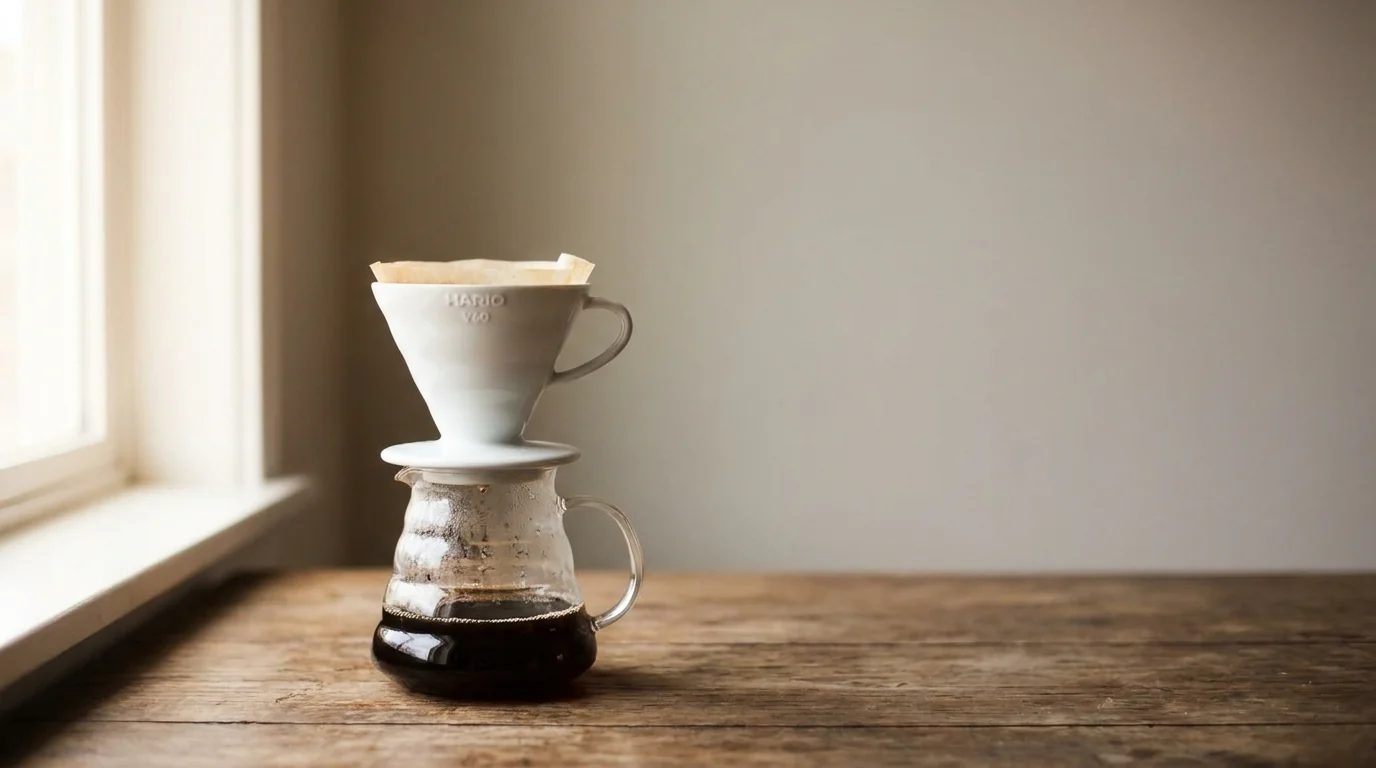
"Third wave coffee" is one of those phrases that everyone in specialty coffee uses and few people outside specialty coffee can define. It refers to a real and consequential cultural shift in coffee — the emergence of coffee as artisanal craft, comparable to wine or craft beer, with substantial changes in how coffee is grown, sourced, roasted, brewed, and consumed. Understanding the third wave movement clarifies much about modern specialty coffee culture, why coffee looks different in 2026 than it did in 1996, and what all those independent coffee shops with paper filter drippers and handwritten origin cards are actually about.
Late 1990s onward
third wave coffee emerged roughly from the late 1990s, gaining momentum through the 2000s and mainstreaming by ~2015[1]
Craft focus
treats coffee as an artisanal craft product comparable to how wine, craft beer, or artisan bread are approached[2]
Third of three waves
the framework identifies three generational shifts in North American coffee culture: commodity → café-based → specialty craft[1]
The three waves — the framework
The "waves of coffee" is a widely-used framework for describing generational shifts in North American coffee culture. It's sometimes criticised as US-centric (coffee culture in other countries doesn't map perfectly to this framework), but remains useful for discussing modern specialty coffee's origins.
First wave: Commodity coffee (early 20th century - 1960s)
Character: Coffee as functional caffeine delivery commodity. Mass-produced, mass-marketed, uniform product.
Dominant brands:
- Folgers (US)
- Maxwell House (US)
- Nescafé (instant, global)
- Chock Full o'Nuts (Northeast US)
- Hills Bros. (US)
Format:
- Pre-ground, canned coffee.
- Instant coffee (Nescafé, Sanka, others).
- Percolated at home or drip-brewed with automatic drip machines from the 1970s onward.
- Coffee as morning ritual/functional beverage.
Cultural context:
- Coffee as blue-collar and workplace fuel.
- Little to no distinction between origins or varieties.
- Brand loyalty rather than quality-based choice.
- Coffee as coffee — no substantial variation expected or experienced.
End of era: approximately when specialty coffee began demanding more attention (roughly the 1970s-1980s transition).
Second wave: Café-based espresso culture (1960s-1990s)
Character: Coffee as social experience and lifestyle; café as third place; introduction of espresso to mainstream American consumers.
Dominant player:
- Starbucks (founded 1971, IPO 1992, global expansion from mid-1990s onward).
- Peet's Coffee (founded 1966; predecessor to Starbucks philosophically).
- Second Cup (Canada, 1975).
- Costa Coffee (UK, 1971).
- Caffè Nero (UK, 1997).
Format:
- Café-based consumption becomes normalized.
- Espresso drinks (lattes, cappuccinos, mochas) introduced to mainstream American consumers.
- Coffee as premium beverage worth paying $3-5 for.
- Café as social/work space.
- Beans available for home brewing but café consumption dominant.
Cultural context:
- Coffee as lifestyle marker.
- "Fourbucks" — mainstreaming of espresso as reasonable purchase.
- Coffee shop as work space (predating remote work normalisation).
- Some attention to coffee origin (Starbucks introduced origin-specific brews) but blend-focused.
End of era: overlaps with third wave; not sharp transition. Second wave players continue to dominate by volume but third wave dominates specialty positioning[1].
Third wave: Specialty craft (late 1990s onward)
Character: Coffee as artisanal craft product; deep attention to origin, processing, roasting, and brewing; craft/independent focus.
Emblematic roasters:
- Intelligentsia Coffee (Chicago, founded 1995) — early third wave leader.
- Stumptown Coffee Roasters (Portland OR, 1999) — early third wave leader.
- Counter Culture Coffee (Durham NC, 1995).
- Blue Bottle Coffee (Oakland CA, 2002).
- Ritual Coffee Roasters (San Francisco CA, 2005).
- Verve Coffee Roasters (Santa Cruz CA, 2007).
- Heart Coffee Roasters (Portland OR, 2009).
- La Colombe (Philadelphia PA).
- Onyx Coffee Lab (Arkansas).
- Tim Wendelboe (Oslo, Norway).
- Koppi (Helsingborg, Sweden).
- Square Mile Coffee (London).
- Workshop Coffee (London).
- Prufrock Coffee (London).
- Market Lane Coffee (Melbourne).
Plus thousands of smaller regional roasters worldwide.
Format:
- Small independent cafés dominate.
- Single-origin coffee prominent on menus.
- Origin details displayed (farm, region, processing, altitude, variety).
- Manual brewing methods (pour-over, Chemex, AeroPress, siphon) featured alongside espresso.
- Roast dates printed on bags.
- Coffee professionals visibly present as skilled workers.
- Bean varieties and processing methods explained on menu.
Cultural context:
- Coffee as legitimate craft product.
- Origin traceability as marketing point.
- Direct trade relationships with farmers.
- Producer welfare and sustainability concerns.
- Educational orientation (menu boards explain, baristas discuss).
- Specific aesthetic (minimalist, industrial-craft, reclaimed wood, subway tile — the "third wave café look").
The specific features of third wave coffee
What actually distinguishes third wave from earlier specialty coffee culture:
Origin transparency
- Single origin — coffee from one country/region/ farm rather than blends.
- Detailed provenance — often specifying farm, farmer name, altitude, variety, processing method.
- Estate coffees — named farms recognised as brands.
- Cup of Excellence coffees — competition-winning lots explicitly labelled.
- Direct trade — roasters visiting farms, direct relationships with producers, transparent pricing.
Roast philosophy
- Light-to-medium roasts dominant.
- Roast to preserve origin character — not roasted to fit a house profile.
- Development-focused roasting — not just to a specific colour.
- Roast date transparency — printed on bags for freshness tracking.
- Different roasts for different origins — not one- size-fits-all approach.
- Contrast with dark roast Starbucks/Peet's era.
Brewing methods
- Manual brewing prominence — pour-over (V60, Kalita, Chemex), AeroPress, siphon, French press.
- Espresso as one option among many — not the default for all cafés.
- Brew method matched to bean — light Ethiopian for V60; heavier profile for espresso.
- Cupping vocabulary — sensory description language spread from professional to consumer.
The producer relationship
- Direct trade — bypassing traditional commodity export chains.
- Farmer visits — roasters travelling to origin.
- Premium pricing to farmers — transparent premiums above commodity prices.
- Long-term relationships — multi-year sourcing contracts.
- Cup of Excellence auctions — competition-based premium pricing.
- Focus on farmer welfare and sustainability.
Coffee education
- Educational menus — explaining origins, processing, brewing methods.
- Barista as knowledge worker — expected to discuss coffee origins, processing, and characteristics.
- Cupping events for consumers — introducing professional sensory evaluation.
- Coffee professionals as public figures — barista competitions, coffee education businesses, coffee media.
Aesthetics and space
- Minimalist café design — reclaimed wood, subway tile, exposed brick, industrial fixtures.
- Visible coffee equipment — machines and grinders as aesthetic elements.
- Coffee bar counter culture — space for watching brewing.
- Slow coffee culture — sit and enjoy rather than grab-and-go emphasis.
- Photography-friendly presentation — leading to Instagram-driven café culture.
The Trish Rothgeb origin
The "third wave" terminology is generally attributed to Trish Rothgeb, a coffee industry professional (Q- grader, coffee educator, and founder of Wrecking Ball Coffee Roasters):
- 2002: Rothgeb published an article in The Flamekeeper (a small trade publication of the Roasters Guild, part of SCA) titled around themes of coffee industry generational shifts.
- The article discussed the emergence of a distinctive "third wave" of coffee culture with the specific features listed above.
- The term spread through specialty coffee professional networks over the following few years.
- By mid-2000s: third wave was standard vocabulary in specialty coffee industry discussion.
- By ~2015: third wave was mainstream vocabulary outside the industry — appearing in general lifestyle media, coffee shop marketing, etc.
Rothgeb built on earlier informal discussions in specialty coffee circles about how the specialty coffee industry had evolved through generations, and the "first/second/ third wave" framework had multiple contributors before being crystallised in her article[1].
Global third wave (not just American)
The three-wave framework is somewhat US-centric — coffee cultures elsewhere developed differently:
Nordic specialty coffee (Norway, Sweden, Denmark, Finland):
- Very high-quality specialty scene, arguably ahead of US in some ways.
- Some Nordic roasters (Tim Wendelboe, Koppi, Coffee Collective) among the most respected globally.
- Nordic light roast profile became internationally influential.
Australian and New Zealand coffee culture:
- Third-wave features developed in parallel with US movement, sometimes ahead.
- Melbourne coffee scene particularly strong.
- Flat white (see Flat White) emerged from Australasian coffee culture.
- Antipodean baristas brought their approach to London and other cities.
British specialty coffee:
- London's third wave scene emerged from ~2005-2010, largely driven by Australian/New Zealand baristas.
- Now one of the most robust specialty coffee scenes globally.
Japanese specialty coffee:
- Distinctive Japanese approach — precision, siphon brewing, kissaten traditions — that predates and parallels American third wave.
- Not always mapped to the "wave" framework but functionally similar craft/quality focus.
Continental European coffee:
- Traditional Italian espresso culture is arguably outside the wave framework.
- Some Italian traditionalists explicitly reject third wave (favouring traditional espresso blends over single-origin light roasts).
- Central and Eastern European specialty coffee has developed rapidly since 2010.
Origin countries' specialty coffee:
- Ethiopian, Colombian, Brazilian, Kenyan specialty cafés — often adopting third wave aesthetic and approach.
- Combination of traditional coffee culture + modern specialty framework.
The "fourth wave" discussion
Various coffee industry commentators have proposed a "fourth wave" since roughly 2010:
Proposed characteristics of a fourth wave:
- More technical/scientific approach to brewing (refractometers, TDS measurement).
- Greater emphasis on individual farm/lot micro- differentiation.
- Direct-to-consumer subscription business models (Trade Coffee, Blue Bottle subscriptions).
- Coffee as fully luxury/lifestyle product with prices matching (Panama Geisha, Black Ivory).
- Return to community/relationship focus.
Whether "fourth wave" is real or just marketing depends on your framing. Some in the industry consider it a genuine distinct phase; others see it as continued third wave evolution rather than a discrete new generation.
Current state (2026): the wave framework has possibly reached diminishing usefulness. Modern specialty coffee is diverse enough that a linear "wave" model doesn't capture the variation.
The critiques of third wave coffee
Not everyone appreciates third wave culture:
Pretension and gatekeeping:
- Some third wave cafés perform inaccessibility.
- Complex menus can intimidate casual coffee drinkers.
- Barista culture sometimes veers into condescension.
Pricing concerns:
- Third wave coffee is often expensive — $5-8 per drink common.
- Excludes lower-income consumers.
- Concentrates coffee spending among higher-income urban demographic.
Gentrification associations:
- Third wave cafés often accompany neighbourhood gentrification.
- Complicated relationship with existing communities.
Aesthetic uniformity:
- Global third wave cafés often look remarkably similar (the "AirSpace" phenomenon).
- Instagram-driven design homogenisation.
Ethical claim complications:
- Direct trade doesn't automatically mean fair to producers.
- Some third wave marketing overstates farmer benefit.
- Coffee industry economics remain challenging for producers regardless of specialty premium.
Coffee traditionalism criticism:
- Italian espresso traditionalists dislike single- origin light-roast espresso approach.
- Some argue third wave has moved away from what makes coffee culturally meaningful.
"Coffee snobbery" complaint:
- Confidence about correct brewing methods, correct beans, correct roasts can feel exclusionary.
Most of these critiques have merit even while third wave also delivers real value. The movement is neither purely positive nor purely problematic.
Third wave's mainstream impact
Despite being a specialty movement, third wave has significantly influenced mainstream coffee:
At home:
- Sales of manual brewing equipment (V60, Chemex, AeroPress) increased dramatically post-2010.
- Whole bean sales grew relative to pre-ground.
- Home espresso equipment sales grew substantially.
- Grinder awareness increased (burr grinders instead of blade).
- Roast dates became consumer expectation.
In chain cafés:
- Starbucks Reserve program (2010+) — Starbucks's attempt to enter specialty coffee space.
- Blue Bottle acquired by Nestlé (2017) — third wave goes corporate.
- Peet's Coffee acquired by JAB Holding — private equity in specialty.
- Reflect the influence — chain café menus expanded origin variety, brewing method options, and quality focus in response to third wave demand.
In supermarkets:
- Specialty coffee brands in mainstream retail.
- Whole bean specialty coffee widely available.
- Origin-specific SKUs at grocery stores.
- Cold brew, nitro coffee, and other third wave-adjacent formats in shelf-stable versions.
In language:
- "Single origin," "direct trade," "specialty grade," "cupping score," "development time," "extraction yield" — third wave vocabulary now general coffee vocabulary among enthusiasts.
Common misconceptions
- "Third wave coffee just means expensive coffee." Expensive is a byproduct of quality/craft focus, not the defining feature. Some third wave coffee is reasonably priced; some is expensive.
- "Third wave means only light roast." Light-to- medium roasts are prominent but not universal. Some third wave roasters produce excellent medium-dark and dark roasts.
- "Third wave is over — replaced by fourth wave." The wave framework has reached diminishing usefulness but third wave characteristics dominate modern specialty coffee.
- "Third wave is American." American-originated framework but global movement. Nordic, Australian, British, Japanese specialty coffee scenes are all robust and internationally influential.
- "Third wave is anti-espresso." Not at all — many third wave cafés focus heavily on espresso, just with different beans/roasts than second wave.
Practical rules
If you're new to specialty coffee:
- Try multiple third wave cafés in your area.
- Order the pour-over of the day and ask about the bean.
- Buy whole beans with recent roast dates.
- Give it time — palate develops over weeks/months of varied specialty coffee.
If you're skeptical of specialty coffee culture:
- Try a well-made pour-over with a distinctive single- origin (Ethiopian yirgacheffe is a good starting point).
- Recognise that some third wave pretension is real but the underlying quality difference is also real.
- Find cafés that match your comfort level — not all third wave cafés perform inaccessibility.
If you're a home coffee enthusiast:
- Third wave philosophy applies at home — fresh beans, good grinder, appropriate brewing method for the bean.
- Buying from small roasters is often meaningfully better than supermarket specialty.
- Subscription services (Trade Coffee, Angels' Cup, many others) make third wave accessible.
If you visit different cities:
- Third wave café guides exist for most major cities.
- Cafe hopping is a legitimate coffee experience — regional style differences are real.
- Nordic, Antipodean, and Japanese specialty coffee cities are particularly worth exploring.
The honest summary
Third wave coffee is a cultural and business movement that emerged from the late 1990s, treating coffee as an artisanal craft product with emphasis on origin traceability, single-origin beans, light-to-medium roasting, careful brewing technique, and direct relationships with coffee farmers. It's the third of three cultural waves in North American coffee (commodity → café-based espresso → specialty craft) though the framework applies loosely to global coffee cultures. Emerging from roasters like Intelligentsia (1995), Stumptown (1999), and Blue Bottle (2002), and codified by Trish Rothgeb's 2002 industry article, third wave philosophy now dominates specialty coffee globally. Legitimate criticisms exist (pretension, pricing, gentrification associations), but the underlying quality and craft focus is real — third wave delivers meaningfully better coffee for people who care to notice. Modern specialty coffee culture is essentially the mainstreamed third wave.
Frequently asked questions
- What is third wave coffee?
- Third wave coffee is a cultural and business movement in the specialty coffee industry that emerged from the late 1990s onward. It treats coffee as an artisanal craft product (comparable to how wine or craft beer is treated) rather than a commodity beverage. Key features: emphasis on origin traceability, preference for single-origin beans, light-to-medium roasting to preserve origin character, careful brewing technique, direct trade relationships with farmers, focus on cup quality over volume, and a specific coffee shop aesthetic emphasising craft.
- What are first, second, and third wave coffee?
- The three-wave framework describes cultural shifts in North American coffee consumption. First wave (roughly early-20th century to 1960s): commodity coffee, mass-produced and mass-marketed brands (Folgers, Maxwell House, Nescafé). Coffee as functional caffeine delivery. Second wave (1960s-1990s): café-based espresso culture; introduction of espresso drinks to mainstream American consumers; Starbucks as dominant player; coffee as social experience and lifestyle. Third wave (late 1990s onward): coffee as artisanal craft; specialty focus; origin/varietal awareness; small independent roasters and cafés.
- Who coined 'third wave coffee'?
- The term is commonly attributed to Trish Rothgeb (formerly of Wrecking Ball Coffee Roasters, and a Q-grader/coffee educator), who wrote a 2002 article in The Flamekeeper (a small coffee industry publication) discussing 'the third wave of coffee.' Rothgeb built on earlier informal discussions in specialty coffee circles about generational shifts in the industry. The term spread through specialty coffee community and became widely used by the mid-2000s.
- What are the notable third wave coffee roasters?
- Founding-era third wave American roasters: Intelligentsia Coffee (Chicago, founded 1995), Stumptown Coffee Roasters (Portland, 1999), Counter Culture Coffee (Durham NC, 1995), Blue Bottle Coffee (Oakland, 2002), Ritual Coffee Roasters (San Francisco, 2005). Internationally: Tim Wendelboe (Oslo), Koppi (Sweden), Square Mile (London), Workshop Coffee (London), and hundreds of others. Modern third wave is fragmented across thousands of small roasters globally; no single brand dominates.
- Is third wave coffee just pretentious?
- Fair criticism that some third wave culture is pretentious. The pretension varies substantially by specific café — some are welcoming and educational; others perform inaccessibility. But the underlying focus on quality, traceability, and craft is legitimate — third wave coffee does deliver better coffee than commodity or standard café coffee for people who care to notice. The 'is third wave pretentious?' question is best answered by trying multiple third wave cafés and forming your own opinion. If you're a coffee enthusiast, you're already appreciating what third wave enabled.
References
Every factual claim in this article is drawn from the sources below. See the source library for how we grade evidence.
- [1]Uncommon Grounds: The History of Coffee and How It Transformed Our World (revised edition)Basic Books (Mark Pendergrast) · 2010 · Reference work · Tier 2 · Moderate
- [2]CoffeeEncyclopaedia Britannica · Reference work · Tier 3 · Contextual
- [3]Coffee Varieties CatalogWorld Coffee Research · Reference work · Tier 2 · Moderate
- [4]Brewing FundamentalsCoffee Science Foundation · Reference work · Tier 2 · Moderate
- [5]International Coffee OrganizationInternational Coffee Organization · Official dataset · Tier 1 · Strong
Related reading
- Beans, Roasts & OriginsWhat Is Single-Origin Coffee? Why Origin Matters→
- Beans, Roasts & OriginsThe History of Coffee: From Ethiopia to the Modern Cup→
- Beans, Roasts & OriginsCoffee Processing Methods Explained→
- Beans, Roasts & OriginsMexican Coffee: Chiapas, Oaxaca, and Cup Profile→
- Beans, Roasts & OriginsKopi Luwak: The Controversial Civet-Processed Coffee→
- Beans, Roasts & OriginsPhilippine Coffee: Kapeng Barako and Liberica→