Ethiopian Coffee: Yirgacheffe, Sidamo, and Harrar
By Coffee Studies Editorial·Published July 15, 2026·8 min read
Quick answer
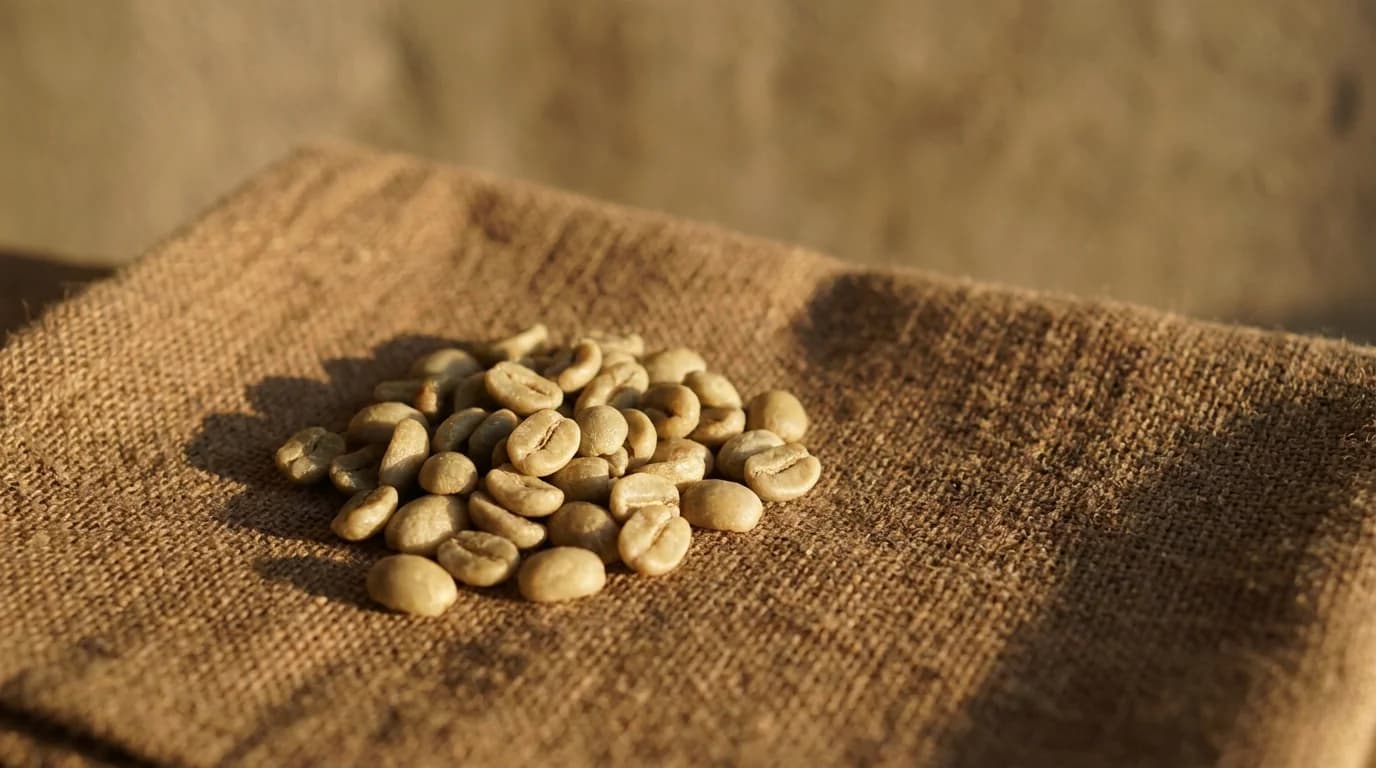
Ethiopian coffee occupies a unique position in the world of coffee — it's simultaneously the origin story (the plant's biological homeland), a continuous living tradition (the coffee ceremony still practised daily in millions of Ethiopian homes), and one of the most distinguished specialty coffee origins in active commercial trade. If you drink good coffee, you drink Ethiopian coffee's descendants; if you drink great coffee, you probably drink actual Ethiopian coffee.
Genetic homeland
Coffea arabica originated as a species in the highland forests of southwestern Ethiopia — its wild diversity exists nowhere else[3]
Heirloom diversity
thousands of distinct cultivars grow in Ethiopian forests and farms — far more genetic variety than any other producing country[1]
~5th largest producer
Ethiopia is consistently among the top 5-7 coffee-producing countries by volume, and one of the top specialty origins by reputation[6]
The regions
Ethiopian coffee is grown across a set of highland regions in the south and southwest of the country. Each has distinctive climate, elevation, soil, and traditional cultivars — producing recognisable flavour signatures.
Yirgacheffe. A small sub-region within larger Sidamo, located in the Gedeo Zone. Yirgacheffe coffees are considered the paradigm of elegant, aromatic Ethiopian coffee — bright citrus acidity (lemon, bergamot), delicate floral notes (jasmine, orange blossom), tea-like body, and a distinctive clean finish. Grown at 1,750-2,200 metres. Washed processing dominates but naturals are increasingly common.
Sidamo. The larger region that contains Yirgacheffe as a sub-region. Sidamo coffees are family to Yirgacheffe but more varied — some more berry-forward, some heavier-bodied, some similar in profile to Yirgacheffe. Grown at 1,400-2,200 metres.
Guji. Another Sidamo sub-region, historically bundled with broader Sidamo but increasingly recognised as its own origin. Guji coffees often have intense fruit character — red berry, ripe stone fruit, tropical fruit — with excellent clarity. Grown at 1,800-2,300 metres.
Harrar. In eastern Ethiopia, geographically separated from the southern coffee regions. Distinctive character: heavy body, wine-like fermented notes, blueberry, and a slightly mocha-chocolate quality. Almost exclusively natural processed. Grown at 1,500-2,100 metres.
Limu. In southwestern Ethiopia (Jimma Zone). Produces generally cleaner, more balanced coffees with mild floral notes, medium body, and moderate acidity. Predominantly washed. Grown at 1,400-2,100 metres.
Djimmah (also spelled Jimma). Located in southwestern Ethiopia. Produces mostly naturally-processed coffees, often with earthy, sometimes wild fermented character. Historically associated with lower-grade coffee but modern quality initiatives have elevated Djimmah production.
Kaffa. In the westernmost coffee-growing region — the literal origin geography of Coffea arabica. Kaffa produces coffees with distinctive forest character, moderate acidity, and connections to the surviving wild coffee populations. Some of Ethiopia's most genetically diverse coffee comes from here[5].
Heirloom varieties (and what "heirloom" means)
Most Ethiopian coffee is described commercially as "heirloom" — a term that requires some unpacking.
In most coffee-producing countries, cultivars are named individual varieties with known parentage: Typica, Bourbon, Caturra, Catuai, Castillo, SL28, and so on. These are propagated as identifiable clones or lines.
In Ethiopia, coffee cultivation grew out of thousands of years of harvesting wild forest coffee. Wild Coffea arabica in Ethiopian forests exists in extraordinary genetic diversity — thousands of distinct genetic strains, most never formally identified. Traditional Ethiopian farms often plant a mix of these locally-adapted strains rather than a single cultivar.
"Heirloom" as a commercial label typically means: a mix of traditional Ethiopian cultivars, not identifiable as a single named variety, propagated locally rather than from a global seed source[1].
Formal Ethiopian variety programmes do exist. The Jimma Agricultural Research Center (JARC) has identified and released selected cultivars (74110, 74112, 74140, etc.) for cultivation — particularly those with disease resistance to coffee leaf rust and coffee berry disease. These are grown alongside heirloom mixes.
Why the genetic diversity matters: Ethiopian coffee's wild gene pool is the global reservoir for future coffee breeding. As climate change and disease pressure existing commercial varieties elsewhere, breeders draw on Ethiopian genetics for resistance and adaptation traits. Conserving Ethiopian forest coffee diversity is a global coffee-industry priority[2].
Processing: natural vs washed
Ethiopian coffee is famous for both major processing methods, and the same beans can taste dramatically different in each style.
Natural process (dry-processed):
- Ripe coffee cherries are dried whole in the sun on raised beds or patios.
- Fruit ferments around the bean during the drying period (10-30 days).
- Beans absorb flavour compounds from the fermenting fruit pulp.
- Cup profile: intense fruit-forward, wine-like, jammy; strawberry, blueberry, mango, tropical fruit notes.
- Body tends to be heavier; acidity often milder.
- More variable — natural processing produces occasional defects (overripe/underripe cherries in the mix, uneven drying).
Washed process (wet-processed):
- Cherry pulp is removed before drying using a pulper.
- Beans (with their inner mucilage layer) are then fermented in water tanks for 12-72 hours to break down the mucilage.
- After mucilage removal, beans are washed and dried.
- Cup profile: cleaner, more delicate, more articulated; floral, citrus, tea-like, jasmine, bergamot.
- Body tends to be lighter; acidity often bright and complex.
- More consistent — washed processing produces cleaner, more uniform lots.
Regional traditions: Yirgacheffe and Sidamo are famous for washed coffees but produce excellent naturals too. Harrar is almost exclusively natural. Guji produces both. Modern Ethiopian coffee culture increasingly experiments with hybrid methods — honey process (pulped natural), anaerobic fermentation, extended fermentation — creating even more diverse profiles.
What Ethiopian coffee tastes like
The Ethiopian coffee "family" is broadly recognisable — even across regions and processing methods, Ethiopian coffees share certain qualities:
- Aromatic complexity. Ethiopian coffees have more nose than most origins — florals, teas, fruits, spices.
- Bright acidity. Even naturals tend to retain notable acidity (though softer than washed lots).
- Clean finish. Well-processed Ethiopian coffees have distinctive clarity in the aftertaste.
- Tea-like body. Ethiopian coffees are rarely heavy or syrupy; they tend toward light-to-medium body.
- Genetic diversity in the cup. Different heirloom mixes produce meaningfully different profiles even from adjacent farms.
Compared to other African origins (Kenya, Rwanda, Burundi), Ethiopian coffees are typically less bright/aggressive in acidity, more floral/tea-like, and more aromatically complex.
Compared to Central and South American coffees, Ethiopian coffees are more expressive/unusual in flavour — where Central American coffees might taste "clean, balanced, chocolatey," Ethiopian coffees taste "floral, citrus, jasmine, strawberry."
Ethiopian coffee industry today
Ethiopia is consistently among the world's top 5-7 coffee producers by volume:
- ~40% of arabica exports from Africa come from Ethiopia.
- ~5-7 million people depend on the coffee industry for their livelihoods.
- Smallholder-dominated. Unlike many other producing countries, Ethiopian coffee is largely grown on small farms (often 0.5-2 hectares) rather than large plantations.
- Semi-forest and forest coffee still accounts for a meaningful portion of production — coffee grown under natural forest canopy in agroforestry systems.
- ECX (Ethiopia Commodity Exchange) — the government- regulated coffee trading system. Historically opaque about origin (mixing coffees before sale). Recent reforms allow more direct trade with specific cooperatives and single- estate lots.
- Cooperative unions — the Oromia Coffee Farmers Cooperative Union (OCFCU), Sidama Coffee Farmers Cooperative Union, and Yirgacheffe Coffee Farmers Cooperative Union aggregate coffee from thousands of smallholder members and are major export channels[7].
The Ethiopian coffee ceremony
Beyond commercial production, coffee has profound cultural significance in Ethiopia — see The Ethiopian Coffee Ceremony for the full treatment. Coffee is drunk daily in ceremonial form in millions of Ethiopian homes, with roasting, grinding, and brewing performed together as a social ritual that can last 1-2 hours.
Buying Ethiopian coffee
Reading Ethiopian coffee labels:
- Region/sub-region: Yirgacheffe, Sidamo, Guji, Harrar, Limu, Djimmah, etc. Increasingly specific washing station names (e.g., "Yirgacheffe Kochere Chelbesa") are used for quality lots.
- Processing method: natural, washed, honey, anaerobic, etc.
- Grade: Grade 1 (top quality, very few defects), Grade 2 (specialty grade, minor defects), through Grade 5.
- Elevation: often mentioned; higher elevation (1,800m+) typically correlates with brighter, more complex cups.
- Harvest year: matters for freshness in green coffee; Ethiopian main harvest is October-January.
- Cooperative or estate name: modern specialty labels often name the specific cooperative or washing station, giving traceability to a specific community.
Price range: Ethiopian coffees at retail typically run $18-30/lb for good specialty lots, with named estate/ washing station lots reaching $40-80+/lb for exceptional quality. Yemeni Mocha and Panama Geisha remain the most expensive origins, but Ethiopian Yirgacheffe and Guji lots often approach premium specialty pricing.
Common misconceptions
- "Ethiopian coffee is just Yirgacheffe." Yirgacheffe is famous but represents only one region. Sidamo, Guji, Harrar, and others produce equally distinctive coffees with different profiles.
- "Natural process is inferior." Historically true (older Ethiopian naturals were often defect-prone), but modern specialty naturals from Ethiopia are among the most celebrated coffees in the world.
- "Ethiopian coffee is basically African coffee." The African coffee category is diverse — Ethiopian, Kenyan, Rwandan, Burundian, and other origins each have distinctive characters. Ethiopian coffees are more aromatic and floral; Kenyan more punchy and berry- forward; Rwandan and Burundian often lighter and tea-like.
- "Ethiopia only grows heirloom coffee." JARC-released cultivars are important for disease-resistance and are grown alongside heirloom mixes on many farms.
The honest summary
Ethiopian coffee is the biological homeland of Coffea arabica, the source of the world's coffee genetic diversity, and one of the most distinguished origins in the specialty market. The major regions — Yirgacheffe, Sidamo, Guji, Harrar, Limu, Djimmah — each produce distinctive cup profiles, ranging from delicate floral washed coffees to intense wine-like naturals. Ethiopia's "heirloom" cultivars represent thousands of years of local coffee co-evolution and provide the genetic reservoir that global coffee breeding depends on. For most coffee enthusiasts, spending time with Ethiopian coffees is one of the most educational experiences in coffee — the range of flavours available from this one country exceeds what most other origins can offer.
Frequently asked questions
- Where in Ethiopia is coffee grown?
- Ethiopian coffee is grown across the highland regions of the country's south and southwest, at elevations of 1,300-2,200 metres. The major named regions are Yirgacheffe, Sidamo (which contains Yirgacheffe and Guji sub-regions), Harrar, Limu, Djimmah, and Kaffa. Each region has distinctive climate, soil, and cultivars that produce recognisable flavour profiles.
- What are Ethiopian heirloom varieties?
- 'Heirloom' in Ethiopian coffee refers to the wild and semi-cultivated varieties native to Ethiopian highland forests — often thousands of individual genetic strains, most not formally identified or named. This diversity dramatically exceeds any other coffee-growing country. Modern classification identifies groups like the Landrace varieties and Ethiopian JARC (Jimma Agricultural Research Center) cultivars, but 'heirloom' typically refers to the traditional undifferentiated diversity.
- What's the difference between Yirgacheffe and Sidamo?
- Yirgacheffe is a sub-region within the larger Sidamo region. Yirgacheffe coffees are known for delicate floral notes, bright lemon-citrus acidity, and jasmine-tea aromatics — often considered the paradigm of clean, elegant Ethiopian coffee. Broader Sidamo coffees have a similar family character but tend to be more varied — some with more berry fruit, some heavier-bodied. Guji is another Sidamo sub-region with distinctive intense fruit character.
- What's natural vs washed Ethiopian coffee?
- Natural process: coffee cherries are dried whole in the sun, with the fruit fermenting around the bean during drying. Produces intensely fruity, wine-like flavours — strawberry, blueberry, tropical fruit. Washed process: cherry pulp is removed before drying, then beans are fermented in water. Produces cleaner, more delicate flavours — floral, citrus, tea-like. Ethiopian coffees are famous in both styles; each produces a distinct sensory experience even from the same farm.
- Why is Ethiopian coffee important beyond Ethiopia?
- Ethiopia is the biological homeland of Coffea arabica — every arabica coffee in the world is genetically descended from Ethiopian ancestors. The wild genetic diversity still present in Ethiopian forests is the reservoir that global coffee breeding programmes draw from for disease resistance, climate adaptation, and flavour traits. Beyond genetics, Ethiopian coffee culture (the ceremony, traditional preparations) is the oldest continuous coffee tradition in the world.
References
Every factual claim in this article is drawn from the sources below. See the source library for how we grade evidence.
- [1]Coffee Varieties CatalogWorld Coffee Research · Reference work · Tier 2 · Moderate
- [2]Interactive Coffee Varieties CatalogWorld Coffee Research · Reference work · Tier 2 · Moderate
- [3]Caffeine and related purine alkaloids: biosynthesis, catabolism, function and genetic engineeringPhytochemistry · 2008 · Review · Tier 2 · Moderate
- [4]Characterization of the Cultivation Region of Ethiopian Coffee by Elemental AnalysisAnalytical Letters · 2016 · Observational study · Tier 2 · Moderate
- [5]Ethiopia's Coffee Sector: A Bitter or Better Future?Journal of Agrarian Change · 2007 · Review · Tier 2 · Moderate
- [6]International Coffee OrganizationInternational Coffee Organization · Official dataset · Tier 1 · Strong
- [7]Uncommon Grounds: The History of Coffee and How It Transformed Our World (revised edition)Basic Books (Mark Pendergrast) · 2010 · Reference work · Tier 2 · Moderate
- [8]CoffeeEncyclopaedia Britannica · Reference work · Tier 3 · Contextual
Related reading
- Beans, Roasts & OriginsWhere Did Coffee Originate? Ethiopia, Yemen, History→
- Beans, Roasts & OriginsThe Ethiopian Coffee Ceremony: Jebena, Ritual, and Culture→
- Beans, Roasts & OriginsCoffee Origins Around the World→
- Beans, Roasts & OriginsJamaican Blue Mountain Coffee: Why It Costs So Much→
- Beans, Roasts & OriginsKona Coffee: Hawaii's Famous Volcanic-Grown Beans→
- Beans, Roasts & OriginsLiberica Coffee: The Third Commercial Coffee Species→