Fika: The Swedish Coffee Culture
By Coffee Studies Editorial·Published July 15, 2026·9 min read
Quick answer
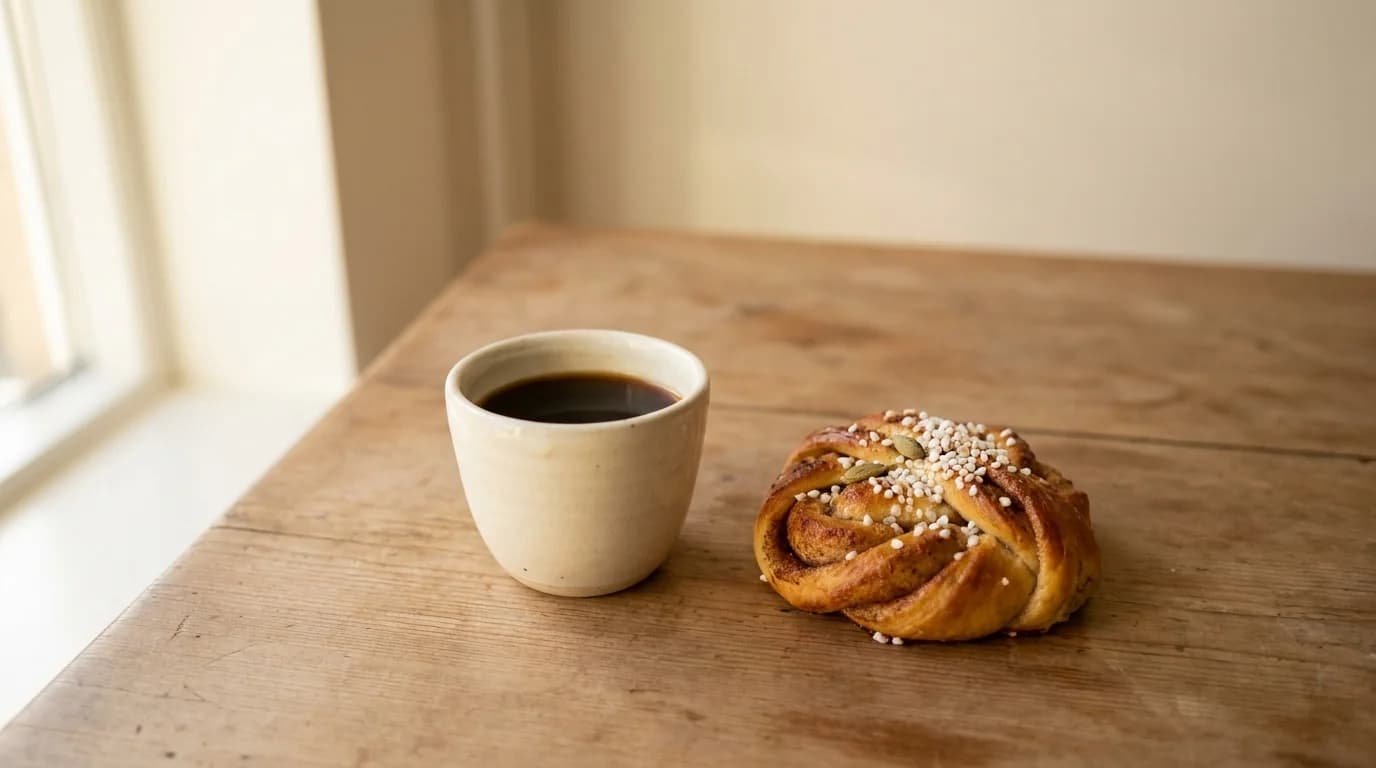
Fika is one of those cultural concepts that resists direct translation — the closest English equivalent is "coffee break," but that translation captures maybe 30% of what fika actually is. In Sweden, fika isn't just when you drink coffee; it's a specific institutionalised social ritual that happens twice a day for most Swedes, involves specific foods (usually pastry), specific social norms (usually with other people), and specific cultural values (taking time, prioritising connection, resisting the always-on productivity culture). It's also the reason Sweden ranks among the top coffee-consuming countries in the world.
Twice daily
typical fika frequency for most Swedes — morning around 10am and afternoon around 3pm[1]
~8-10 kg/year
Swedish per capita coffee consumption — among the top 3-5 in the world, roughly double the US[3]
Cinnamon bun
the iconic fika pastry — kanelbullar are so central to fika that October 4 is Cinnamon Bun Day (Kanelbullens dag) in Sweden[2]
What fika actually is
Fika (pronounced "FEE-kah") is:
- A specific ritual — not just drinking coffee, but a designated social pause with specific elements.
- A beverage moment — coffee is central, usually drip-brewed or French-press, occasionally espresso-based drinks; tea can substitute for those who don't drink coffee.
- A snack occasion — pastry (usually) is expected. Fika without something sweet feels incomplete.
- A social event — traditionally with other people; solo fika exists but is not the default.
- A deliberate pause — the time is set aside; you're not multi-tasking through fika. Unhurried.
- A cultural value — around taking time for connection, slowing down, prioritising quality of experience over functional efficiency.
- A word for the act — "fika" is both noun and verb. You "have fika" (verb: fikade / to fika), and fika is also the name of the event/thing.
The word "fika" itself is thought to be a 19th-century Swedish backslang from kaffi (dialect form of kaffe / coffee) — the syllables reversed. This etymology is uncertain but widely cited.
The traditional structure
When and where
When: Morning fika typically around 10am; afternoon fika around 3pm. Twice-daily fika is standard in Swedish workplaces and homes. Some cultures schedule fika into work calendars; some do it more informally.
Where: At home, at work (in the shared kitchen or a meeting room), at a café, or at a friend's home. Where matters less than the deliberate pause quality.
Who fikas together
Who: Typically 2-6 people. Solo fika exists but is less common than group fika. Fika is fundamentally social.
The drink
What (drink): Coffee is the default — usually black, though milk and sugar are accepted. Filter coffee, French press, or espresso-based drinks all fit. Tea is an acceptable alternative for non-coffee-drinkers. Cold drinks (juice, soft drinks) are less traditional but not forbidden.
The food
What (food): Something sweet. Traditional options:
- Kanelbullar — cinnamon buns. The archetypal fika pastry. Cardamom-scented brioche dough coiled with a cinnamon-butter-sugar filling and topped with pearl sugar. Iconic to the point of having a national day (October 4).
- Kardemummabullar — cardamom buns. Similar to cinnamon buns but with cardamom filling instead. Increasingly popular internationally.
- Chokladbollar — chocolate balls. No-bake balls of oats, sugar, cocoa, butter, coffee, and vanilla, rolled in pearl sugar or coconut. Common home fika treat.
- Sockerkaka — a simple butter-and-sugar sponge cake. Everyday fika staple.
- Semlor — cardamom-cream buns traditionally eaten in the weeks before Lent (semmelbullar). Fat Tuesday (Fettisdagen) is the peak semlor day.
- Mazariner — small almond tarts.
- Prinsesstårta — princess cake, sponge with cream and raspberry, covered in green marzipan. Special-occasion fika.
- Various cookies (kakor): ballerinas, digestive biscuits, small ginger snaps.
Traditional fika involves homemade or bakery-fresh pastries rather than supermarket packaged goods, though everyday fika at work often uses whatever's available.
Fika at work
Swedish workplace fika culture is distinctive:
- Scheduled into the day. Morning fika around 10am; afternoon fika around 3pm. Sometimes announced with a bell or a workplace notification.
- Genuine break. People stop working, gather in a common area, and socialise for 15-30 minutes. This isn't a coffee-at-desk activity.
- Pastry provision. Someone (rotating responsibility) brings pastries — either baked at home or from a bakery. Some workplaces have permanent stocked snack areas.
- Meeting integration. Some meetings are explicitly fikamöten (fika-meetings) — structured around the shared coffee/pastry moment.
- Boundary against overwork. Fika institutionalises the value that constant work isn't the goal — pause and connection are legitimate uses of time.
International companies with Swedish offices often adopt fika culture; Swedish companies expanding abroad sometimes attempt to export fika into other national workplace cultures (with varying success).
IKEA fika: IKEA's global stores include fika-inspired café menus with cinnamon buns, coffee, and other Swedish pastries. This has been many people's international introduction to the concept.
Fika at home and socially
Outside work, fika takes multiple forms:
Home fika
Home fika. Family or roommate coffee time, often with weekend baking. Sunday afternoon fika is a traditional weekly pattern for many Swedish households.
The social invitation
"Ska vi fika?" — a specific social invitation. Similar to "shall we grab coffee?" in English but with more social weight. Meeting for fika is a legitimate friendship maintenance activity, not just an excuse for another purpose.
Café fika
Café fika. Meeting at a café for extended coffee-and- pastry conversation. Swedish café culture generally accommodates lingering fika rather than pushing turnover.
Weekend fika
Weekend fika. Longer, more elaborate. Multiple courses of pastries, extended conversation. Sometimes hosted at someone's home with home-baked treats.
Holiday fika
Holiday fika. Around holidays, specific traditional pastries dominate — semlor before Lent, saffron buns (lussekatter) around St. Lucia's Day (December 13), and so on.
Why fika works — the cultural argument
Several arguments for why fika is culturally successful:
Institutionalises rest. In cultures where "always on" work culture creates guilt around breaks, fika's established institutional presence removes the guilt. Fika time is legitimate time; you're not slacking.
Builds social connection. Regular scheduled interaction with colleagues, friends, and family maintains relationships without requiring special planning.
Provides temporal structure. In a day that can otherwise blur together, the 10am and 3pm anchor points create rhythm.
Combines pleasure with routine. Coffee and pastry are genuinely enjoyable; associating them with routine social time increases both the pleasure of the routine and the routineness of the pleasure.
Counteracts screen isolation. Modern work involves increasing screen time; fika creates specific screen-free in-person time.
Fits the climate. Sweden's long dark winters make indoor social ritual particularly valuable — fika is sometimes described as a defence against the winter darkness.
Signals values. Making time for fika signals what a workplace or family values (relationships over pure efficiency).
Sweden's coffee consumption
Sweden consistently ranks among the world's top per capita coffee consumers:
- Approximately 8-10 kg per person per year in Sweden.
- Approximately 4-5 kg per person per year in the US.
- Approximately 6 kg per person per year in Italy.
Only Finland and sometimes Norway and the Netherlands consistently exceed Sweden. Sweden's high consumption is substantially attributable to fika — twice-daily scheduled coffee intake adds up to substantially more coffee than functional-only consumption cultures.
Coffee brewing preference: Swedes traditionally favour filter coffee (drip or French press), typically brewed strong and served black. Espresso-based drinks have become more common in the past 20 years with international café influence, but filter coffee remains the fika default.
Roast preference: Medium to medium-dark roasts dominate the Swedish market. Löfbergs, Zoégas, and Arvid Nordquist are common Swedish roasters[3].
Fika around the world
Fika has spread internationally as Swedish cultural influence, tourism, and IKEA cafés have introduced non- Swedes to the concept:
IKEA cafés have introduced millions of people globally to Swedish coffee and pastry culture via their in-store café operations.
Scandinavian cafés in major cities globally often incorporate fika elements (cinnamon buns, filter coffee service, deliberate slower pace).
Corporate adoption — some international companies have adopted fika-style scheduled breaks as team- building or wellness initiatives.
Cookbook and lifestyle publishing — English-language fika cookbooks and lifestyle books have proliferated in the past decade, often positioning fika as a mindfulness/wellness practice.
Genuine local practice — some non-Swedish communities have adopted fika-adjacent practices without Swedish origin — Danish hygge, Dutch koffietijd, and various regional coffee traditions share elements.
Whether adoption outside Sweden retains fika's genuine character or becomes just a marketing term depends on whether the deliberate-pause and social-ritual elements survive translation.
Fika compared to other coffee traditions
Different national coffee traditions emphasise different things:
Italian espresso bar
Italian espresso bar culture: quick espresso at the counter; social but transactional; efficiency-oriented.
French café
French café culture: longer sits at outdoor tables; observing street life; sometimes solo, sometimes social.
Turkish coffee
Turkish coffee culture: ceremonial preparation with extended conversation; often deep social significance (fortune-telling, hosting rituals).
American coffee
American coffee culture (traditional): functional morning fuel; often solo; work-adjacent.
American coffee culture (specialty): café-based; extended dwell time; often solo with laptop.
Ethiopian ceremony
Ethiopian coffee ceremony: hour-plus preparation and consumption; deeply ceremonial; centred on hosting and gathering.
Fika's place
Fika: shorter than Ethiopian ceremony but longer than American; social by default; pastry-integrated; institutionalised into daily rhythm.
Each tradition solves coffee-plus-social-ritual differently. Fika's distinctive contribution is the twice- daily institutional rhythm plus the tight pastry-and- coffee pairing.
Common misconceptions
- "Fika just means coffee break." Coffee break is the closest translation but misses fika's social, ritual, and cultural dimensions.
- "Fika requires specific pastries." Traditional pastries are ideal, but any acceptable snack works. Bakery cookies, homemade cake, even chocolate — the pause and social elements matter more than the specific food.
- "Fika is only Swedish." Similar practices exist in Finland (kahvitauko), Denmark (hygge overlaps), Norway (kaffepause), and other Nordic countries. Fika is the most institutionalised version.
- "Fika is falling out of practice." Ongoing surveys suggest fika remains strongly practised in Swedish daily life, though patterns have shifted (work-from- home reduces workplace fika; some younger workers fika less regularly).
- "You must drink coffee to fika." Tea is acceptable. What matters is the social pause with something warm to drink and something to eat.
Practical fika at home
How to fika (informally):
- Make a proper pot of coffee (French press or drip is traditional; espresso is fine too).
- Have something baked available — a cinnamon bun, a piece of cake, a cookie.
- Set aside 15-30 minutes without distraction.
- Invite someone to join if possible.
- Actually pause — no phone, no work, no multi-tasking.
- Have real conversation; don't rush.
That's it. The mechanical elements are simple; the psychological commitment to actually taking the time is the hard part.
A basic kanelbullar recipe for making the classic fika pastry:
- Yeast dough with cardamom.
- Rolled out, spread with softened butter, brown sugar, cinnamon.
- Rolled and cut into buns.
- Topped with pearl sugar.
- Baked at 220°C for 8-10 minutes.
Recipe details vary; the ingredient list is what makes it a proper kanelbulle.
The honest summary
Fika is the Swedish social ritual of coffee, pastry, and deliberate pause — twice-daily in most Swedish workplaces and homes, centred on cinnamon buns and other traditional pastries, and treated as a legitimate cultural priority rather than a break from "real" activity. It's a major reason Sweden ranks among the world's top per capita coffee consumers. Beyond the coffee itself, fika institutionalises rest, social connection, and deliberate pace — values that many other work cultures struggle to protect. The word doesn't translate cleanly into English; "coffee break" captures the mechanical elements but misses fika's social and cultural significance. If you want to import a piece of Swedish coffee culture into your own life, the coffee is easy; the harder part is committing to the deliberate pause and social connection that make fika what it is.
Frequently asked questions
- What is fika?
- Fika (pronounced 'fee-kah') is the Swedish social ritual of coffee, pastry, and deliberate pause — typically taken with other people, twice a day. It's simultaneously a beverage moment, a snack, a social occasion, and a cultural practice. Fika is deeply embedded in Swedish work and social life — most Swedish workplaces have morning fika and afternoon fika built into the day. Fika is both a noun (the ritual itself) and a verb (att fika means 'to have fika').
- What do you eat during fika?
- Traditional fika pairs coffee with a sweet pastry, usually one of the classics: kanelbullar (cinnamon buns) — the most iconic; kardemummabullar (cardamom buns); prinsesstårta (princess cake, green marzipan-covered); chokladbollar (chocolate balls); sockerkaka (simple sponge cake); mazariner (almond tarts); semlor (cardamom-cream buns, traditionally eaten before Lent). Something homemade, or from a proper bakery, is preferred over supermarket packaged goods.
- How is fika different from a coffee break?
- A coffee break is a pause during work to drink coffee — often solo, quick, functional. Fika is a deliberate social ritual — usually with other people, unhurried, with pastry, and treated as legitimate use of time rather than a break from 'real' activity. Swedish workplaces schedule fika into the day and expect participation. Meetings can be structured around fika (a fikamöte, or fika-meeting). The social and temporal aspects distinguish fika from a functional coffee break.
- How often do Swedes fika?
- Typically twice a day — mid-morning (around 10am) and mid-afternoon (around 3pm), though patterns vary. Some Swedes fika three times a day; some only once. In Swedish workplaces, morning and afternoon fika are often scheduled into the day. On weekends, fika might be more relaxed — a longer sit at a café or a home visit with pastries. Fika can also be a specific social invitation: 'ska vi fika?' means 'shall we fika?' — the equivalent of asking someone to meet for coffee, but with more social weight.
- Why is Sweden's coffee consumption so high?
- Fika is a big part of the answer. Sweden consistently ranks among the top 3-5 countries in per capita coffee consumption worldwide (roughly 8-10 kg per person annually, compared to ~4-5 kg in the US). The institutionalised twice-daily fika habit means Swedes consume coffee at a much steadier and higher rate than cultures where coffee is treated as a functional stimulant rather than a social ritual. Cold climate, dark winters, and strong pastry traditions all reinforce coffee's cultural role.
References
Every factual claim in this article is drawn from the sources below. See the source library for how we grade evidence.
- [1]CoffeeEncyclopaedia Britannica · Reference work · Tier 3 · Contextual
- [2]Uncommon Grounds: The History of Coffee and How It Transformed Our World (revised edition)Basic Books (Mark Pendergrast) · 2010 · Reference work · Tier 2 · Moderate
- [3]World Coffee Statistics DatabaseInternational Coffee Organization · Official dataset · Tier 1 · Strong
- [4]The World of Caffeine: The Science and Culture of the World's Most Popular DrugRoutledge (Bennett Alan Weinberg and Bonnie K. Bealer) · 2001 · Reference work · Tier 2 · Moderate
Related reading
- Beans, Roasts & OriginsCoffee Origins Around the World→
- Beans, Roasts & OriginsThe History of Coffee Houses: From Mecca to London→
- Beans, Roasts & OriginsThe Ethiopian Coffee Ceremony: Jebena, Ritual, and Culture→
- Beans, Roasts & OriginsThai Coffee: Doi Chang Arabica and Oliang Explained→
- Beans, Roasts & OriginsWhat Is a Coffee Blend? How Roasters Mix Beans→
- Beans, Roasts & OriginsKopi Luwak: The Controversial Civet-Processed Coffee→