What Is a Coffee Blend? How Roasters Mix Beans
By Coffee Studies Editorial·Published July 15, 2026·6 min read
Quick answer
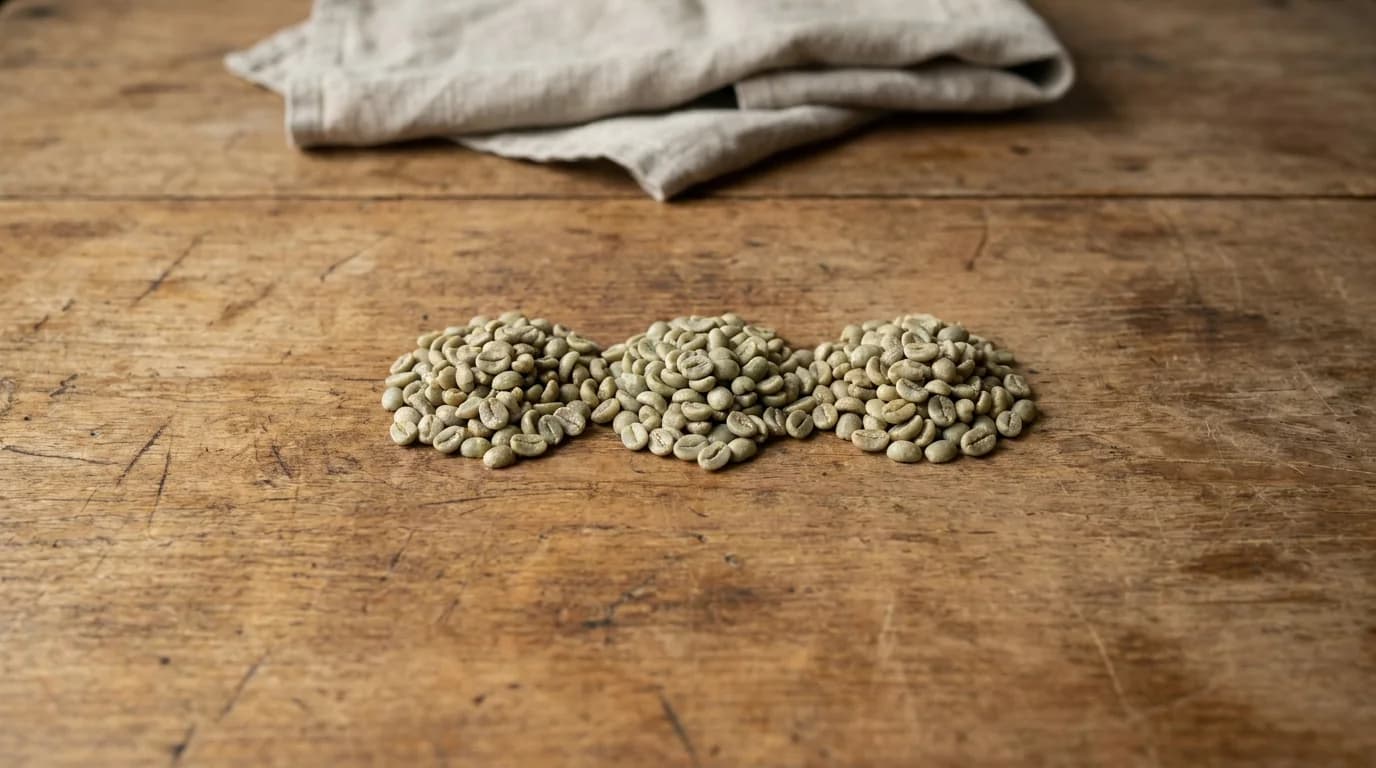
Coffee blends have quietly done most of the world's coffee-drinking work for centuries. Every classic Italian espresso is a blend. Most supermarket premium coffees are blends. Even much specialty coffee is blend-based. The specialty movement's emphasis on single origins has framed blending as a lesser art — but at its best, blending is a craft that deserves as much respect as single-origin sourcing.
Multiple origins
a blend combines beans from two or more distinct sources — often countries, sometimes regions or farms within a country[2]
Complementary strengths
good blends combine beans whose characteristics balance each other — one adds body, another adds acidity, a third adds sweetness[3]
Consistency by design
blends can be reformulated across seasons to maintain a consistent profile as individual origin harvests vary[4]
What a blend is
A coffee blend combines beans from more than one origin. The "origin" being combined can vary:
- Multi-country blend: beans from different countries (e.g., Colombia + Ethiopia + Sumatra). Most common.
- Multi-region blend: beans from different regions within one country.
- Multi-farm blend: beans from different farms, sometimes within the same region.
- Multi-varietal blend: different coffee varieties, possibly from the same farm.
The point of blending is to achieve something no single origin delivers on its own — typically a specific balance of flavour, body, acidity, sweetness, and (for espresso) crema.
Why blending exists
1. Balance. Different origins have different strengths and weaknesses. A blend can combine them to fill in gaps:
- Ethiopian coffee — bright, floral, complex, but sometimes thin-bodied
- Sumatran coffee — heavy body, earthy, low-acid, but sometimes lacking brightness
- Colombian coffee — balanced, sweet, chocolatey, medium body — an excellent middle
A blend combining an Ethiopian + Sumatran + Colombian can be more complete than any of the three alone.
2. Consistency. Coffee is a crop; harvests vary year to year. A well-designed blend can be reformulated seasonally to maintain a consistent flavour profile. Same "house blend" tastes similar in January and July, even if the underlying Ethiopian component came from a different specific lot.
3. Cost management. Blending premium and less-premium beans lets roasters offer specific flavour profiles at specific price points. A "morning blend" might combine a specialty Ethiopian (for brightness) with a commodity Brazilian (for body and cost).
4. Espresso-specific goals. Espresso extraction is demanding — it wants beans that produce good crema, balanced extraction across the shot, and a flavour profile that survives being drunk in a small concentrated volume. Traditional Italian espresso blends were developed over generations specifically for these needs, and often include robusta for body and crema.
How blends are built
Good blends aren't random — they're formulated with intention. A blender's typical process:
1. Define the target profile. What should the finished cup taste like? What roast level? What brewing method? Target customer?
2. Assemble candidate origins. Taste dozens or hundreds of green coffee samples. Understand each one's strengths and weaknesses.
3. Experiment with combinations. Try 50/50, 40/40/20, 70/20/10. Each combination changes the whole. Small percentage changes can meaningfully shift flavour.
4. Test the finished cup. How does it taste at target roast level? Through target brewing methods? With milk (for espresso blends)? Across a range of preparations?
5. Adjust and finalise. Sometimes the best blend has unexpected ratios (a 5% component might carry a whole character even at small proportion).
6. Re-assess seasonally. As harvests change, re-tune the blend to maintain profile.
Pre-blend vs post-blend:
- Pre-blend roasting combines all beans before roasting. Faster, simpler, cheaper. Downside: different beans have different ideal roast profiles; blending pre-roast means compromising on each.
- Post-blend roasting roasts each component separately at its ideal profile, then combines. More labour and equipment, but each bean is at its best. Common in specialty coffee.
Both approaches produce excellent blends when done well.
Common blend types
Espresso blends:
- Designed for espresso brewing at 1:2 ratio, 25-35 seconds
- Often include robusta for body, crema, and sweetness
- Sometimes darker-roasted to survive espresso concentration
- Traditional Italian style: 80/20 or 70/30 arabica/robusta
House blends:
- Cafés' signature everyday blends
- Usually designed for versatility — works as drip or espresso
- Balanced profile, not too extreme in any direction
Morning/breakfast blends:
- Lighter, brighter, often designed to pair with breakfast food
- Frequently include African beans for acidity
After-dinner blends:
- Fuller-bodied, often darker roasted
- Designed to be enjoyed on its own, sometimes with dessert
Decaf blends:
- Same blending logic, but starting from decaffeinated beans
- Decaffeination affects flavour, so decaf blending is its own challenge
Seasonal/holiday blends:
- Marketing-driven but also often genuinely well-formulated seasonal offerings
Where "blend" gets a bad reputation
The specialty coffee movement's focus on single origin has left "blend" carrying some baggage — sometimes deserved, sometimes not.
Legitimate concerns about some blends:
- Commodity blends using cheap, low-quality beans across the board — the "blend" in supermarket private-label bags is often less deliberate craft than logistics
- Blends used to hide low-quality beans — sometimes blends are formulated to make bad beans acceptable by burying them in better ones
- Lack of transparency — traditional blends often don't disclose their component origins, which frustrates drinkers who want to know where their coffee comes from
- "Blend" as filler word — sometimes just means "we didn't bother telling you what's in this"
These concerns don't apply to good blends. A well-crafted specialty espresso blend combining an Ethiopian Yirgacheffe, Colombian Huila, and Brazilian Cerrado — with disclosed proportions and thoughtful roasting — is not inferior to a single-origin equivalent. It's a different product with different goals.
What research actually shows about blending
The chemistry of blending is under-studied compared to the chemistry of single origins. A 2008 Journal of Agricultural and Food Chemistry study documented that different origins have reliably distinct chemical signatures[1] — which is the starting point for blending decisions. A blender's craft is knowing how these signatures combine and predict finished-cup character.
Coffee variety catalogues from World Coffee Research document the range of varietal genetic differences that inform both single-origin selection and blend formulation[3].
Global coffee production data from ICO[4] shows how blending drives the coffee industry at scale — most commercial coffee production ultimately reaches consumers as blends.
Choosing blends vs single origins
Choose a blend when:
- You want consistent flavour across purchases
- You're brewing espresso and want a proven espresso-adjusted profile
- You want a full-featured cup with balanced character
- You're preparing coffee for many people with different tastes
- You want value at a specific price point
- You're serving milk-based drinks (blends often survive milk better than delicate single origins)
Choose a single origin when:
- You want to experience the specific character of one place
- You want to learn what different origins actually taste like
- You want traceability and known provenance
- You're brewing pour-over or drip and want the coffee to shine
- You're specifically exploring specialty coffee
Alternate them:
- Many coffee drinkers keep both — a house blend for daily drinking and a rotating single origin for exploration.
Common misconceptions
- "Blends use inferior beans." Not necessarily. Excellent blends combine excellent beans by deliberate design.
- "Single origin is always better." Different, not always better. A poor single origin can be worse than a good blend.
- "Roasters blend to save money." Sometimes, but often blending is a craft choice — the finished cup needs characteristics no single origin delivers.
- "You can't taste the components in a blend." Skilled blenders and drinkers can often identify contributing origins in a blend, especially in unmasked (lighter-roasted) blends.
The honest summary
A coffee blend combines beans from more than one origin to achieve a specific flavour, balance, or format goal. Blending is a genuine craft — good blenders combine complementary origins with skill; poor blends are often filler-driven. Blends dominate espresso, milk-based drinks, and commercial coffee. Single origins dominate specialty exploration and pour-over brewing. Both categories have exceptional and terrible examples; the format matters less than the execution.
Frequently asked questions
- What does 'coffee blend' mean?
- A coffee blend is a mixture of beans from more than one origin — different countries, regions, farms, or lots — combined to achieve a specific flavour profile. Blending is a deliberate craft; blenders combine beans that complement each other rather than combining leftover beans.
- Is a coffee blend cheaper than single origin?
- Usually, but not always. Blends allow roasters to combine higher-cost beans (for specific character) with lower-cost beans (for body or filler) to hit a target price point. That said, premium blends using top specialty beans can be as expensive as single origins.
- Are espresso blends better than single-origin espresso?
- Different, not better. Traditional espresso blends were developed over centuries specifically for espresso — combining beans that produce good crema, balanced flavour, sweetness, and body. Single-origin espresso is newer, more variable, and can be excellent or challenging depending on the beans.
- How do roasters create a blend?
- Blends are built by tasting individual origins and combining them for a target profile — often blending 2-4 origins in specific proportions. Some roasters blend before roasting (pre-blend); others roast each component separately and combine after (post-blend). Both approaches are legitimate; post-blend gives more control.
References
Every factual claim in this article is drawn from the sources below. See the source library for how we grade evidence.
- [1]Comparison of the Effectiveness of Fatty Acids, Chlorogenic Acids, and Elements for the Chemometric Discrimination of Coffee (Coffea arabica L.) Varieties and Growing OriginsJournal of Agricultural and Food Chemistry · 2008 · Observational study · Tier 2 · Moderate
- [2]CoffeeEncyclopaedia Britannica · Reference work · Tier 3 · Contextual
- [3]Coffee Varieties CatalogWorld Coffee Research · Reference work · Tier 2 · Moderate
- [4]International Coffee OrganizationInternational Coffee Organization · Official dataset · Tier 1 · Strong
Related reading
- Beans, Roasts & OriginsWhat Is Single-Origin Coffee? Why Origin Matters→
- Beans, Roasts & OriginsCoffee Origins Around the World→
- Beans, Roasts & OriginsArabica vs Robusta: Taste, Caffeine, and Differences→
- Beans, Roasts & OriginsCosta Rica Coffee: Tarrazú, Varieties, and Distinction→
- Beans, Roasts & OriginsThe History of Coffee Houses: From Mecca to London→
- Beans, Roasts & OriginsFika: The Swedish Coffee Culture→