The History of Coffee Houses: From Mecca to London
By Coffee Studies Editorial·Published July 15, 2026·9 min read
Quick answer
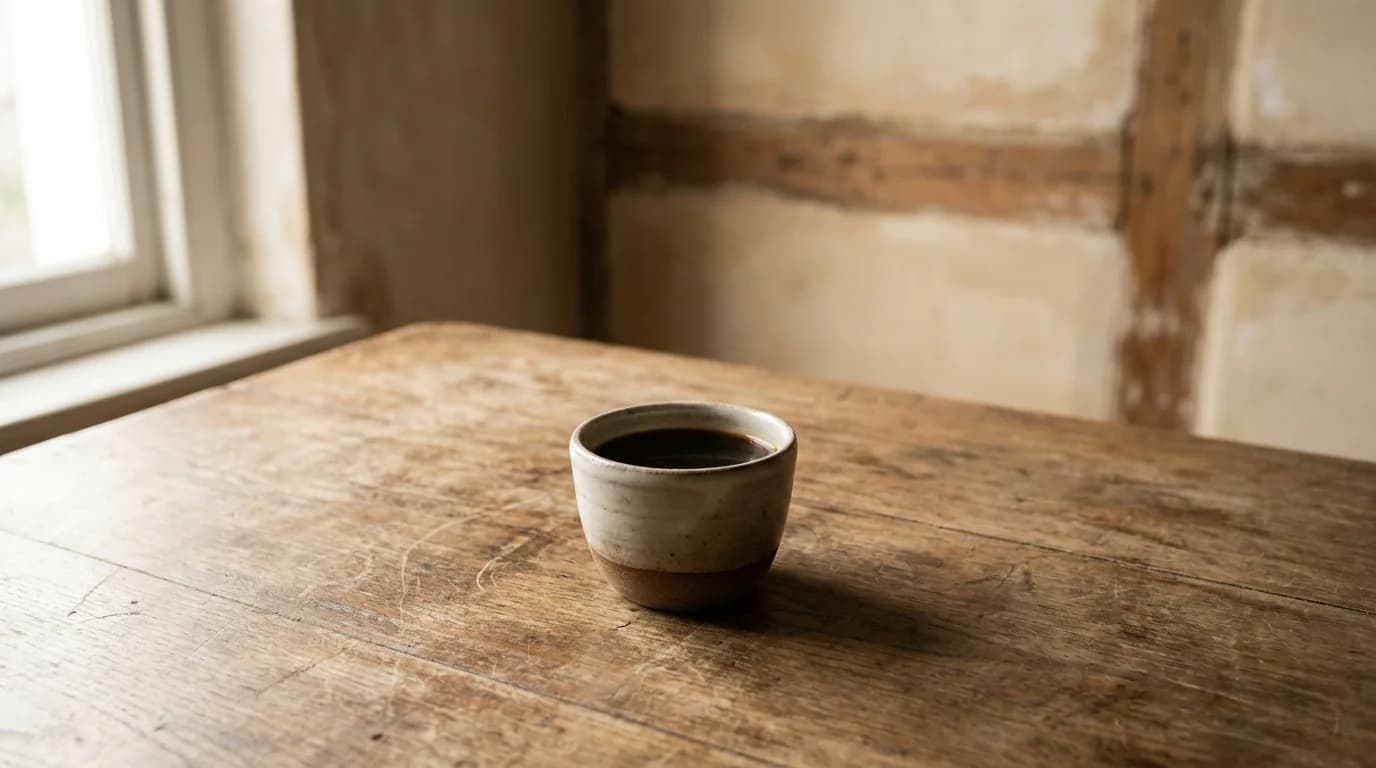
The coffee house was arguably as important an invention as coffee itself. Before Ottoman Istanbul in the 1550s, there was no place in the world quite like it: a public commercial space where anyone with a few coins could sit for hours, discuss the news of the day, read the latest pamphlets, and consume a beverage that stimulated conversation rather than dulling it. The tavern was older; the church older still; the private salon existed for aristocrats. The coffee house was something new — and the shape of modern urban life owes a great deal to it.
~1554
first documented coffee house — Istanbul, established by two Syrian entrepreneurs[1]
1650
first English coffee house opens in Oxford — followed by London (1652)[2]
Lloyd's of London
the world's oldest continuously operating insurance market began as a coffee house[4]
Where the coffee house came from
Coffee itself arrived in Istanbul from Yemen via Cairo and Damascus during the early-to-mid 16th century, as coffee- drinking practice spread outward from Yemen through the Islamic world. In private homes and in religious contexts (Sufi orders in particular), coffee was already established as a beverage.
The coffee house as a public commercial institution — that specific innovation appears to have emerged in Istanbul around 1554. The two entrepreneurs traditionally credited (Hakam from Aleppo and Şems from Damascus) opened establishments in the Tahtakale neighbourhood, and the model spread rapidly through the city and across the empire[1].
What made a coffee house different from a tea shop or a tavern:
- Public and open — anyone could enter and sit, regardless of class (within social norms of the time).
- Extended stay — you could nurse a single coffee for hours; the space, not the beverage, was the primary service.
- Sober — unlike the tavern, coffee stimulated rather than intoxicated. This changed the character of the conversation and the community.
- Middle-class oriented — priced for merchants, craftsmen, professionals, and students rather than aristocrats.
- Information hubs — newspapers, pamphlets, and word- of-mouth news all circulated through coffee houses.
By the late 16th century, Ottoman coffee houses (kahvehane) were serving thousands across Istanbul alone.
The Ottoman coffee house and its trials
The Ottoman coffee house had a complicated relationship with authority. Because it was a space where men gathered to discuss politics openly, it was periodically viewed with suspicion by rulers.
Periods of prohibition and re-legalisation
Periods of prohibition and re-legalisation:
- 1633: Sultan Murad IV banned coffee houses (and tobacco) partly over political-discussion concerns and partly over religious objections. The ban was enforced seriously — including death penalties in some cases.
- After Murad IV's death (1640): enforcement lapsed, though nominal restrictions continued.
- Later 17th century: coffee houses were fully re- legalised and became more numerous than before[1].
The recurring pattern — periods of official crackdown followed by re-legalisation — became a template for the coffee house's history in many other places. Governments tended to distrust the institution's role as a venue for open discussion; the discussions and the coffee both kept returning.
The coffee house reaches Europe
Coffee arrived in Europe primarily through Venetian trade with the Ottoman Empire. Venice had commercial factors in Istanbul, Alexandria, and other Ottoman ports; coffee flowed along the same routes that carried spices and silk.
Timeline of early European coffee houses
Timeline of early European coffee houses:
- ~1645: First European coffee house documented in Venice. Venice's coffee house tradition would eventually produce the still-operating Caffè Florian in St. Mark's Square (opened 1720).
- 1650: Oxford — the first English coffee house opens, established by a man called Jacob (variously described as Lebanese, Jewish, or Turkish; sources disagree). Oxford's coffee house catered particularly to university scholars and gave rise to the "penny university" reputation.
- 1652: London — Pasqua Rosée, a young Greek servant of a Levant merchant, opens the city's first coffee house on St. Michael's Alley, sponsored by his employer. It's immediately controversial (tavern-keepers object; some clergy object; the drink is exotic and suspicious) but extraordinarily popular.
- 1671: Marseille — the first French coffee house opens, catering to trade with the Levant.
- 1683-1685: Vienna — coffee house tradition emerges after the Ottoman siege of Vienna. The retreating Ottoman army left behind sacks of coffee beans that Viennese locals initially didn't know what to do with. A Polish soldier named Jerzy Franciszek Kulczycki, who had lived in Turkey, allegedly obtained the beans and opened the first Viennese coffee house. (This origin story is romanticised — the actual first Viennese coffee house is more likely attributable to Johannes Diodato in 1685 — but Kulczycki became a folk hero anyway.)
- 1686: Paris — Café Procope opens on the Rue de l'Ancienne-Comédie. It remains one of the oldest continuously operating restaurants in the world[2].
By 1700, coffee houses were established across most major European cities.
London's coffee house era
England's coffee houses had a particularly rich cultural role during the late 17th and 18th centuries — a period sometimes called London's "coffee house era."
At its peak, London had over 500 coffee houses. Each tended to develop a specialised clientele:
- Political coffee houses — Whigs at St. James's Coffee House, Tories at the Cocoa Tree.
- Literary and intellectual coffee houses — Will's (frequented by Dryden and later Pope), Button's (Addison, Steele, and the Spectator magazine circle).
- Scientific coffee houses — the Grecian Coffee House attracted members of the Royal Society; Newton's circle discussed physics there.
- Maritime and commercial coffee houses — Lloyd's Coffee House on Tower Street specialised in shipping news and insurance discussions.
Lloyd's → insurance market
Lloyd's Coffee House → Lloyd's of London: Edward Lloyd opened his coffee house around 1686 near the London docks. It attracted ship captains, merchants, and underwriters who gathered to discuss maritime risk and arrange insurance policies. Lloyd published a shipping newspaper (Lloyd's List, still published today). The insurance business that grew there formally organised as Lloyd's of London in 1774, and the coffee house's descendants are still visible in the modern insurance market's "Lloyd's" branding[4].
Jonathan's → the stock exchange
Jonathan's Coffee House → London Stock Exchange: Similarly, Jonathan's Coffee House hosted informal securities trading in the late 17th century. Stock brokers were expelled from the Royal Exchange in 1698 for rowdy behaviour and reconvened at Jonathan's. The formal London Stock Exchange grew out of this coffee house arrangement, opening as a subscription room in 1773.
Penny universities
"Penny universities": The English coffee house's low entry price (a penny for the coffee, no membership required) and access to newspapers and pamphlets earned them the nickname "penny universities" — a poor man's route to current-events literacy.
The Habsburg coffee house tradition
Vienna's coffee house culture developed slightly later than England's but has proved more continuous — the Viennese Kaffeehaus is still recognisably an institution today.
Key features of the Viennese tradition
Key features of the Viennese tradition:
- Table service — a waiter brings your coffee with a small glass of water; you can stay indefinitely.
- Newspapers on wooden holders — a rack of daily papers from many countries, free for patrons to read.
- Marble-top tables and Thonet bentwood chairs — a specific aesthetic that developed by the mid-19th century.
- Literary and intellectual patronage — coffee houses as workspaces for writers, philosophers, artists. Trotsky, Freud, Wittgenstein, Zweig, and many others were documented regular patrons of specific Viennese coffee houses.
- A specific coffee menu — Mélange, Kleiner Brauner, Kapuziner, Einspänner, and others; a formalised set of preparations still recognised on Viennese coffee house menus.
The Viennese coffee house was recognised as UNESCO Intangible Cultural Heritage in 2011.
Continental European coffee houses
Other European coffee house traditions developed distinctive characters:
- Italian coffee bars evolved differently — smaller, stand-up bars where espresso is consumed quickly rather than the lingering coffee-house model. This became the dominant Italian pattern in the 20th century.
- French cafés absorbed the coffee house tradition into a broader café model that includes food service and alcoholic drinks, with less clear separation from other hospitality types.
- German and Central European Kaffeehaus followed the Viennese pattern with regional variations.
The 20th-century transformation
The mid-20th century saw the coffee house's decline as an institution:
- Ubiquity of home coffee meant the coffee house was no longer the primary place to get good coffee.
- Rise of the diner and later fast-food model offered alternative social-eating spaces.
- Television and later home entertainment reduced the "gather to hear news" function.
The Starbucks era from the 1970s-80s onward revived the coffee-plus-social-space model but in a specifically 20th-century form: chain-based, standardised, mall- and urban-corner-oriented. Starbucks explicitly invoked the "third place" concept (home, work, and a third social gathering space) drawn from earlier coffee house history.
The third-wave specialty coffee movement from the 2000s onward re-emphasised the independent coffee house model — smaller establishments, focus on coffee quality and origin, longer patron dwell times, sometimes consciously reviving elements of the pre-commodity coffee house tradition.
The coffee house's enduring pattern
Across four-and-a-half centuries, the coffee house has repeatedly filled the same social niche:
- A public commercial gathering space open to all paying customers.
- A caffeinated (not intoxicating) beverage enabling extended alert conversation.
- A venue for information exchange — whether handwritten newsletters, printed newspapers, or wifi- enabled laptops.
- A workspace for people who don't have (or don't want to be at) an office.
- A place where reputation and business dealing happen outside formal institutions.
The current independent café is a recognisable descendant of the 1554 Istanbul kahvehane, the 1650 Oxford coffee house, and the 1830 Viennese Kaffeehaus. The physical details change; the social function is remarkably consistent[3].
What the research says
Hattox's Coffee and Coffeehouses is the standard academic treatment of the Islamic-world origins of the coffee house as a social institution, drawing on 16th-century Arabic sources including legal debates about coffee[1].
Pendergrast's Uncommon Grounds covers the coffee house across cultures and centuries in narrative depth, including London, Paris, Vienna, and the transition to modern chains[2].
The history, at length
 Long-form history of coffeeUncommon Grounds: The History of Coffee and How It Transformed Our WorldThe book this site cites whenever a historical claim needs a source, and the one worth reading if the history is what interests you rather than the brewing. Pendergrast covers six centuries at length, including the commercial and colonial parts that shorter histories skip.amazon.com $11.48 USDamazon.ca $30.99 CADPrice and availability as of View on Amazon
Product prices and availability are accurate as of the date/time indicated and are subject to change. Any price and availability information displayed on Amazon at the time of purchase will apply to the purchase of this product. Certain content that appears on this site comes from Amazon. This content is provided ‘as is’ and is subject to change or removal at any time.
Weinberg & Bealer's The World of Caffeine contextualises the coffee house in broader histories of caffeinated culture, including comparison to tea houses and the Enlightenment public sphere[3].
Encyclopaedia Britannica's coffee entry and the National Coffee Association's history summary both cover the coffee house's institutional milestones[4][5].
Common misconceptions
- "Coffee houses started in London." London's coffee houses were culturally influential but came a century after Istanbul's. The institution originated in the Ottoman world.
- "The Viennese coffee house was invented by a Polish soldier." Jerzy Franciszek Kulczycki is the folk-hero version; the historical evidence points to Johannes Diodato as opening Vienna's first documented coffee house in 1685.
- "Coffee houses were only for men." In much of their history yes, but with real regional variation. The Viennese tradition became more mixed earlier than the English one; some French cafés were mixed from the beginning; Ottoman coffee houses were largely male-only.
- "Café culture is a 20th-century invention." The 20th-century chain café is new; the coffee house as a social institution is nearly five centuries old.
The honest summary
The coffee house began in Istanbul around 1554 as a public commercial space built around a specific caffeinated beverage, and spread rapidly across the Ottoman Empire in the 16th century and across Europe in the 17th. English coffee houses spawned major modern institutions (Lloyd's of London, the London Stock Exchange) and shaped political and scientific discourse. The Viennese Kaffeehaus tradition became a distinctive and continuous cultural form. Today's independent café, third-wave coffee shop, and chain café are all recognisable descendants of a 470-year-old institutional model — coffee plus a social space plus information exchange — that has proven durably useful across very different societies and eras.
Frequently asked questions
- When and where did coffee houses first appear?
- The first documented coffee houses (Ottoman Turkish: kahvehane) appeared in Istanbul around 1554, established by two Syrian entrepreneurs from Damascus and Aleppo. Within decades, coffee houses had spread across the Ottoman Empire, becoming central to urban social life in Cairo, Aleppo, Damascus, and other cities.
- When did coffee houses reach Europe?
- Coffee houses reached Europe via Venetian trade with the Ottoman Empire. The first documented European coffee house opened in Venice around 1645. Oxford opened one in 1650 (established by a Lebanese Jew named Jacob), and London's first coffee house opened in 1652 on St. Michael's Alley. Vienna's coffee house tradition dates from after the 1683 Ottoman siege, and Paris's Café Procope opened in 1686.
- Why were coffee houses politically important?
- Coffee houses were public spaces where people from different classes could gather, drink a stimulating (not intoxicating) beverage, read newspapers, and discuss the news of the day. This made them naturally political — a space for open debate outside the tavern, the church, and the aristocratic salon. English coffee houses were sometimes called 'penny universities' because for the price of a coffee you could join informed discussion. Governments periodically tried to ban or restrict them, usually unsuccessfully.
- How did coffee houses shape the modern world?
- Several major modern institutions started as coffee house gatherings. Lloyd's of London insurance market grew from Lloyd's Coffee House (opened 1686). The London Stock Exchange traces back to Jonathan's Coffee House, where stock trading originally happened. Many newspapers of the 17th-18th centuries had their circulation and readership shaped by coffee houses. The coffee house was arguably the first modern public information network.
- How is the modern café related to historic coffee houses?
- The Viennese coffee house tradition (Kaffeehaus) is the closest living continuation, still operating in similar form. Modern chain cafés (Starbucks, Costa) borrow the coffee-plus-social-space model but with a different economic and social character. Independent 'third wave' cafés often consciously invoke the coffee house tradition, emphasising space for extended conversation and work. In a sense, the coffee house has been continuously reinvented for four-and-a-half centuries.
References
Every factual claim in this article is drawn from the sources below. See the source library for how we grade evidence.
- [1]Coffee and Coffeehouses: The Origins of a Social Beverage in the Medieval Near EastUniversity of Washington Press (Ralph S. Hattox) · 1985 · Reference work · Tier 2 · Moderate
- [2]Uncommon Grounds: The History of Coffee and How It Transformed Our World (revised edition)Basic Books (Mark Pendergrast) · 2010 · Reference work · Tier 2 · Moderate
- [3]The World of Caffeine: The Science and Culture of the World's Most Popular DrugRoutledge (Bennett Alan Weinberg and Bonnie K. Bealer) · 2001 · Reference work · Tier 2 · Moderate
- [4]CoffeeEncyclopaedia Britannica · Reference work · Tier 3 · Contextual
- [5]The History of CoffeeNational Coffee Association · Reference work · Tier 3 · Contextual
Related reading
- Beans, Roasts & OriginsThe History of Coffee: From Ethiopia to the Modern Cup→
- Beans, Roasts & OriginsWhere Did Coffee Originate? Ethiopia, Yemen, History→
- Beans, Roasts & OriginsYemen, the Port of Mocha, and Coffee's Commercial Birth→
- Beans, Roasts & OriginsSumatra Coffee: Wet-Hulled Beans and Earthy Depth→
- Beans, Roasts & OriginsWhat Is a Coffee Blend? How Roasters Mix Beans→
- Beans, Roasts & OriginsWhy Arabica Has Almost No Genetic Diversity→