Sumatra Coffee: Wet-Hulled Beans and Earthy Depth
By Coffee Studies Editorial·Published July 15, 2026·8 min read
Quick answer
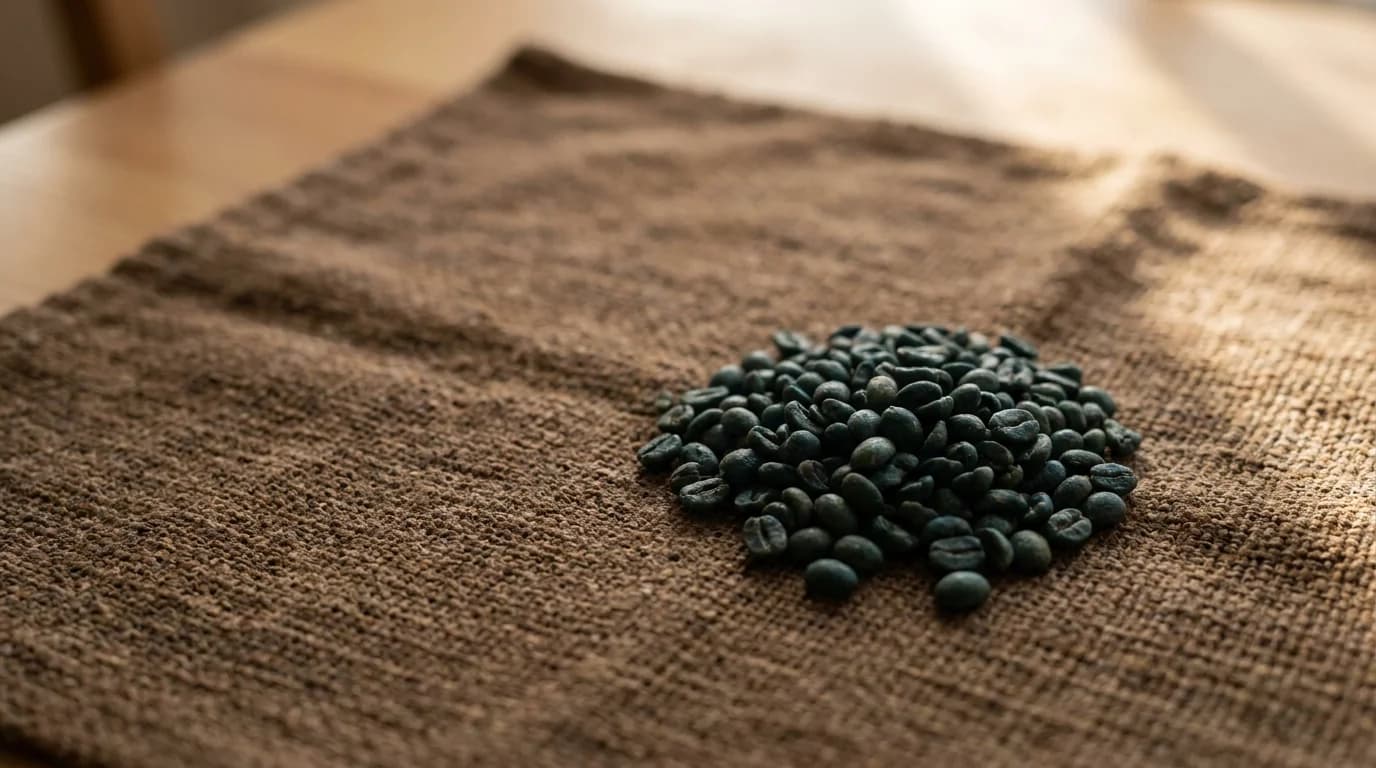
Sumatran coffee has one of the most distinctive flavour signatures in the world of coffee — instantly recognisable to experienced tasters, beloved by many specialty roasters, and occasionally divisive. It's the origin that answers what coffee would taste like if you deliberately fermented it differently from everyone else. The technique responsible — wet-hulled processing — exists commercially almost nowhere else on Earth, and the flavour it produces has no direct equivalent from any other origin.
Wet-hulled process
unique Indonesian processing method (giling basah) that produces Sumatra's distinctive flavour signature[2]
Heavy body
Sumatran coffee typically has among the heaviest body of any origin — full, syrupy, almost oily[6]
Low acidity
wet-hulling degrades acidic compounds; Sumatran coffee is dramatically less bright than washed African or Central American coffees[4]
The wet-hulled process
Understanding Sumatran coffee starts with understanding its processing method — because virtually everything distinctive about the flavour traces back to this single technical difference from other origins' processing.
How most washed coffee is processed:
- Coffee cherries pulped (skin and most fruit removed).
- Beans (with parchment layer) fermented in water for 12-72 hours to remove mucilage.
- Beans washed clean.
- Beans dried on patios or raised beds until they reach ~12% moisture content (target for stable storage).
- Beans then hulled (parchment layer mechanically removed) as a final step before export.
How Sumatran wet-hulled process differs:
- Coffee cherries pulped (usually by hand or with simple mechanical pulpers).
- Beans fermented briefly — often just overnight, sometimes even less.
- Beans washed but not fully cleaned.
- Beans dried partially — to ~40% moisture (much wetter than typical washed process).
- Beans hulled while still wet — the parchment layer is removed while beans are moist.
- The wet green beans then finish drying exposed to air — this is when the distinctive character develops.
- Final drying takes 2-3 days.
Why this creates the Sumatran character:
- Exposed green beans + microbial activity. Normal washed process protects the bean under parchment through drying. Wet-hulled exposes the bean during a critical moisture range where various microbes (yeasts, bacteria, fungi) can grow and produce flavour compounds.
- Distinctive fermentation compounds. The microbial activity produces earthy, cedar-like, tobacco-like compounds that are largely absent in other processing methods.
- Bean colour change. Green beans from wet-hulled processing are often bluish-green rather than the yellow- green of washed processing.
- Acidity degradation. Chlorogenic acids and other acidic compounds are partially degraded during the wet- hulled process, producing lower perceived acidity in the cup.
- Body development. The processing produces heavier extracted body, with a slightly syrupy quality[2].
Why Sumatra developed this method: the traditional explanation is climate — Sumatra's constant humidity makes fully drying coffee under parchment very slow and difficult. Wet-hulling accelerates the process because the beans are dried without the parchment layer's moisture-retaining insulation. Whether this was the original driver or the method just emerged and became traditional is debated.
The regions
Aceh province — northern Sumatra:
- Gayo highlands around Takengon and Lake Tawar. High elevation (1,200-1,600m), volcanic soils, cool climate. Produces most of Sumatra's specialty arabica.
- Coffee is marketed as "Aceh Gayo" or just "Gayo."
- Local cooperatives (KSU Baburrayyan, Permata Gayo, and others) are important quality-focused producers.
- Aceh has a special political status within Indonesia and its coffee sector has been actively developed post- civil-conflict (2005 peace agreement) as economic development.
North Sumatra — Lake Toba region:
- Historic Mandheling coffee area.
- Around Lake Toba (the world's largest volcanic crater lake), including Lintong Nihuta region.
- Elevation 1,100-1,600m.
- Coffee marketed as "Mandheling," "Sumatra Mandheling," or "Lintong."
West Sumatra (Padang region):
- Smaller specialty production.
- Volcanic Sumatran coffees with mineral character.
South Sumatra (Lampung province):
- Largely lowland robusta production.
- Second-largest robusta-producing region in Indonesia (after Vietnam is not in Indonesia — Sumatra internally, after Lampung and Bengkulu together dominate Indonesian robusta).
Adjacent Indonesian islands also produce wet-hulled coffee with similar character:
- Sulawesi (Toraja) — highland arabica from central Sulawesi, similar wet-hulled processing, distinctive earthy character.
- Java — historic coffee producer, mostly washed processing now.
- Bali — small volcanic-highland production.
- Flores — emerging specialty region.
- Papua — small production from Indonesian New Guinea.
Varieties
Sumatran arabica varieties:
- Typica — introduced by Dutch colonial planters in the 18th century. Historically dominant.
- Bourbon — later introduction.
- Tim-Tim (Timor Hybrid) — an arabica-robusta natural hybrid discovered in Timor. Rust-resistant. Widely planted in Sumatra.
- Ateng — a Catimor-family variety (Tim-Tim × Caturra). Modern high-yielding, rust-resistant. Very common in Sumatra.
- Ateng Super, Bergendal, Rambung — regional selections.
- Gayo 1, Gayo 2 — locally-developed selections in Aceh.
- Various local landraces — particularly in Gayo, older farms often have mixed cultivar plantings[1].
Robusta production uses various commercial robusta clones.
What Sumatran coffee tastes like
The classic Sumatran profile:
- Very heavy body — full, syrupy, sometimes described as "oily."
- Low acidity — bright acid notes are subtle or absent.
- Earthy character — the signature flavour: forest floor, wet earth, mushroom, cedar.
- Chocolate depth — dark chocolate, molasses, dark caramel.
- Herbal notes — tobacco, cedar, sometimes hints of spice.
- Long finish — Sumatran coffees linger.
The classic Sumatran profile is polarising:
- Fans love the distinctive body and earthy-cedar character. Sumatran coffee is often described as "grounding," "meditative," "unlike anything else."
- Critics describe it as "musty," "dirty," "fermented," "off." Some specialty coffee tasters consider wet-hulled processing to introduce what would be considered defects in other origins.
Modern quality-focused Sumatran production has increasingly moved toward:
- Better-controlled wet-hulling with cleaner drying environments.
- Some washed processing (producing more conventional cup profiles).
- Honey and natural processing experiments.
- More traceable single-cooperative or single-farm lots.
This range means you can find:
- Classic wet-hulled Sumatran — the heavy, earthy traditional profile.
- Modern washed Sumatran — cleaner, more balanced, more like other Southeast Asian arabica.
- Experimental Sumatran — anaerobic, honey, natural — producing distinctive but different profiles.
Sumatra in blends
Sumatran coffee's distinctive character makes it a common component of specific blend styles:
Espresso blends: Sumatran coffee adds heavy body and low-acidity foundation to espresso blends, complementing brighter African or Central American components.
"Mocha Java" and other classic blends: the traditional blend combining Yemeni Mocha with Javanese (or Sumatran) coffee — one of the oldest recognised coffee blends. Modern versions often use Ethiopian coffee for the Mocha portion.
Dark roasts: Sumatran coffee holds up particularly well to dark roasting. Where lighter coffees can taste hollow when roasted dark, Sumatran coffee's heavy body and low acidity provide the structure that dark roast profiles need.
Cold brew: Sumatran coffee's low acidity and heavy body work well in cold brew, producing rich, smooth, low- acid cold coffee.
Environmental and social context
Sumatran coffee production has some distinctive challenges:
Orangutan habitat overlap. Coffee cultivation in Sumatra sometimes competes with rainforest habitat critical for Sumatran orangutans (critically endangered) and other species. The Rainforest Alliance and other certifications have Sumatra-specific programmes addressing this.
Smallholder dominance. Sumatran coffee is largely grown by smallholder farmers (0.5-2 hectares typical), often organised through village cooperatives.
Post-conflict Aceh. Aceh's civil conflict (1976-2005) disrupted coffee production for decades. The 2005 peace agreement and post-tsunami rebuilding have included substantial coffee-sector development.
Climate pressure. Sumatra is vulnerable to changing weather patterns; some traditional coffee-growing zones have become marginal in recent decades[3].
Buying Sumatran coffee
Reading Sumatran coffee labels:
- Region: Aceh, Gayo, Mandheling, Lintong, or specific district.
- Processing: wet-hulled (default), washed, honey, natural — modern specialty labels often note this.
- Cultivar: often "Ateng" or "Tim-Tim," sometimes "Typica" or "Bourbon" for premium lots.
- Cooperative or estate: modern specialty labels emphasise this.
- Grade: commercial grades based on defect count and screen size; specialty grading uses cupping scores.
For someone new to Sumatran coffee: try both a classic wet-hulled Sumatran (traditional profile) and a washed Sumatran (cleaner profile) to understand the range before deciding your preference.
Common misconceptions
- "Sumatran coffee is defective coffee." Wet-hulled processing produces flavour compounds that would be considered defects in other origins — but the resulting cup is a legitimate stylistic choice, not accidental ruination. Whether you like it is taste preference; it isn't "bad coffee."
- "Mandheling is a specific region." Marketing name for coffee traded through Mandailing communities in North Sumatra, not a formally defined geography.
- "Sumatra is all wet-hulled." Most is, but washed and experimental Sumatran coffees are increasingly common and offer very different cup profiles.
- "Sumatran coffee has more caffeine because it's strong-tasting." Caffeine is set by species and variety, not processing or cup profile. Sumatran arabica has similar caffeine to any other arabica.
The honest summary
Sumatran coffee is one of the world's most distinctive origins, defined primarily by the wet-hulled (giling basah) processing method that produces heavy body, low acidity, and distinctive earthy-cedar-tobacco character unlike any other coffee. The major regions — Aceh's Gayo highlands and North Sumatra's Mandheling region — dominate production. Sumatran coffee is beloved by fans for its distinctive character and used heavily in dark-roast and espresso blends worldwide. Modern quality-focused production has expanded to include washed and experimental processing, giving contemporary Sumatran coffee a wider range than the traditional wet-hulled classic. If you've only ever had washed African or Central American coffee, Sumatran coffee is one of the most educational contrasts you can taste — different in almost every dimension.
Frequently asked questions
- What makes Sumatran coffee distinctive?
- The processing method. Sumatran coffee uses a unique wet-hulled process (giling basah) not used commercially anywhere else in the world. The green beans are hulled while still very moist, which fundamentally changes bean chemistry during drying and produces the characteristic Sumatran flavour profile: heavy body, low acidity, earthy/musty notes, dark chocolate, cedar, and tobacco. It's one of the most instantly recognisable coffee flavour signatures in the world.
- What is wet-hulled processing?
- Wet-hulled processing (giling basah in Indonesian) is a shortened washed processing method used almost exclusively in Sumatra and adjacent Indonesian islands. Coffee cherries are pulped, fermented briefly (usually just overnight), washed, then partially dried on patios. When beans are still moist (~40% moisture — much wetter than the 12% target for storage), the parchment layer is mechanically hulled off. The wet green beans then finish drying exposed to air. This produces the distinctive Sumatran character.
- What are the main Sumatran coffee regions?
- The three major regions are: Aceh province in northern Sumatra, especially the Gayo highlands around Takengon and Lake Tawar, producing what's marketed as 'Gayo' coffee; Lintong and North Sumatra around Lake Toba, historically known as 'Mandheling' after the local Mandailing people; and southern Sumatra regions including Lampung (mostly robusta). Aceh and North Sumatra dominate specialty arabica production.
- Is Mandheling a region?
- Mandheling is a marketing name — historically referring to coffee traded through communities of the Mandailing people around the Lake Toba region of North Sumatra. It's not a formally defined geographic region like Yirgacheffe or Cerrado. 'Sumatra Mandheling' typically means Sumatran arabica from the North Sumatra region, wet-hulled processed, often blended from various farmers and cooperatives.
- Why does Sumatran coffee taste earthy?
- The wet-hulled processing is the primary reason. When coffee is hulled at high moisture content, the exposed green beans continue to interact with environmental fungi, bacteria, and air during the drying finish. This microbial activity produces flavour compounds — including some that other processing methods specifically avoid — that create the distinctive earthy, musty, cedar-and-forest character. Traditional Sumatran coffee farmers embrace this; modern quality-focused producers control it more carefully.
References
Every factual claim in this article is drawn from the sources below. See the source library for how we grade evidence.
- [1]Coffee Varieties CatalogWorld Coffee Research · Reference work · Tier 2 · Moderate
- [2]Coffee agronomyFood and Agriculture Organization of the United Nations · Reference work · Tier 2 · Moderate
- [3]International Coffee OrganizationInternational Coffee Organization · Official dataset · Tier 1 · Strong
- [4]Caffeine and related purine alkaloids: biosynthesis, catabolism, function and genetic engineeringPhytochemistry · 2008 · Review · Tier 2 · Moderate
- [5]Uncommon Grounds: The History of Coffee and How It Transformed Our World (revised edition)Basic Books (Mark Pendergrast) · 2010 · Reference work · Tier 2 · Moderate
- [6]CoffeeEncyclopaedia Britannica · Reference work · Tier 3 · Contextual
Related reading
- Beans, Roasts & OriginsCoffee Origins Around the World→
- Brew MethodsVietnamese Coffee Guide: Phin, Cà Phê Sữa, Robusta→
- Beans, Roasts & OriginsArabica vs Robusta: Taste, Caffeine, and Differences→
- Beans, Roasts & OriginsJamaican Blue Mountain Coffee: Why It Costs So Much→
- Beans, Roasts & OriginsKona Coffee: Hawaii's Famous Volcanic-Grown Beans→
- Beans, Roasts & OriginsLiberica Coffee: The Third Commercial Coffee Species→