Cold Brew Coffee Guide: Ratios, Steep Time, Technique
By Coffee Studies Editorial·Published July 15, 2026·6 min read
Quick answer
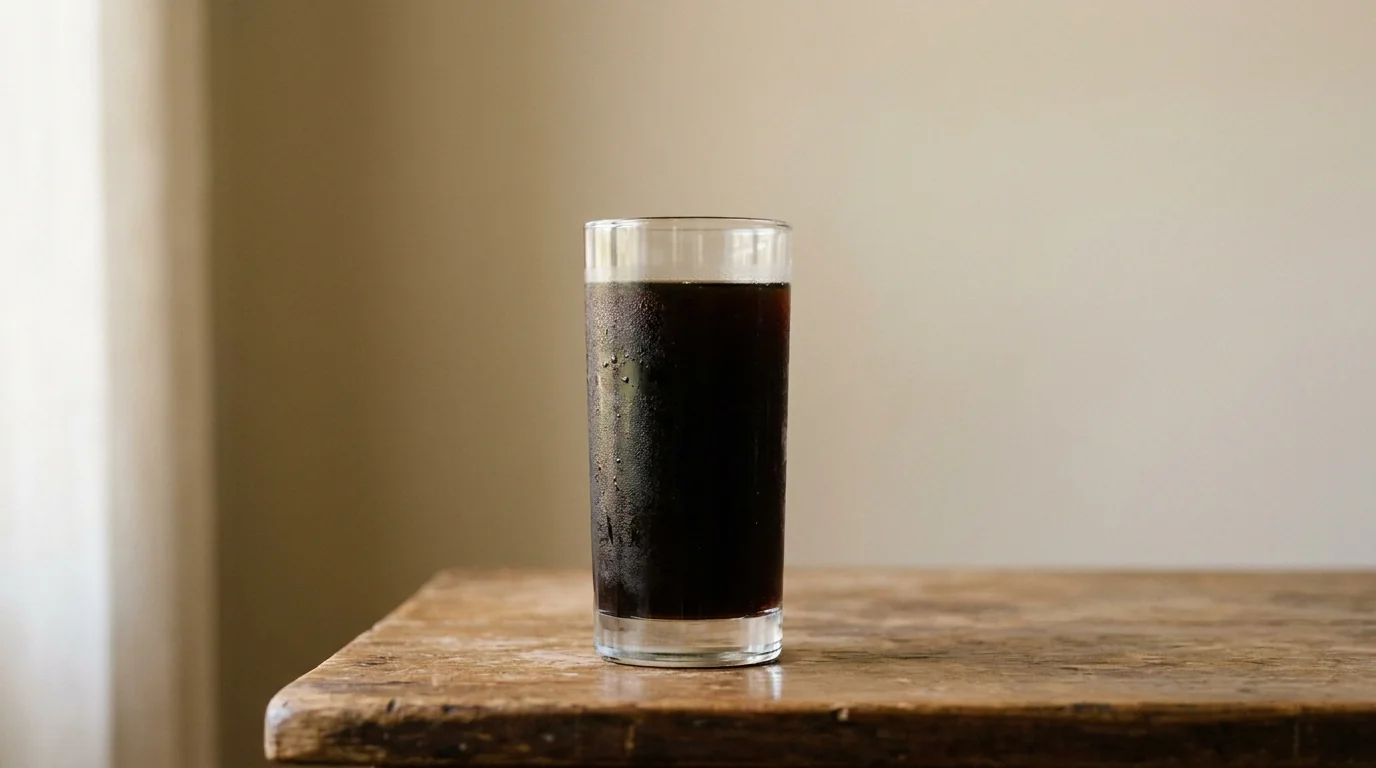
Cold brew is the simplest brewing method to do at home and one of the most rewarding: no thermometer, no scale precision required, no technique. You mix coarse-ground coffee and cold water, wait 12–24 hours, and filter. The result is a coffee that tastes different from hot brewing in ways that peer-reviewed chemistry can actually explain.
12–24 hours
typical steep time for cold brew — long enough to extract properly at room temperature or cold[1]
1:8
a common weight ratio for cold brew concentrate, later diluted 1:1 with water or milk[3]
Lower acidity
documented across peer-reviewed studies — cold brew consistently shows lower titratable acidity than hot brewed coffee[2]
What cold brew actually is
Cold brew is coffee extracted with cold or room-temperature water over a long period — typically 12 to 24 hours. That's the whole definition. The absence of heat is the defining feature; everything else follows from that.
Two things it is not:
- Iced coffee. Iced coffee is hot-brewed coffee that's been poured over ice or refrigerated. The chemistry is regular hot brew, cooled after the fact.
- Nitro cold brew. That's cold brew infused with nitrogen for a creamy, beer-like mouthfeel, served on tap. The base is regular cold brew.
The chemistry of the smoothness
A 2017 Scientific Reports study looked at how time, roast, and grind size affect caffeine and chlorogenic acid extraction in cold brew. It found that:
- Extraction is slower in cold water than hot, but reaches meaningful levels at practical steep times (12+ hours).
- Chlorogenic acids — which contribute perceived acidity in coffee — extract more efficiently in hot brewing than cold, especially for lighter roasts[1].
A 2020 Foods study directly compared hot vs cold brew across the roast spectrum. Cold brew consistently produced lower titratable acidity than hot brew at similar brewing ratios, along with a different pattern of extracted aromatic compounds[2].
Practically: cold brew skips over the aggressive extraction of certain acids and bitter compounds that hot water pulls out quickly. That's the "smoothness" people notice.
The basic recipe
Concentrate version — dilute before drinking:
- 150 g coarse-ground coffee
- 1,200 g cold or room-temperature water
- Ratio: 1:8
- Combine in a large jar or French press
- Stir gently to wet all the grounds
- Cover and steep 18 hours at room temperature (or 24 hours in the fridge)
- Filter through a coffee filter or fine-mesh sieve lined with cheesecloth
- Store concentrate in fridge, drink diluted 1:1 with water or milk
This yields about 900 g of concentrate — enough for 6–8 servings.
Ready-to-drink version — no dilution:
- 60 g coarse-ground coffee
- 720 g cold water
- Ratio: 1:12
- Same process
- Drink as-is, over ice
Weaker overall; you'll get about 600 g of ready-to-drink cold brew.
Equipment: what you actually need
- A large jar or French press — a 1-quart mason jar works.
- A scale — for consistent ratios. Grams over volumes.
- A grinder (or ask a shop to grind coarse for you) — the coarser than French press, closer to sea-salt texture.
- A filter — coffee filter, cheesecloth over a mesh strainer, or a French press mesh (which lets some sediment through).
- A container for storage — fridge-stable for up to two weeks.
Purpose-built cold brew makers (Toddy, dedicated brewers) work well but aren't necessary.
Grind size and steep time
Both matter, and both are more forgiving in cold brew than in hot brewing:
- Grind coarse — closer to sea salt than to sand. Fine grinds over-extract during the long steep and produce bitterness.
- Steep at least 12 hours — anything less and extraction is incomplete, especially with room-temperature water.
- Don't push past 24 hours — the incremental extraction is more bitter than sweet.
- Room temperature vs fridge — room-temp extracts slightly faster (say 16 hours vs 20 hours for equivalent strength). Fridge is safer for food safety on longer steeps.
What affects the flavour
Beyond ratio, grind, and time:
- Bean choice. Medium roasts are the classic default — lighter roasts can be interesting but sometimes come out vegetal in cold brew. Dark roasts produce a chocolatey, low-acid cup that pairs well with milk.
- Water quality. Same as hot brewing — filtered water helps. Very hard water can give a chalky finish.
- Filtration. Paper filters produce the cleanest cup; French press mesh leaves some oils and fines that add body.
Caffeine: cold brew's biggest misunderstanding
You often hear that cold brew has "more caffeine than hot coffee." This is misleading:
- Per unit of coffee grounds, hot water extracts caffeine more efficiently than cold water.
- Per finished serving, cold brew often does have more caffeine — because cold brew servings tend to be larger (16 oz vs 8 oz for hot coffee) and use more coffee per unit of water (1:8 concentrate vs 1:16 drip).
The USDA reference database and typical serving sizes suggest a 16 oz cold brew concentrate diluted 1:1 lands around 150–200 mg of caffeine — meaningfully more than an 8 oz drip coffee's 80–100 mg, but the difference is driven by size and ratio, not brewing chemistry.
If you're monitoring caffeine intake, know your specific cold brew's dilution.
What the research says
The peer-reviewed chemistry on cold brew is now substantial:
- Extraction kinetics. Cold and hot brewing extract compounds at different rates, with hot water reaching equivalent extraction in a fraction of the time. Chlorogenic acid extraction in particular is less efficient in cold brewing[1].
- Acidity. Multiple studies show lower titratable acidity in cold brew at similar brew ratios, consistent across roast levels[2].
- Aroma profile. Cold and hot brewing produce different patterns of extracted aroma compounds; cold brew tends to be lower in the more volatile, quick-to-extract aromatics that give hot coffee its bright, fresh top notes.
None of this makes cold brew "better" or "worse" than hot brew — they are different chemical extractions of the same starting material, producing different sensory outcomes.
Common misconceptions
- "Cold brew is stronger." Higher caffeine per serving comes from the recipe (more coffee per unit of water, larger serving), not from cold brewing being more extractive.
- "Cold brew is less acidic and better for reflux." Lower titratable acidity is measurable, but individual responses to acid reflux triggers vary widely. Some reflux sufferers do better on cold brew; others don't. Try it if it interests you.
- "You have to use special beans." Any coffee works. Medium roasts are a safe starting point; experiment from there.
- "Cold brew keeps forever." Refrigerated cold brew is fine for 1–2 weeks. It doesn't spoil quickly, but flavour degrades and mould can eventually grow.
The hardware side of that choice — mesh against paper, immersion against slow drip — is in cold brew coffee makers.
The honest summary
Cold brew is the easiest way to get consistently good coffee at home — no technique, no thermometer, minimal equipment. The chemistry that produces its distinctive smoothness is documented and reproducible. Start with a 1:8 concentrate at 18 hours, coarse grind, and adjust to taste from there.
Frequently asked questions
- What is the best ratio for cold brew?
- For concentrate, 1:6 to 1:8 by weight is standard — you'll dilute 1:1 or more before drinking. For ready-to-drink cold brew, 1:12 to 1:15 brewed at the strength you want. Start at 1:8 for concentrate; adjust to taste from there.
- How long should cold brew steep?
- 12–24 hours. Twelve is the practical minimum; 18 is a common sweet spot. Beyond 24 hours, additional extraction starts to add bitterness rather than sweetness, and the flavour flattens.
- Does cold brew have more caffeine than hot coffee?
- Per serving, usually — but only because cold brew servings tend to be larger and use more coffee per unit of water. Per gram of coffee brewed, hot water actually extracts caffeine more efficiently. Cold brew's higher per-cup caffeine is a serving-size effect, not a brewing-chemistry effect.
- Why does cold brew taste smoother?
- Cold water extracts less of the acids and bitter compounds that hot water pulls out quickly. Research documents that cold brew has lower titratable acidity than hot brewed coffee at similar strengths, along with a different profile of aromatic compounds — which is what most drinkers perceive as 'smoother.'
References
Every factual claim in this article is drawn from the sources below. See the source library for how we grade evidence.
- [1]The Effect of Time, Roasting Temperature, and Grind Size on Caffeine and Chlorogenic Acid Concentrations in Cold Brew CoffeeScientific Reports · 2017 · Controlled trial · Tier 2 · Moderate
- [2]Physiochemical Characteristics of Hot and Cold Brew Coffee Chemistry: The Effects of Roast Level and Brewing Temperature on Compound ExtractionFoods · 2020 · Controlled trial · Tier 2 · Moderate
- [3]Brewing FundamentalsCoffee Science Foundation · Reference work · Tier 2 · Moderate
Related reading
- Brewing ScienceCoffee-to-Water Ratio Explained→
- Brewing ScienceCoffee Grind Size Guide: Which Grind for Which Method→
- Brewing ScienceCoffee Acidity: pH, Sourness, and What Affects It→
- Brewing ScienceCoffee pH Explained: What Acidity Means in the Cup→
- Brew MethodsNitro Cold Brew: How Nitrogen Makes Coffee Creamy→
- Brew MethodsKalita Wave Brew Guide: Ratios, Technique, and Results→