Top Coffee-Producing Countries in the World
By Coffee Studies Editorial·Published July 15, 2026·7 min read
Quick answer
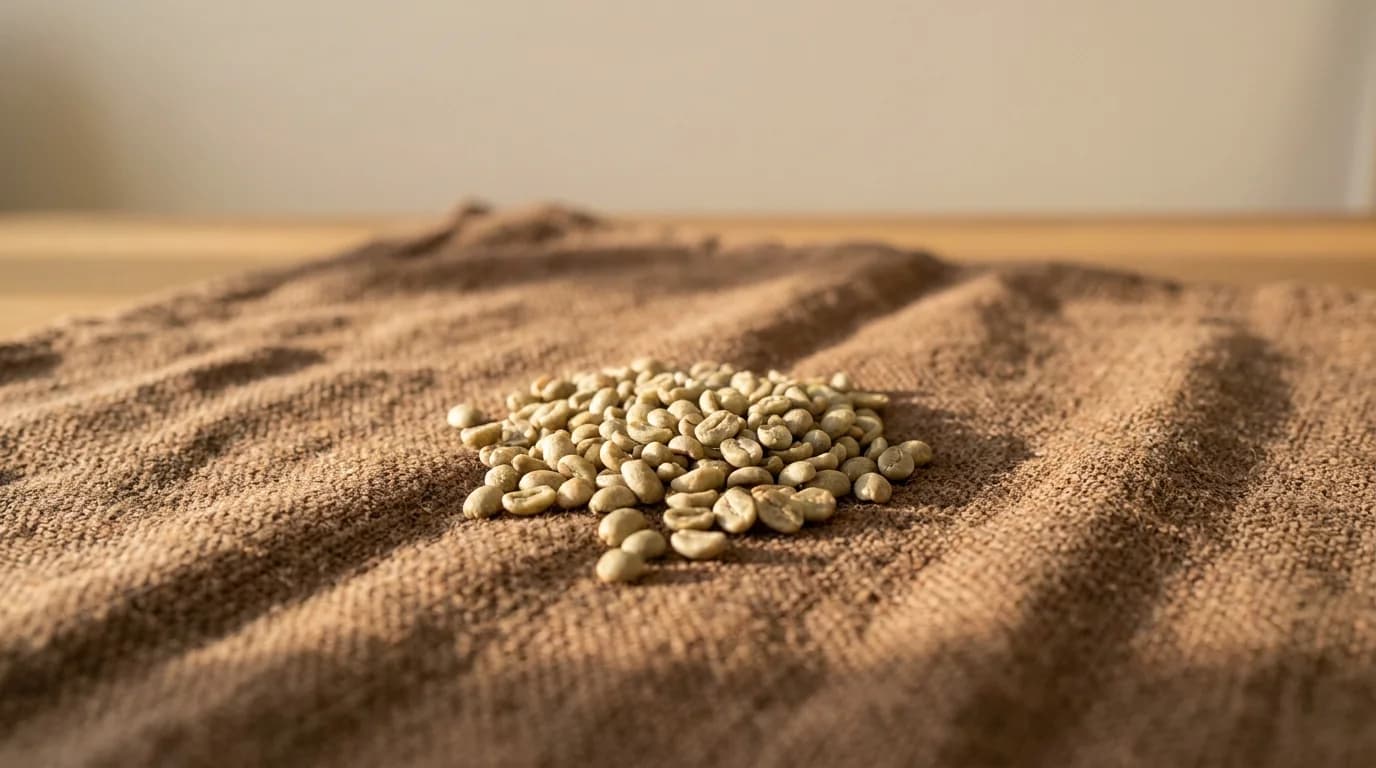
Global coffee production is dominated by a small number of countries — most of coffee's tropical growing belt runs through Latin America, Africa, and Southeast Asia, but the practical concentration is far higher than the geography suggests. Ten countries account for roughly 85% of world supply, and just three (Brazil, Vietnam, Colombia) account for more than half. Understanding who produces what substantially clarifies how global coffee actually works.
~10 million tons/year
total global coffee production in typical years — variable by biennial cycle and weather[2]
Brazil ~40%
Brazil's share of global coffee production — larger than the next two producers combined[5]
~60-70 countries
produce coffee commercially, but the top 10 account for roughly 85% of global supply[1]
The top 10 (approximate current rankings)
Coffee production volumes shift year to year based on biennial harvest cycles, weather, and market conditions. These rankings represent typical recent-year production; specific numbers vary. All figures in metric tons of green coffee (unroasted).
Figure
World's top 10 coffee producers by annual production
Values in thousand metric tons/year (approx.)
1. Brazil — ~3,000,000 tons/year
- Largest producer by a substantial margin (~40% of global supply).
- Both arabica (~75%) and robusta/Conilon (~25%).
- Largest producer of arabica overall.
- Dominant producing regions: Minas Gerais, São Paulo, Espírito Santo, Bahia.
- Biennial cycle affects global supply significantly.
- See Brazilian Coffee.
2. Vietnam — ~1,800,000 tons/year
- Second-largest producer.
- ~95% robusta, ~5% arabica.
- Largest robusta producer globally.
- Rose from minor producer to #2 world producer in ~30 years (1980s to 2010s) — one of the most dramatic agricultural transformations of the late 20th century.
- Central Highlands (Dak Lak, Lam Dong, Dak Nong) is the primary production region.
3. Colombia — ~700,000-800,000 tons/year
- Third-largest producer.
- 100% arabica.
- Largest producer of washed arabica specifically.
- Andean regions across the country.
- See Colombian Coffee.
4. Indonesia — ~600,000-750,000 tons/year
- Fourth-largest producer.
- Mix of arabica (~15%) and robusta (~85%).
- Distinctive wet-hulled processing on Sumatra.
- Also produces coffee from Java, Sulawesi, Bali, Flores, Papua.
- See Sumatra Coffee.
5. Ethiopia — ~500,000 tons/year
- Fifth-largest producer.
- 100% arabica.
- Home country of arabica — the largest producer of distinctive heirloom cultivars.
- ~5-7 million people depend on coffee for livelihood.
- Smallholder-dominated production.
- See Ethiopian Coffee.
6. Uganda — ~350,000-450,000 tons/year
- Largest African robusta producer.
- Both robusta (~80%) and arabica (~20%).
- Coffee is Uganda's largest export commodity.
- Elgon region (arabica) and Lake Victoria region (robusta) dominate production.
7. Honduras — ~300,000-400,000 tons/year
- Largest Central American producer.
- 100% arabica.
- Growth from smaller volumes in past 20 years.
- Copán and Marcala regions produce specialty lots.
8. India — ~350,000 tons/year
- Both arabica (~30%) and robusta (~70%).
- Grown mostly in southern states (Karnataka, Kerala, Tamil Nadu).
- Distinctive "monsooned" coffee (bulk-exposed to monsoon winds during storage, producing distinctive character).
9. Peru — ~250,000-350,000 tons/year
- 100% arabica.
- Grown in the eastern Andean slopes.
- Significant organic and Fair Trade certified production.
- Growing specialty focus.
10. Mexico — ~250,000-300,000 tons/year
- 100% arabica.
- Grown mainly in Chiapas, Veracruz, Oaxaca.
- Historically important but affected by climate change and coffee leaf rust.
Regions 11-20 (also significant)
Beyond the top 10, several other countries produce meaningful quantities of coffee:
- Guatemala — ~200,000-250,000 tons/year; famous specialty regions (Antigua, Huehuetenango).
- Nicaragua — ~150,000 tons/year; growing specialty reputation.
- Ivory Coast — ~100,000-150,000 tons/year; historic robusta producer, currently declining.
- Costa Rica — ~85,000 tons/year; small volume but strong specialty reputation, particularly for honey- processed coffees.
- Kenya — ~50,000-75,000 tons/year; world-famous specialty coffee reputation despite modest volume.
- Papua New Guinea — ~50,000 tons/year.
- Tanzania — ~50,000 tons/year.
- El Salvador — ~40,000 tons/year; historic producer reduced by rust and civil war.
- Rwanda — ~15,000-20,000 tons/year; small but rapidly-growing specialty reputation.
- Burundi — ~15,000 tons/year; small but specialty- focused.
- Panama — ~7,000-10,000 tons/year; very small but home to record-priced Panama Geisha (see Panama Geisha Coffee).
- Yemen — ~3,000-5,000 tons/year; historic origin but war-disrupted production (see Yemen and the Port of Mocha).
Arabica vs robusta by country
The arabica/robusta split varies dramatically by producer:
Arabica-only producers: Colombia, Ethiopia, Costa Rica, Kenya, Guatemala, Honduras, Peru, Mexico, Nicaragua, Rwanda, Burundi, Panama, El Salvador.
Robusta-dominant producers: Vietnam (~95% robusta), Uganda (~80% robusta), Ivory Coast (~100% robusta), Indonesia (~85% robusta), India (~70% robusta).
Mixed producers: Brazil (~75% arabica, ~25% robusta), Tanzania, Cameroon, Ecuador.
Global production is roughly 60% arabica, 40% robusta in typical years, with the split gradually shifting toward more robusta over the past 30 years (driven largely by Vietnamese expansion)[2].
Why Brazil dominates so much
Brazil's ~40% market share isn't accidental — it's the result of specific conditions and history:
Geography. Vast highland areas in south-central Brazil have ideal coffee climate — moderate temperatures, seasonal rainfall, high elevation, volcanic soils in some regions. The area of suitable coffee land in Brazil dramatically exceeds any other producing country.
Land use. Brazilian coffee is grown on very large, mechanised plantations rather than smallholder farms — enabling much higher productivity per person than smallholder-dominated origins.
History. Brazilian coffee production scaled from the 1830s onward under Portuguese and later Brazilian governance. By 1850 Brazil was already the world's largest producer.
Infrastructure. Ports (Santos), roads, storage, and industry structure all developed specifically to move massive coffee volumes.
Government support. Brazil has historically used price supports, buffer stocks, and market interventions to stabilise its coffee industry.
Climate adaptation. Brazil has been the primary beneficiary of coffee-industry investment in disease resistance, yield improvements, and drought tolerance[8].
Why Vietnam rose so fast
Vietnam's transformation from minor producer to world #2 is one of the most dramatic agricultural expansions in history:
- 1975: After Vietnam War, coffee production was minimal.
- 1986: Doi Moi economic reforms opened agricultural production.
- 1990s: State support, land availability in Central Highlands, and global robusta demand triggered massive expansion.
- 2000: Vietnam becomes world's second-largest producer.
- Today: Vietnamese coffee is deeply integrated into global supply chains, particularly instant coffee and espresso blends.
Vietnam's rise displaced other producing countries and substantially depressed global robusta prices, which had lasting consequences for producers elsewhere.
Coffee production by continent
Americas (~55-60% of global production):
- Brazil dominates.
- Colombia, Honduras, Peru, Mexico, Guatemala, Nicaragua, and smaller Central American producers.
Asia (~30-35% of global production):
- Vietnam dominates.
- Indonesia, India, Papua New Guinea.
Africa (~10-12% of global production):
- Ethiopia and Uganda dominate.
- Kenya, Tanzania, Ivory Coast, Rwanda, Burundi.
Oceania: minimal production (Papua New Guinea is main).
Climate change and the future
Coffee production faces significant climate-related pressure:
- Arabica particularly vulnerable. Arabica has a narrow climate niche (moderate temperatures, specific rainfall patterns). Projections suggest suitable arabica land may shrink by 50%+ by 2050 under some scenarios.
- Traditional growing regions may become marginal. Some historic coffee regions may no longer support quality coffee cultivation.
- New growing regions may emerge as climate zones shift — some previously marginal high-altitude regions may become viable.
- Robusta somewhat more heat-tolerant but faces its own pressures.
- Coffee leaf rust and coffee berry disease continue to threaten production, particularly for arabica.
- Adaptation strategies include breeding programs (drawing from Ethiopian wild genetic diversity), agroforestry, altitude migration, and diversification into different cultivars.
The future map of coffee production will likely look substantially different from today's map[7].
Economic significance
Coffee is enormously important to producing countries' economies:
- ~25 million families worldwide depend on coffee production for their primary livelihood.
- ~125 million people in producing countries are economically dependent on coffee.
- Coffee is often a top export commodity for producing countries — Ethiopia, Uganda, Rwanda, Burundi, and Honduras derive significant national income from coffee exports.
- Volatile prices create ongoing economic uncertainty for producers — coffee prices historically swing widely based on Brazilian harvest, currency, and speculation.
- Direct trade and specialty premiums provide better returns for participating producers but reach only a fraction of global production[8].
Common misconceptions
- "Colombia is the biggest coffee producer." Third-largest. Brazil is larger by a factor of ~4x, Vietnam is larger by a factor of ~2x.
- "All coffee comes from Latin America." Approximately 55-60% does. Asia (mostly Vietnam and Indonesia) is ~30-35% and Africa is ~10-12%.
- "African countries produce most of the world's coffee." No — Africa is the smallest producing continent by volume (though the birthplace of coffee).
- "Kenya produces massive amounts of coffee." Kenya produces only ~50,000-75,000 tons/year — small volume despite significant reputation.
- "Coffee production is rising everywhere." Overall production is growing but individual country trajectories vary — some (Vietnam, Honduras) growing rapidly, others (Ivory Coast, El Salvador) declining significantly.
The honest summary
Global coffee production is highly concentrated — approximately 85% of the world's coffee comes from the top 10 producing countries, and just three (Brazil, Vietnam, Colombia) produce more than half of the global total. Brazil dominates with ~40% market share, Vietnam produces mostly robusta, Colombia produces washed arabica. Different producers focus on different species (Vietnam robusta, Colombia arabica, Ethiopia arabica) and different processing traditions (Brazilian pulped natural, Colombian washed, Ethiopian natural/washed, Sumatran wet-hulled). Climate change and disease pressure make the future map of coffee production uncertain — but coffee's role in the economies of producing countries and in the daily lives of consumers worldwide is likely to remain fundamental for decades to come.
Frequently asked questions
- Which country produces the most coffee?
- Brazil, by a very large margin — approximately 40% of global coffee supply, roughly 3 million metric tons per year. Brazil has been the world's largest producer since around 1850 and produces about three times as much as the second-largest country (Vietnam). Brazilian production is so influential that global arabica prices essentially track Brazilian harvest volumes and weather.
- What are the top 10 coffee-producing countries?
- Approximate current rankings: (1) Brazil, (2) Vietnam, (3) Colombia, (4) Indonesia, (5) Ethiopia, (6) Uganda, (7) Honduras, (8) India, (9) Peru, (10) Mexico. Ordering after the top 3-4 varies year to year based on harvest conditions. Together the top 10 produce approximately 85% of global coffee. Around 60-70 countries produce coffee commercially, but the industry is dominated by these largest producers.
- Where is the largest arabica producer?
- Brazil produces both arabica and robusta, and is the world's largest arabica producer — approximately 40% of world arabica supply. Colombia is the largest producer of washed arabica specifically (Brazil's arabica is mostly natural or pulped-natural processed). If you count only washed arabica, Colombia leads.
- Where is the largest robusta producer?
- Vietnam is the world's largest robusta producer by a substantial margin — approximately 40% of world robusta supply. Vietnamese coffee production is roughly 95% robusta, 5% arabica. Second-largest robusta producer is Brazil (Conilon), then Indonesia and Uganda.
- Is coffee production growing or declining globally?
- Overall global coffee production has grown steadily for decades, roughly doubling from the 1980s to today. However, arabica production faces significant climate-change pressure — projected suitable land for arabica cultivation may shrink by 50%+ by 2050 under some scenarios. Robusta production has grown faster than arabica in recent decades, and Vietnam's rise as a producer has driven much of the total growth. Long-term outlook depends heavily on climate adaptation and breeding programs.
References
Every factual claim in this article is drawn from the sources below. See the source library for how we grade evidence.
- [1]International Coffee OrganizationInternational Coffee Organization · Official dataset · Tier 1 · Strong
- [2]World Coffee Statistics DatabaseInternational Coffee Organization · Official dataset · Tier 1 · Strong
- [3]FAOSTATFood and Agriculture Organization of the United Nations · Official dataset · Tier 1 · Strong
- [4]Coffee — commodity dataUSDA Foreign Agricultural Service · Official dataset · Tier 1 · Strong
- [5]Coffee: World Markets and TradeUSDA · Official dataset · Tier 1 · Strong
- [6]UN Comtrade DatabaseUnited Nations · Official dataset · Tier 1 · Strong
- [7]Coffee Varieties CatalogWorld Coffee Research · Reference work · Tier 2 · Moderate
- [8]Uncommon Grounds: The History of Coffee and How It Transformed Our World (revised edition)Basic Books (Mark Pendergrast) · 2010 · Reference work · Tier 2 · Moderate
Related reading
- Beans, Roasts & OriginsCoffee Origins Around the World→
- Beans, Roasts & OriginsArabica vs Robusta: Taste, Caffeine, and Differences→
- Beans, Roasts & OriginsBrazilian Coffee: The World's Largest Producer→
- Beans, Roasts & OriginsCoffee and Climate Change: What the Science Says→
- Beans, Roasts & OriginsThe Coffee Plant: Biology, Growth, and Cherry Anatomy→
- Beans, Roasts & OriginsCarbonic Maceration Coffee: Wine-Inspired Processing→