Carbonic Maceration Coffee: Wine-Inspired Processing
By Coffee Studies Editorial·Published July 15, 2026·8 min read
Quick answer
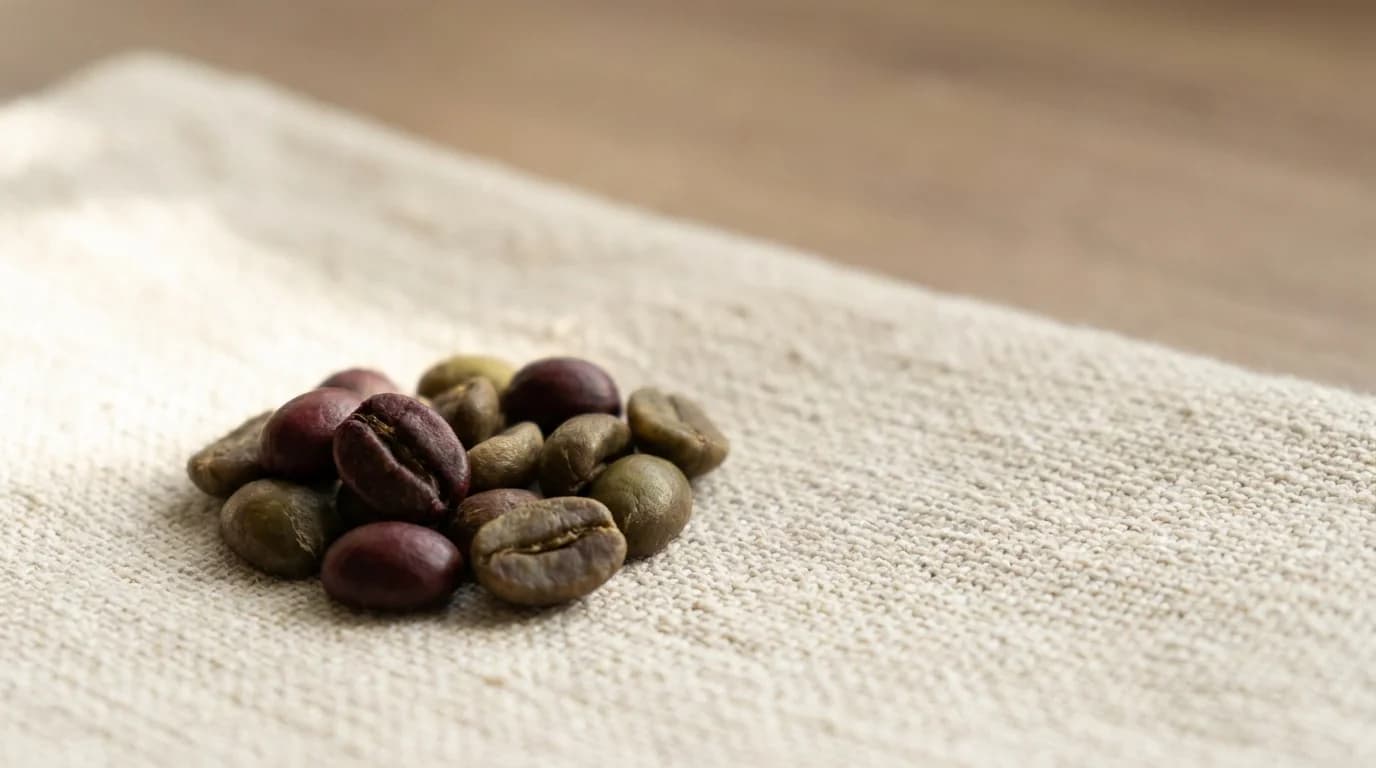
Carbonic maceration is arguably the most consequential processing innovation in coffee's recent history — a wine- inspired technique that has expanded coffee's possible flavour profile in ways nothing else has. Since a Serbian barista used it to win the 2015 World Barista Championship, carbonic maceration coffee has moved from experimental curiosity to established specialty processing method used at high-end producers globally. It's also a great case study in how techniques from other fermentation industries — wine, beer, kombucha — keep making their way into coffee.
Beaujolais origin
the technique borrowed from French Beaujolais winemaking, which has used carbonic maceration for centuries[1]
2015 WBC win
Sasa Sestic's carbonic maceration coffee win at the World Barista Championship launched the technique globally[5]
Intracellular fermentation
fermentation happens inside intact cherry cells via enzymes, not by external microbes on the mucilage surface[2]
What carbonic maceration is
Carbonic maceration is a specific fermentation technique where fruit is sealed in an oxygen-free environment (usually flooded with CO₂) and fermented via intracellular enzymatic activity rather than external microbial fermentation.
The chemistry:
In normal fermentation, microbes (yeasts, bacteria) sit on the surface of fruit or in the surrounding liquid and consume sugars, producing alcohol, CO₂, organic acids, and various flavour compounds. The microbes are the actors; the fruit is the substrate.
In carbonic maceration, oxygen is deliberately excluded. Without oxygen, microbes on the fruit surface can't do their usual aerobic work. But something else happens: inside the intact fruit cells, enzymes (particularly alcohol dehydrogenase and pyruvate decarboxylase) continue to function without oxygen and convert sugars to ethanol, acetaldehyde, and various aromatic compounds. The fruit essentially ferments itself from the inside out[2].
This produces meaningfully different flavour compounds than external microbial fermentation. The specific volatile aromatics developed during carbonic maceration — including various esters, benzyl compounds, and specific alcohols — are what create the distinctive fruit-forward, floral character.
The Beaujolais connection
Carbonic maceration in wine has been used in the Beaujolais region of France for centuries. Beaujolais Nouveau — the famously fresh, fruit-forward, light-bodied wine released just weeks after harvest — is made primarily by carbonic maceration.
The wine process:
- Whole grape clusters (intact grapes on stems) are put into sealed tanks.
- Tanks are flooded with CO₂ to exclude oxygen.
- Grapes at the bottom of the pile break under weight and release juice; some traditional fermentation happens at the bottom.
- Grapes higher up remain intact and undergo carbonic maceration.
- After 5-15 days, the tank is opened, grapes are pressed, and the wine finishes with normal fermentation.
Wine made this way has distinctive characteristics: brighter red fruit flavours (strawberry, cherry, banana, bubblegum), softer tannins, lighter body, less colour extraction, more approachable youth. These same character elements — strawberry, cherry, floral, sometimes bubblegum — appear in carbonic maceration coffee, suggesting similar chemical pathways are at work.
Adapting the technique to coffee
Applying carbonic maceration to coffee happened in the 2010s — a period when specialty coffee producers were increasingly borrowing techniques from wine, beer, and food fermentation science.
The coffee process:
- Ripe cherries picked and cleaned. Fully ripe, properly-harvested cherries are essential — the quality ceiling for CM depends heavily on cherry quality.
- Whole cherries sealed in stainless-steel tank. Tanks are food-grade, sealed, and equipped with pressure valves.
- CO₂ flooding. The tank is flushed with CO₂ to displace all oxygen. Sometimes the CO₂ comes from external tanks; sometimes it's generated by initial traditional fermentation of a small amount of pulped cherry.
- Fermentation. Cherries ferment in the anaerobic environment for 24-96 hours (varies widely by producer). Temperature is often controlled — cool fermentation (12-18°C) produces different profile than warm (22-28°C).
- Tank monitoring. pH and CO₂ levels are monitored; experienced producers can adjust conditions during fermentation.
- Removal and processing. After the intended fermentation time, cherries are removed and processed further — usually pulped and dried (like a natural or honey process). Some producers do additional fermentation steps.
- Drying and finishing. Beans dried to normal 11-12% moisture, then rested and exported.
Variations:
- CM natural — beans dried as whole cherries after CM.
- CM washed — beans pulped and washed after CM fermentation.
- CM honey — beans pulped but mucilage retained after CM.
- Double fermentation — CM followed by additional microbial fermentation.
- Inoculated CM — specific yeasts (often wine yeasts) added to the CM tank for reproducible flavour profiles.
Each variation produces different specific character while retaining the underlying CM fruit-forward signature.
The 2015 breakthrough
The World Barista Championship (WBC) is the most prestigious competition in specialty coffee, held annually since 2000. Competing baristas serve espresso, cappuccino, and signature drinks to judges, showcasing coffee they've selected and prepared. The coffees chosen by winners tend to influence what the entire specialty industry pays attention to.
2015 WBC — Sasa Sestic wins with carbonic maceration coffee. Sestic, a Serbian-Australian barista and coffee producer, worked with Colombian producer La Palma Y El Tucán to develop a carbonic maceration process for their coffee. He served the resulting coffee at the WBC and won.
Aftermath:
- The specific processing method became internationally known.
- Multiple producers began experimenting with CM.
- Within 3-4 years, CM coffees were being produced across Colombia, Ethiopia, Costa Rica, Panama, Rwanda, Australia, and beyond.
- WBC winning coffees in subsequent years frequently used CM or related experimental processing.
- CM went from novelty to established specialty processing method[5].
The 2015 CM breakthrough is often cited as the beginning of the modern experimental processing era in specialty coffee — the moment when techniques from wine, beer, and food fermentation started being applied systematically to coffee production.
What CM coffee tastes like
The signature carbonic maceration coffee profile:
- Intense fruit character. Strawberry, raspberry, red cherry, sometimes tropical fruit or stone fruit.
- Wine-like acidity. Brighter, more complex than traditional processing, sometimes with red wine notes.
- Floral aromatics. Rose, hibiscus, sometimes jasmine.
- Sometimes bubblegum, cotton candy, or candied fruit notes — a distinctive marker of carbonic maceration.
- Syrupy body. Fuller mouthfeel than typical washed processing.
- Long complex finish. Aftertaste persists with articulated flavour notes.
- Sometimes 'not tasting like coffee' — many tasters new to CM find it barely recognisable as coffee.
Well-executed vs poorly-executed CM:
Well-executed CM coffee is distinctive, complex, memorable, and often astonishing. It's the reason producers and consumers keep coming back to the method.
Poorly-executed CM coffee is over-fermented, funky, alcoholic, sometimes flat-out defective. The narrow margin between distinctive-and-excellent and over-the-line-and- defective is one of the challenges of CM processing — it takes real skill and equipment to consistently produce high-quality lots.
The producers pushing CM
Several producers have become internationally known for CM and related experimental processing:
- La Palma Y El Tucán (Colombia) — key producer in Sestic's 2015 WBC win; continues to produce experimental lots at scale.
- Ninety Plus Coffee (Panama, Ethiopia) — pioneer of experimental processing across origins.
- Finca Deborah (Panama) — high-elevation Panamanian producer using CM.
- Diego Bermudez / Finca El Paraiso (Colombia) — well-known for advanced experimental processing including CM and thermal shock.
- Various Costa Rican Micro-Mills (Costa Rica) — small producer-processor operations experimenting with CM and related methods.
- Ethiopian specialty cooperatives and independent producers.
Modern CM is increasingly happening globally, not just at a few pioneering producers.
CM in the market
Pricing: CM coffees typically sell for 2-4x the price of comparable traditionally-processed coffees from the same farms. A washed Colombian specialty lot might be $18-25/lb; a CM version of the same beans could be $40-100/lb or more.
Availability: Most independent specialty roasters carry some CM coffee, particularly during peak harvest seasons for producing countries. Availability varies substantially by region.
Types of CM you'll see:
- CM Natural — most common variant, most fruit-forward.
- CM Washed — cleaner, more articulated CM character.
- CM Honey — middle profile.
- Extended CM or Long CM — longer fermentation for more intense character.
- Yeast-inoculated CM — specific yeasts added for reproducible profile.
- CM + Thermal Shock — CM combined with temperature cycling.
The debate about experimental processing
Not everyone in specialty coffee celebrates the experimental processing trend.
Supporters argue:
- Experimental processing has expanded coffee's flavour possibilities in genuinely new directions.
- It gives producers premium pricing options and creative outlets.
- Modern consumers embrace distinctive character.
- Similar to wine's ongoing experimentation with fermentation techniques.
Critics argue:
- Experimental processing can dominate over origin/varietal character — producing distinctive coffees that all taste similar to each other regardless of underlying beans.
- The processing character can mask coffee defects or overwhelm subtle high-quality character.
- Some experimental lots taste "not like coffee" in ways that don't really represent coffee craft.
- The premium prices sometimes reflect novelty more than quality.
- Cup of Excellence and other competitions have debated whether experimentally-processed coffees should be scored in the same category as traditionally-processed coffees.
Both positions have merit. The current consensus among most specialty coffee professionals is that experimental processing is a legitimate expansion of coffee possibilities that deserves to be evaluated on its own terms alongside traditional processing — a position that essentially matches how wine treats different fermentation traditions.
Common misconceptions
- "Carbonic maceration is just anaerobic fermentation." Different mechanisms. Anaerobic uses microbes without oxygen; CM triggers intracellular enzymatic fermentation inside intact fruit cells. Different flavour outcomes.
- "CM ruins coffee's true character." Modifies is more accurate — CM produces distinctive character that overlays the underlying bean. Whether this is ruination or enhancement is taste preference.
- "All experimental processing is CM." No — anaerobic, lactic, thermal shock, extended fermentation, and inoculated processing are all distinct approaches. CM is one specific method within the broader experimental processing category.
- "CM coffee has more caffeine because it's fermented." Caffeine content is determined by species and variety, not processing. CM doesn't affect caffeine levels[3].
The honest summary
Carbonic maceration is a coffee processing method borrowed from Beaujolais winemaking, where whole cherries are fermented in oxygen-free CO₂-flooded tanks via intracellular enzymatic activity rather than external microbial fermentation. The technique produces distinctively fruit-forward, wine-like coffee with intense strawberry, cherry, floral, and sometimes bubblegum notes. First applied to coffee around 2015 (with Sasa Sestic's World Barista Championship win as the breakthrough moment), CM has since become an established specialty processing method used globally. Well-executed CM coffee is distinctive and memorable; the narrow margin between excellent-and-distinctive and over-fermented-and-defective makes it technically challenging. If you want to explore how far coffee flavour can be pushed via processing choices, CM is one of the most educational — and often astonishing — coffees you can try.
Frequently asked questions
- What is carbonic maceration coffee?
- Carbonic maceration is a coffee processing method borrowed from Beaujolais wine production. Whole coffee cherries are sealed in stainless-steel tanks flooded with carbon dioxide, creating an oxygen-free environment. Enzymes inside the cherries convert sugars to ethanol and other flavour compounds via intracellular fermentation — a fundamentally different mechanism from traditional microbial fermentation. The process produces distinctively fruit-forward, wine-like coffee character.
- Where did carbonic maceration coffee come from?
- The technique was borrowed from the French Beaujolais wine region, which has used carbonic maceration for centuries to produce their characteristically fruit-forward wines. The first significant application to coffee is generally credited to Sasa Sestic, a Serbian-Australian barista who used carbonic maceration coffee to win the 2015 World Barista Championship. Since then, the method has spread globally through specialty coffee producers and become common in high-end lots.
- How is carbonic maceration different from anaerobic fermentation?
- Both are oxygen-free, but the mechanism differs. Traditional anaerobic fermentation uses microbes (yeasts, bacteria) to convert sugars in the coffee mucilage or fruit — the fermentation happens externally to the bean and cherry cells. Carbonic maceration triggers intracellular enzymatic fermentation — enzymes inside the intact cherry cells do the work, converting sugars to ethanol and flavour compounds. The two methods produce different flavour profiles: anaerobic often more tropical/wine-like; carbonic often more fruit-forward and floral.
- What does carbonic maceration coffee taste like?
- Distinctive characteristics: intense fruit character (strawberry, raspberry, red wine, cherry), floral notes (rose, jasmine), sometimes bubblegum or candy-like sweetness, wine-like acidity, and a syrupy body. Well-executed CM coffees are among the most memorably-flavoured coffees in specialty. Some tasters find the profile astonishing; others find it 'not tasting like coffee.' Both reactions are common with experimental processing.
- Is carbonic maceration coffee worth the premium?
- Depends on your taste. CM coffees are typically 2-4x the price of comparable traditionally-processed coffees from the same farms. They produce distinctive, memorable, sometimes extraordinary cups — but not always. Well-executed CM coffee from a skilled producer is worth trying at least once for the sensory experience. Poorly-executed CM coffee can be over-fermented, funky, or defective. Buy from reputable specialty roasters who describe the specific processing carefully.
References
Every factual claim in this article is drawn from the sources below. See the source library for how we grade evidence.
- [1]Brewing FundamentalsCoffee Science Foundation · Reference work · Tier 2 · Moderate
- [2]Coffee volatile compounds and roast markersPMC / NIH · 2016 · Review · Tier 2 · Moderate
- [3]Coffee agronomyFood and Agriculture Organization of the United Nations · Reference work · Tier 2 · Moderate
- [4]Coffee Varieties CatalogWorld Coffee Research · Reference work · Tier 2 · Moderate
- [5]Uncommon Grounds: The History of Coffee and How It Transformed Our World (revised edition)Basic Books (Mark Pendergrast) · 2010 · Reference work · Tier 2 · Moderate
- [6]CoffeeEncyclopaedia Britannica · Reference work · Tier 3 · Contextual
Related reading
- Beans, Roasts & OriginsCoffee Processing Methods Explained→
- Beans, Roasts & OriginsPanama Geisha Coffee: The Premium Bean Explained→
- Beans, Roasts & OriginsEthiopian Coffee: Yirgacheffe, Sidamo, and Harrar→
- Beans, Roasts & OriginsCoffee Fermentation: Microbes, Processing, and Flavour→
- Beans, Roasts & OriginsCoffee Roasting Chemistry: Maillard Reaction and Flavour→
- Beans, Roasts & OriginsBlack Ivory Coffee: The Elephant-Processed Cup→