Black Ivory Coffee: The Elephant-Processed Cup
By Coffee Studies Editorial·Published July 16, 2026·10 min read
Quick answer
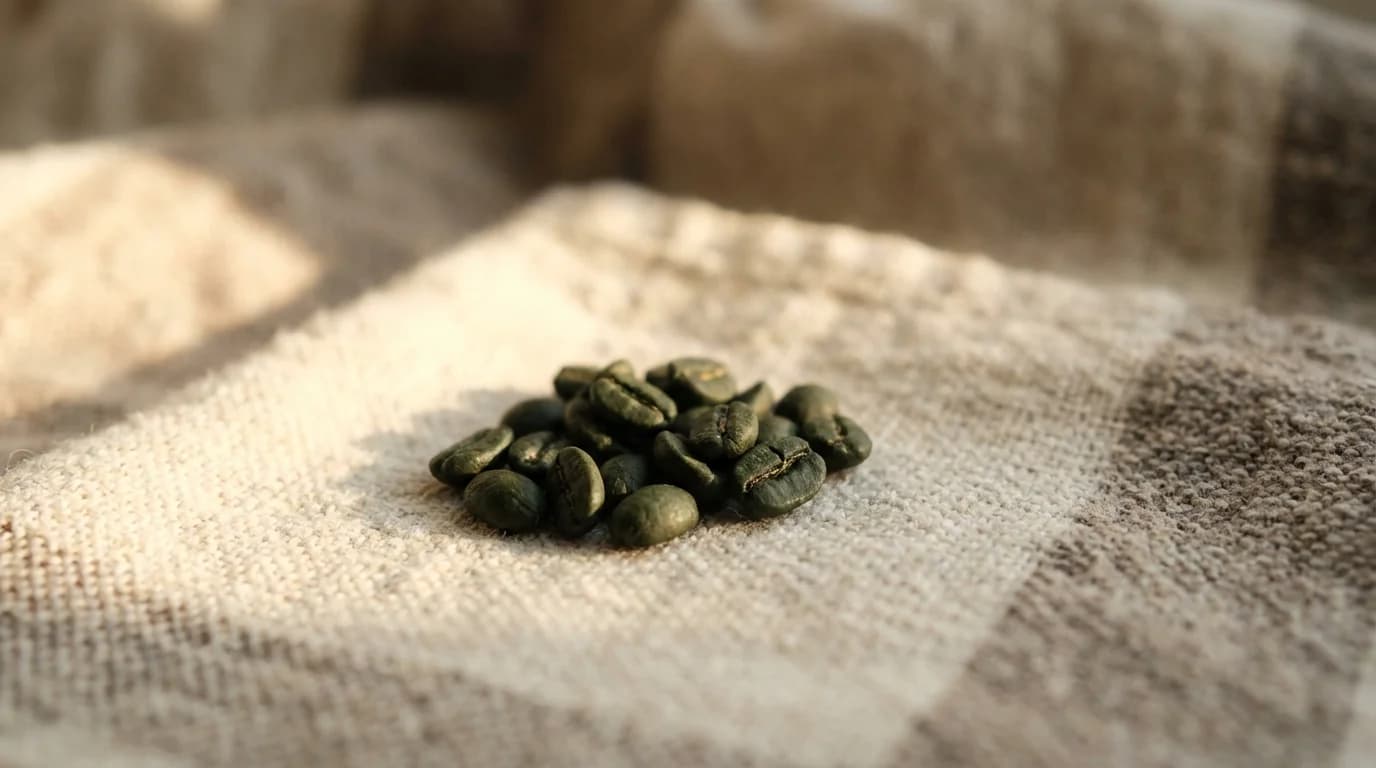
Black Ivory Coffee is the rarer, more expensive, more ethically-defensible cousin of kopi luwak — a Thai elephant- processed coffee produced through a rescued-elephant sanctuary in northern Thailand. At $1,500-2,500 per pound retail, it's one of the world's most expensive coffees; at ~200 kg annual production, it's one of the rarest. Understanding what it actually is, how it compares to kopi luwak, and why its existence connects coffee production to elephant conservation makes for one of the more unusual stories in modern coffee.
~$2,500/lb retail
among the world's most expensive coffees at retail; single cups sell for $50-150+ at partner venues[1]
~200 kg per year
annual production volume — genuinely one of the rarest specialty coffees in commercial existence[1]
Golden Triangle Foundation
produced in partnership with an elephant rescue/rehabilitation program in northern Thailand[3]
What Black Ivory Coffee actually is
The production process:
-
The elephants. Domesticated Asian elephants (Elephas maximus) at the Golden Triangle Asian Elephant Foundation in Chiang Rai, Thailand. Most are rescued from Thai street begging and illegal logging industries, now living in a sanctuary environment.
-
The coffee. Thai arabica beans (Typica, some Bourbon) grown in northern Thailand's highlands. Traditional wet processing is done first; the processed green beans are then fed to elephants.
-
The feeding. Coffee cherries or partially-processed beans are mixed with elephants' regular diet (bananas, sugar cane, rice, tamarind, other vegetation) and fed as part of normal daily meals. Not force-feeding — the elephants eat it as they would other food.
-
The digestion. Coffee cherries and beans pass through the elephant's very long digestive tract over approximately 12-72 hours (elephants have some of the longest gastrointestinal transit times of any mammal at ~72 hours full transit).
-
Enzymatic modification. During transit, elephant digestive enzymes and gut fermentation modify the beans. Elephants are herbivores with digestive systems optimized for breaking down plant matter — proteins in the beans are partially digested, some flavour compounds are modified.
-
Collection. Workers collect elephant droppings from the sanctuary grounds, sort through them to find the coffee beans (which pass through relatively intact compared to the digested plant material), and clean them.
-
Cleaning and drying. Beans are extensively washed in a multi-stage process, then dried according to traditional coffee practices.
-
Roasting and packaging. Roasted in small batches; packaged in distinctive ceremonial containers reflecting the luxury positioning.
The Blake Dinkin origin story
Black Ivory Coffee was developed by Canadian entrepreneur Blake Dinkin, launched commercially in 2012:
Background
Background: Dinkin, previously in consumer product marketing, spent nearly a decade researching how various animals digest coffee. He tested processing through various species (lions, giraffes, others) before settling on elephants as producing the most consistent flavour modification.
The Thailand connection
The Thailand connection: The Golden Triangle Asian Elephant Foundation, an established elephant welfare organisation in Chiang Rai, was chosen as the production partner. The foundation cares for elephants rescued from Thai logging (illegal since 1989) and street begging industries.
Business model
Business model:
- Partnership with the elephant foundation provides animal care and reliable production environment.
- A portion of coffee proceeds directly funds elephant welfare, veterinary care, and conservation programs.
- Luxury hotel and resort distribution (Anantara particularly) provides premium pricing venue.
- Small production scale maintains rarity and price premium.
Marketing angle: the coffee is positioned as combining extreme rarity, distinctive flavour, and conservation impact — luxury with a story. Global media coverage (Forbes, National Geographic, various travel and food publications) has built the brand[1].
The claimed flavour effect
Elephant digestion is theorised to produce specific flavour effects different from civet processing:
Elephant digestive characteristics:
- Longer transit time — 12-72 hours vs 24-36 for civets.
- Herbivorous digestion — enzymes optimized for plant matter breakdown; different from omnivore digestion.
- Fermentation environment — elephant gut contains bacteria adapted for breaking down cellulose and other plant fibres.
- Longer intestinal contact — beans spend much longer time in contact with modification agents.
Proposed flavour effects:
- Reduced bitterness — protein digestion partially breaks down bitter proteins.
- Fruity, floral character — plant matter co- fermentation may transfer flavours to beans.
- Very smooth mouthfeel — extensive enzymatic modification affects body.
- Chocolate, malt, cherry, spice notes — commonly reported in tasting descriptions.
- Very low acidity — brightness compounds substantially modified.
Reported cup profile:
- Distinctive — noticeably different from traditional processing.
- Smooth and mellow rather than bright and complex.
- Some tasters describe hints of grassy or hay-like notes from elephant-diet co-flavours.
- Long finish.
- Different from kopi luwak's earthier profile.
Objective quality assessment:
- Genuinely distinctive but not obviously superior to top traditional specialty coffees.
- Novelty and story dominate perception in most tastings.
- Blind tastings against equally-priced Panama Geisha or top Yemeni Mocha typically don't favour Black Ivory on cup quality alone[2].
The extraordinary production math
Why Black Ivory Coffee is so limited and expensive:
Input to output ratio:
- Approximately 33 kg of raw coffee cherries required to produce 1 kg of finished Black Ivory Coffee.
- Most beans pass through unchanged (not enough digestion time to produce the target effect) or are damaged (broken, cracked, unsuitable for sale).
- Additional loss during collection (some beans lost in droppings, some scattered in sanctuary environment).
Labour intensive:
- Manual searching through droppings for coffee beans.
- Multiple washing stages required for food-grade cleanliness.
- Small-batch processing throughout.
Annual production:
- ~200 kg total (approximately 440 lb) in typical years.
- Compare: a single medium Ethiopian estate might produce hundreds of thousands of kg annually.
Number of elephants:
- Typically 20-30 elephants in the herd.
- Not all beans from all elephants meet quality standards.
- Individual elephant health/mood affects daily production.
Rarity comparison:
- Wild Kopi Luwak: probably 500-1,000 kg globally per year.
- Black Ivory Coffee: ~200 kg globally per year.
- Panama Geisha: hundreds of thousands of kg annually.
- Yemen Mocha: thousands of tons annually.
Black Ivory is genuinely rare — the physical constraint of elephant digestion makes it inherently low-volume[5].
Where to find Black Ivory Coffee
Very limited distribution:
Ultra-luxury hotel partnerships:
- Anantara Golden Triangle Elephant Camp & Resort (Thailand) — the origin location; offers immersive experiences.
- Various other Anantara resorts globally.
- Selected other luxury hotels in Southeast Asia, Europe, and North America.
Direct purchase:
- Black Ivory Coffee website — direct sales but limited allocation.
- Selected specialty retailers in ultra-premium channels.
Not available at:
- Typical specialty coffee retailers.
- Standard cafés (even high-end).
- Most e-commerce coffee sites.
- Grocery stores.
Pricing tiers:
- Single 35g portion at partner hotel: $50-150 (enough for one small brew).
- Full elephant experience at Anantara Golden Triangle: hundreds of dollars including full sensory presentation.
- Purchase whole beans: $1,500-2,500+/lb through direct sales.
Realistic access: for most consumers, Black Ivory Coffee is more likely to be experienced through a one-time hotel purchase during travel than through regular home consumption.
The ethics — a nuanced picture
Black Ivory Coffee's ethical positioning is meaningfully different from kopi luwak:
Positive aspects:
- Elephant welfare focus — the sanctuary rescues and rehabilitates elephants from harsh industries.
- Not force-feeding — coffee cherries are mixed with elephants' normal diet; they eat naturally.
- Conservation funding — portion of proceeds directly supports elephant welfare programs.
- Small-scale operation — no industrial exploitation.
- Transparency — the operation welcomes visitors and media scrutiny.
Neutral to negative considerations:
- Unnatural food component — coffee cherries aren't a wild elephant food source.
- Ultra-luxury framing — funds conservation but through consumer luxury spending.
- Alternative would work — the elephants could be supported without producing coffee.
- Sustainability of demand — commercial pressure on elephants' digestive systems if scaled up.
Overall verdict: Black Ivory Coffee sits in a more ethically defensible position than caged-civet kopi luwak. Not without complications, but a genuine conservation-adjacent operation rather than exploitation.
Independent verification: the Golden Triangle Foundation is a registered charitable organisation with external oversight. Documentation of elephant welfare is substantially better than caged kopi luwak operations.
Comparison: Black Ivory vs Kopi Luwak
| Feature | Black Ivory | Kopi Luwak |
|---|---|---|
| Animal | Asian elephant | Asian palm civet |
| Transit time | 12-72 hours | 24-36 hours |
| Feeding | Mixed with regular diet | Cherry-heavy (esp. caged) |
| Ethical concerns | Modest, well-managed | Substantial (caged operations) |
| Annual production | ~200 kg | ~thousands of kg (caged); ~500-1000 kg wild |
| Price (retail) | $1,500-2,500+/lb | $100-600/lb |
| Availability | Ultra-luxury hotels | Widely available but often fake |
| Origin countries | Thailand only | Indonesia, Vietnam, Philippines, others |
| Flavour profile | Smooth, mellow, subtle | Smooth, earthy, distinctive |
| Cup quality vs price | Novelty premium | Novelty premium |
Both are novelty-processed coffees priced for scarcity rather than consensus cup quality. Black Ivory is rarer, more expensive, more ethically defensible.
Other animal-processed coffees
Black Ivory and Kopi Luwak are the two most-known animal- processed coffees, but the category includes:
Jacu bird coffee
Jacu Bird Coffee (Brazil):
- Penelope obscura — Brazilian bird that eats coffee cherries.
- Small-scale production in Espírito Santo state.
- Beans excreted intact.
- Not associated with animal welfare concerns (wild birds).
- Price: $100-500/lb.
Coati coffee
Coati Coffee (Central/South America):
- Nasua spp. — coati/coatimundi mammals.
- Small production in Costa Rica and neighbours.
- Similar principle to kopi luwak.
- Limited commercial availability.
Bat coffee
Bat Coffee (Costa Rica, others):
- Various fruit-eating bats select cherries by ripeness.
- Very small-scale production.
- Novelty positioning.
Monkey coffee
Monkey Coffee:
- Various primate species in different regions.
- Very limited commercial production.
- "Monkey parchment coffee" from Taiwan (rhesus macaques) is one specific version.
All these share the "coffee through an animal's digestive tract" model with varying species-specific effects.
Where luxury coffee sits in the broader specialty
context
Black Ivory represents an extreme point on the luxury coffee spectrum:
Ultra-luxury coffees ($500-2,500+/lb):
- Black Ivory Coffee ($1,500-2,500/lb).
- Ultra-premium Panama Geisha (auction lots reach $2,000-10,000+/lb; retail typically $200-1,000).
- Extremely rare Yemen Mocha ($200-500+/lb).
- Cup of Excellence winning lots (various origins, $200-1,000+/lb).
Standard premium coffees ($40-200/lb):
- Named-estate specialty coffees from top origins.
- Top Ethiopian, Kenyan, Colombian, Costa Rican.
- Named-farm Panama Geisha (non-competition lots).
- Kona 100% (upper tier).
Mid-range specialty ($15-40/lb):
- Mainstream specialty from good roasters.
- Most single-origin specialty coffees.
- Most retail specialty coffee.
Cheap commercial ($5-15/lb):
- Supermarket blends.
- Volume/commodity coffee.
Black Ivory sits at the extreme luxury end where price substantially decouples from consensus quality. Its market exists in ultra-luxury contexts where the story and rarity matter as much as (or more than) the coffee itself.
Common misconceptions
- "Black Ivory Coffee is exploitative like kopi luwak." Meaningfully different. Elephants are in a sanctuary environment; coffee is not force-fed; conservation funding is real.
- "You can buy Black Ivory anywhere for the right price." Very limited distribution. Even at $2,500/ lb, it's not sold everywhere.
- "Black Ivory is objectively the world's best coffee." Distinctive, but not consensus-superior to top Panama Geisha or Ethiopian yirgacheffe on cup quality alone.
- "The elephants are only fed coffee." No — cherries are supplemental to their normal diet.
- "All coffee elephants eat becomes Black Ivory." Only a small fraction of consumed cherries produce finished beans; most are lost or damaged.
Practical rules
If you want to try Black Ivory:
- Look for opportunities at ultra-luxury hotels (particularly Anantara properties).
- Consider a one-time purchase for the experience rather than ongoing consumption.
- Understand it's novelty coffee — expect distinctive but not transformative.
If you want maximum coffee quality per dollar:
- Consider Panama Geisha (non-competition retail lots at $60-150/lb).
- Top Ethiopian Yirgacheffe or Guji ($30-60/lb).
- Cup of Excellence winning lots from various origins.
- Named-estate Kenyan AA ($30-50/lb).
- Yemen Mocha ($100-200/lb) — cultural significance + premium quality.
If you want to support elephant conservation:
- Direct donations to elephant welfare organisations (World Elephant Day partners, Golden Triangle Asian Elephant Foundation directly).
- More funds go to actual programs than through the coffee middle-man economics.
If you're curious about coffee processing extremes:
- Try one of the animal-processed coffees for the experience.
- Compare to experimental processing (carbonic maceration, anaerobic fermentation) — see Carbonic Maceration Coffee and Coffee Processing Methods.
- Both push processing boundaries; experimental methods are more scalable and often more distinctive.
The honest summary
Black Ivory Coffee is coffee made from Thai arabica beans processed through the digestive systems of Asian elephants at the Golden Triangle Asian Elephant Foundation in northern Thailand. Launched commercially in 2012 by Blake Dinkin, produced at only ~200 kg annually, priced at $1,500-2,500+/lb retail — among the world's rarest and most expensive coffees. The elephant conservation association distinguishes it meaningfully from cage-based kopi luwak, though it remains a luxury novelty rather than a specialty coffee superior on cup quality alone. Available primarily at ultra-luxury hotels (Anantara resorts particularly). For coffee enthusiasts, Black Ivory is a genuine bucket-list experience worth trying once if the opportunity arises; for regular consumption or maximum quality per dollar, top traditional specialty coffees deliver more without the extreme price premium.
Frequently asked questions
- What is Black Ivory Coffee?
- Black Ivory Coffee is coffee made from Thai arabica beans that have been eaten by Asian elephants at the Golden Triangle Asian Elephant Foundation in Chiang Rai, Thailand. The elephants eat coffee cherries mixed with their regular diet, the beans pass through the digestive tract (typically 12-72 hours), and are collected from droppings, cleaned, and processed. It's marketed and priced as the world's most expensive coffee — retail around $1,500-2,500 per pound (about $50-200 per cup at ultra-luxury hotels).
- How is Black Ivory Coffee different from kopi luwak?
- Different animal, different mechanism, different scale. Kopi luwak uses Asian palm civets (small nocturnal mammals); Black Ivory uses Asian elephants (large herbivores with vastly longer digestive tracts). Elephants are herbivores, so digestion is longer and more thorough — some proteins and bean compounds are broken down more completely. Black Ivory is much rarer than kopi luwak (annual production ~200 kg for Black Ivory vs many tons for kopi luwak). Ethical positioning is also different — Black Ivory works with a conservation program; kopi luwak is largely produced by caged civets.
- Why is Black Ivory Coffee so expensive?
- Extreme production inefficiency and premium positioning. To produce 1 kg of Black Ivory Coffee requires approximately 33 kg of raw coffee cherries fed to elephants (most beans pass through unchanged or are damaged; some are lost in droppings). Add labour of collection, meticulous cleaning, small-scale production, and conservation program overhead. Annual production is limited to ~200 kg (about 440 lb) — genuinely one of the rarest coffees in the world. Combined with luxury hotel distribution and marketing positioning, retail prices reach $1,500-2,500/lb.
- Where can you buy Black Ivory Coffee?
- Very limited distribution. Sold primarily through partnerships with ultra-luxury hotels (Anantara resorts particularly), some high-end restaurants, and directly from Black Ivory Coffee's own limited retail. Not available at typical specialty coffee retailers due to price and scarcity. A single 35g portion (enough for one small brew) commonly sells for $50-150 at partner venues. Whole beans available for direct purchase but require substantial commitment given the price point.
- Is Black Ivory Coffee ethical?
- The ethical story is genuinely more positive than kopi luwak. The Golden Triangle Asian Elephant Foundation is a rescue and rehabilitation program for elephants formerly used in Thailand's street begging and illegal logging industries. Elephants receive proper care, veterinary attention, and appropriate diets — the coffee cherries are supplemental (not force-fed diet). A portion of Black Ivory Coffee proceeds directly funds elephant welfare programs. Whether luxury coffee production is the right way to fund conservation is debatable, but the operation is significantly different from cage-based kopi luwak.
References
Every factual claim in this article is drawn from the sources below. See the source library for how we grade evidence.
- [1]CoffeeEncyclopaedia Britannica · Reference work · Tier 3 · Contextual
- [2]Coffee volatile compounds and roast markersPMC / NIH · 2016 · Review · Tier 2 · Moderate
- [3]Uncommon Grounds: The History of Coffee and How It Transformed Our World (revised edition)Basic Books (Mark Pendergrast) · 2010 · Reference work · Tier 2 · Moderate
- [4]Coffee Varieties CatalogWorld Coffee Research · Reference work · Tier 2 · Moderate
- [5]International Coffee OrganizationInternational Coffee Organization · Official dataset · Tier 1 · Strong
Related reading
- Beans, Roasts & OriginsKopi Luwak: The Controversial Civet-Processed Coffee→
- Beans, Roasts & OriginsPanama Geisha Coffee: The Premium Bean Explained→
- Beans, Roasts & OriginsJamaican Blue Mountain Coffee: Why It Costs So Much→
- Beans, Roasts & OriginsColombian Coffee: Altitude, Acidity, and Variety→
- Beans, Roasts & OriginsHoney Process Coffee: Yellow, Red, and Black Honey→
- Beans, Roasts & OriginsThai Coffee: Doi Chang Arabica and Oliang Explained→