Coffee Fermentation: Microbes, Processing, and Flavour
By Coffee Studies Editorial·Published July 18, 2026·6 min read
Quick answer
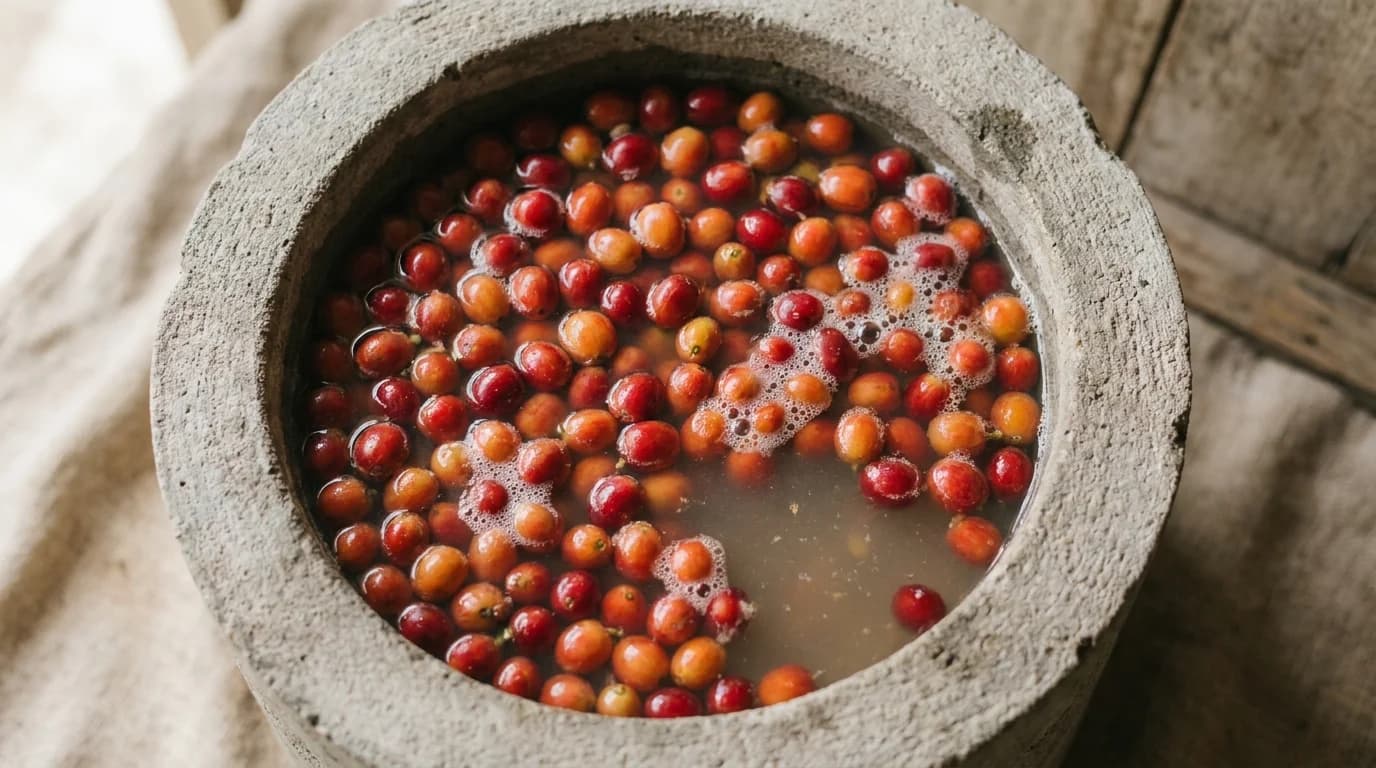
The flavour difference between a washed Ethiopian coffee and a natural processed one from the same farm, same harvest, same variety — the difference in brightness, fruit character, and complexity — is substantially the result of which microorganisms were active during fermentation, for how long, and under what conditions. Coffee fermentation is not a passive or incidental step. It is a managed biological process with direct chemical consequences for what ends up in your cup.
12–72 hours (washed) vs. 2–6 weeks (natural)
fermentation timelines differ radically by processing method — washed fermentation in water tanks is measured in hours and controlled tightly; natural fermentation in whole drying cherries lasts weeks and involves a much more diverse microbial succession[1]
3 microbial groups: LAB, AAB, yeasts
lactic acid bacteria, acetic acid bacteria, and yeasts are the three major microbial groups active in coffee fermentation — their relative dominance, determined by oxygen access, water, and temperature, determines the flavour metabolites that accumulate[2]
Metabolites penetrate the parchment layer
fermentation metabolites — lactic acid, acetic acid, ethanol, esters — are not just surface compounds; they diffuse through the parchment (the papery layer surrounding the bean) and alter the bean's chemical composition, changing what the roaster and brewer work with[1]
What fermentation is actually doing
A freshly picked coffee cherry is composed of several layers surrounding the bean: the outer skin (exocarp), the pulp (mesocarp), and a sticky, sugar-rich layer called the mucilage — formally the pectin-rich endocarp. The bean itself (the seed) sits inside the mucilage, enclosed by the parchment layer (endocarp).
When the cherry is picked and processing begins, the mucilage layer is in contact with the external environment — ambient microbes, water, air — and fermentation starts almost immediately. Microorganisms consume the sugars in the mucilage (primarily sucrose, glucose, and fructose) and produce metabolites as byproducts[1].
The objective of fermentation in washed processing is practical: to degrade and loosen the mucilage so it can be washed off the bean. The flavour effects are a consequence of that process — but a consequence that producers have learned to control and optimise deliberately.
The three microbial groups
Lactic acid bacteria (LAB): Species including Leuconostoc mesenteroides, Lactobacillus plantarum, and Lactobacillus brevis are typically the early dominant organisms in washed fermentation. LAB are facultative anaerobes — they function in both oxygen and low-oxygen conditions — and they are acid-tolerant, allowing them to outcompete other organisms as the fermentation environment acidifies. Their primary output is lactic acid, which acidifies the fermentation tank and produces a clean, dairy-like character in the finished cup. Some LAB strains also produce ethanol and specific esters[2].
Acetic acid bacteria (AAB): Species including Acetobacter pasteurianus and Gluconobacter oxydans require oxygen to produce acetic acid from ethanol. They are more prominent in natural (dry) processing — where the whole cherry dries on raised beds with air circulation — than in submerged washed tanks where oxygen is limited. Controlled AAB activity produces fruity, wine-like acetic acid notes; excess AAB activity produces a sharp vinegar fault that is a processing defect.
Yeasts: Saccharomyces cerevisiae (the same species used in bread and beer fermentation) along with Pichia anomala, Candida parapsilosis, Hanseniaspora uvarum, and others are active early in fermentation. Yeasts ferment sugars to ethanol and CO₂, and produce a range of esters — ethyl acetate, isoamyl acetate, and others — that contribute fruit and floral character. Yeast populations typically peak early and decline as LAB acidify the environment[1].
Washed fermentation: the chemistry
In washed (wet) processing, the cherry skin is mechanically removed first (pulping), then the beans — with mucilage intact — are placed in water tanks. Fermentation proceeds in a low-oxygen environment that selects for LAB.
The LAB population acidifies the tank quickly, dropping pH from around 6.5 to 4.0–4.5 within the first 12–24 hours. At this pH, pectinase enzymes (produced both by the microbes and naturally present in the mucilage itself) degrade the pectin structure of the mucilage, allowing it to be washed away[1].
The duration of washed fermentation typically ranges from 12 to 72 hours, depending on ambient temperature (higher temperature = faster fermentation), altitude (higher altitude = cooler = slower), and the desired flavour profile. Fermentation is judged complete when the mucilage washes off cleanly.
The metabolites produced — primarily lactic acid, with smaller amounts of acetic acid and ethanol — penetrate the parchment layer. Studies have detected lactic acid, succinic acid, and specific esters in the finished green bean, confirming that fermentation products do transfer from the external environment into the bean itself[2].
Figure
Flavour metabolites by processing method
Values in relative concentration (washed = baseline 1)
Natural fermentation: the chemistry
In natural (dry) processing, no pulping occurs. Whole cherries are laid on raised drying beds or concrete patios and dried intact over 2–6 weeks. Fermentation happens simultaneously with drying — a more complex, longer, and more variable process than washed fermentation.
The aerobic drying environment supports a more diverse microbial community: LAB, AAB, and yeasts all remain active for longer, and the succession of dominant organisms changes as the cherry dries. Early fermentation is yeast-dominated; mid-process LAB acidify the environment; later, as the cherry dries and water activity drops, AAB become more prominent in the outer layer of the fruit.
The longer contact time between the fermenting fruit and the bean means more metabolites accumulate and diffuse into the bean. This is why natural coffees are typically more intensely fruity — the bean is exposed to more complex metabolites for longer[1].
The risk in natural processing is over-fermentation and uneven drying. If cherries pile up (restricting airflow) or if rain interrupts drying (re-wetting), microbial activity intensifies in ways that can produce off-flavours: butyric acid (rancid, sweaty), excessive acetic acid (sharp vinegar), or phenolic compounds. This is why quality natural coffees require careful management of drying bed depth and turning frequency.
Controlled and inoculated fermentation
Contemporary specialty processing has moved from managing fermentation empirically (adjusting time and temperature by observation) to controlling it microbiologically.
Anaerobic fermentation tanks seal coffee (pulped or whole cherry) in stainless-steel tanks purged with CO₂ or nitrogen. The oxygen-free environment eliminates AAB entirely and creates conditions for specific LAB and yeast metabolisms that produce unusual ester profiles[2].
Inoculated fermentation goes further: specific microbial cultures — commercial wine yeasts, selected LAB strains — are added to the fermentation environment at the start. This creates a reproducible, controlled microbial community that produces predictable metabolite profiles, allowing producers to replicate specific flavour outcomes across harvests.
Temperature-controlled fermentation (using cooling tanks or shade environments) slows the overall fermentation rate, allowing producers to extend the flavour-development window without over-fermentation. Slower fermentation at lower temperatures tends to produce more complex ester profiles and cleaner, more nuanced cups.
Why fermentation variability matters for flavour
Fermentation is the most variable step in coffee post-harvest processing — and variability in fermentation is a primary cause of lot-to-lot flavour inconsistency even from the same farm and harvest. The variables that most affect outcome:
Temperature: The rate of all microbial activity is temperature-dependent. A 10°C increase roughly doubles the rate of microbial metabolism. Farms at lower altitude with higher ambient temperatures complete fermentation faster — and have a narrower window between correct fermentation and over-fermentation.
Water availability: Aqueous environments favour LAB; oxygen-rich dry environments favour AAB. The presence or absence of free water is the single most important factor determining which organisms dominate.
Fermentation duration: Determines the total metabolite load that accumulates. Too short: mucilage is not fully degraded (processing defect), and insufficient metabolite transfer. Too long: over-fermentation off-flavours develop.
Initial microbial population: The microbes naturally present on the farm, in the water, and on the equipment vary by location. Two farms in the same region will have different microbial terroir — contributing to the flavour distinctiveness of coffees from specific farms or producers.
The honest summary
Coffee fermentation is a microbially driven chemical process during post-harvest processing that directly shapes the finished coffee's flavour. Lactic acid bacteria, acetic acid bacteria, and yeasts consume mucilage sugars and produce organic acids, ethanol, and esters that penetrate the bean parchment and alter the bean's chemical composition. Washed fermentation (submerged in water, LAB-dominant) produces clean, bright metabolite profiles. Natural fermentation (whole-cherry drying, diverse microbial community) produces higher levels of acetic acid, ethanol, and esters — the compounds responsible for the wine-like, fruity character of natural coffees. Fermentation time, temperature, oxygen access, and microbial population are the variables producers control to achieve consistent, intentional flavour outcomes.
Frequently asked questions
- What is coffee fermentation?
- Coffee fermentation is the microbial breakdown of the mucilage layer — a sugar-rich, sticky fruit substance — that surrounds the coffee bean inside the cherry. After cherries are picked and the outer skin is removed (in washed processing) or as cherries dry intact (in natural processing), bacteria and yeasts consume the mucilage sugars and produce metabolites including lactic acid, acetic acid, and ethanol. These compounds interact with the parchment layer and the bean itself, altering the bean's chemical composition and contributing to the finished coffee's flavour.
- Which microorganisms are involved in coffee fermentation?
- Three major groups: lactic acid bacteria (LAB) including Leuconostoc mesenteroides, Lactobacillus plantarum, and related species — these produce lactic acid and are typically dominant in washed fermentations in water; acetic acid bacteria (AAB) including Acetobacter and Gluconobacter species, which produce acetic acid and are more prominent in natural (dry) fermentations; and yeasts, primarily Saccharomyces cerevisiae along with Pichia, Candida, and Hanseniaspora species. The microbes present, and which dominate, depend on processing environment, water availability, temperature, and oxygen access.
- How does fermentation affect coffee flavour?
- Fermentation metabolites — especially lactic acid, acetic acid, ethanol, succinic acid, and various esters — penetrate the bean's parchment during fermentation and directly affect the bean's chemical composition. Lactic acid contributes clean, yoghurt-like brightness. Acetic acid in controlled amounts contributes fruity-wine character; in excess, it produces a sharp vinegar fault. Ethanol and esters produce fruit complexity. The length of fermentation, the dominant microbe species, and temperature all determine which metabolites accumulate and in what concentration.
- What is the difference between washed and natural fermentation?
- Washed (wet) fermentation: the cherry skin is removed, then the beans (with mucilage still attached) are submerged in water tanks for 12–72 hours. The water environment selects for lactic acid bacteria, which produce primarily lactic acid and limited acetic acid. Result: clean, bright, origin-transparent cups. Natural (dry) fermentation: whole cherries dry intact on raised beds or patios. No water submersion means the microbiome is more diverse — both LAB and AAB, more yeasts, more acetic acid production. Contact time is weeks rather than hours. Result: fruity, complex, wine-like cups with higher organic acid complexity.
- What is over-fermentation in coffee?
- Over-fermentation occurs when fermentation proceeds too long, allowing acetic acid bacteria to dominate and produce acetic acid in excess, or allowing other microbes to produce off-flavour compounds including butyric acid (rancid, sweaty) or phenolic compounds. Over-fermented coffee has a sharp vinegar or rotten-fruit character in the cup — it is a processing defect, not a feature. Precisely controlling fermentation time and temperature is one of the most critical quality variables in coffee post-harvest processing.
References
Every factual claim in this article is drawn from the sources below. See the source library for how we grade evidence.
- [1]Coffee agronomyFood and Agriculture Organization of the United Nations · Reference work · Tier 2 · Moderate
- [2]Coffee volatile compounds and roast markersPMC / NIH · 2016 · Review · Tier 2 · Moderate
- [3]Coffee Varieties CatalogWorld Coffee Research · Reference work · Tier 2 · Moderate
Related reading
- Beans, Roasts & OriginsCoffee Processing Methods Explained→
- Beans, Roasts & OriginsCarbonic Maceration Coffee: Wine-Inspired Processing→
- Beans, Roasts & OriginsWhat Is Specialty Coffee? The 80-Point Standard→
- Brewing ScienceCoffee Acidity: pH, Sourness, and What Affects It→
- Beans, Roasts & OriginsHoney Process Coffee: Yellow, Red, and Black Honey→
- Beans, Roasts & OriginsCoffee Roasting Chemistry: Maillard Reaction and Flavour→