Coffee Roasting Chemistry: Maillard Reaction and Flavour
By Coffee Studies Editorial·Published July 18, 2026·7 min read
Quick answer
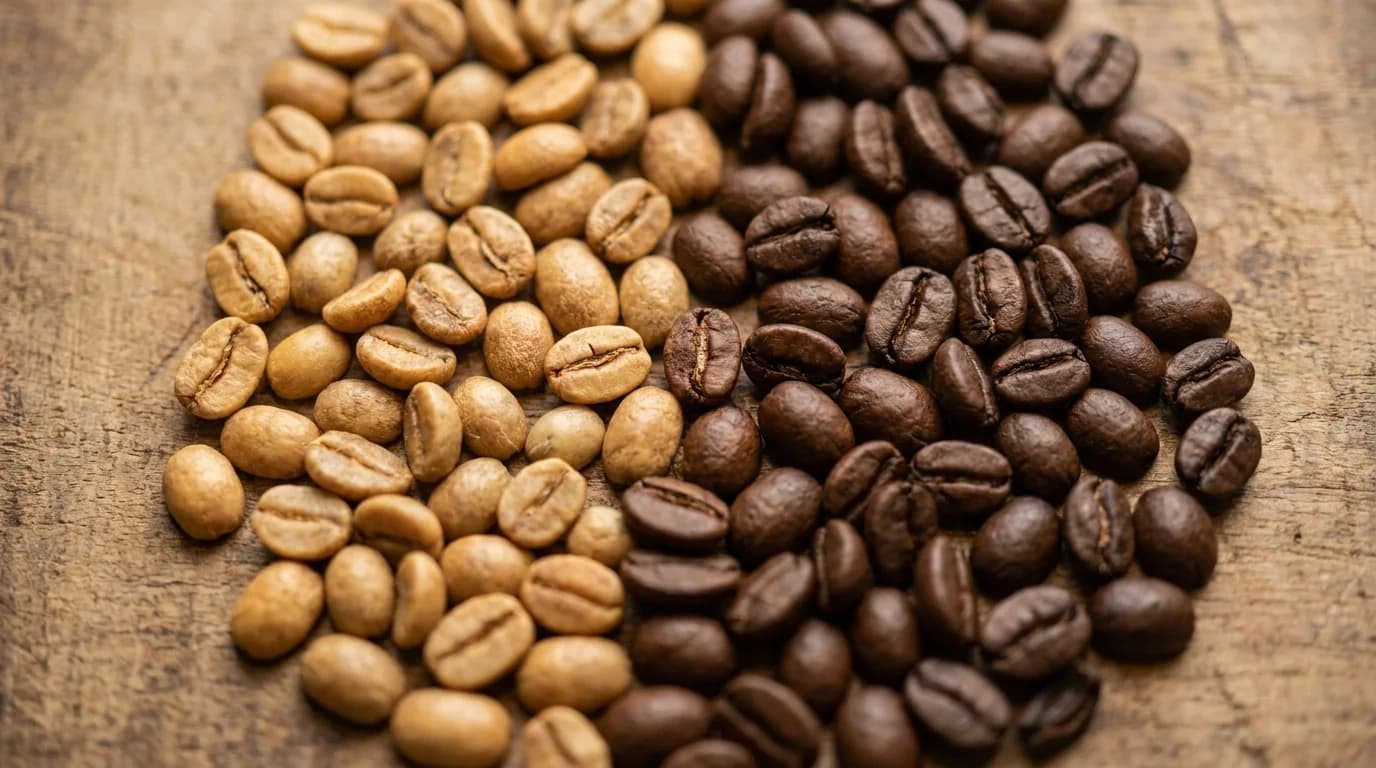
Coffee's aroma is one of the most chemically complex of any food or beverage. More than 1,000 volatile aromatic compounds have been identified in roasted coffee — a number that exceeds wine, chocolate, and most other flavour-rich foods. Almost none of them exist in the green bean. They are created during roasting through an interconnected cascade of chemical reactions, most of which occur within a 20-minute window and are sensitive to small changes in temperature.
Understanding the chemistry of roasting explains why roast degree matters so dramatically for flavour — and why the same green beans treated differently by two roasters can taste like different coffees.
Over 1,000 volatile compounds formed during roasting
the Maillard reaction, Strecker degradation, caramelisation, and chlorogenic acid breakdown collectively produce more than 1,000 identified volatile aromatic compounds during roasting — green coffee contains very few of these; they are almost entirely created by heat[2]
6–10% of green bean dry weight is chlorogenic acids
chlorogenic acids (CGAs) are the dominant phenolic compounds in green coffee and a major source of coffee's antioxidant activity; they degrade progressively during roasting into increasingly bitter compounds, which is a primary chemical reason dark roast coffee tastes more bitter[1]
Maillard reaction begins at ~150°C
the cascade of Maillard reactions between amino acids and reducing sugars that produces most of coffee's aromatic compounds begins around 150°C and accelerates through the 160–200°C range — this is where brown colour and roasted aroma develop simultaneously[1]
The Maillard reaction
The Maillard reaction is not a single reaction — it is a family of parallel and cascading reactions that begin when reducing sugars (glucose, fructose, and others) react with free amino acids in the presence of heat. In coffee, this begins at approximately 150°C and accelerates as temperature increases through the roasting window[1].
The initial step produces colourless, unstable intermediates called Amadori products. These undergo further transformations through multiple branching pathways:
- Fragmentation of sugars to smaller carbonyl compounds, which react with further amino acids
- Cyclisation and dehydration to form heterocyclic aromatic compounds including pyrazines, furans, and pyrroles
- Polymerisation of intermediate products into high-molecular- weight brown pigments called melanoidins — the compounds responsible for coffee's brown colour and that contribute to its body in the cup
The Maillard reaction's aromatic outputs in coffee include:
Pyrazines: alkyl pyrazines (2-methylpyrazine, 2,5-dimethylpyrazine, 2-ethyl-3-methylpyrazine) are among the most potent and concentration-dependent contributors to roasted, nutty, and earthy aromas in coffee. They are mostly absent in light roasts and progressively more abundant in darker roasts.
Furans: 2-furfuryl alcohol, 2-acetylfuran, and 5-methylfurfural contribute caramel and sweet-roasted character. Furans are thermal contaminants at very high concentrations but are present in roasted coffee at flavour-relevant trace concentrations[3].
Pyrroles: 1-methylpyrrole, 2-formylpyrrole, and others contribute musty, caramellic notes.
Thiophenes: sulphur-containing heterocycles produced in part from Maillard reactions involving cysteine contribute roasty, meaty character.
Strecker degradation
Strecker degradation is a specific branch of the Maillard cascade that produces some of coffee's most aromatic compounds at very low concentrations. Alpha-amino acids react with dicarbonyl compounds (produced by early Maillard steps) to form alpha-aminoketones and Strecker aldehydes[2].
The Strecker aldehydes formed from coffee's amino acid composition include:
| Amino acid | Strecker aldehyde | Aroma character |
|---|---|---|
| Leucine | 3-methylbutanal | Malty, chocolate |
| Isoleucine | 2-methylbutanal | Cocoa, nut |
| Methionine | Methional | Cooked potato, earthy |
| Phenylalanine | Phenylacetaldehyde | Honey, rose |
| Valine | 2-methylpropanal | Malty, pungent |
Strecker aldehydes are among the most volatile and potent aroma compounds in roasted coffee. Their concentration is typically in the parts-per-billion range — but their aroma detection thresholds are correspondingly low, making them significant contributors to the perceived aroma despite their trace presence.
Caramelisation
Caramelisation is the thermal decomposition of sugars in the absence of amino acids — distinct from the Maillard reaction, which requires both. In coffee roasting, caramelisation of sucrose (which makes up about 8% of green coffee's dry weight) begins above 160°C and accelerates sharply above 180°C[1].
Caramelisation produces:
- Diacetyl — buttery, caramellic character
- Hydroxymethylfurfural (HMF) — sweet, caramellic, a marker of thermal processing intensity
- Maltol and isomaltol — sweet, jam-like character
- Further furans — overlapping with Maillard furan production
The sucrose in green coffee is almost completely consumed during medium roasting. This contributes to the characteristic profile difference between light and medium roasts — light roasts retain some sucrose-derived sweetness in the bean, while medium roasts have completed caramelisation.
Chlorogenic acid breakdown
Chlorogenic acids (CGAs) are the dominant phenolic compounds in green coffee, making up 6–10% of the dry bean by mass. They are the primary source of green coffee's antioxidant activity and are significantly altered by roasting[1].
The breakdown cascade during roasting:
Light roast (~190–200°C): CGAs partially degrade. Isomerisation produces new CGA isomers, and some hydrolysis produces free caffeic acid and quinic acid. 40–60% of the original CGA content remains.
Medium roast (~210–220°C): More extensive degradation. Quinic acid undergoes lactone formation to produce quinolactones — compounds that are significantly more bitter and astringent than their CGA precursors. Vinyl catechol oligomers form.
Dark roast (>220°C): Near-complete CGA degradation. Phenyl indanes — the most bitter CGA breakdown products — form in substantial quantities. Catechol and 4-vinyl catechol polymerise further into high-molecular-weight bitter compounds.
Figure
Chlorogenic acid retention by roast level
Values in % of original green bean CGA content remaining
This CGA breakdown cascade is one of the primary chemical mechanisms behind the well-documented relationship between roast level and bitterness — lighter roasts are more acidic and less bitter not because of subjective taste preference but because they have a fundamentally different phenolic composition.
Volatile formation across roast development
Not all volatile compounds form at the same temperature or at the same rate. The volatiles that produce light, fruity character form early and can be destroyed at higher temperatures. The volatiles that produce roasted, smoky, dark character form later[2].
Early formation (150–180°C): Ester degradation products, furans, and Maillard early-stage products including hydroxymethylfurfural. Light, caramellic, and sweet aromatics predominate.
Mid-roast (180–200°C, through first crack): Strecker aldehydes forming rapidly, pyrazines beginning to accumulate, CO₂ pressure building inside beans and driving volatile compounds out as first crack releases pressure. Chocolate, nut, and caramel aromatics peak.
Late development (200–220°C): Pyrazine concentration continues increasing. Delicate ester volatiles (fruity, floral compounds) begin to thermally degrade. Phenolic compounds from CGA breakdown accumulate.
Dark roast territory (>220°C, through second crack): Oil migration to bean surface as cell wall integrity degrades. Pyrazines dominant. Phenyl indane bitterness pronounced. Many early volatile compounds consumed. The characteristic dark roast aroma is largely phenol- and pyrazine-dominated.
Acrylamide: the thermal contaminant
Acrylamide forms during coffee roasting through the reaction between asparagine (an amino acid abundant in green coffee) and reducing sugars — a specific branch of the Maillard pathway that produces acrylamide at roasting temperatures above approximately 120°C[3].
Counter-intuitively, lighter roasts contain more acrylamide than darker roasts. Acrylamide forms rapidly in the early roasting phase and then decomposes at higher temperatures and longer roasting times. Dark-roasted coffee has undergone sufficient thermal treatment to degrade most acrylamide formed during the earlier roasting stages.
Coffee is a recognised dietary source of acrylamide — regulatory agencies including EFSA and the FDA have assessed coffee's contribution to dietary acrylamide exposure. The concentrations in coffee are in the low parts-per-billion range, and the actual intake from typical consumption is considered low relative to other dietary sources (fried potato products have substantially higher acrylamide content per gram than coffee).
CO₂ and the degassing connection
The Maillard reaction and caramelisation both produce CO₂ as a byproduct of decarboxylation reactions. Freshly roasted coffee contains CO₂ dissolved in the bean matrix at concentrations that can reach several times the bean's own weight equivalent in gas.
This CO₂ is the reason freshly roasted coffee "blooms" when hot water is added — the CO₂ venting from the grounds creates the characteristic dome of foam. It is also why specialty coffee bags have one-way valves: to allow CO₂ to escape without admitting oxygen[2].
CO₂ also carries volatile aromatic compounds. The rate of CO₂ outgassing after roasting determines how quickly the aromatic volatile compounds escape from the bean into the surrounding air — this is a significant factor in why freshly roasted coffee has such an intense aroma compared to coffee that has rested for several weeks.
Roast theory, for people with a roaster
 Roast theory and profilingThe Coffee Roaster's Companion by Scott Rao (2014-05-04)Rao writes for people operating a roaster rather than reading about one, so it assumes you have heat, airflow and a drum to apply them to. Dense and short. Worth it once you are roasting and trying to make a profile repeatable rather than deciding whether to start.amazon.com $45.00 USDamazon.ca $65.00 CADPrice and availability as of View on Amazon
Product prices and availability are accurate as of the date/time indicated and are subject to change. Any price and availability information displayed on Amazon at the time of purchase will apply to the purchase of this product. Certain content that appears on this site comes from Amazon. This content is provided ‘as is’ and is subject to change or removal at any time.
The honest summary
Coffee roasting drives a cascade of chemical reactions that transforms the chemical composition of the bean. The Maillard reaction between amino acids and sugars (beginning ~150°C) produces most of coffee's aromatic volatiles — pyrazines, furans, pyrroles, and thiophenes — plus brown melanoidin pigments. Strecker degradation produces potent trace aldehydes (3-methylbutanal, phenylacetaldehyde) responsible for malty and honeyed roasted aromas. Caramelisation converts sucrose to diacetyl, maltol, and further furans. Chlorogenic acids — 6–10% of green bean dry weight — degrade progressively into increasingly bitter quinolactones and phenyl indanes, which is the primary chemical mechanism behind the greater bitterness of darker roasts. Roast degree is not a style preference but a chemical outcome: it determines which reactions have run to completion and which compounds have accumulated or been destroyed.
Frequently asked questions
- What is the Maillard reaction in coffee roasting?
- The Maillard reaction is a non-enzymatic browning reaction between reducing sugars (glucose, fructose, and others) and amino acids that begins around 150°C during roasting. It is not a single reaction but a cascade of parallel and sequential reactions that produce hundreds of different compounds — volatile aromatics (pyrazines, furans, pyrroles, thiophenes), non-volatile brown pigments called melanoidins, and carbon dioxide. The Maillard reaction is responsible for most of what we recognise as roasted coffee aroma and the brown colour of the beans.
- What is Strecker degradation in coffee?
- Strecker degradation is a specific branch of the Maillard reaction cascade in which alpha-amino acids react with carbonyl compounds (produced by earlier Maillard steps) to form Strecker aldehydes and alpha-amino ketones. In coffee, Strecker degradation produces key aromatic aldehydes including 3-methylbutanal (malty, chocolatey), 2-methylbutanal (cocoa-like), methional (cooked potato, present at low levels), and phenylacetaldehyde (honeyed, floral). These aldehydes are among the most aromatic compounds in roasted coffee despite their low concentration.
- What happens to chlorogenic acids during roasting?
- Chlorogenic acids (CGAs) are the dominant phenolic compounds in green coffee, making up 6–10% of the dry bean weight. They are the primary antioxidant compounds in green coffee but degrade substantially during roasting. At light roast temperatures (~200°C), partial degradation produces quinic acid and caffeic acid. At medium and dark roast temperatures, further reactions produce quinolactones and vinyl catechols, and eventually phenyl indane compounds — all of which are significantly more bitter than the original CGAs. This is a major chemical mechanism behind the increased bitterness of dark roast coffees.
- Does roasting produce harmful compounds?
- Roasting at high temperatures does produce trace amounts of acrylamide — a compound classified as a probable carcinogen by IARC — through the reaction of asparagine (an amino acid in coffee) with reducing sugars. Lighter roasts paradoxically contain more acrylamide than darker roasts because prolonged roasting at high temperature degrades acrylamide. Coffee is a known dietary source of acrylamide, but the concentrations and typical daily intake from coffee consumption are considered low relative to other dietary sources. Furans, also formed at high temperature, are another thermal contaminant present in coffee.
- Why does roast degree change coffee flavour so much?
- Roast degree determines which chemical reactions have run to completion and which compounds have formed, accumulated, or degraded. Light roast: more chlorogenic acids preserved (more acidity, more antioxidant activity), more delicate ester volatiles intact (fruit and floral notes), higher acrylamide concentration. Medium roast: Maillard products fully developed (chocolate, caramel, nut aromas), chlorogenic acids partially degraded, balance between fruit acids and roasty notes. Dark roast: extensive chlorogenic acid degradation (more bitter phenyl indanes), pyrazines dominant (smoky, roasty), oils surfacing on bean exterior, CO₂ pressure high (oils carry more volatiles to surface).
References
Every factual claim in this article is drawn from the sources below. See the source library for how we grade evidence.
- [1]Impact of roasting on phenolic and volatile compounds in coffeePMC / NIH · 2022 · Review · Tier 2 · Moderate
- [2]Coffee volatile compounds and roast markersPMC / NIH · 2016 · Review · Tier 2 · Moderate
- [3]Thermal contaminants in coffee roasting: a reviewMDPI (IJERPH) · 2023 · Review · Tier 2 · Moderate
Related reading
- Beans, Roasts & OriginsThe Coffee Roasting Process: From Green Bean to Brown→
- Beans, Roasts & OriginsLight vs Medium vs Dark Roast: Flavour, Caffeine, Facts→
- Brewing ScienceWhat Are Chlorogenic Acids? Coffee's Key Polyphenol→
- Brewing ScienceCoffee Acidity: pH, Sourness, and What Affects It→
- Beans, Roasts & OriginsCoffee Fermentation: Microbes, Processing, and Flavour→
- Beans, Roasts & OriginsColombian Coffee: Altitude, Acidity, and Variety→