The Coffee Roasting Process: From Green Bean to Brown
By Coffee Studies Editorial·Published July 15, 2026·9 min read
Quick answer
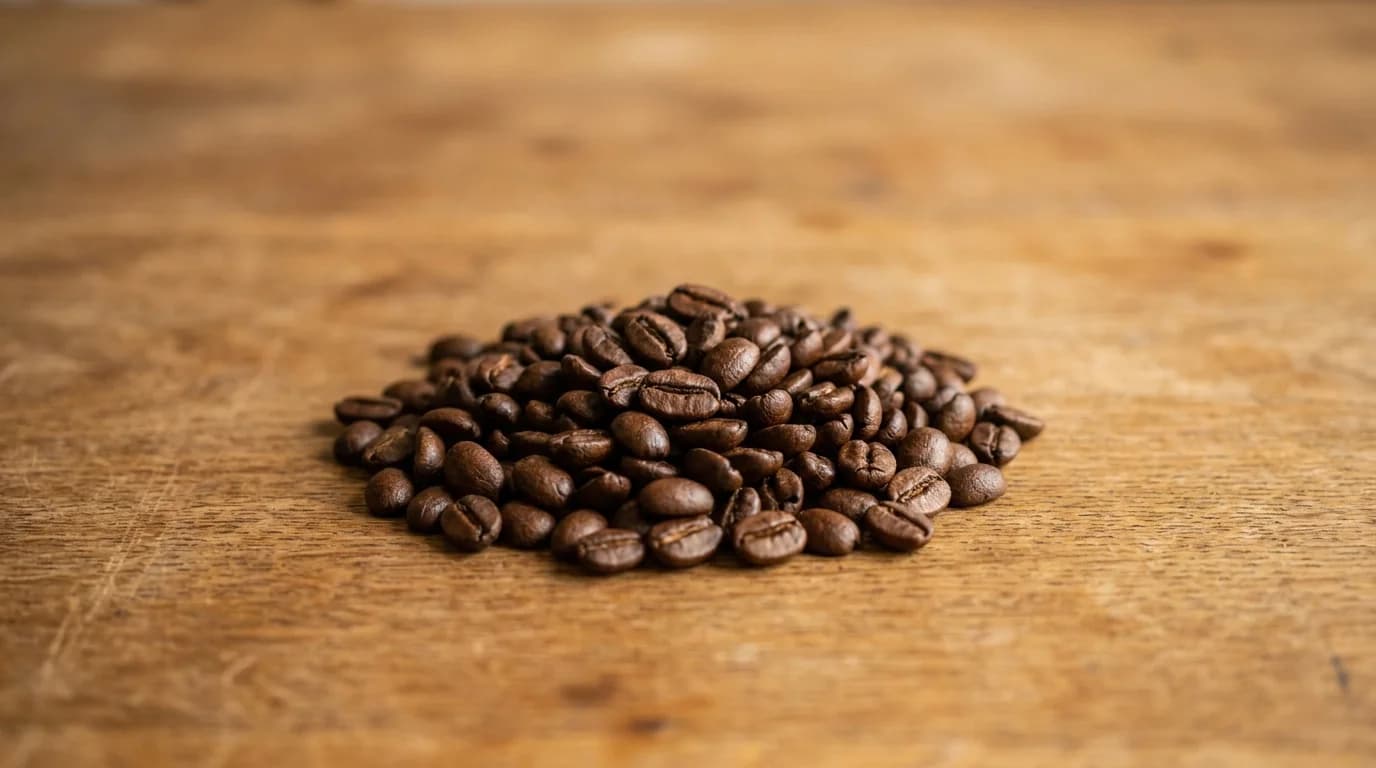
Roasting is the transformation between agriculture and beverage in coffee — the step that turns a hard, grassy, mostly unpalatable green seed into the aromatic brown bean we recognise as coffee. It's a chemistry-intensive process that happens in just 10-20 minutes but drives hundreds of parallel reactions, and the specific way it's executed substantially determines what your coffee will taste like. Understanding roasting is one of the most under-explored aspects of coffee literacy for most consumers.
10-20 minutes
typical commercial drum-roast duration; time and heat curve substantially determine flavour[5]
200-230°C
peak roasting temperatures for light-to-dark roast range; higher temperatures produce darker roasts[1]
Two audible cracks
first crack (~196°C) marks light roast; second crack (~224°C) marks the transition to dark roast[4]
What green coffee is (starting point)
Before roasting, coffee is green: hard beans of pale to blue-green colour, roughly 10-12% moisture content, dense, and largely unpalatable if brewed directly. Green coffee has been processed after harvest (see Coffee Processing Methods) but hasn't yet undergone the thermal transformation that produces the coffee we drink.
Green coffee chemistry:
- Water: 10-12% moisture.
- Chlorogenic acids: 5-8% of dry weight — coffee's main polyphenols. See What Are Chlorogenic Acids?.
- Sugars: natural sucrose ~6-9%, plus other polysaccharides.
- Amino acids and proteins: 8-16% of dry weight.
- Caffeine: 1-2% (arabica) to 2-2.5% (robusta).
- Lipids (coffee oils): 6-11%.
- Trigonelline, minerals, other minor compounds.
Green coffee brewed as-is tastes grassy, vegetal, sour, and astringent — nothing like coffee. All the aromatic and flavour character we associate with coffee develops during roasting through chemical transformation of these starting compounds[4].
The chemistry: what actually happens
Coffee roasting is dominated by several parallel chemical processes:
Dehydration
Dehydration (early stage, ~100-160°C).
Water evaporates from the beans. Green coffee's 10-12% moisture drops to 1-2% by the end of roasting. Bean colour starts yellowing. Little aromatic development yet.
Maillard reaction
Maillard reaction (mid stage, ~160-200°C).
The single most important chemistry of coffee roasting. Amino acids react with reducing sugars to produce hundreds of new compounds — most of coffee's aroma comes from Maillard-derived molecules including pyrazines (nutty, roasted), furans (caramel, sweet), thiophenes (savoury), aldehydes (fruity, floral), and many others. Bean colour turns brown; aroma becomes distinctly coffee-like[1].
Caramelisation
Caramelisation (~170-200°C).
Sugars decompose under heat, producing sweet caramel, molasses, and honey notes. Runs in parallel with Maillard.
First crack
First crack (~196°C).
Steam and CO₂ pressure inside the beans becomes sufficient to rupture the beans' cellular structure. Audible popping sound similar to popcorn but quieter. The bean expands visibly (up to 100% volume increase). Beans have reached the light roast stage.
Development phase
Development phase (between first and second crack).
The most flavour-critical phase. Roasters control heat carefully here — extending development builds body, sweetness, and depth; shortening it preserves acidity and brightness. Typical duration: 1-4 minutes.
Second crack
Second crack (~224°C).
A quieter, sharper crackling sound as bean oils are forced out through cell wall damage. Beans reach medium-dark to dark roast. Beyond second crack, roasts approach French roast and beyond.
Pyrolysis
Pyrolysis (dark stages, >225°C).
Compounds break down under intense heat. Complex flavour compounds are destroyed; sharp bitter and burnt notes develop. Extended pyrolysis produces very dark roasts and eventually charred coffee[2].
Figure
Typical bean-temperature curve during a 15-minute drum roast
The roast levels
Named roast levels correspond to specific development stages (see Light vs Medium vs Dark Roast):
Light roast (Cinnamon, New England):
- Ended just after first crack.
- Peak bean temperature ~196-205°C.
- Dry surface (no oil visible).
- Bright acidity, distinct origin character preserved.
- Higher chlorogenic acid content (less thermally degraded).
Medium roast (American, City, Full City):
- Extended development after first crack.
- Peak bean temperature ~205-220°C.
- Still dry surface (some oil at Full City level).
- Balanced acidity and body; classic American drip profile.
Medium-dark roast (Vienna, French Continental):
- Approaching or at second crack.
- Peak bean temperature ~220-225°C.
- Some visible oil on surface.
- Reduced acidity, more body, developing bittersweet chocolate notes.
Dark roast (French, Italian):
- Through or past second crack.
- Peak bean temperature ~225-230°C.
- Oily surface.
- Little origin character remaining; roast-forward flavour (smoky, bittersweet, dark chocolate).
- Substantial chlorogenic acid degradation.
Very dark roast (Spanish, Italian Espresso Extreme):
- Well past second crack.
- Peak bean temperature 230°C+.
- Very oily surface, often charred appearance.
- Nearly complete origin character loss; primarily roast flavour.
Practical trade-off: lighter roasts preserve origin character and acidity but require good beans; darker roasts mask origin defects but destroy nuance. Specialty coffee generally favours light-to-medium roasts to showcase bean character.
What roasters control
Skilled roasters manage a specific set of variables:
Batch size. Smaller batches allow more precise heat control but reduce production volume. Commercial roasters range from 500 g (sample roasters) to 250 kg+ (commercial production drums).
Charge temperature. The temperature at which beans are loaded into the roaster. Affects initial thermal shock and early rate of temperature increase.
Airflow. Convective vs conductive heat transfer. Airflow removes chaff (papery silverskin) and controls how directly beans are heated by hot air vs the drum.
Heat application curve. The pattern of heat added over time. Front-loaded (hot start, cooler finish) vs even curve vs back-loaded (slow start, hot finish) produce different flavour profiles.
Time to first crack. Typically 8-12 minutes for commercial drum roasts. Faster times (5-8 minutes) produce brighter, more acidic profiles; slower times (12-15 minutes) produce more developed, sweeter profiles.
Development time ratio. The fraction of total roast time spent after first crack. Modern specialty roasting often targets 15-25% development time ratio. Longer development = more sweetness and body; shorter = more brightness.
End temperature and drop time. When to stop the roast. Off by 10-15 seconds can substantially change the resulting flavour.
Post-roast cooling. Rapid cooling arrests further development. Air cooling on cooling trays is standard; water quenching (used in some commercial equipment) can affect subsequent bean chemistry[3].
Roaster types
Drum roasters
Drum roasters (most common):
- A rotating drum with beans inside, heated by external gas or electric elements.
- Both conductive (drum-to-bean) and convective (hot air) heat transfer.
- The traditional standard; used by most specialty and commercial roasters.
- Sizes from 500 g sample roasters to 250 kg+ production drums.
Fluid-bed / air roasters
Fluid-bed / air roasters:
- Beans suspended in a stream of hot air.
- Primarily convective heat transfer.
- Very fast temperature response; excellent airflow.
- Common in home roasters (Behmor, Fresh Roast, Hottop) and some smaller commercial operations.
Infrared / halogen roasters
Infrared / halogen roasters:
- Radiant heat from infrared or halogen sources.
- Even heating; smaller batches typical.
- Modern electric home roasters often use this technology.
Ancient/traditional methods:
- Pan roasting over open fire — still used in Ethiopian coffee ceremonies and some traditional preparations.
- Produces distinctive character but is variable.
Each roaster type produces slightly different flavour profiles even with identical green coffee and target roast levels.
Acrylamide and other health considerations
Roasting produces some compounds that raise health questions:
Acrylamide. Formed during Maillard reactions between asparagine (an amino acid) and reducing sugars at high temperatures. Present in all coffee (and many other roasted foods). Classified as a "probable human carcinogen" based on animal studies at very high doses. Coffee's dietary contribution is small compared to other sources (fried potatoes, bread crust). Coffee acrylamide is a topic of regulatory attention but not a practical consumer concern at typical coffee consumption[6].
Furans. Also formed during roasting; low levels present in all roasted coffee. Similar situation to acrylamide.
Polycyclic aromatic hydrocarbons (PAHs). Trace levels form during high-temperature roasting. Very dark roasts have somewhat higher PAH content. Levels are well below regulatory concern thresholds.
The overall coffee-and-health picture remains favourable even accounting for these compounds — the BMJ umbrella review and other syntheses find consistent associations between moderate coffee consumption and better health outcomes. See Is Coffee Healthy?.
Home coffee roasting
Home roasting is a hobby with real appeal:
Advantages:
- Fresher coffee than commercially available (peak flavour occurs 3-14 days post-roast).
- Green coffee is much cheaper than roasted (~$5-10/lb vs $18-25/lb).
- Direct control over roast profile.
- Ability to try green coffees not available roasted.
Disadvantages:
- Requires equipment ($100-3000 depending on scale).
- Learning curve is real — early roasts are often poor.
- Smoke management (indoor roasting produces substantial smoke, especially at dark roast levels).
- Batch sizes are small (100-500 g typical for home equipment).
Equipment options:
- Popcorn popper ($20-50) — cheapest entry, works but limited.
- Behmor 1600 ($400) — enclosed drum roaster designed for indoor use.
- Sonofresco / Fresh Roast ($200-300) — fluid-bed home roasters.
- Aillio Bullet R1 ($1900-2600) — semi-pro drum roaster with software control.
Green coffee sources:
- Sweet Maria's (largest US green coffee supplier).
- Bodhi Leaf Coffee, Burman Coffee, Mill City Roasters.
- Direct from importers or specialty roasters.
Home roasting is an intermediate hobby — not casual but also not requiring commercial-level investment.
Reading roast information
Coffee packages often include roast information:
- Roast level: Light, Medium, Medium-Dark, Dark, or specific names (City, Vienna, French, Italian).
- Roast date: critical for freshness. Coffee is at peak flavour 3-14 days after roasting; declines after 30 days for whole beans, faster for pre-ground.
- Roast profile description: some specialty roasters describe roast character ("developed but bright," "extended sweet finish").
- Country of origin and processing: important context for how the roast will taste.
For freshness: buy from roasters who print roast dates clearly, and consume within 3-4 weeks of roasting for best flavour.
Common misconceptions
- "Dark roast has more caffeine." Actually slightly less — caffeine is thermally stable but volume loss during roasting means dark roast beans weigh less than light roast beans. Per bean, dark roast has slightly less caffeine.
- "Espresso is a dark roast." Not necessarily. Traditional Italian espresso is medium-dark to dark, but modern specialty espresso often uses medium roasts. Espresso is a brewing method, not a roast level.
- "Oily beans are better." Oil on beans just means they were roasted dark. Not a quality indicator.
- "Roasting is simple — just heat until brown." The temperature curve, development time, and stopping point all substantially affect flavour. Skilled roasting is genuinely craft-intensive.
- "Home roasting is easy." It's doable but has a real learning curve. Early home roasts often taste worse than commercial coffee.
Practical rules
Buying roasted coffee:
- Look for a printed roast date within the past 2-3 weeks.
- Whole beans stay fresh longer than pre-ground.
- Airtight opaque storage away from heat preserves flavour.
Understanding roast levels:
- Light-medium: preserves origin character; best for specialty single-origin coffees.
- Medium: balanced; the mainstream American default.
- Medium-dark to dark: more roast-forward; better for espresso, dark-roast coffee lovers, or hiding bean defects.
If you home roast:
- Start with a popcorn popper or entry-level roaster.
- Buy small quantities of many green coffees to experiment.
- Log every roast (green weight, times to landmarks, end temperature, resulting notes).
- Give roasted beans 24-48 hours to degas before brewing.
Roast theory, for people with a roaster
 Roast theory and profilingThe Coffee Roaster's Companion by Scott Rao (2014-05-04)Rao writes for people operating a roaster rather than reading about one, so it assumes you have heat, airflow and a drum to apply them to. Dense and short. Worth it once you are roasting and trying to make a profile repeatable rather than deciding whether to start.amazon.com $45.00 USDamazon.ca $65.00 CADPrice and availability as of View on Amazon
Product prices and availability are accurate as of the date/time indicated and are subject to change. Any price and availability information displayed on Amazon at the time of purchase will apply to the purchase of this product. Certain content that appears on this site comes from Amazon. This content is provided ‘as is’ and is subject to change or removal at any time.
The honest summary
Coffee roasting transforms hard grassy green beans into aromatic brown coffee through 10-20 minutes of controlled heating that drives Maillard reactions, caramelisation, and other chemical processes. Two audible cracks — first crack around 196°C marking light roast, second crack around 224°C marking the transition to dark roast — are key landmarks. Skilled roasters control heat curves, airflow, timing, and endpoint decisions to develop specific flavour profiles from any given green coffee. Different roast levels produce meaningfully different flavours: light roasts preserve origin character and brightness, dark roasts emphasise roast-forward flavours and hide origin nuance. Home roasting is a viable hobby but has a real learning curve. For most consumers, buying from quality specialty roasters and paying attention to roast dates is the highest-leverage way to drink better coffee.
Frequently asked questions
- What actually happens when coffee is roasted?
- Multiple things simultaneously. First the beans dehydrate (green coffee is ~10-12% water, roasted is ~1-2%). Then Maillard reactions begin — amino acids and sugars combine to produce hundreds of aromatic and flavour compounds and the beans start browning. Around 196°C the first crack occurs as steam and CO2 pressure inside the beans breaks their cellulose structure. Caramelisation of sugars develops sweet notes. Around 224°C the second crack signals bean oils migrating to the surface as beans reach dark roast territory.
- What is first crack and second crack?
- Audible signals during roasting. First crack (~196°C, 8-12 minutes in) is a popcorn-like popping sound as steam pressure ruptures bean cell walls. First crack marks the transition to a properly-drinkable light roast. Second crack (~224°C, several minutes later) is a quieter, sharper crackling as bean oils are forced out to the surface. Second crack marks the transition toward medium-dark and dark roasts. Timing between the two cracks is one of the roaster's key flavour-development windows.
- How long does roasting take?
- Commercial drum roasting typically takes 10-20 minutes per batch. Light roasts often finish around 10-12 minutes (dropping temperature just after first crack). Medium roasts extend to 12-14 minutes. Dark roasts go 14-18 minutes into or beyond second crack. Longer roast times can develop more sweetness but risk over-development or scorching. Faster roasts (5-8 minutes, common in some commercial equipment) tend to produce sharper, more acidic profiles. Home roasting can take similar times using drum, fluid-bed, or air roasters.
- Do roasters really control everything?
- Skilled roasters control the heat profile precisely across the roast — starting hot to drive dehydration, moderating during Maillard development, adjusting through first crack, controlling development time between first and second crack, and calling the stop point. Every roasting decision affects flavour. Two roasters using the same green beans and same equipment will produce meaningfully different results based on their roast profiles.
- Is home coffee roasting possible?
- Yes, at hobbyist scale. Options range from stovetop popcorn poppers ($20-50) to dedicated home roasters like the Behmor 1600, Bullet R1, or Aillio Bullet ($500-3000+). Home roasting requires attention (batches typically 5-20 minutes each), some smoke management, and practice. Fresh home-roasted coffee at its peak is genuinely excellent, but commercial specialty roasters typically achieve more consistent results with their equipment and experience.
References
Every factual claim in this article is drawn from the sources below. See the source library for how we grade evidence.
- [1]Roasting Conditions and Coffee Flavor: A Multi-Study Empirical InvestigationBeverages (MDPI) · 2020 · Review · Tier 2 · Moderate
- [2]Impact of roasting on phenolic and volatile compounds in coffeePMC / NIH · 2022 · Review · Tier 2 · Moderate
- [3]Effect of Roasting on the Antioxidant Activity of Coffee BrewsJournal of Agricultural and Food Chemistry · 2002 · Observational study · Tier 2 · Moderate
- [4]Coffee volatile compounds and roast markersPMC / NIH · 2016 · Review · Tier 2 · Moderate
- [5]Brewing FundamentalsCoffee Science Foundation · Reference work · Tier 2 · Moderate
- [6]Scientific Opinion on acrylamide in foodEuropean Food Safety Authority · 2015 · Agency guidance · Tier 1 · Strong
- [7]CoffeeEncyclopaedia Britannica · Reference work · Tier 3 · Contextual
Related reading
- Beans, Roasts & OriginsLight vs Medium vs Dark Roast: Flavour, Caffeine, Facts→
- Brewing ScienceWhat Are Chlorogenic Acids? Coffee's Key Polyphenol→
- Beans, Roasts & OriginsCoffee Processing Methods Explained→
- Beans, Roasts & OriginsThird Wave Coffee: The Specialty Coffee Movement→
- Beans, Roasts & OriginsCarbonic Maceration Coffee: Wine-Inspired Processing→
- Beans, Roasts & OriginsThe History of Coffee Houses: From Mecca to London→