Colombian Coffee: Altitude, Acidity, and Variety
By Coffee Studies Editorial·Published July 15, 2026·7 min read
Quick answer
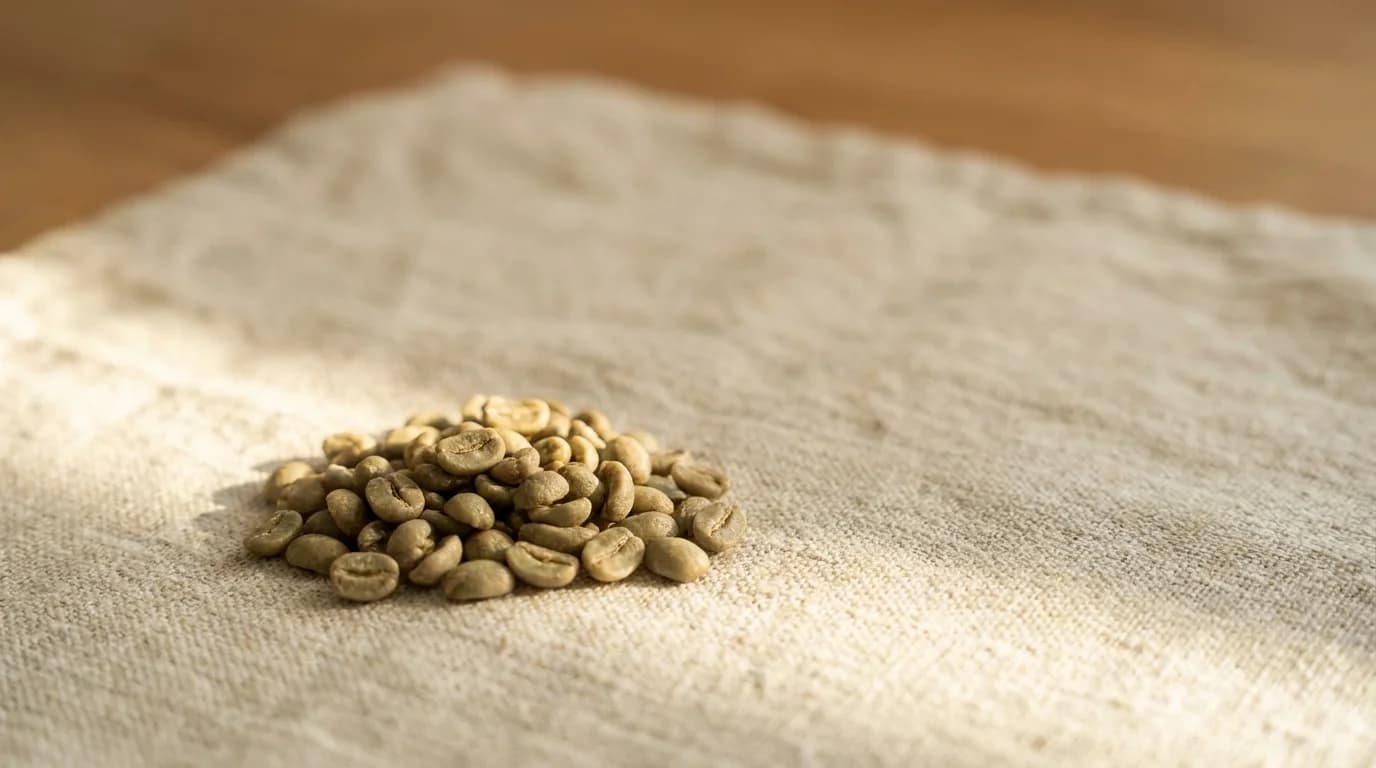
Colombia is one of the world's most important coffee-producing countries — consistently the second- or third-largest by volume, the largest producer of washed arabica, and one of the most reputationally consistent origins in specialty coffee. Colombian coffee is often described as the reference profile for what mainstream specialty arabica should taste like: clean, balanced, medium-bodied, moderately bright, sweet and approachable. That approachability sometimes gets it dismissed by extreme-flavour hunters, but Colombia's ceiling in specialty production is very high indeed — modern Huila and Nariño coffees rival anything from any origin.
~3rd largest producer
Colombia is consistently among the world's top producers, largest producer of washed arabica[4]
100% arabica
Colombia grows essentially no robusta — the entire national production is arabica, differentiating it from Brazil and Vietnam[1]
Coffee Axis UNESCO
the Coffee Cultural Landscape of Colombia (Caldas, Risaralda, Quindío) inscribed as World Heritage in 2011[7]
The three Andean ranges
Colombian coffee grows across the country's three mountain ranges — the Western, Central, and Eastern Cordilleras of the Andes — at elevations that suit arabica cultivation. The country's near-equatorial location, combined with high elevation and abundant rainfall, produces conditions where coffee can be grown and harvested essentially year-round in different regions.
Two annual harvests are typical:
- Main harvest (September-December) across most regions.
- Secondary harvest (April-June), called mitaca — particularly in central regions.
This bimodal production is unusual among coffee-producing countries and gives Colombia consistent year-round supply of fresh-crop coffee[3].
Major coffee regions
Coffee Axis (Eje Cafetero) — Caldas, Risaralda, Quindío. Located in the central Andean region. The historic heartland of Colombian coffee: dense small-farm cultivation, cooperative processing infrastructure, and the classic "Colombian" cup profile — medium body, balanced acidity, chocolate-caramel sweetness, and clean finish. This is the coffee that made Colombia's reputation. UNESCO recognised the region's cultural landscape in 2011.
Huila (southern Andes, department of Huila). Has emerged in the past 20 years as Colombia's specialty leader. Higher elevations, distinctive microclimates, and quality-focused cooperatives have produced some of the country's most celebrated single-origin lots. Flavour tends toward brighter acidity, more distinctive fruit notes, more complex profiles than the classic central-region coffees.
Nariño (extreme southern Andes, bordering Ecuador). Very high elevations (up to 2,300 metres) and equatorial climate produce coffees with distinctive bright, complex, sometimes tropical-fruit character. Nariño's terrain is difficult and production small, but its specialty reputation is substantial.
Antioquia (northwestern Andes, including Medellín region). One of Colombia's largest producing departments. Diverse production across many altitudes and microclimates. Historic role in the Colombian coffee industry.
Santander (northeastern Andes). Traditionally significant region, currently rebuilding specialty coffee reputation after historical export focus on commercial-grade coffee.
Cauca (southwestern Andes). Similar climate to Nariño, producing similar profiles at somewhat lower elevations. Growing specialty presence.
Tolima (central Andes). Long production history, mixed commercial and specialty output.
Varieties
Colombian coffee is entirely arabica. The main cultivars grown:
Traditional Bourbon-Typica lineage:
- Typica — the oldest cultivar in the Americas, originally brought via the Dutch/French colonial coffee transfer chain (see History of Coffee). Still grown in older Colombian plantings; excellent cup quality; low yields.
- Bourbon — related variety, more productive than Typica, similar cup profile. Historically important in Colombia.
- Caturra — a natural mutation of Bourbon that's smaller/more compact, allowing denser planting. Higher yields, similar cup character. Became the dominant Colombian cultivar in the mid-20th century.
Disease-resistant cultivars:
- Colombia — released 1980s by Cenicafé (Colombian coffee research institute), the first Colombian rust- resistant variety. Widely planted for a period.
- Castillo — released 2005 by Cenicafé, superior rust-resistance to earlier Colombia variety. Now the most widely planted cultivar in Colombia, accounting for a majority of new plantings.
- Cenicafé 1 — 2016 release, further improved resistance and productivity.
Debate about Castillo: in specialty circles there's ongoing discussion about whether Castillo produces slightly inferior cup quality to Bourbon-Caturra lineage. The practical reality is that without rust-resistant varieties, Colombian arabica production would be under existential threat — coffee leaf rust epidemics (particularly 2008-2012 across Latin America) devastated non-resistant plantings. Castillo has been the tool that kept Colombian arabica viable at scale[5].
Modern quality-focused farms often maintain a mix of resistant and traditional cultivars — Castillo for production stability, Bourbon/Caturra for premium specialty lots.
Grading: Supremo and Excelso
Colombian export grading is based primarily on bean size (screen size), not cup quality.
- Supremo — screen 17-18 (largest beans).
- Excelso — screen 14-16 (medium beans).
- UGQ (Usual Good Quality) — screen 13 and below, commercial grade.
Important: these grades were developed for commercial export and don't reliably predict cup quality. Bean size correlates loosely with elevation and cultivar but is a poor proxy for actual flavour. A Supremo can be excellent or mediocre; an Excelso can be excellent or mediocre.
Specialty coffee grading uses the SCA cupping score (80+ = specialty, 90+ = exceptional) rather than screen size. Modern specialty Colombian coffees are often marketed by cooperative, farmer, and cupping score rather than by Supremo/Excelso.
For consumers: "Supremo" on a supermarket bag doesn't mean much beyond size. For specialty coffee, look for named regions, cooperatives, farmer names, and cupping scores.
FNC and the industry structure
The Federación Nacional de Cafeteros de Colombia (FNC, National Federation of Coffee Growers) is the industry organisation representing Colombian coffee farmers. Founded 1927. Key roles:
- Cenicafé — the FNC's research arm, responsible for varietal development (Castillo, Cenicafé 1), agronomic research, and technical support to farmers.
- Almacafé — warehousing and quality-control infrastructure.
- Buencafé — freeze-dried instant coffee production.
- Juan Valdez — the marketing brand and café chain that made "Café de Colombia" globally recognised. The fictional Juan Valdez character (with his mule Conchita and his moustache) has been the Colombian coffee brand ambassador since 1959.
- Café de Colombia — the Protected Designation of Origin (PDO) label for coffee produced entirely in Colombia.
The FNC's model — a producer-owned federation providing research, quality control, marketing, and price support to smallholder farmers — has been influential globally as a model for coffee-producing country organisation[6].
What Colombian coffee tastes like
The classic Colombian profile — the one that made the country's reputation:
- Medium body — neither light nor heavy.
- Balanced acidity — moderate brightness, often described as citrus or caramel-apple.
- Chocolate and caramel sweetness — nutty, mild dessert-like notes.
- Clean finish — no lingering harshness.
- Approachable — pleasant across brewing methods and roast levels.
The specialty Colombian profile (Huila, Nariño, quality- focused lots elsewhere) extends this with:
- More distinctive fruit notes — red apple, plum, red berry, sometimes tropical fruit.
- Brighter acidity — more complex, sometimes wine-like.
- More expressive aromatic character — floral notes, clearer origin character.
- Better clarity — well-processed washed coffees have distinctive articulated flavour separation.
Compared to Ethiopian coffees, Colombian coffees are less aromatic and less floral but more balanced and body- supported. Compared to Central American coffees (Guatemalan, Costa Rican, Nicaraguan), Colombian coffees are similar in family but often somewhat more distinctive in fruit character.
Processing
Colombian coffee is overwhelmingly washed processed. The country's cooperative infrastructure and abundant water supply support washed processing at scale. Traditional wet-mills and modern eco-pulpers are both in use.
Modern specialty producers increasingly experiment with:
- Honey / pulped natural — cherry pulp partially removed; mucilage remains during drying.
- Natural process — full-cherry drying; produces more fruit-forward profiles.
- Anaerobic fermentation — controlled oxygen-free fermentation for distinctive flavour development.
- Extended fermentation — longer wet-processing times for enhanced character.
These experimental methods produce distinctive lots but remain a small fraction of overall Colombian production.
Buying Colombian coffee
Reading Colombian coffee labels:
- Region — Huila, Nariño, Coffee Axis, etc. Increasingly specific — sub-regions, municipalities, farmer names.
- Cultivar — Bourbon, Caturra, Castillo, Colombia, etc.
- Processing — washed (default), honey, natural, anaerobic.
- Elevation — often mentioned; higher altitude correlates with brighter, more complex profiles.
- Grade — Supremo, Excelso, or cupping score.
- Certifications — Rainforest Alliance, Fair Trade, UTZ, Organic — common on Colombian coffee.
- Cooperative or farm name — modern specialty lots emphasise this.
Common misconceptions
- "Supremo means best quality." Supremo is a size designation, not a quality designation. Excellent Excelso lots exist; mediocre Supremo lots exist.
- "Colombian coffee is boring." Classic mainstream Colombian coffee is designed to be balanced/approachable rather than exotic. Modern specialty Colombian (Huila, Nariño) is anything but boring.
- "Juan Valdez is a real person." Fictional character, brand ambassador since 1959.
- "All Colombian coffee is disease-resistant Castillo." Castillo dominates new plantings but Bourbon, Caturra, Typica, and other traditional cultivars remain in cultivation, particularly on older or specialty-focused farms.
The honest summary
Colombian coffee is one of the world's most important arabica origins, producing consistently high-quality washed coffee across a range of high-elevation Andean regions. The traditional Coffee Axis produces the classic balanced, approachable Colombian profile; modern specialty production in Huila and Nariño produces some of the most distinctive single-origin coffees in the world. The Federación Nacional de Cafeteros' producer-owned industry model is influential globally, and disease-resistant Castillo cultivars have kept Colombian arabica production viable through the coffee leaf rust crises of the 21st century. For most coffee drinkers, Colombian coffee is the reference for what good washed arabica tastes like — reliable, balanced, and at the top end extraordinary.
Frequently asked questions
- What makes Colombian coffee distinctive?
- Colombian coffee is grown at high elevation (1,200-2,000+ metres) in three Andean mountain ranges, in a climate that produces distinctive cup character: clean and balanced with medium body, moderate bright acidity (often described as citrus or caramel-apple), and clear sweet notes. It's the reference profile for 'classic' arabica coffee — not the most exotic origin, but one of the most consistently well-produced.
- What is the Coffee Axis or Coffee Triangle?
- The Coffee Axis (Eje Cafetero) or Coffee Triangle (Triángulo del Café) refers to the three Colombian departments of Caldas, Risaralda, and Quindío in the central Colombian Andes — the historic heartland of Colombian coffee production. The region is a UNESCO World Heritage Site (2011) recognised for its cultural coffee landscape. Modern Colombian specialty coffee increasingly comes from other regions (Huila, Nariño), but the Coffee Axis remains iconic.
- What are Colombia's main coffee regions?
- Colombia produces coffee in over 20 departments, but the major regions are: Caldas, Risaralda, Quindío (Coffee Axis) — the classic Colombian profile; Huila (southern) — leader in modern specialty production; Nariño (southern) — very high elevation, distinctive bright profile; Antioquia (northwest) — one of the largest producing areas; Santander, Tolima, Cauca — significant additional production. Each has distinct microclimates and flavour profiles.
- What's the difference between Supremo and Excelso?
- Supremo and Excelso are Colombian export grading categories based on screen size (bean size) rather than cup quality directly. Supremo requires beans of screen 17-18 (larger). Excelso is screen 14-16 (smaller). Both are export-grade quality; the distinction is primarily aesthetic and doesn't reliably predict flavour differences. Specialty coffee grading uses cupping scores instead — Supremo/Excelso is a commercial grade that Colombian farmers historically used before modern specialty grading emerged.
- What is Castillo and why does it matter?
- Castillo is a coffee variety developed by Cenicafé (the Colombian coffee research institute) and released in 2005. It's resistant to coffee leaf rust — the fungal disease that has devastated arabica production globally. Castillo now accounts for a majority of Colombian coffee planting. There's debate in specialty circles about whether Castillo has slightly less cup quality than traditional Bourbon-Caturra lineage varieties; the practical reality is that without disease-resistant varieties, Colombian coffee's future is at serious risk.
References
Every factual claim in this article is drawn from the sources below. See the source library for how we grade evidence.
- [1]Coffee Varieties CatalogWorld Coffee Research · Reference work · Tier 2 · Moderate
- [2]Interactive Coffee Varieties CatalogWorld Coffee Research · Reference work · Tier 2 · Moderate
- [3]Coffee agronomyFood and Agriculture Organization of the United Nations · Reference work · Tier 2 · Moderate
- [4]International Coffee OrganizationInternational Coffee Organization · Official dataset · Tier 1 · Strong
- [5]Coffee leaf rust: a reviewPMC / NIH · 2022 · Review · Tier 2 · Moderate
- [6]Uncommon Grounds: The History of Coffee and How It Transformed Our World (revised edition)Basic Books (Mark Pendergrast) · 2010 · Reference work · Tier 2 · Moderate
- [7]CoffeeEncyclopaedia Britannica · Reference work · Tier 3 · Contextual
Related reading
- Beans, Roasts & OriginsCoffee Origins Around the World→
- Beans, Roasts & OriginsWhat Is Single-Origin Coffee? Why Origin Matters→
- Beans, Roasts & OriginsArabica vs Robusta: Taste, Caffeine, and Differences→
- Beans, Roasts & OriginsIndian Coffee: Monsoon Malabar and Filter Kaapi→
- Beans, Roasts & OriginsKenyan Coffee: AA Grade and Bright Acidity Explained→
- Beans, Roasts & OriginsGuatemalan Coffee: Regions, Flavour, and What to Look For→