Guatemalan Coffee: Regions, Flavour, and What to Look For
By Coffee Studies Editorial·Published July 18, 2026·4 min read
Quick answer
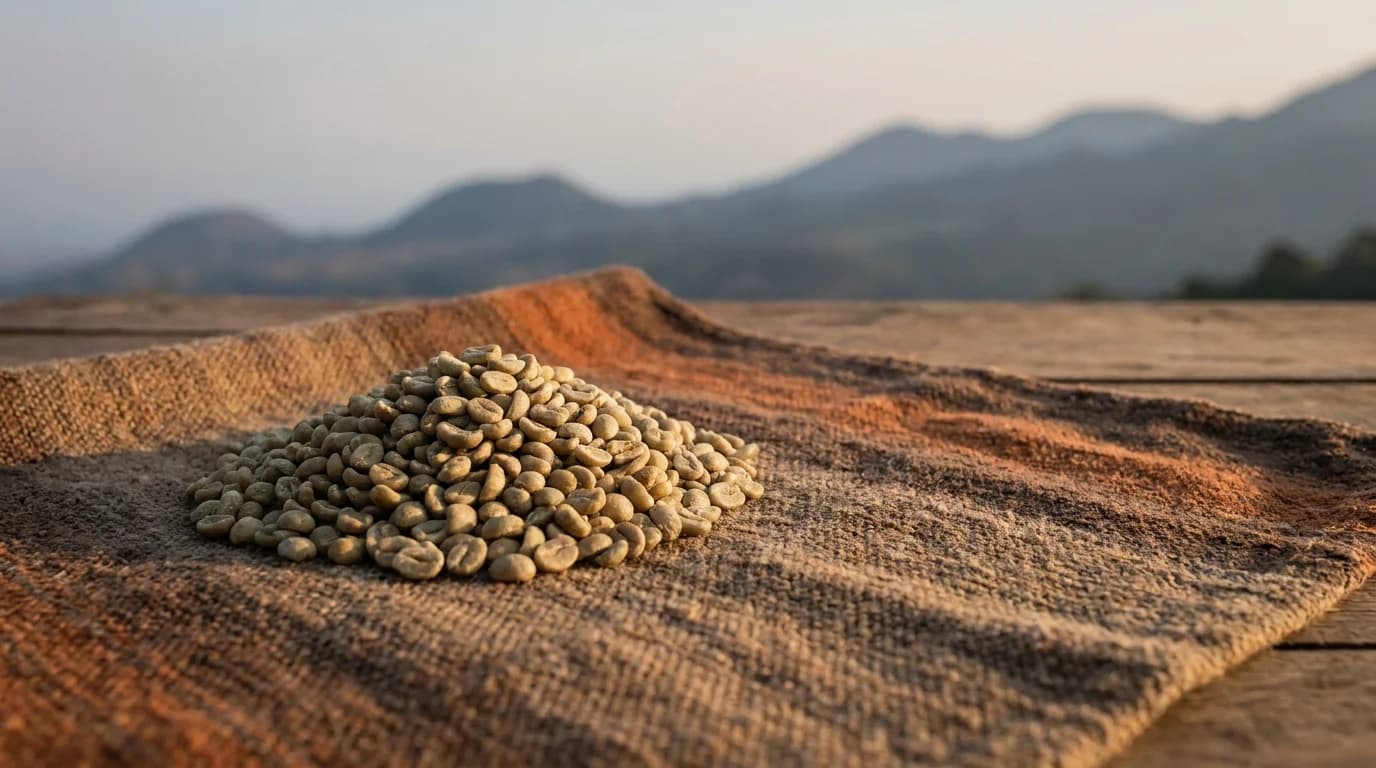
Guatemala is not a country you buy coffee from by accident — you seek it out. The country produces a relatively small share of global coffee by volume but punches well above its weight in specialty circles, largely because the eight recognised growing regions each have distinct altitude, soil, and climate conditions that produce meaningfully different cups.
1,300–1,900 metres
Guatemala's main coffee-growing regions sit at some of the highest altitudes in Central America — the elevation slows bean development, allowing more complex sugars and acids to build in the seed before harvest[4]
8 named growing regions
Guatemala markets its coffee under eight official regional designations — Antigua, Huehuetenango, Cobán, Atitlán, Fraijanes, Acatenango, San Marcos, and Nuevo Oriente — each with a distinct microclimate and cup profile[1]
~3.5 million 60 kg bags/year
Guatemala ranks among the top 10 coffee-producing countries globally and is typically the fourth-largest producer in the Americas after Brazil, Colombia, and Honduras[2]
Where Guatemalan coffee grows
Guatemala sits in the volcanic spine of Central America, which gives the country two things that matter for coffee: altitude and mineral-rich volcanic soil.
The western and central highlands — where most specialty coffee is grown — sit at 1,300–1,900 metres above sea level. At this altitude, coffee cherries ripen slowly, building concentrated sugars and organic acids that translate into a complex, full-bodied cup[4].
Volcanic ash from active and dormant volcanoes (Fuego, Santiaguito, and others) enriches the growing soil with minerals including phosphorus, potassium, and calcium. This is one reason Guatemalan coffees — particularly Antigua — tend toward a dense, full body.
The eight growing regions
Guatemala's Anacafé (the national coffee association) formally recognises eight growing regions, each with a registered profile[1]:
Figure
Guatemala coffee regions by approximate altitude range
Values in metres asl
Antigua vs Huehuetenango
These two regions account for most of the Guatemalan coffee that reaches specialty cafés internationally, and they taste different.
Antigua sits on a high volcanic plateau at about 1,500 metres, surrounded by three volcanoes. The region has a notably dry microclimate — unusual for Guatemala — with clear wet and dry seasons that support predictable, even cherry development. Antigua coffee is known for dark chocolate character, a smoky earthiness that some attribute to the volcanic soil, a full body, and a balanced, moderate acidity. It is often described as classic, reliable, and substantial[3].
Huehuetenango is the outlier. It is Guatemala's most remote and highest-altitude growing region, with farms reaching above 1,900 metres. The region is warmed by dry hot air that flows up from the Tehuantepec plains in southern Mexico — this air movement protects the high- altitude farms from frost, making growing at elevation viable. The result is a very different cup: bright, fruit-forward, floral, with stone fruit or berry notes and a more pronounced, articulate acidity. Where Antigua is rich and grounded, Huehuetenango is light and expressive.
Flavour profile
The diversity of regions means there is no single "Guatemalan coffee" profile — but some tendencies hold across the country:
- Sweetness: chocolate and caramel are the dominant sweet notes in most Guatemalan coffees, particularly those from lower-altitude regions like Antigua and Cobán.
- Acidity: moderate to bright depending on altitude; Huehuetenango and Fraijanes produce more acidic, lively cups; Cobán and Nuevo Oriente produce softer, more muted acidity.
- Body: typically full, particularly for washed coffees from volcanic-soil regions.
- Finish: often clean and long, with chocolate or caramel lingering.
Most Guatemalan specialty coffee is processed using the washed (wet) method, which strips the cherry skin and fruit before drying. This tends to produce cleaner, brighter cups where the bean's inherent character — rather than fermentation flavours from the fruit — comes through.
Buying Guatemalan coffee
When looking at a bag of Guatemalan coffee, the most useful piece of information after the roast date is the growing region:
Antigua — expect dark chocolate, full body, balanced acidity. Reliable for espresso and immersion brewing (French press, moka pot).
Huehuetenango — expect more fruit-forward, bright, floral character. Works well as filter coffee where acidity and lighter notes read clearly.
Cobán / cloud forest — expect earthier, heavier, spice- inflected cups. Less internationally common but distinctive.
If only "Guatemala" is listed without a region, the coffee is a blend of growing areas — still likely to be good, but less information to calibrate expectations[2].
SHB (Strictly Hard Bean) is the highest Guatemalan grade, indicating beans grown above 1,350 metres with a dense, hard seed. This is a reasonable quality signal, though not a flavour profile descriptor.
The honest summary
Guatemalan coffee is distinguished by altitude, volcanic soil, and the meaningful flavour differences between its eight growing regions. Antigua is the most famous origin — chocolate, full-bodied, balanced — and Huehuetenango is the most distinctive: high-altitude, fruit-forward, and bright. Most Guatemalan coffee is washed-process arabica, which contributes to the clean, structured cup character. Guatemala produces approximately 3.5 million bags per year, making it a significant origin by volume as well as quality. When buying, the growing region is the most useful piece of information on the bag.
Frequently asked questions
- What does Guatemalan coffee taste like?
- Guatemalan coffee tends toward chocolate, caramel, and brown sugar sweetness, with a moderate-to-bright acidity and a full, rich body. Flavour varies by region: Antigua coffees are known for dark chocolate, smoky earthiness, and balanced acidity from the volcanic microclimate; Huehuetenango coffees are brighter and more fruit-forward with floral notes and more pronounced acidity; Cobán coffees are heavier-bodied with earthy and spice character from the cloud forest climate. The variation between regions is meaningful enough that knowing the growing region tells you more than knowing the country alone.
- Where is coffee grown in Guatemala?
- Guatemala has eight official coffee-growing regions, each with a distinct microclimate. The most internationally known are Antigua (volcanic plateau south of Guatemala City), Huehuetenango (high altitude in the northwest, near the Mexican border), Cobán (cloud forest in Alta Verapaz), and Atitlán (the slopes around Lake Atitlán). Other regions include Fraijanes, Acatenango, Nuevo Oriente, and San Marcos. Altitude across regions ranges from 1,300 to over 1,900 metres above sea level.
- Is Guatemalan coffee arabica or robusta?
- Guatemalan coffee is predominantly arabica. The altitude and climate in Guatemala's main growing regions favour arabica cultivation — most coffee is grown at 1,300–1,900 metres, where arabica thrives. Robusta, which grows at lower altitudes, is produced in very small quantities in Guatemala but is not the basis of the country's specialty reputation.
- What is Antigua coffee?
- Antigua coffee grows on the high volcanic plateau surrounding the colonial city of Antigua, at roughly 1,500 metres above sea level. The region is flanked by three volcanoes — Agua, Fuego, and Acatenango — whose ash enriches the soil with minerals. A dry microclimate and clear seasonal distinction between wet and dry seasons contribute to consistent bean development. Antigua coffee is typically known for its dark chocolate and smoky character, full body, and balanced acidity. It is among the most recognised Guatemalan origins internationally.
- What is Huehuetenango coffee?
- Huehuetenango (pronounced way-way-teh-NAHN-go) is Guatemala's highest-altitude growing region, reaching above 1,900 metres in some farms. Located in the far northwest near the Mexican border, the region is warmed by dry hot winds from the Tehuantepec plain in Mexico, which protect the crops from frost at altitudes that would otherwise be too cold. Huehuetenango coffees are typically brighter and more fruit-forward than Antigua — more floral, with peach, berry, or stone fruit notes and a more pronounced acidity.
References
Every factual claim in this article is drawn from the sources below. See the source library for how we grade evidence.
- [1]FAOSTATFood and Agriculture Organization of the United Nations · Official dataset · Tier 1 · Strong
- [2]World Coffee Statistics DatabaseInternational Coffee Organization · Official dataset · Tier 1 · Strong
- [3]Coffee Varieties CatalogWorld Coffee Research · Reference work · Tier 2 · Moderate
- [4]Coffee agronomyFood and Agriculture Organization of the United Nations · Reference work · Tier 2 · Moderate
Related reading
- Beans, Roasts & OriginsCoffee Origins Around the World→
- Beans, Roasts & OriginsArabica vs Robusta: Taste, Caffeine, and Differences→
- Beans, Roasts & OriginsCoffee Processing Methods Explained→
- Beans, Roasts & OriginsWhat Is Single-Origin Coffee? Why Origin Matters→
- Beans, Roasts & OriginsMexican Coffee: Chiapas, Oaxaca, and Cup Profile→
- Beans, Roasts & OriginsIndian Coffee: Monsoon Malabar and Filter Kaapi→