Coffee Processing Methods Explained
By Coffee Studies Editorial·Published July 15, 2026·9 min read
Quick answer
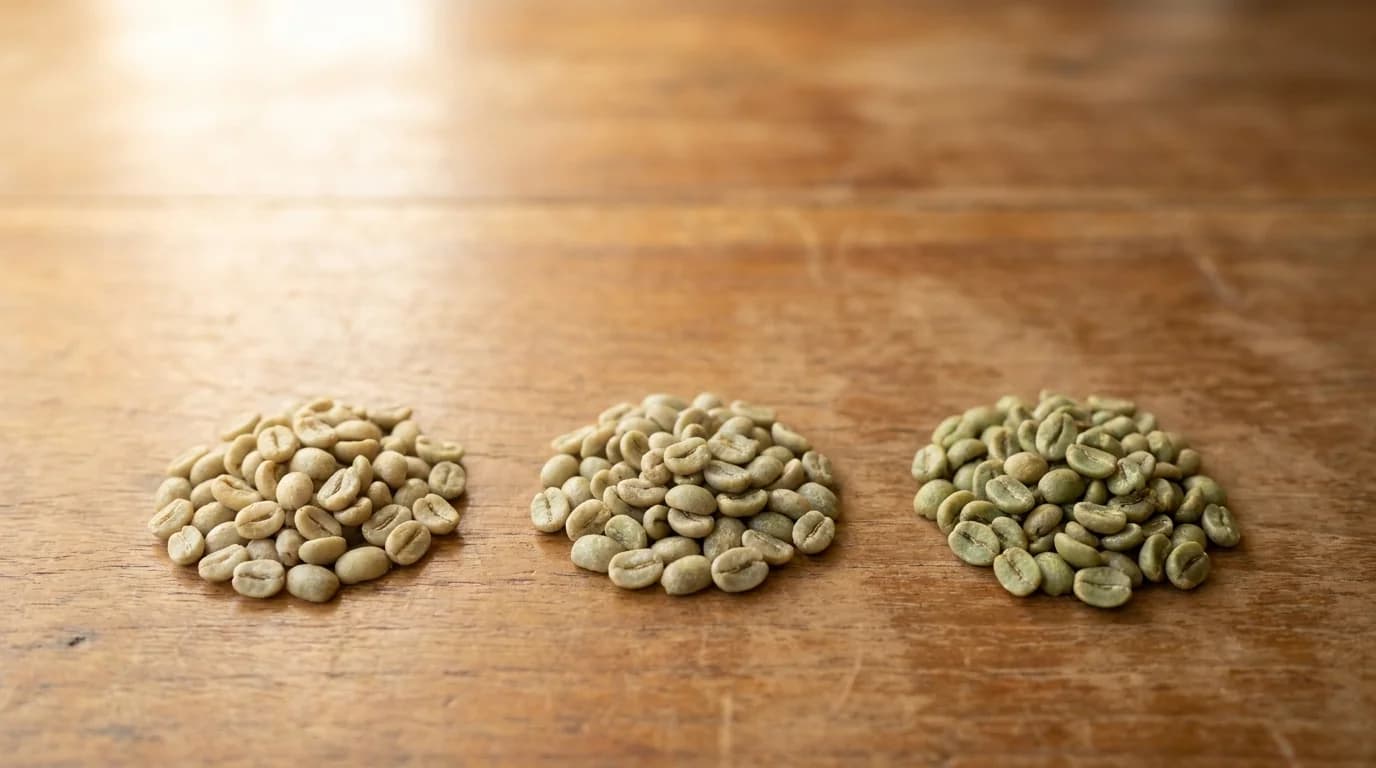
If you're serious about coffee, understanding processing is non-negotiable. It's one of the two variables (alongside cultivar and terroir) that most determines what your cup will actually taste like — and it's the variable that's undergone the most rapid change in the past 20 years, as specialty coffee producers have adopted techniques from wine, beer, and food science to expand what coffee can taste like.
Four categories
washed, natural, honey (pulped natural), and experimental — each producing distinctive flavour profiles[2]
~11-12% moisture
target moisture content for stable green coffee storage — the ending point of any processing method[1]
Fermentation matters
microbial and enzymatic activity during processing produces flavour compounds that appear in the final cup[3]
Why processing is a big deal
A coffee cherry is a small fruit with a coffee bean (technically the seed) inside. To make coffee, you need to separate the bean from the surrounding fruit — the skin, the sticky mucilage layer, the parchment layer, and the silverskin — and dry the bean to stable moisture content.
The processing decisions made in the days between picking and storage substantially affect what the finished coffee tastes like:
- What flavour compounds transfer from the fruit into the bean.
- What fermentation products develop and enter the bean.
- Which enzymes remain active during drying.
- What microbial ecosystem shapes the bean during processing.
The processing method can be as consequential for flavour as the origin, variety, or roast level. Two coffee lots from the same farm, same variety, harvested the same day, processed differently, can taste like coffees from different worlds[3].
Figure
Global coffee production share by processing method
Washed process (fully washed / wet process)
How it works:
- Ripe cherries are picked and floated in water — unripe or defective cherries float; ripe ones sink and are kept.
- Cherries are pulped: mechanical pulpers squeeze off the skin and most of the fruit, leaving beans covered in a sticky mucilage layer inside a parchment shell.
- Beans (in parchment) are fermented in water tanks for 12-72 hours. Microbes break down the mucilage.
- Beans are washed clean of the fermented mucilage.
- Beans (still in parchment) are dried on patios or raised beds for 1-3 weeks until they reach ~11-12% moisture.
- Beans are stored in parchment until export, then hulled (parchment removed) before shipping.
Origins where this is standard: Colombia, Central America (Guatemala, Costa Rica, Nicaragua, El Salvador), most Kenyan production, most modern specialty Ethiopian.
Flavour profile:
- Cleanest cup of any traditional method.
- Bright, articulated acidity.
- Clear origin/variety character.
- Lower body than natural.
- Less pronounced fruit sweetness (fruit doesn't stay with bean during drying).
- More expressive of the underlying coffee's terroir and varietal character.
When you see "washed" on a label, expect a clean, bright, origin-character-forward cup.
Natural process (dry process)
How it works:
- Ripe cherries are picked and cleaned.
- Whole cherries are laid out on patios or raised beds to dry — usually 2-6 weeks.
- During drying, the fruit ferments around the bean; sugars and flavour compounds transfer from fruit to bean.
- Once cherries are fully dried (skin like a wrinkled raisin), beans are hulled from the dried cherry.
- Beans continue to condition, then are graded and exported.
Origins where this is standard: most Ethiopian Harrar and traditional Yirgacheffe naturals, most Yemeni, much of Brazilian, some Central American and modern specialty producers everywhere.
Flavour profile:
- Intensely fruit-forward: strawberry, blueberry, tropical fruit, wine-like.
- Heavier body than washed.
- Softer acidity.
- More sweetness.
- More variable — natural processing is harder to control, and defects (from unevenly-drying cherries, mould, or overripe fruit) can appear.
When you see "natural" or "dry-processed" on a label, expect intensely fruity, wine-like character with softer acidity and fuller body.
Honey process (pulped natural)
How it works:
- Ripe cherries picked and cleaned.
- Cherry skin removed by pulper (like washed method).
- Beans (still with mucilage layer attached) are dried directly — no water fermentation stage.
- Depending on how much mucilage is left before drying,
the coffee is classified as:
- White honey — most mucilage removed; nearly a washed profile.
- Yellow honey — some mucilage; light-to-medium profile.
- Red honey — most mucilage retained; darker, sweeter, richer profile.
- Black honey — full mucilage retained; closest to natural profile, extra dark colour of beans during drying.
Origins where this is used: invented in Brazil (see Brazilian Coffee) and adopted heavily across Central America (particularly Costa Rica) since the 2000s. Increasingly used globally.
Flavour profile:
- Middle ground between washed and natural.
- Sweeter than washed — mucilage sugars caramelise during drying.
- More body than washed.
- Cleaner than natural — no cherry-skin defects during drying.
- Distinct honey-like sweetness that's the origin of the name.
- Varies substantially by sub-type (white honey vs black honey are very different profiles).
When you see "honey process," "yellow/red/black honey," or "pulped natural" on a label, expect a sweeter, fuller- bodied coffee than washed but cleaner than natural.
Wet-hulled process (giling basah)
How it works:
- A specifically Indonesian variant of shortened washed processing.
- Beans are hulled (parchment removed) while still very moist (~40% moisture), unusual because most processing hulls beans dry.
- Exposed wet beans finish drying, developing distinctive earthy character.
- See Sumatra Coffee for the full treatment.
Origins: essentially unique to Sumatra and adjacent Indonesian islands (Sulawesi, Flores).
Flavour profile: heavy body, low acidity, distinctive earthy/cedar/tobacco character, dark chocolate depth.
Experimental processing
The past 10-15 years has seen an explosion of experimental processing methods borrowed from wine, beer, and food fermentation science.
Anaerobic fermentation
Anaerobic fermentation:
- Beans (or whole cherries) sealed in tanks with no oxygen.
- Yeast populations different from open-air fermentation dominate.
- Produces distinctive fruit-forward, sometimes wine-like, sometimes tropical-fruit flavours.
- Timing varies: 24-72+ hours common.
Carbonic maceration
Carbonic maceration:
- Whole cherries sealed in tanks flooded with CO₂.
- Intracellular fermentation happens inside the cherries.
- Borrowed from the Beaujolais wine tradition.
- Produces very intense, distinctive character.
- See Carbonic Maceration Coffee for the full deep-dive.
Extended fermentation
Extended fermentation:
- Longer-than-traditional fermentation times (some for 6+ days).
- Deeper flavour development.
- Requires careful monitoring — very small margin between distinctive and defective.
Inoculated fermentation
Inoculated fermentation:
- Specific yeast or bacteria strains added to the fermentation.
- Reproducible flavour profiles.
- Wine yeasts (like Saccharomyces cerevisiae) are common additions.
Thermal shock
Thermal shock:
- Rapid temperature cycling during fermentation.
- Alters microbial populations.
- Produces distinctive profiles.
Lactic fermentation
Lactic fermentation:
- Encouraging lactic-acid bacteria dominance.
- Produces yogurt-like, tropical-fruit notes.
Natural anaerobic
Natural anaerobic:
- Combines the anaerobic and natural approaches.
- Whole cherries sealed in oxygen-free environments.
- Very intense fruit character.
Practical note on experimental processing: these methods produce distinctive, memorable, often astonishing coffees. They also introduce more variability, higher processing costs, and sometimes flavour profiles that experienced tasters consider off-character for coffee. In some competitions, judges debate whether experimentally- processed coffees should be scored against traditional processing standards or as their own category.
Processing environment and drying
Beyond the wet-processing stage, drying method also matters:
Patio drying
Patio drying (traditional):
- Coffee spread on concrete or brick patios in direct sun.
- Requires regular raking to ensure even drying.
- Best for regions with reliable sun and dry weather.
- Common in Brazil, some Central American producers.
Raised bed drying
Raised bed drying (African beds):
- Coffee spread on mesh-topped raised beds, exposed to air on all sides.
- Better airflow, more even drying, less risk of ground contamination.
- Standard for most specialty processing globally.
Mechanical drying
Mechanical drying:
- Coffee dried in heated drums or bins.
- Faster, less weather-dependent, more consistent.
- Some quality trade-offs vs slow sun-drying at low temperatures.
- Common in high-volume commercial production.
Combined drying
Combined / staged drying:
- Coffee dried partially in sun, finished in mechanical dryers.
- Compromise approach used in many origins.
Drying temperature matters: high heat accelerates drying but can damage bean cell structure and produce off-flavours. Ideal drying is slow (10-15+ days) at moderate temperatures.
What ends up in the cup
Different processing methods produce different chemistry:
- Volatile aromatic compounds develop during fermentation and drying. Longer/more anaerobic fermentation produces more diverse aromatics.
- Sugars and organic acids in the mucilage transfer to the bean at varying rates depending on how long the bean stays in contact with mucilage.
- Chlorogenic acids (the primary polyphenols in coffee) can be modified during fermentation, affecting both flavour and antioxidant content.
- Aromatic esters and other complex flavour compounds develop during controlled fermentation.
- Fermentation defects — including phenolic off-flavours — can develop if fermentation is uncontrolled or contaminated[3].
Modern coffee producers increasingly view processing as an active flavour-development tool — like winemakers view fermentation — rather than a mechanical bean-separation step. This has expanded coffee's flavour possibilities significantly in the past two decades[6].
Buying by processing method
Reading processing labels:
- "Washed" or "fully washed" — the standard modern specialty processing; clean, articulated origin character.
- "Natural" or "dry-processed" — fruit-forward, wine-like, heavier body.
- "Honey" or "pulped natural" — sweeter, medium body, distinctive processing character. Sub-categories (yellow/red/black honey) indicate how much mucilage was retained.
- "Wet-hulled" or "giling basah" — Indonesian processing; earthy, heavy body.
- "Anaerobic" — modern experimental; often distinctive fruit-forward.
- "Carbonic maceration" or "CM" — wine-inspired process; intense character.
- "Extended fermentation" — variable but often distinctive.
When exploring a new origin, try both washed and natural processing from the same or similar farms — it's the fastest way to learn what processing changes about coffee.
Common misconceptions
- "Washed is better than natural." Neither is objectively better; they produce different profiles. Washed is more predictable; natural has more character potential but higher variability.
- "Natural coffee is 'wild.'" Modern specialty natural processing is carefully controlled — it just uses cherry fermentation rather than water fermentation.
- "Experimental processing is a fad." It's expanded significantly since the mid-2010s and become a permanent part of specialty coffee. Best-of-competition coffees increasingly feature experimental processing.
- "Processing doesn't matter much." Processing is one of the two biggest determinants of cup flavour (alongside variety). It can matter more than origin or roast.
- "You can tell processing from the bean colour." Sometimes (naturals often produce slightly darker green beans; wet-hulled produces bluish-green), but not reliably. Reading the label matters.
The honest summary
Coffee processing — the sequence of steps between picking ripe cherries and having storable green beans — substantially determines what your coffee will taste like. The four main categories (washed, natural, honey, and experimental) produce distinctly different flavour profiles from the same underlying beans. Washed coffee is the modern specialty default; natural coffee is fruitier and wine-like; honey coffee is a middle ground; experimental methods (anaerobic, carbonic maceration, extended fermentation) produce distinctive modern character. Processing choice is often as consequential as origin choice for cup flavour, and modern specialty coffee treats processing as an active flavour- development tool alongside variety and terroir.
Frequently asked questions
- What is coffee processing?
- Coffee processing is the set of steps between picking ripe coffee cherries and having dry, storable green coffee beans ready for export. It involves separating the coffee bean (seed) from the surrounding fruit pulp and skin, controlling fermentation, and drying the beans to stable moisture content (~11-12%). The specific processing method used substantially affects the finished coffee's flavour, and processing is often considered one of the two biggest determinants of cup quality (alongside cultivar and terroir).
- What are the main coffee processing methods?
- Four broad categories: (1) Washed/wet process — cherry pulped, beans fermented in water to remove mucilage, then dried. Produces the cleanest, brightest cups. (2) Natural/dry process — whole cherries dried in sun, then bean extracted. Produces the fruitiest, most wine-like cups. (3) Honey/pulped natural — cherry pulped but mucilage partially retained during drying. Middle profile. (4) Experimental — anaerobic fermentation, carbonic maceration, extended fermentation, thermal shock — modern methods producing distinctive character.
- Which processing method is best?
- None is objectively best — they produce different flavour profiles. Washed coffees showcase clean origin character and are the default for most specialty single-origins. Natural coffees are more intensely fruity and expressive. Honey coffees are a middle ground. Experimental methods produce distinctive character but also introduce more variability. The best method depends on the coffee's varietal character, the producer's intent, and your taste preference.
- Why does processing affect flavour so much?
- Multiple mechanisms: fermentation during processing produces flavour compounds that end up in the bean; contact with cherry mucilage during drying transfers sugars and fruit compounds to the bean; drying speed and temperature affect enzyme activity in the bean; and processing environment (microbes present, oxygen access, humidity) shapes which flavour compounds develop. Two lots from the same farm processed differently can taste like coffees from different countries.
- What are experimental or anaerobic coffees?
- Experimental processing methods use techniques borrowed from wine, beer, or food science to produce distinctive coffee flavour profiles. Common approaches: anaerobic fermentation (oxygen-free fermentation, often with added yeasts); carbonic maceration (whole-cherry CO2 fermentation, borrowed from Beaujolais wine); thermal shock (rapid temperature cycling during fermentation); extended fermentation (longer than traditional fermentation windows); and inoculated fermentations (specific microbe additions). These methods have become common in high-end specialty coffee since the mid-2010s.
References
Every factual claim in this article is drawn from the sources below. See the source library for how we grade evidence.
- [1]Coffee agronomyFood and Agriculture Organization of the United Nations · Reference work · Tier 2 · Moderate
- [2]Brewing FundamentalsCoffee Science Foundation · Reference work · Tier 2 · Moderate
- [3]Coffee volatile compounds and roast markersPMC / NIH · 2016 · Review · Tier 2 · Moderate
- [4]Coffee Varieties CatalogWorld Coffee Research · Reference work · Tier 2 · Moderate
- [5]CoffeeEncyclopaedia Britannica · Reference work · Tier 3 · Contextual
- [6]Uncommon Grounds: The History of Coffee and How It Transformed Our World (revised edition)Basic Books (Mark Pendergrast) · 2010 · Reference work · Tier 2 · Moderate
Related reading
- Beans, Roasts & OriginsCarbonic Maceration Coffee: Wine-Inspired Processing→
- Beans, Roasts & OriginsEthiopian Coffee: Yirgacheffe, Sidamo, and Harrar→
- Beans, Roasts & OriginsWhat Is Single-Origin Coffee? Why Origin Matters→
- Beans, Roasts & OriginsBrazilian Coffee: The World's Largest Producer→
- Beans, Roasts & OriginsWhat Is Fair Trade Coffee? Certification Explained→
- Beans, Roasts & OriginsFika: The Swedish Coffee Culture→