Coffee Origins Around the World
By Coffee Studies Editorial·Published July 15, 2026·6 min read
Quick answer
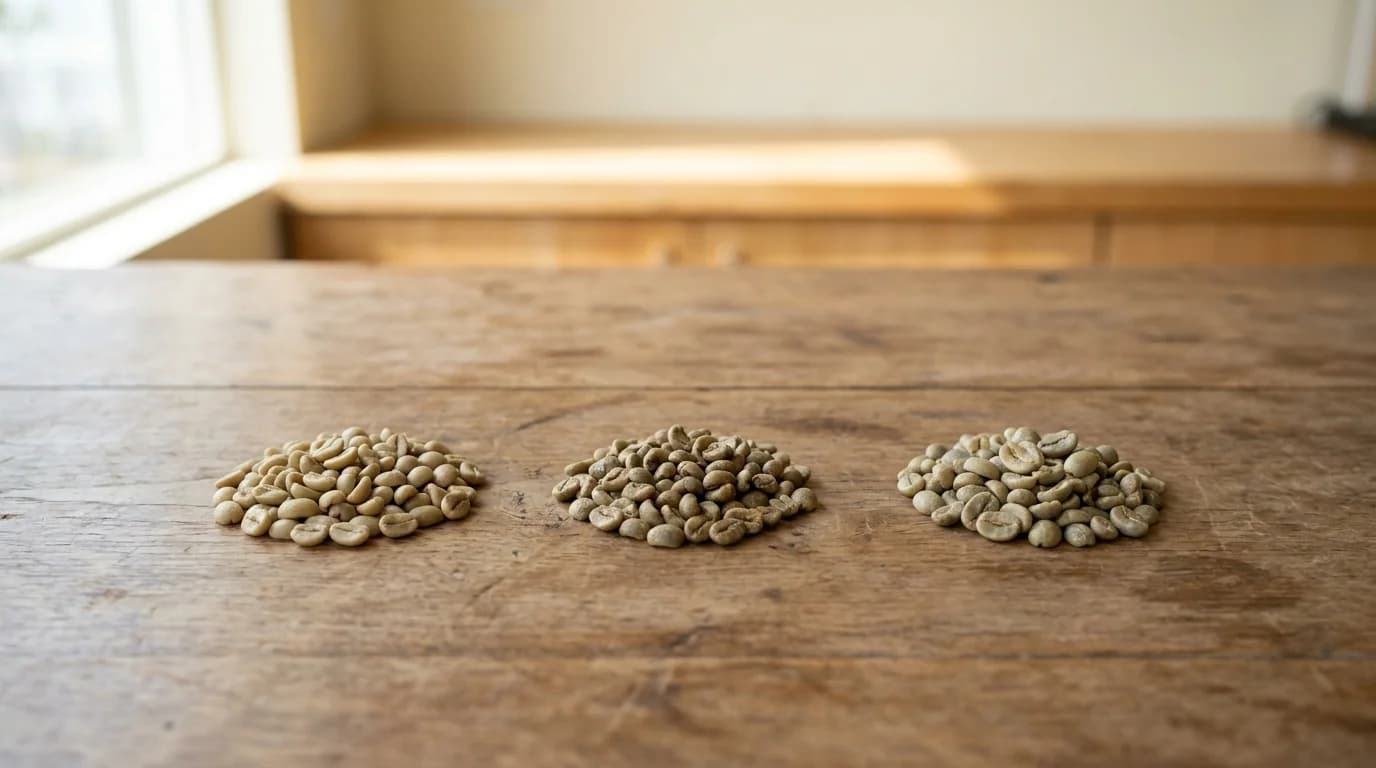
Coffee grows in a specific band of the world — the "coffee belt" between the Tropics of Cancer and Capricorn, at altitudes and climates that most other crops can't handle. Within that belt, different regions produce recognisably different coffees. The differences aren't marketing; they're documented in the chemistry and taste of the finished cup.
~70 countries
grow coffee commercially, but production is concentrated — the top 10 producers account for most of the world's supply[1]
Brazil
the world's largest coffee producer — approximately a third of global supply[6]
Terroir is real
analytical studies document consistent chemical differences between coffees from different growing regions[3]
The coffee belt
Coffee grows commercially between roughly 25° north and 25° south of the equator, in regions with:
- Warm but not hot temperatures — mostly 15-24°C for arabica, higher for robusta
- Consistent rainfall — usually 1,500-2,500 mm/year
- Well-drained soils — volcanic soils are especially good
- Altitude — arabica particularly benefits from higher altitudes (600-2,000+ m); robusta tolerates lower elevations
Within this band, three major regional groupings dominate global production: Africa, Latin America, and Asia-Pacific.
Africa
Ethiopia — the genetic homeland of arabica coffee. Wild coffee still grows in Ethiopian forests. Ethiopian coffees are known for their brightness, floral aromatics, and fruity acidity — especially the Yirgacheffe and Sidamo regions. A 2016 analytical study characterised Ethiopian coffee origins by elemental composition, documenting consistent regional signatures[2].
Kenya — famous for bright, wine-like acidity and blackcurrant/ tomato flavour notes. Processed washed (fully removed pulp before drying) which contributes to the clarity of flavour.
Rwanda and Burundi — high-altitude Bourbon variety coffees; sweet, wine-like, complex. A newer specialty coffee origin, increasingly appreciated.
Uganda — mostly robusta production, some quality arabica.
Typical African profile: bright, fruit-forward, floral, high acidity, distinctive origin character.
Latin America
Brazil — the world's largest producer by far. Grows both arabica and robusta. Brazilian arabicas are typically balanced, sweet, chocolatey, and nutty — the "reliable middle" of coffee character. Widely used in espresso blends for body.
Colombia — the second-largest arabica producer. Colombian coffees are known for balanced sweetness, medium body, mild acidity, and consistency. Farmer cooperatives (Federación Nacional de Cafeteros) maintain quality standards.
Costa Rica, Guatemala, Honduras, El Salvador — Central American coffees typically show clean acidity, sweetness, and nutty/chocolatey character. Guatemalan Antigua and Costa Rican Tarrazú are particularly well-known.
Peru — increasingly a specialty coffee source; softer acidity, sweetness, and nut-forward flavours.
Typical Latin American profile: balanced, sweet, moderate acidity, chocolate and nut notes.
Asia and Pacific
Vietnam — the world's largest robusta producer. Vietnamese coffee culture uses very dark roasted robusta with sweetened condensed milk; on world markets, Vietnamese robusta feeds instant coffee and commercial espresso blends.
Indonesia — Sumatra, Java, Sulawesi produce distinctive arabicas often processed by the "wet-hulled" (giling basah) method, which produces earthy, herbal, low-acid coffees with heavy body. Sumatran Mandheling is the classic example.
India — Monsooned Malabar and other Indian arabicas; often lower-acid with wood, spice, and pepper notes.
Papua New Guinea — high-altitude arabicas with clean brightness and complexity.
Yemen — historic coffee-trading origin; wild, funky, unique character. Small production but important culturally.
Typical Asia-Pacific profile: earthy, full-bodied, low-acid, sometimes wild or funky (especially wet-hulled Indonesian).
Why terroir matters
The chemical differences between origins are real and measurable. A 2008 Journal of Agricultural and Food Chemistry study compared multiple chemical families — fatty acids, chlorogenic acids, and mineral elements — for chemometric discrimination of arabica coffees by origin. All three markers were effective at distinguishing origins, meaning the compositional differences are reliable enough to trace where coffee came from based on the beans alone[3].
Why does terroir produce these differences? Several factors:
- Altitude. Higher-altitude coffee grows more slowly, develops more complex sugars and acids, and produces denser beans with more concentrated flavour.
- Climate. Cool nights and warm days help develop desirable compounds; consistent moderate temperatures favour arabica.
- Soil. Volcanic soils are rich in minerals; specific mineral profiles differ by region.
- Variety. Different regions grow different varietals — Bourbon in Rwanda vs Caturra in Colombia vs Heirloom in Ethiopia — each with distinct genetic profiles.
- Processing. Washed (fully removed pulp), natural (dried in the fruit), and honey (partial pulp removal) processing produce very different flavour characteristics from the same beans.
- Post-harvest handling. Fermentation length, drying method, and storage all affect the final cup.
What "single origin" means
You'll see coffee bags labelled "single origin," "single farm," "single lot" — with increasingly specific meanings:
- Single country — beans from one country (Ethiopia, Colombia, Brazil). Broadest use.
- Single region — beans from a specific region within a country (Yirgacheffe, Antigua, Sumatra).
- Single farm — beans from one specific farm or cooperative. Common in specialty coffee.
- Single lot — beans from a specific harvest at a specific farm, processed as a batch.
Single origin lets you experience the specific character of a place. Blends combine origins to achieve balance and consistency across seasons.
Blends vs single origins
Neither is objectively better:
Single-origin advantages:
- Showcases regional character
- Traceability
- Educational — you learn what specific origins taste like
- Often specialty-quality
Blend advantages:
- Consistency year-round
- Balanced flavour profile
- Often better for espresso (blends can add body, crema, or specific characters)
- Sometimes better value
How origin affects your cup
If you're new to origin exploration, some strong contrasts to try:
For brightness and fruit: Ethiopian Yirgacheffe, Kenya AA
For balance and chocolate: Colombian Huila, Brazilian Cerrado
For earth and body: Sumatran Mandheling, Sulawesi Toraja
For wine-like complexity: Kenya, Ethiopian Yirgacheffe natural
For clean acidity: Costa Rican Tarrazú, Guatemalan Antigua
Brewing method matters — pour-over and drip highlight brightness and clarity (good for African and Central American origins); French press and darker roasts highlight body and earthiness (good for Indonesian and some Latin American origins).
What origin does not tell you
Origin is a strong flavour indicator but not the whole story. Also matters:
- Freshness. A stale Kenya AA loses its brightness. A fresh Sumatran Mandheling shows its earth better.
- Roast level. Light roast shows origin character strongly; dark roast masks it under roasting flavours (see Light vs Medium vs Dark Roast).
- Brew method. The same beans taste different across espresso, pour-over, and cold brew.
- Processing method. A natural-processed Ethiopian tastes quite different from a washed Ethiopian.
- Growing year. Coffee is a crop — some harvests are better than others at the same farm.
World coffee statistics
The International Coffee Organization tracks global production data, and FAOSTAT provides broader agricultural statistics[1][6]. Rough approximations of major producer share:
- Brazil: ~33% of global production
- Vietnam: ~15% (largely robusta)
- Colombia: ~7%
- Indonesia: ~6%
- Ethiopia: ~5%
- Honduras: ~4%
Producer rankings shift year to year with weather, disease, and market conditions. Climate change is beginning to reshape suitable growing regions.
Common misconceptions
- "Kona is the only Hawaiian coffee." No — Hawaii grows coffee on several islands with distinct microclimates. Kona is the most famous.
- "Jamaican Blue Mountain is the world's best coffee." It's famous and expensive, but not objectively best. Many other origins produce coffees of equal or better quality at a fraction of the price.
- "Colombian coffee is always good." Colombia produces huge quantities across many quality levels — from commodity supermarket blends to world-class specialty lots.
- "African coffees are more acidic and less healthy." Different chemistry, not different health impact. Both African and Latin American coffees appear in the same coffee-and-health research base.
Origin by origin
 Origin-by-origin referenceThe World Atlas of Coffee 3rd edition: From beans to brewing – coffees explored, explained and enjoyedOrganised by producing country rather than by technique, which makes it the reference to reach for when a bag names a region you do not know. The brewing sections are brief by design; the maps and the origin profiles are the reason to own it.amazon.com $24.86 USDamazon.ca $31.65 CADPrice and availability as of View on Amazon
Product prices and availability are accurate as of the date/time indicated and are subject to change. Any price and availability information displayed on Amazon at the time of purchase will apply to the purchase of this product. Certain content that appears on this site comes from Amazon. This content is provided ‘as is’ and is subject to change or removal at any time.
The honest summary
Coffee origin is one of the biggest levers on flavour. Africa tends bright and fruity; Latin America balanced and chocolatey; Asia-Pacific earthy and full-bodied. Within each region, specific countries and micro-regions have their own character. The chemistry is documented and reproducible. If you've only ever drunk supermarket coffee blends, trying single origins from different continents is one of the fastest ways to understand what coffee is capable of.
Frequently asked questions
- What countries produce the most coffee?
- Brazil is by far the largest producer (about a third of world supply), followed by Vietnam (dominant in robusta production), Colombia, Indonesia, Ethiopia, and Honduras. These six countries account for a large majority of global coffee production.
- Why does coffee from different regions taste different?
- Terroir — the combination of climate, altitude, soil, and rainfall — affects how the coffee plant develops. Different varieties grow in different regions, processing methods (washed, natural, honey) differ by region, and the microclimate shapes bean chemistry. Analytical studies have documented consistent chemical differences between regions.
- What is single-origin coffee?
- Coffee sourced from a single country, region, or even a single farm — rather than a blend of beans from multiple origins. Single-origin coffees showcase the specific character of one place; blends aim for consistency and balance across seasons. Both are legitimate approaches.
- Is coffee from a specific origin healthier?
- No meaningful health difference between coffee origins at typical consumption levels. Chemical differences exist — Ethiopian coffees average different chlorogenic acid content than Colombian, for example — but not in ways that translate to clear health advantages.
References
Every factual claim in this article is drawn from the sources below. See the source library for how we grade evidence.
- [1]International Coffee OrganizationInternational Coffee Organization · Official dataset · Tier 1 · Strong
- [2]Characterization of the Cultivation Region of Ethiopian Coffee by Elemental AnalysisAnalytical Letters · 2016 · Observational study · Tier 2 · Moderate
- [3]Comparison of the Effectiveness of Fatty Acids, Chlorogenic Acids, and Elements for the Chemometric Discrimination of Coffee (Coffea arabica L.) Varieties and Growing OriginsJournal of Agricultural and Food Chemistry · 2008 · Observational study · Tier 2 · Moderate
- [4]CoffeeEncyclopaedia Britannica · Reference work · Tier 3 · Contextual
- [5]Coffee Varieties CatalogWorld Coffee Research · Reference work · Tier 2 · Moderate
- [6]FAOSTATFood and Agriculture Organization of the United Nations · Official dataset · Tier 1 · Strong
Related reading
- Beans, Roasts & OriginsArabica vs Robusta: Taste, Caffeine, and Differences→
- Beans, Roasts & OriginsLight vs Medium vs Dark Roast: Flavour, Caffeine, Facts→
- Beans, Roasts & OriginsArabica Coffee: The World's Leading Coffee Species→
- Beans, Roasts & OriginsBrazilian Coffee: The World's Largest Producer→
- Beans, Roasts & OriginsCosta Rica Coffee: Tarrazú, Varieties, and Distinction→
- Beans, Roasts & OriginsRwandan Coffee: Origin, Profile, and Specialty Revival→