Rwandan Coffee: Origin, Profile, and Specialty Revival
By Coffee Studies Editorial·Published July 19, 2026·5 min read
Quick answer
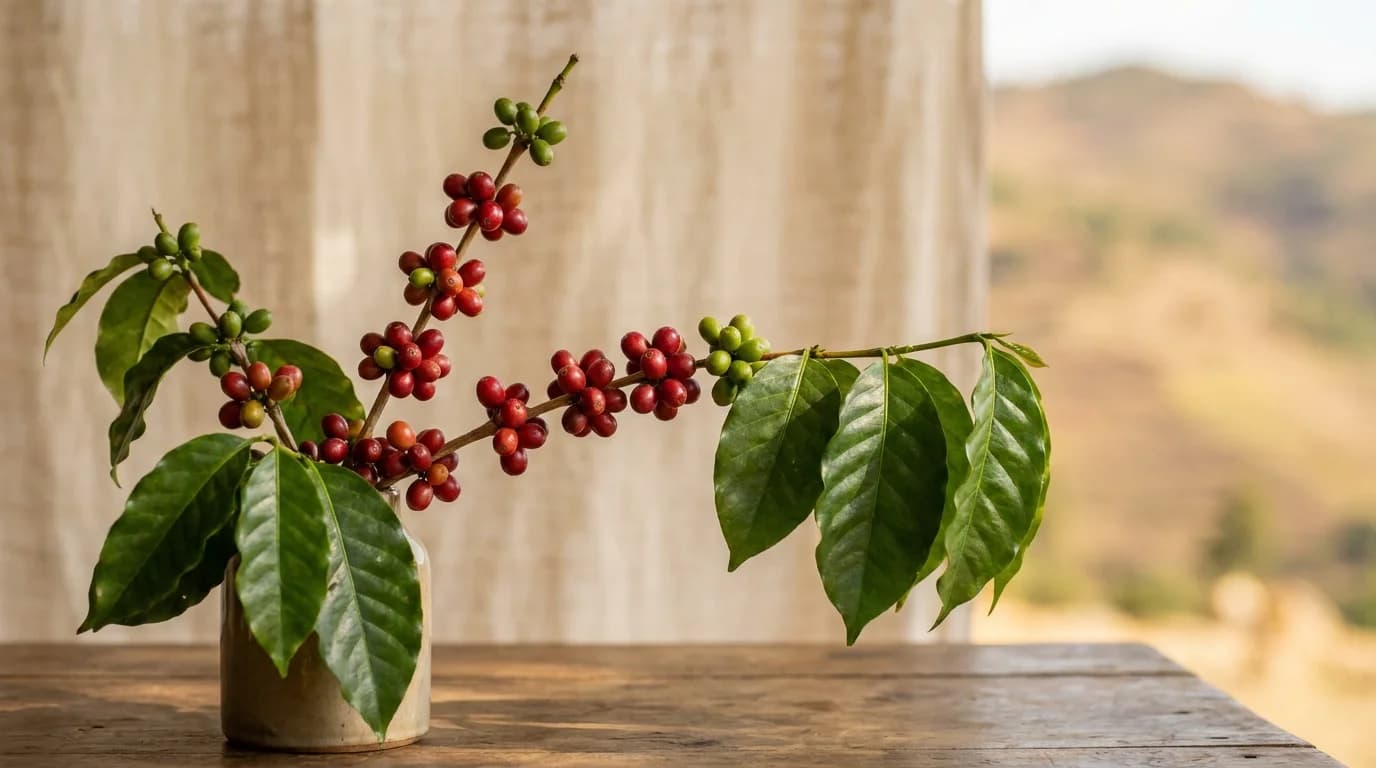
Rwanda's coffee story is one of the more remarkable in the specialty industry — not because of ancient tradition or exotic processing, but because of what was rebuilt in a decade. Coffee farming existed before 1994; much of the sector was destroyed in the genocide and its immediate aftermath; and then, over the 2000s, a deliberate national project of reconstruction produced one of Africa's most consistent specialty origins. The coffee is exceptional. The history behind why it matters is more so.
1,400–2,000 metres — among the highest growing altitudes in Africa
Rwanda's western highlands along the Congo Nile ridge and the Virunga volcanic range reach altitudes of 1,400–2,000 metres, among the highest coffee-growing elevations in Africa; high altitude slows cherry maturation and concentrates sugars and acids, contributing to the bright acidity and fruit intensity associated with Rwandan specialty coffee[1]
Bourbon — introduced 1904 by Belgian colonial administration
the Bourbon arabica cultivar was introduced to Rwanda by Belgian colonisers in 1904, brought from the island of Réunion (formerly Bourbon); the variety became dominant across Rwanda's highland regions and remains the primary cultivar today, valued for its cup quality and fruit character[3]
Washing stations rebuilt the sector after 1994
Rwanda's specialty coffee revival was built on centralised washing stations — wet mills receiving cherries from hundreds of surrounding smallholders; before stations, quality was inconsistent and specialty market access was limited; the station infrastructure enabled traceability, quality control, and Cup of Excellence competition[1]
How coffee came to Rwanda
Coffee was introduced to Rwanda during Belgian colonial rule. In 1904, the Belgian colonial administration distributed Bourbon arabica seedlings brought from the island of Réunion and required their cultivation as a cash crop across the highland regions[1].
The volcanic highland terrain of western Rwanda — particularly the Congo Nile ridge between Lake Kivu and the Congo Basin divide — proved exceptionally suited to arabica. The elevation, volcanic soil, east African rainfall patterns, and morning mist created growing conditions that produced high-quality coffee with the characteristics now associated with Rwandan specialty: high acidity, floral and fruit aromatics, clean sweetness.
During the colonial and post-independence period, Rwandan coffee was produced primarily as a commodity for the conventional market — harvested by smallholder farmers, processed individually by dry or rudimentary methods, and sold into commodity blends without traceability.
The 1994 collapse and reconstruction
The 1994 genocide against the Tutsi killed approximately 800,000 people in roughly 100 days and displaced millions more. The effects on the agricultural sector were catastrophic: farmers fled, farms were abandoned, processing facilities were destroyed or left unmaintained, and the social infrastructure of cooperative farming collapsed[2].
Rwandan coffee production and quality declined sharply in the mid-1990s. What infrastructure remained produced coffee at commodity grade — inconsistent quality, poor post-harvest handling, no market differentiation.
The reconstruction began in the late 1990s and accelerated through the 2000s, driven by a combination of:
Rwandan government policy: The Government of Rwanda identified specialty coffee as a priority export sector under its economic development strategy. Policy support included tax incentives for washing station construction and investment in the cooperatives that would operate them.
International development investment: Aid organisations including USAID's PEARL (Partnership for Enhancing Agriculture in Rwanda through Linkages) programme supported washing station construction, farmer training, and market access during the critical 2000–2008 period.
Washing station construction: The key structural intervention was building centralised washing stations. Each station could receive cherries from 200–2,000 surrounding smallholder farmers, process them to specialty standards, and create a traceable, identifiable lot that specialty buyers could source with confidence[1].
Growing regions
Figure
Rwanda coffee: growing regions by altitude and production characteristics
Values in elevation (metres above sea level)
The Bourbon variety
Rwanda's coffee is almost entirely Bourbon arabica — specifically the variety that arrived in 1904 from Réunion[3].
Bourbon is characterised by:
- Moderate yield relative to hybrid varieties
- High cup quality — typically good sweetness and complexity
- Susceptibility to pests and diseases including coffee berry borer and coffee leaf rust
- A tendency to express terroir clearly — altitude, soil, and processing choices translate visibly into cup character
At Rwandan altitudes (1,400–2,000 metres), Bourbon arabica produces the bright malic acidity, floral aromatics, and red and stone fruit flavour notes that have become associated with the Rwandan specialty profile. The same variety at lower altitude produces a heavier, flatter cup — confirming that elevation is as significant a quality determinant as variety in this origin[1].
Some Rwandan farms and washing stations have begun trialling newer varieties — including F1 hybrid varieties developed by World Coffee Research — but Bourbon remains dominant.
Cup profile
Rwandan specialty coffee from the western highlands typically shows[3]:
Acidity: High and vibrant — often described as malic (green apple, stone fruit) or citric (lemon, orange). Less wine-like than Ethiopian naturals; cleaner and brighter.
Aroma: Floral aromatics are a signature — jasmine, rose, hibiscus. Some lots show stone fruit (peach, apricot) or black currant aromatics.
Body: Delicate to medium. Rwanda is not a heavy, thick cup — it reads as light and clean.
Sweetness: High perceived sweetness — a characteristic of well-processed, high-altitude Bourbon that complements the acidity without sugar addition.
Finish: Clean and long. Good Rwandan specialty leaves a pleasant fruity aftertaste without bitterness.
This profile places Rwanda alongside Ethiopian washed coffees and Kenyan coffees in the bright, fruity, high-acidity East African style, though Rwanda's profile is typically more delicate and floral than Kenyan's intense blackcurrant character or Ethiopian washed Yirgacheffe's jasmine-lemon complexity.
The potato defect
Rwandan coffee has a well-documented quality challenge unique among African origins: the "potato defect" — a specific flavour fault that causes some beans in a lot to produce a cooked potato or earthy vegetable flavour when brewed[4].
The defect is caused by the antestia bug (Antestiopsis orbitalis), a coffee cherry pest widespread in Rwanda and Burundi. When the bug feeds on the cherry, it introduces bacteria that produce pyrazine compounds in the affected bean. Roasting does not eliminate the defect; affected beans produce an unmistakeable potato flavour in the cup.
The potato defect affects a small percentage of any Rwandan lot — typically 1–5% — but because a single defective bean can taint an entire cup, it has historically been a barrier to premium market access. Rwandan producers and washing stations have invested significantly in manual sorting to remove affected beans, though elimination is difficult. The defect is the primary quality challenge specific to the Rwandan origin.
The honest summary
Rwanda grows Bourbon arabica at 1,400–2,000 metres across the volcanic highlands of the western Congo Nile ridge and the Virunga mountains, producing coffees with bright malic acidity, floral and stone fruit aromatics, and clean sweetness associated with the East African high-altitude specialty profile. The Bourbon variety was introduced by Belgian colonial authorities in 1904. The coffee sector was devastated by the 1994 genocide and collapsed nearly completely before being rebuilt from the late 1990s through a deliberate national programme of washing station construction, cooperative development, and specialty market access. Cup of Excellence competitions from 2008 have established Rwanda internationally as a consistent specialty origin. The potato defect — caused by the antestia bug — remains the primary quality challenge specific to the origin.
Frequently asked questions
- What does Rwandan coffee taste like?
- Rwandan coffee from the western highlands typically shows: bright, high acidity (often described as malic or citric — stone fruit or citrus tones); floral aromatics (jasmine, rose); fruit notes including peach, apricot, red currant, or blackcurrant; a clean, sweet cup; and a delicate to medium body. These characteristics are associated with the high-altitude Bourbon arabica grown on volcanic soil in Rwanda's western provinces. Coffees from the Congo Nile ridge and Virunga regions tend to show the most complexity; lower-altitude lots are fuller-bodied with less acidity.
- Why is Rwandan coffee called Bourbon?
- The Bourbon cultivar of Coffea arabica was introduced to Rwanda by Belgian colonial authorities in 1904, brought from the island of Réunion (formerly called Bourbon), where it had been cultivated since the 18th century. The Belgian administration promoted coffee cultivation as a cash crop across the highland regions. Rwanda's climate — high altitude, volcanic soil, abundant rainfall, mist — proved well-suited to Bourbon arabica, and the variety became dominant. Bourbon coffees are characterised by moderate yield and good cup quality, with fruit and sweetness that express well at high altitudes.
- What happened to Rwandan coffee after 1994?
- The 1994 genocide decimated Rwanda's coffee sector. Farmers fled or were killed; farms were abandoned; processing infrastructure was destroyed or left unmaintained. Immediately after the genocide, Rwandan coffee production collapsed and quality plummeted. In the late 1990s and early 2000s, international aid organisations and Rwandan government programmes invested in rebuilding the sector — specifically through the construction of washing stations (wet mills) that allowed farmers to process coffee centrally to specialty quality standards. By the mid-2000s, Rwandan specialty coffee was re-entering international markets with dramatically improved quality.
- What is a Rwandan washing station?
- Rwandan specialty coffee is almost entirely processed through centralised washing stations — wet mills that receive ripe coffee cherries from surrounding smallholder farmers (typically 200–2,000 farmers per station), depulp and ferment the coffee in concrete tanks, wash it, and dry it on raised drying tables. Before washing stations, most Rwandan coffee was dry-processed (natural) by individual farmers in ways that produced inconsistent quality. The washing station model allowed quality control, traceability, and specialty market access. Rwanda's network of washing stations — many cooperative-owned — is considered a model for smallholder specialty coffee development.
- Does Rwanda have a Cup of Excellence?
- Yes. Rwanda has held Cup of Excellence (CoE) competitions since 2008, with some interruptions. CoE is an annual competition for individual lots of high-quality coffee that are cupped by national and international judges and auctioned online to specialty buyers. Winning Rwandan CoE lots have achieved auction prices significantly above commodity market prices, providing economic incentive for quality production. The competition has been an important part of Rwanda's specialty coffee identity and market development.
References
Every factual claim in this article is drawn from the sources below. See the source library for how we grade evidence.
- [1]Coffee agronomyFood and Agriculture Organization of the United Nations · Reference work · Tier 2 · Moderate
- [2]World Coffee Statistics DatabaseInternational Coffee Organization · Official dataset · Tier 1 · Strong
- [3]Coffee Varieties CatalogWorld Coffee Research · Reference work · Tier 2 · Moderate
- [4]Coffee leaf rust: a reviewPMC / NIH · 2022 · Review · Tier 2 · Moderate
Related reading
- Beans, Roasts & OriginsEthiopian Coffee: Yirgacheffe, Sidamo, and Harrar→
- Beans, Roasts & OriginsKenyan Coffee: AA Grade and Bright Acidity Explained→
- Beans, Roasts & OriginsCoffee Processing Methods Explained→
- Beans, Roasts & OriginsWhat Is Specialty Coffee? The 80-Point Standard→
- Beans, Roasts & OriginsCoffee Origins Around the World→
- Beans, Roasts & OriginsKona Coffee: Hawaii's Famous Volcanic-Grown Beans→