Kenyan Coffee: AA Grade and Bright Acidity Explained
By Coffee Studies Editorial·Published July 16, 2026·10 min read
Quick answer
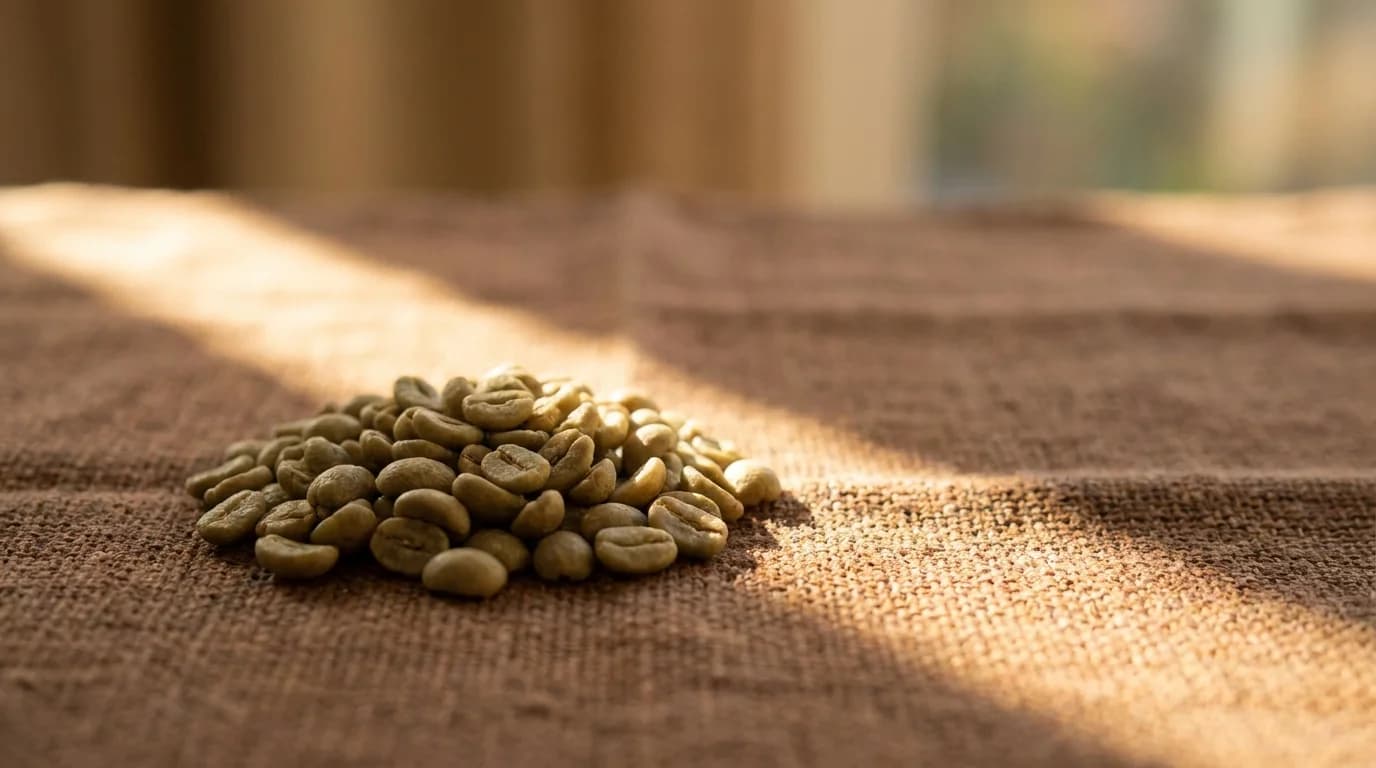
Kenyan coffee is one of specialty coffee's most beloved origins — famous for a distinctively assertive cup profile that many coffee professionals rank among their favourite coffees in the world. It's also relatively small production by global volume standards (only ~50,000-75,000 tons annually compared to Brazil's ~3 million), making outstanding Kenyan lots genuinely limited-supply premium products. Understanding Kenya's specific varieties, processing methods, and grading system helps clarify what you're getting when you buy Kenyan coffee.
SL28 and SL34
Kenya's signature cultivars, developed at Scott Laboratories in the 1930s — responsible for the distinctive berry-forward profile[1]
Double-washed
Kenya's distinctive processing method with two extended fermentation stages — produces cleaner, more articulated cups[3]
~50-75K tons/year
Kenyan production volume — small by global standards but disproportionate specialty coffee reputation[4]
The Kenyan coffee regions
Kenyan coffee grows in the central highlands, primarily in several distinct regions:
Nyeri
Nyeri (central highlands, west of Mount Kenya):
- One of the most celebrated Kenyan coffee regions.
- High elevation (1,600-2,000+ m).
- Volcanic soils from Mount Kenya region.
- Home to many famous small cooperative societies: Karogoto, Gathaithi, Tegu, and others.
Kirinyaga
Kirinyaga (central highlands, southeast of Mount Kenya):
- Adjacent to Nyeri; similar climate and quality.
- Notable cooperatives: Rungeto, Kabare, Karithathi.
- Some argue Kirinyaga produces even more distinctive coffees than Nyeri.
Other regions
Nyanza (western highlands):
- Lower-volume region.
- Distinct character from central highlands.
Machakos (south of Nairobi):
- Lower-elevation cultivation.
- Less specialty prominence than Nyeri/Kirinyaga.
Embu (eastern highlands):
- Growing specialty reputation.
- Notable cooperatives producing quality lots.
Meru (northeastern highlands):
- Moderate specialty production.
Bungoma, Kisii, and other regions: additional production areas with distinctive local characters.
The classic Kenyan quality reputation comes primarily from the central highland regions (Nyeri, Kirinyaga) around Mount Kenya — the specific combination of elevation, volcanic soil, climate, and cooperative processing infrastructure produces the classic Kenyan character[3].
SL28 and SL34 — the signature cultivars
Kenya's cup profile is substantially tied to two specific coffee cultivars:
SL28
SL28 (Scott Laboratories 28):
- Selected at Scott Laboratories in Kenya in the 1930s.
- The selection focus was drought tolerance for growing regions with less rainfall.
- Turned out to have exceptional cup quality — particularly distinctive blackcurrant/berry notes.
- Widely planted across Kenya.
- Also grown in Central America, Malawi, and elsewhere (though Kenyan-grown SL28 has particular reputation).
- Susceptible to coffee leaf rust (a significant challenge).
SL34
SL34 (Scott Laboratories 34):
- Related selection with slightly better disease resistance.
- Similar but not identical cup profile.
- Also widely planted in Kenya.
Other varieties
Other varieties:
- Ruiru 11 (1985 release) — a Kenyan-bred hybrid with much better disease resistance than SL28/SL34. Cup quality debated (some argue slightly less distinctive than SL28).
- Batian (2010 release) — newer Kenyan-bred variety with disease resistance and improved cup quality compared to Ruiru 11.
- K7, Sudan Rume — smaller-scale historical Kenyan cultivars.
The disease resistance vs cup quality tension: Historically SL28 dominated Kenyan production, but its rust susceptibility has become a serious challenge with climate change and rust pressure. Modern Kenyan production increasingly mixes SL28/SL34 (for cup quality) with Ruiru 11 and Batian (for disease resistance). The "classic Kenyan" cup character is tied specifically to SL28/SL34; too much substitution with Ruiru 11 shifts the profile[6].
The double-washing processing method
Kenya is famous for a distinctive processing method that differs from standard washed processing:
Standard washed process (used in most origins):
- Cherries pulped.
- Beans (in parchment) fermented in water for 12-48 hours.
- Beans washed.
- Beans dried.
Kenyan double-washing process:
- Cherries pulped.
- Beans fermented in water for 12-24 hours.
- Beans washed.
- Beans fermented again in fresh water for another 12-24 hours.
- Beans washed again.
- Beans soaked in fresh water for 12-24 additional hours.
- Beans dried on raised beds (typically the classic raised-bed drying invented in Kenya, now used globally).
Effect on cup quality:
- Extended fermentation and washing produces cleaner, more articulated coffee.
- Individual flavour notes are more distinctly separated.
- Some subtle fruit compounds develop more fully.
- Higher processing labour cost.
Kenya invented raised-bed drying — the standard specialty coffee drying method used globally today. Beans dry on mesh-topped raised beds with airflow on all sides, producing more even drying than patio drying.
Some producers now experiment with naturals and honey processing (as global specialty trends have adopted these), but the classic Kenyan quality reputation is built on the traditional double-washing.
The grading system
Kenya has a distinctive coffee grading system based on bean size:
- PB (Peaberry) — the ~5-10% of cherries that produce a single rounded bean instead of two flat beans. Distinctive premium grade in Kenya.
- AA — the largest flat beans, screen size 17-18 (roughly 7.2 mm). The most famous Kenyan grade.
- AB — medium beans, screen 15-16. Often equal quality to AA in the cup.
- C — smaller beans, screen 14 and below. Lower grade.
- TT and T — smaller/damaged beans. Not typically sold in specialty markets.
- MH/ML (Mbuni Heavy/Mbuni Light) — natural- processed grades; less common in Kenya.
Important: grade is based on bean size, not cup quality directly. Large beans (AA) typically correlate with quality but not perfectly — well-processed AB or PB can equal or exceed mediocre AA.
The Nairobi coffee auction: Kenyan coffee is historically sold through a weekly auction at the Nairobi Coffee Exchange. Cooperative societies and estate producers submit lots; international buyers bid. Auction prices establish market values. Some modern producers also sell through direct trade arrangements bypassing the auction.
What Kenyan coffee tastes like
The distinctive Kenyan profile:
Intense bright acidity
Intense bright acidity — often described as wine-like, citric, or tart. This is the most defining Kenyan characteristic — bright acidity substantially higher than most other origins.
Blackcurrant and berry notes
Blackcurrant and berry notes — SL28 in particular produces distinctive blackcurrant flavour, sometimes described as cassis. Red berry, strawberry, and other berry notes common.
Complex fruit character — beyond berries, Kenyan coffees often show stone fruit, tomato, occasionally tropical fruit notes.
Full syrupy body
Full syrupy body — despite the bright acidity, Kenyan coffees have substantial mouth-feel and body.
Long clean finish — well-processed Kenyan coffees have persistent aromatic aftertaste with clear flavour separation.
Overall character: "assertive" is the common descriptor. Kenyan coffee doesn't hide — the character is prominent and distinctive.
Comparisons:
- Vs Ethiopian: Kenyan is less floral, more berry- forward, more intense body. Ethiopian is more aromatic complexity; Kenyan more assertive fruit.
- Vs Panama Geisha: Panama Geisha is more delicate and floral; Kenyan is more intense and fruit-forward.
- Vs Central American: Central American is more balanced and approachable; Kenyan is more distinctive and challenging.
- Vs Sumatran: opposite directions completely — Sumatran heavy earthy body vs Kenyan bright articulated character.
For many specialty coffee professionals, Kenyan coffee is a favourite specifically because of this distinctive assertive character.
The cooperative model
Kenyan coffee production is dominated by smallholder farmers organised into cooperative societies:
Structure:
- Individual small farms (0.5-3 acres typical) grow coffee cherries.
- Farmers deliver cherries to central cooperative wet mills (factories).
- Cooperatives process, dry, and mill the coffee.
- Cooperatives sell through the Nairobi auction or direct trade.
- Farmers receive payment based on final sales prices.
Famous cooperative societies:
- Karogoto (Nyeri) — highly regarded.
- Gathaithi (Nyeri) — cooperative producing celebrated lots.
- Tegu (Nyeri) — historic specialty producer.
- Rungeto (Kirinyaga) — famous cooperative.
- Kabare (Kirinyaga) — high-quality producer.
Estate coffees exist but are less common than the cooperative model. Some notable estates produce distinctive single-estate Kenyan coffees at premium prices.
Fair Trade and other certifications are common but not universal — Kenyan coffee prices are typically strong enough that Fair Trade certification is less transformative than in other producing countries[7].
Buying Kenyan coffee
Reading Kenyan coffee labels:
- Origin: typically specifies "Kenya" plus region (Nyeri, Kirinyaga, etc.) and cooperative/factory name.
- Grade: AA, AB, PB, or other.
- Cultivar: SL28, SL34, Ruiru 11, Batian, or blends.
- Processing: typically double-washed; some experimental processing available.
- Elevation: often noted for premium lots.
- Auction lot or direct trade — sometimes specified.
- Cupping score for specialty lots (85+ specialty, 90+ exceptional).
Where to buy:
- Specialty coffee roasters who source from named Kenyan cooperatives.
- Direct trade importers (Cafe Imports, Royal Coffee, others) who work directly with Kenyan producers.
- Third-wave specialty cafés frequently feature Kenyan single-origins.
Pricing:
- Standard specialty Kenyan (Kenya AA): $18-30/lb retail.
- Named cooperative lots: $25-40/lb.
- Premium single-estate: $30-60/lb.
- Cup of Excellence lots: $80-200+/lb.
Kenyan coffee is broadly available at specialty coffee retailers globally.
Storage and brewing
Storage: like all specialty coffee, at peak within 3-4 weeks of roasting.
Brewing: Kenyan's assertive bright profile is best showcased by:
- Filter methods (Chemex, V60, Kalita Wave) — highlight the acidity and clarity.
- Aeropress — good for concentrated single-cup brewing.
- French press — brings out body but can mute the brightness slightly.
- Espresso — some specialty roasters make excellent Kenyan-based espresso; the intense character produces distinctive shots but not to everyone's taste.
Roast level: Kenyan coffee generally shines at light-to-medium roasts. Dark roasting Kenyan coffee is often considered wasteful — the distinctive character gets muted or destroyed. Look for roast profiles described as "medium-light" or "developed light."
Common misconceptions
- "Kenya AA is always the best grade." Bean size isn't a perfect quality predictor. Well-processed AB, PB, or C can be excellent; poorly-processed AA can be mediocre.
- "All Kenyan coffee tastes like blackcurrant." SL28 particularly produces the classic blackcurrant note. Kenyan coffees using Ruiru 11 or Batian, or from lower elevations, may have less pronounced berry character.
- "Kenyan coffee is African coffee." Yes broadly, but Kenyan coffee is distinctly different from Ethiopian, Rwandan, Ugandan, or Burundian coffees. African coffee is a broad category with substantial internal variety.
- "Peaberry is a special variety." Peaberry is a developmental variation (single-seed cherry instead of two-seed) that occurs in ~5-10% of coffee cherries across all varieties. Kenya PB grade sorts these peaberries out for premium sale. Peaberry has some distinctive cup character but isn't a genetic variety.
- "Kenya coffee comes from big plantations." Almost entirely smallholder farmers, organised into cooperatives. Some estate exceptions, but not the dominant model.
Kenya coffee's challenges
Coffee leaf rust and climate change are substantial threats to Kenyan production:
- SL28's rust susceptibility means widespread SL28 planting is agronomically risky.
- Warming temperatures may make lower elevations marginal for arabica.
- Rainfall pattern changes affect harvest timing.
Economic pressure on farmers:
- Rising labour costs, urbanisation, and alternative income opportunities pull younger workers away from coffee.
- Some traditional coffee-growing areas are transitioning to other crops or urban land use.
- Cooperative infrastructure has struggled in some areas.
Adaptation strategies:
- Breeding programs for disease-resistant varieties with SL28-like cup quality.
- Agroforestry approaches to moderate climate stress.
- Direct trade premium pricing to sustain smallholder economics.
- Investment in cooperative infrastructure.
Kenyan coffee's long-term future depends on successfully navigating these challenges while preserving the distinctive quality that makes Kenyan coffee distinctive.
Practical rules
If you want to try Kenyan coffee:
- Look for specialty Kenya AA or named cooperative lots.
- Try SL28-dominant lots specifically for the classic Kenyan character.
- Brew with filter methods to showcase acidity and clarity.
- Expect intense assertive character; not a subtle coffee.
If you love bright fruit-forward coffees:
- Kenyan should be in your rotation regularly.
- Compare Kenyan with Ethiopian Yirgacheffe naturals — different but related distinctive profiles.
If you prefer smooth balanced coffees:
- Kenyan may not suit you. Central American or Kona might be better fits.
For specialty coffee exploration:
- Kenyan coffee is essentially required in any serious specialty coffee education.
- Try multiple regions (Nyeri, Kirinyaga, Embu) to develop familiarity with regional character differences.
When brewing Kenyan:
- Slightly coarser grind than usual can help balance Kenyan's assertive acidity.
- Slightly cooler water (94-96°C) can moderate intensity.
- Longer bloom time helps develop the complex fruit character.
The honest summary
Kenyan coffee is arabica from the central Kenyan highlands (Nyeri, Kirinyaga, and other regions), grown mostly on smallholder farms organised into cooperative societies, using SL28 and SL34 cultivars and a distinctive double-washing processing method. The resulting cup profile — intensely bright acidity, blackcurrant/berry notes, syrupy body, complex fruit character — is among the most distinctive and assertive in specialty coffee. Kenya AA (largest bean grade) is the most famous Kenyan designation, though bean size isn't a perfect quality predictor. Production is small by global standards (~50,000-75,000 tons/year) but reputation is disproportionate — Kenyan coffee is widely considered among the world's top specialty origins. Best experienced through light-to-medium roast, filter-brewed, from named cooperative lots via specialty coffee retailers. If you like bright assertive coffee, Kenyan should be a regular in your rotation; if you prefer smooth balanced profiles, you might find Kenyan too intense.
Frequently asked questions
- What is Kenyan coffee?
- Kenyan coffee is arabica coffee grown in the central highlands of Kenya, primarily on smallholder farms at elevations of 1,400-2,100+ metres. The unique combination of climate, volcanic soil, SL28 and SL34 cultivars, and double-washing processing produces a distinctive cup with intensely bright acidity, characteristic blackcurrant and wine notes, and full syrupy body. Considered one of the world's top specialty coffee origins, though production volume is small compared to Brazil, Vietnam, or Colombia.
- What is Kenya AA coffee?
- AA is a Kenyan bean grade — specifically referring to the largest bean size (screen size 17-18). Kenya's grading system is based on bean size: AA (largest), AB (medium), PB (peaberry), C (smaller), TT and T (smallest/defective). AA has become the most famous Kenyan grade because larger beans typically correlate with quality (though not perfectly). Note: 'AA' is a size grade, not a quality certification. Well-processed AB or PB can equal or exceed mediocre AA. Peaberry (PB) commands its own premium.
- What are SL28 and SL34?
- SL28 and SL34 are arabica coffee cultivars developed at Scott Laboratories (a Kenyan agricultural research station) in the 1930s. SL28 was selected for drought resistance and has become world-famous for its intense berry-forward cup character. SL34 is related but slightly different — a bit more disease resistant, similar cup profile. These two cultivars dominate Kenyan coffee production and are largely responsible for the distinctive Kenyan flavour profile. Both cultivars are grown outside Kenya too, but Kenyan-grown SL28/SL34 has particular reputation.
- What does Kenyan coffee taste like?
- The signature Kenyan profile: intensely bright acidity (often described as wine-like or citric), characteristic blackcurrant/berry notes (SL28 particularly), medium-to-full syrupy body, complex fruit character (tropical fruit, red fruit, sometimes tomato), long clean finish. Often called 'winey' or 'bright' — Kenyan coffee has among the most distinctive and assertive character of any coffee origin. Compared to Ethiopian: less floral, more berry-forward. Compared to Central American: much brighter and more distinctive. Compared to Sumatran: opposite direction — bright and articulated vs earthy and heavy.
- How is Kenyan coffee processed?
- Kenya is famous for a distinctive double-washing (also called Kenyan-style washed) process: coffee cherries are pulped as normal, then fermented in water for 12-48 hours, washed, then fermented in fresh water again for another 12-24 hours, and finally washed and dried. This extended washing produces particularly clean, articulated coffee — different from the single-wash processing typical of Central American washed coffees. The extra step contributes to Kenya's signature clarity and brightness. Some producers now also experiment with naturals, honey, and other processing methods.
References
Every factual claim in this article is drawn from the sources below. See the source library for how we grade evidence.
- [1]Coffee Varieties CatalogWorld Coffee Research · Reference work · Tier 2 · Moderate
- [2]Interactive Coffee Varieties CatalogWorld Coffee Research · Reference work · Tier 2 · Moderate
- [3]Coffee agronomyFood and Agriculture Organization of the United Nations · Reference work · Tier 2 · Moderate
- [4]International Coffee OrganizationInternational Coffee Organization · Official dataset · Tier 1 · Strong
- [5]Caffeine and related purine alkaloids: biosynthesis, catabolism, function and genetic engineeringPhytochemistry · 2008 · Review · Tier 2 · Moderate
- [6]Coffee leaf rust: a reviewPMC / NIH · 2022 · Review · Tier 2 · Moderate
- [7]Uncommon Grounds: The History of Coffee and How It Transformed Our World (revised edition)Basic Books (Mark Pendergrast) · 2010 · Reference work · Tier 2 · Moderate
Related reading
- Beans, Roasts & OriginsEthiopian Coffee: Yirgacheffe, Sidamo, and Harrar→
- Beans, Roasts & OriginsArabica Coffee: The World's Leading Coffee Species→
- Beans, Roasts & OriginsCoffee Origins Around the World→
- Beans, Roasts & OriginsIndian Coffee: Monsoon Malabar and Filter Kaapi→
- Beans, Roasts & OriginsWhat Is Peaberry Coffee and Is It Worth the Premium?→
- Beans, Roasts & OriginsCoffee Roasting Chemistry: Maillard Reaction and Flavour→