What Is Peaberry Coffee and Is It Worth the Premium?
By Coffee Studies Editorial·Published July 18, 2026·5 min read
Quick answer
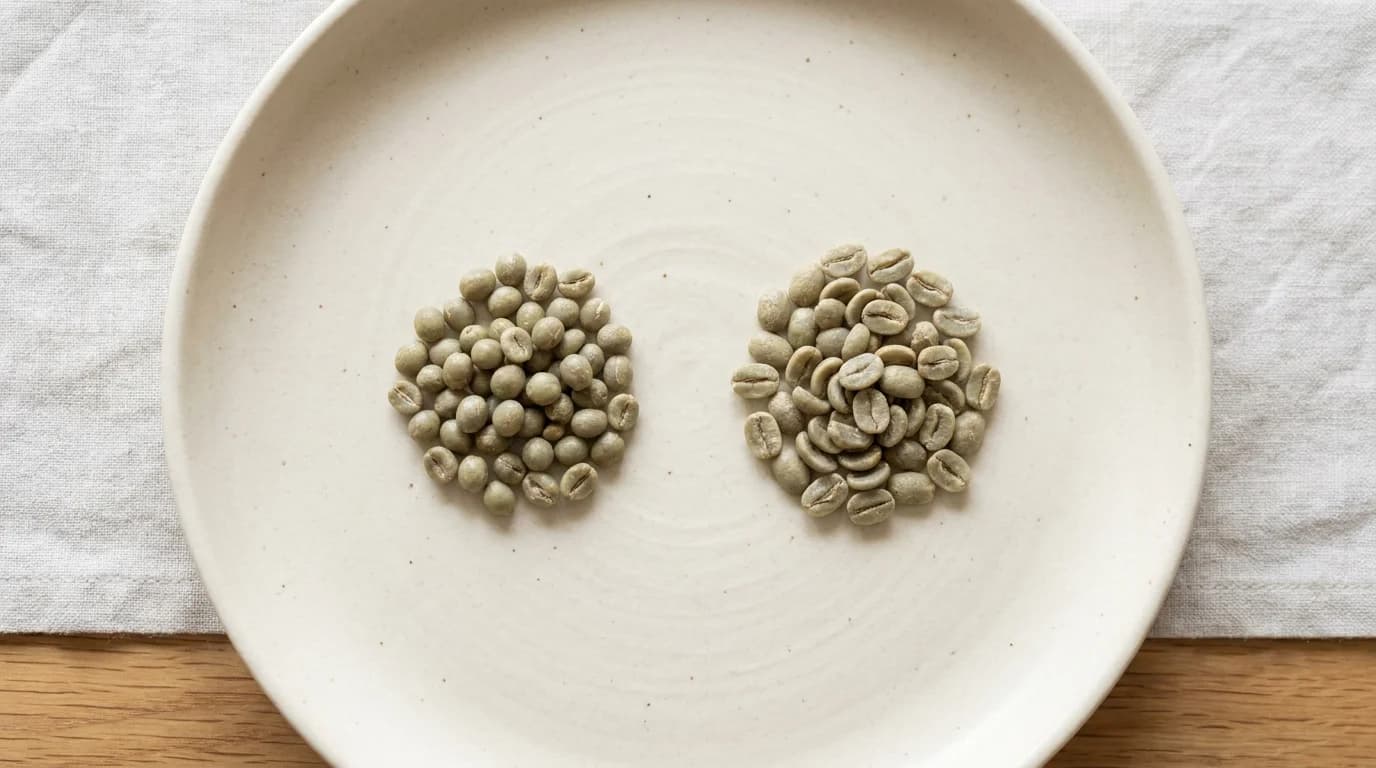
A peaberry is one of the more easily explained curiosities in specialty coffee — and one of the more genuinely debated ones. The anatomy is simple. The value claim is not.
Most coffee cherries contain two seeds, each with one flat face. When only one seed develops inside a cherry, it grows round. The round bean is a peaberry. That is the whole mechanism. What follows — the sorting, the premium pricing, the arguments about whether it actually tastes better — is where the debate begins.
5–10% of any harvest
peaberries occur naturally across all arabica and robusta crops — they are not a variety or a deliberate cultivation choice but a botanical anomaly distributed randomly throughout any harvest[1]
Must be roasted separately
because round peaberries tumble differently in a roasting drum than flat beans, mixing them produces uneven roasting — peaberries are sorted before roasting to ensure consistent heat exposure across the batch[2]
Tanzania Peaberry: the flagship example
Tanzania is the origin most associated with peaberry coffee internationally — peaberry lots from the Kilimanjaro and Mbeya regions are specifically marketed for their concentrated, wine-like character[3]
What is a peaberry
A coffee cherry is a small stone fruit. Inside, it normally contains two seeds sitting face-to-face, each developing a flat side where they press against each other. These are the "flat beans" — the standard shape of a coffee bean.
A peaberry occurs when one of the two ovules in the cherry fails to fertilise or fails to develop[1]. With the competitor absent, the single remaining seed has the full interior space of the cherry and grows into a round, oval shape with no flat face.
The cause of peaberry formation is not definitively established. Proposed factors include:
- Failed pollination of one ovule during flowering
- Genetic predisposition in certain plant lineages
- Nutrient or water stress during cherry development
- Position on the branch — tip cherries and first cherries of a new branch sometimes show higher peaberry rates
No single factor accounts for the occurrence in all cases, and peaberries form at random within a crop — they are not concentrated in one location on a farm or in one growing condition[2].
How peaberries are sorted
During standard coffee processing, after the cherry is depulped and dried, the green beans go through mechanical sorting and grading. Most mechanical sorters use density and size screens to separate different grades of bean.
Peaberries roll differently than flat beans on density tables and vibrating screens — their symmetrical shape causes them to behave more like marbles. In large-scale operations, peaberries are often separated in this process and handled as a distinct lot. In smaller specialty operations, they may be hand-sorted.
Once sorted, peaberries are roasted separately. Their round shape means they tumble more uniformly in a drum roaster (all sides receive relatively even heat exposure), which roasters sometimes argue contributes to more even development. Whether this translates to a better cup is the question.
Tanzania Peaberry: the most famous example
Tanzania is the origin most associated with peaberry coffee internationally, and Tanzania Peaberry has become almost a product category in its own right in specialty markets.
Tanzanian arabica is grown primarily around Mount Kilimanjaro in the north (Kilimanjaro and Arusha regions) and in the southern highlands around Mbeya, at altitudes of 1,400–2,000 metres[3]. The cup profile of Tanzanian coffee generally shows a bright, wine-like acidity, blackcurrant or berry fruit notes (from the SL28 and SL34 varieties that dominate Tanzania, brought from Kenya), medium body, and a clean finish.
Tanzania Peaberry lots from specialty exporters tend to be carefully sorted, green-graded, and marketed as a premium product from this already premium raw material.
Other notable peaberry origins include:
- Kenya — Kenya AA Peaberry lots appear in specialty trade; cup character reflects Kenya's well-known blackcurrant intensity
- Kona, Hawaii — Kona Peaberry is sold at a premium within the already-premium Kona category
- Brazil — Brazil produces peaberry lots (called moka in Brazilian nomenclature, after the caracol's historical association with Mocha coffee); sold at a small premium over flat-bean grades
Does peaberry taste better
This is the core debate, and it does not have a clean answer.
The case for peaberry superiority: The traditional argument is that because one seed receives all the nutrition that would normally go to two, the peaberry is more concentrated — more sugars, more flavour compounds, more development. The round shape also roasts more evenly. Proponents argue the cup is denser and more expressive.
The case against a consistent premium: Side-by-side blind cuppings of peaberry vs flat-bean lots from the same crop have produced inconsistent results. Some tasters find the peaberry lot more concentrated and lively; others find no meaningful difference. Cup quality depends far more on the variety, altitude, processing, and roast than on whether the bean happened to develop alone or with a partner[1].
The honest position: peaberry formation does not guarantee a better cup. A well-processed peaberry lot from a good origin will often be excellent — but so will the flat-bean lot from the same crop. The premium reflects labour cost (sorting), specialty positioning, and marketing as much as it reflects verified cup superiority.
Is the premium worth it
If you are curious about peaberry coffee and have not tried it, buying one good Tanzania Peaberry or Kenya Peaberry lot from a reputable specialty roaster is worthwhile for the experience — the cup character is genuine and the Tanzanian profile in particular is interesting.
If you are asking whether peaberry is consistently worth a meaningful premium over a well-sourced flat-bean lot from the same origin, the evidence does not strongly support it. The cup quality of either product depends far more on origin, altitude, variety, processing, and roasting than on the peaberry vs flat-bean distinction[2].
The honest summary
A peaberry is a coffee cherry in which only one seed developed instead of two, causing the single seed to grow round rather than flat. It occurs in roughly 5–10% of any harvest and must be sorted and roasted separately from flat beans because of the shape difference. Tanzania Peaberry is the most internationally marketed example — the cup shows Tanzania's characteristic wine-like acidity and berry fruit in a concentrated form. Whether peaberries consistently taste better than flat beans from the same crop is debated; controlled comparisons have produced mixed results. The premium largely reflects sorting labour, specialty positioning, and lower yield rather than demonstrated cup superiority in all cases.
Frequently asked questions
- Why does a peaberry form?
- A coffee cherry normally contains two seeds (the coffee beans), each with one flat side facing the other. A peaberry forms when only one of the two ovules in the cherry gets successfully fertilised and develops — the other fails to develop at all. With no competing seed, the single seed grows round, filling the entire interior of the cherry rather than developing a flat face. The cause is not fully understood; genetics, pollination failures, weather events during flowering, and nutrient stress have all been proposed as contributing factors. Peaberries occur randomly across plants and crops — not in one area of a farm but distributed throughout the harvest.
- What does Tanzania Peaberry taste like?
- Tanzania Peaberry typically shows the underlying character of Tanzanian arabica — a bright, wine-like acidity, blackcurrant or berry fruit notes, medium body, and a clean finish. Whether the peaberry form makes it taste noticeably different from a Tanzania flat bean lot is debated. Many people who have tasted direct comparisons report that well-prepared Tanzania Peaberry has a lively, concentrated character, but controlled blind comparisons between peaberry and flat-bean lots from the same crop have produced mixed results.
- Why are peaberries more expensive?
- Peaberries require hand-sorting or density-sorting to separate them from flat beans before roasting, which adds labour cost. Because round beans behave differently in a roasting drum than flat beans (they roll differently and have a different surface-area-to-mass ratio), they need to be roasted separately to avoid uneven development. The additional labour, lower yield, and specialty positioning combine to produce a price premium. Whether the cup quality justifies the premium is a separate question from why the price is higher.
- Are peaberries better than regular coffee beans?
- This is contested. The traditional specialty coffee claim is that because one seed receives all the nutrients that would normally go to two seeds, the peaberry develops a more concentrated, complex flavour. The counter-argument is that peaberry formation is a developmental anomaly that doesn't reliably confer flavour advantage — the flavour of a peaberry lot compared to a flat-bean lot from the same crop varies by origin, variety, and processing, and the evidence for consistent peaberry superiority is limited. The safest summary: peaberries are different, not definitively better.
- What is the difference between a peaberry and a regular coffee bean?
- A regular coffee bean (flat bean) has one flat face and one curved face — it forms as one half of a pair, pressed against its partner inside the cherry. A peaberry is entirely round, with no flat face, because it developed alone inside the cherry with no competing seed. The round shape also means peaberries behave differently during mechanical sorting (they roll through density tables differently) and during roasting (they tumble more evenly in the drum due to their symmetrical shape).
References
Every factual claim in this article is drawn from the sources below. See the source library for how we grade evidence.
- [1]Coffee Varieties CatalogWorld Coffee Research · Reference work · Tier 2 · Moderate
- [2]Coffee agronomyFood and Agriculture Organization of the United Nations · Reference work · Tier 2 · Moderate
- [3]World Coffee Statistics DatabaseInternational Coffee Organization · Official dataset · Tier 1 · Strong
Related reading
- Beans, Roasts & OriginsKenyan Coffee: AA Grade and Bright Acidity Explained→
- Beans, Roasts & OriginsCoffee Origins Around the World→
- Beans, Roasts & OriginsThe Coffee Roasting Process: From Green Bean to Brown→
- Beans, Roasts & OriginsArabica vs Robusta: Taste, Caffeine, and Differences→
- Beans, Roasts & OriginsSumatra Coffee: Wet-Hulled Beans and Earthy Depth→
- Beans, Roasts & OriginsWhy Arabica Has Almost No Genetic Diversity→