Panama Geisha Coffee: The Premium Bean Explained
By Coffee Studies Editorial·Published July 15, 2026·8 min read
Quick answer
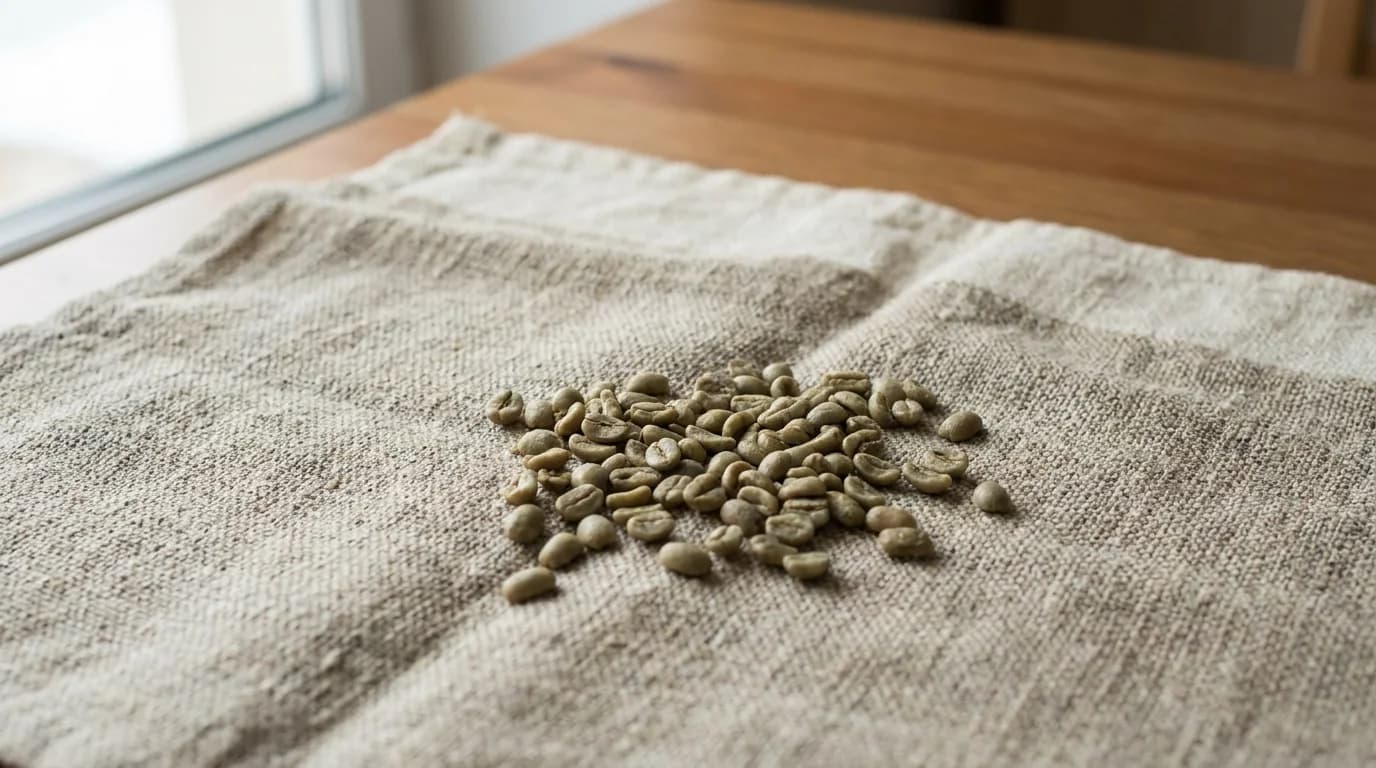
Panama Geisha is the most prestigious coffee in the specialty market — the coffee that gets to auction for prices that sound like typos ($10,000+ per pound in green form), the coffee that competition-winning barista champions serve as their signature offering, and the coffee whose reveal to the world in 2004 arguably marked the beginning of coffee's modern hyper- premium era. It's also a fascinating case study in how a single variety, a single farm, and a single competition entry transformed a global commodity into a luxury product with wine-like status hierarchies.
Ethiopian origin
the Geisha variety was collected in the Gesha village of southwestern Ethiopia in the 1930s[3]
Hacienda La Esmeralda
the Panamanian farm that reintroduced Geisha to global coffee at the 2004 Best of Panama[1]
$10,000+/lb
record Panama Geisha auction lots have exceeded $10,000 per pound in green (unroasted) form[6]
What Geisha actually is
Geisha (or Gesha — both spellings are in use, with "Gesha" often preferred by producers wanting to acknowledge the Ethiopian village name) is a specific variety of Coffea arabica.
Characteristics of the plant itself:
- Tall growth habit. Geisha trees grow tall and lanky compared to compact commercial varieties like Caturra.
- Long, narrow leaves. Distinctive leaf shape helps identify the variety in the field.
- Low yield. Geisha produces significantly less coffee per tree than commercial cultivars — a major reason for the high price.
- Specific climate needs. Geisha performs best at high elevation (1,400-2,000m+) with cool temperatures and careful cultivation. It doesn't thrive in the low- elevation, high-productivity conditions where commercial varieties are grown.
- Late maturation. Cherries take longer to ripen than commercial varieties.
- Disease susceptibility. Geisha has some coffee leaf rust resistance but isn't among the most resistant varieties.
None of these traits made Geisha attractive to commercial producers — hence its obscurity from the 1930s through 2003[1].
The Ethiopian origin
Geisha's origin story starts in southwestern Ethiopia in the 1930s, during a period of British colonial-era efforts to find coffee varieties with useful traits (rust resistance, distinctive cup quality, agronomic advantages).
The 1936 collection. A British consular official collected coffee seeds from a village called Gesha in the Bench Maji Zone of southwestern Ethiopia. The exact location has been the subject of some later confusion — modern research has attempted to pinpoint the specific area with mixed results[3].
Transfer to research collections. The seeds moved through several colonial research institutions:
- Kenya (Kikuyu-area coffee research station)
- Tanganyika (now Tanzania) coffee research
- Uganda coffee research
- Then to CATIE (Centro Agronómico Tropical de Investigación y Enseñanza) in Costa Rica in the 1950s.
Transfer to Panama. In the 1960s, CATIE distributed Geisha seedlings to various Central American countries as part of ongoing coffee research programmes. The variety was adopted for study but produced disappointingly low yields and wasn't commercially interesting.
Rediscovery at Hacienda La Esmeralda. The Peterson family had planted Geisha on their Hacienda La Esmeralda farm in Boquete, Panama, in the 1970s — but the variety was essentially forgotten in a corner of the estate for decades[6].
The 2004 reveal
The story pivots on the 2004 Best of Panama coffee competition. The Peterson family entered a lot from their long-neglected Geisha planting. It won — not just by a small margin, but by a huge margin, scoring far above any coffee the competition had seen.
The auction that followed was equally historic:
- 2004 Panama Geisha: the Peterson family's Esmeralda Especial Geisha sold at auction for $21/lb — an unprecedented price at the time (typical top-quality coffee then was $2-4/lb).
- 2005: the price rose to $50+/lb.
- 2006 onward: annual auction prices continued to climb.
- 2007: $130/lb.
- 2010: $170/lb.
- 2013: $350/lb.
- 2019: $1,029/lb (Elida Geisha Natural).
- 2020: $1,300+/lb.
- 2021: $2,568/lb (Nuguo Coffee, Chiriquí Panama).
- 2022: exceeded $6,000/lb at some private auctions.
- 2023: exceeded $10,000/lb at record-setting private Panama auction lots.
Each new record generated media attention that further elevated the variety's status. Geisha became the specialty coffee equivalent of first-growth Bordeaux — an aspirational premium product with prices decoupled from typical agricultural economics.
What Geisha tastes like
The Panama Geisha flavour profile that made the variety famous:
- Intense jasmine aromatics. Distinctive white-flower perfume on the nose that no other coffee variety produces as strongly.
- Bergamot and citrus acidity. Bright, clean, tea-like acid — Geisha coffee often reminds tasters of Earl Grey tea.
- Tea-like body. Light and clean, never heavy or syrupy.
- Tropical fruit character. Passion fruit, guava, papaya, sometimes lychee — distinctive from any other coffee variety.
- Stone fruit notes. Peach, apricot, sometimes plum.
- Extraordinary clarity. Individual flavour notes are distinctly separated rather than blended.
- Long clean finish. Persistent aromatic aftertaste, honey-sweet without heaviness.
For coffee drinkers used to conventional profiles, first Geisha tastings are often disorienting — it tastes so different from typical coffee that some people initially find it strange or even unappealing. Others fall in love immediately. Either reaction is common.
Chemical analyses of Geisha have identified specific aromatic compounds present at higher concentrations than in other varieties — particularly linalool (jasmine), geraniol, and various terpenes — that contribute to the distinctive floral character[4].
Panama's Boquete and the growing regions
Panama Geisha grows in Panama's Chiriquí Province, in the country's western highlands. The primary areas:
Boquete. The Chiriquí town that hosts most of the famous Geisha-producing farms. Elevation 1,200-1,900m. Volcanic soils from Barú Volcano. Cool climate. Home to:
- Hacienda La Esmeralda (the Peterson family farm).
- Finca Elida (another famous producer).
- Finca Deborah, Ninety Plus Coffee, Lamastus Family Estates, and many others.
Volcán / Renacimiento. North of Boquete, higher- elevation, cooler climate. Increasing Geisha production.
Some highland areas elsewhere in Chiriquí including around La Paz and other mountain communities.
The unique combination of volcanic soils, high elevation (1,400m+ preferred for best Geisha), specific microclimate, and careful cultivation seems to produce the Panama Geisha character particularly well. Geisha grown elsewhere often tastes distinctive but different — the "Panama Geisha" label carries specific meaning.
Processing
Panama Geisha is produced in all major processing methods:
- Washed process — the classic style, showcasing the variety's clean floral character.
- Natural process — enhances fruit intensity, adds wine-like character; increasingly common.
- Honey / pulped natural — intermediate profile.
- Anaerobic and experimental processes — some producers make experimental Geisha lots that command additional premiums.
Different processing methods produce meaningfully different Panama Geisha profiles. A washed Geisha and a natural Geisha from the same farm can taste like they came from different worlds — yet both retain the underlying Geisha character.
Geisha beyond Panama
Since Panama Geisha's 2004 reveal, the variety has been planted broadly:
- Colombia — significant Geisha planting, particularly in Huila and Nariño. Some excellent lots.
- Costa Rica, Honduras, Nicaragua, Guatemala, El Salvador — Central American Geishas exist in meaningful quantities.
- Ecuador and Peru — Andean Geishas emerging.
- Ethiopia (Gesha) — coffee from the original village and surrounding areas exists as a specialty offering, though the genetic relationship to "Panama Geisha" is complex (many Ethiopian coffees from the region are technically Gesha but genetically diverse; Panama's Geisha is descended from a specific collected seedling line).
- Malawi, Rwanda, Burundi, Kenya — some Geisha cultivation in African origins.
Non-Panamanian Geisha typically sells for $30-100/lb — much more accessible than Panama Geisha but still premium compared to typical specialty coffee ($20-30/lb range).
Why "Panama Geisha" specifically?
Some Geisha-from-other-origins matches or exceeds mediocre Panama Geisha quality, but Panama has maintained a persistent quality premium. Why?
- Terroir. The specific volcanic-soil high-elevation environment of Boquete seems to produce the most articulated Geisha profile.
- Cultivation expertise. Panamanian producers have 20 years of experience specifically with Geisha; other origins are still learning.
- Auction infrastructure. Best of Panama and private Panama auctions provide the marketplace for record- setting prices.
- Brand prestige. "Panama Geisha" carries weight in the specialty market that other-origin Geisha doesn't fully match.
Buying and trying Panama Geisha
Practical realities:
- Green (unroasted) prices at auction are $500-2,000+ per pound for mid-range Panama Geisha lots, with competition lots reaching $10,000+.
- Roasted retail prices are typically 2-3x green price plus roasting and retail margins — so consumer Panama Geisha retail is often $200-1,000+/lb.
- Café pours of Panama Geisha exist at high-end specialty cafés, sometimes $12-30 per cup.
- Non-Panama Geisha ($30-100/lb roasted retail) is a much more accessible way to try the variety.
- Home preparation: if you buy Panama Geisha, brew method matters. Filter brewing (V60, Chemex, Kalita Wave) is generally preferred over espresso — the variety's delicate floral character is best expressed through cleaner extraction methods.
Common misconceptions
- "Geisha is a place." The village of Gesha in Ethiopia is the origin (place), but "Geisha coffee" refers to the variety, which is now grown in many countries.
- "Panama Geisha is worth $10,000/lb by any objective measure." Prices reflect scarcity, prestige, and auction dynamics as much as absolute cup quality. Many people find $50-100/lb Panama Geisha or other- origin Geisha nearly indistinguishable from the record- setting lots.
- "Geisha is inherently rust-resistant like other Ethiopian varieties." Geisha has some resistance but isn't as resistant as some other varieties. Modern breeding programmes cross Geisha with resistant varieties to combine traits.
- "Geisha ruined coffee prices — everything is more expensive now." Geisha established a hyper-premium segment; most specialty coffee prices remain in a more normal range. Direct impact on typical coffee prices is minimal; indirect impact via elevated attention to specialty coffee is significant.
The honest summary
Panama Geisha is a specific variety of Coffea arabica originally collected in Ethiopia's Gesha village in the 1930s and reintroduced to global coffee via Hacienda La Esmeralda in Boquete, Panama, in 2004. The variety produces distinctive coffee with intense jasmine and bergamot character, tea-like body, and tropical fruit notes unlike any other coffee origin. Since 2004, Panama Geisha has established the highest coffee auction prices ever recorded — routinely $500-2,000+/lb, with record lots exceeding $10,000/lb. Geisha is now grown in many countries beyond Panama, providing more accessible entry points to try the variety, though Panama Geisha specifically maintains a persistent quality and price premium. It's the closest thing coffee has to first-growth Bordeaux — an aspirational premium product whose prices have decoupled from typical agricultural economics.
Frequently asked questions
- What is Panama Geisha coffee?
- Panama Geisha is coffee from the Geisha (or Gesha) variety of Coffea arabica grown in Panama, particularly in the Boquete region of Chiriquí Province. The variety produces extraordinarily distinctive coffee with intense jasmine floral aromatics, bergamot citrus notes, tea-like body, and complex fruit character. Panama Geisha auction lots have set world records for coffee prices — including several lots that sold for $10,000+ per pound in green form.
- Where does the Geisha variety come from?
- The Geisha variety was originally collected in a village called Gesha in southwestern Ethiopia in the 1930s, as part of British efforts to find rust-resistant coffee varieties. It was transferred to Costa Rica in the 1950s and then to Panama. The variety was largely unremarked until 2004, when Hacienda La Esmeralda in Panama entered Geisha coffee in the Best of Panama competition and won by an unprecedented margin, revealing its extraordinary cup potential.
- Why is Panama Geisha so expensive?
- A combination of factors: exceptional cup quality (Geisha routinely scores 92+ in specialty coffee competitions), very low yield per tree (Geisha is a poor producer compared to commercial varieties), specific growing requirements (high elevation, cool climate, careful cultivation), limited production geographic area (Boquete and surrounding Chiriquí), and prestige/auction dynamics. Once Panama Geisha established a record-price precedent in 2004, subsequent auction lots continued to push prices upward. Top lots sell for $500-2,000+/lb regularly; record lots have exceeded $10,000/lb.
- What does Panama Geisha taste like?
- The signature Panama Geisha profile: intense jasmine floral aromatics on the nose, bright bergamot and citrus acidity, tea-like light body (never heavy), tropical fruit flavours (passion fruit, papaya, guava, sometimes lychee), stone fruit (peach, apricot), and a distinctively clean, honey-sweet, long finish. It's often described as more like a fine tea or a wine than typical coffee — some tasters new to Geisha find it barely recognisable as coffee at first.
- Is Panama the only place growing Geisha?
- No — since Geisha's 2004 reveal, the variety has been planted in many other countries: Colombia, Costa Rica, Honduras, Nicaragua, Guatemala, El Salvador, Ecuador, Peru, and beyond. Non-Panamanian Geisha coffees are typically much more affordable ($30-100/lb range) and vary in quality. Ethiopian Gesha (from the original village and surrounding area) also exists as a distinct coffee. Panama Geisha commands the premium prices; other-origin Geisha is a more accessible way to experience the variety's character.
References
Every factual claim in this article is drawn from the sources below. See the source library for how we grade evidence.
- [1]Coffee Varieties CatalogWorld Coffee Research · Reference work · Tier 2 · Moderate
- [2]Interactive Coffee Varieties CatalogWorld Coffee Research · Reference work · Tier 2 · Moderate
- [3]Characterization of the Cultivation Region of Ethiopian Coffee by Elemental AnalysisAnalytical Letters · 2016 · Observational study · Tier 2 · Moderate
- [4]Comparison of the Effectiveness of Fatty Acids, Chlorogenic Acids, and Elements for the Chemometric Discrimination of Coffee (Coffea arabica L.) Varieties and Growing OriginsJournal of Agricultural and Food Chemistry · 2008 · Observational study · Tier 2 · Moderate
- [5]Caffeine and related purine alkaloids: biosynthesis, catabolism, function and genetic engineeringPhytochemistry · 2008 · Review · Tier 2 · Moderate
- [6]Uncommon Grounds: The History of Coffee and How It Transformed Our World (revised edition)Basic Books (Mark Pendergrast) · 2010 · Reference work · Tier 2 · Moderate
Related reading
- Beans, Roasts & OriginsWhat Is Single-Origin Coffee? Why Origin Matters→
- Beans, Roasts & OriginsCoffee Origins Around the World→
- Beans, Roasts & OriginsEthiopian Coffee: Yirgacheffe, Sidamo, and Harrar→
- Beans, Roasts & OriginsArabica Coffee Varieties: Typica, Bourbon, and Geisha→
- Beans, Roasts & OriginsKopi Luwak: The Controversial Civet-Processed Coffee→
- Beans, Roasts & OriginsColombian Coffee: Altitude, Acidity, and Variety→