Kopi Luwak: The Controversial Civet-Processed Coffee
By Coffee Studies Editorial·Published July 16, 2026·10 min read
Quick answer
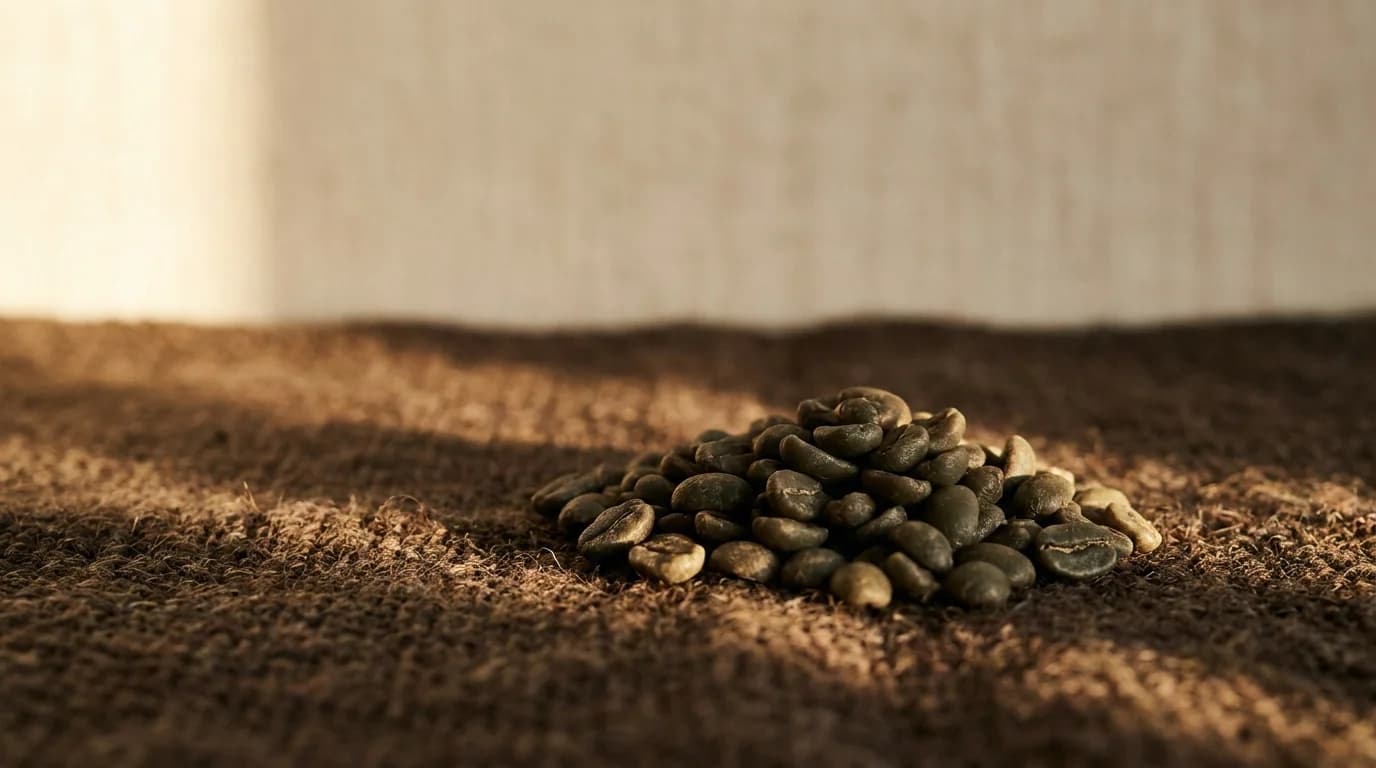
Kopi luwak occupies a specific position in coffee — the most famous of the "unusual origin" coffees, one of the most marketable-through-media coffees in the world (frequent subject of TV segments, documentaries, and travel programming), and simultaneously one of the most ethically fraught coffee products currently sold. Understanding what kopi luwak actually is, how it's produced today, and whether the cup quality justifies the price is important both for anyone considering buying it and for coffee literacy more generally.
Digestive fermentation
civet digestive enzymes ferment and modify coffee beans during transit; the beans emerge intact but chemically altered[3]
$100-600+/lb
typical price range for authentic kopi luwak — reflects scarcity, novelty, and marketing more than objective cup quality[1]
Major ethical concerns
most modern kopi luwak comes from caged, force-fed civets — condemned by animal welfare organisations[1]
What kopi luwak actually is
The production sequence:
-
The civet. Asian palm civets (Paradoxurus hermaphroditus) are small nocturnal mammals native to Indonesia, Vietnam, Philippines, and other parts of Southeast Asia. They're omnivorous and known to eat fruit, small animals, and — relevant here — ripe coffee cherries.
-
The cherries. Wild or plantation coffee cherries at peak ripeness are the raw input. In the wild, civets select the ripest cherries by smell and taste; this selection is considered part of the process's mystique (the animals as natural quality selectors).
-
Digestion. The civet swallows whole cherries. The fleshy fruit pulp is digested normally. The hard coffee beans inside pass through the digestive tract largely intact. During transit (roughly 24-36 hours), digestive enzymes ferment the mucilage layer around the beans and partially penetrate the parchment, chemically modifying the beans.
-
Excretion and collection. The civet excretes the beans in clusters (called "civet coffee" in the literal sense). Workers locate droppings in forest or on plantation floors and collect them.
-
Cleaning. The beans are extensively washed to remove all traces of digestive material. Parchment is subsequently removed. Traditional cleaning is considered essential; modern producers use multi-stage washing.
-
Drying and processing. Cleaned beans are dried, sorted, and prepared for roasting like any other green coffee.
-
Roasting. Typically medium-light roast to preserve the distinctive character; some producers roast darker.
-
Sale. Small quantities marketed at high prices to specialty coffee enthusiasts and tourists.
The claimed flavour effect
The theory is that civet digestive enzymes modify the coffee beans in ways that improve cup quality:
Proposed mechanisms
Proposed mechanisms:
- Reduction of bitterness — digestive enzymes may partially degrade some bitter compounds.
- Reduction of acidity — enzymatic modification softens acidic character.
- Increased smoothness — protein digestion partially denatures bean proteins, potentially affecting body.
- Fermentation flavours — the gut fermentation environment produces some flavour compounds not present in traditionally-processed coffee.
Reported cup profile
Reported cup profile:
- Very smooth, low-bitterness.
- Low acidity — much less bright than traditional specialty coffees.
- Medium body.
- Some earthy or "fermented" character.
- Distinctive but not necessarily complex.
The scientific verdict is mixed. Some chemical analyses show meaningful differences between kopi luwak and same- origin traditional coffee (particularly in caffeine content, protein degradation, and some aromatic compounds). Whether these differences translate to superior cup quality is subjective and debated[3].
The origin story
Kopi luwak dates to Dutch colonial-era coffee production in Indonesia (roughly 1830 onward):
Historical context:
- Dutch colonial authorities established massive coffee plantations on Java, Sumatra, and other Indonesian islands.
- Indonesian workers on these plantations were forbidden by Dutch estate owners from picking coffee cherries for personal consumption or trade.
- Workers noticed that wild Asian palm civets ate cherries from surrounding forests and excreted the intact beans in droppings on plantation grounds or nearby forests.
- Workers collected these dropping-derived beans, roasted them, and consumed the resulting coffee (which was not covered by the picking prohibition).
- The distinctive flavour became appreciated locally, and eventually a small specialty market developed.
The name breaks down as:
- Kopi — Indonesian for "coffee."
- Luwak — Indonesian for "civet" (specifically the Asian palm civet).
By the 20th century, kopi luwak was a small specialty product occasionally exported. From the 1980s onward, as specialty coffee became more valuable globally, kopi luwak's distinctive story and premium pricing made it a marketable export item[2].
The ethical crisis
Modern kopi luwak production has serious animal welfare problems that have transformed the industry:
Traditional wild-collected kopi luwak
Traditional wild-collected kopi luwak:
- Civets roam freely in forests.
- They eat cherries of their choice.
- Workers collect droppings from forest floor.
- Volume is naturally limited — a single wild civet produces enough beans for perhaps 5-10 lb of coffee annually.
- Total global wild kopi luwak production probably a few hundred kg per year.
Caged-civet kopi luwak
Caged-civet kopi luwak (majority of modern production):
- Civets captured from the wild and held in small cages.
- Force-fed a diet primarily of coffee cherries (unnatural for the omnivorous species).
- Held in stressful conditions with insufficient space, poor nutrition, and health problems.
- Producing kopi luwak year-round at industrial volumes.
- Cages often visible to tourists as a marketed "kopi luwak experience."
Documented welfare problems:
- Behavioural distress (stereotypic movements, self- harming).
- Nutritional deficiencies from all-cherry diet.
- Zoonotic disease concerns.
- Premature mortality.
- Various infections and physical problems.
Response from welfare organisations
Response from welfare organisations:
- World Animal Protection has campaigned against caged-civet operations.
- PETA has documented conditions and campaigned for boycotts.
- BBC, The Guardian, and other major news organisations have run investigative pieces since around 2013 documenting the industry.
- SCA (Specialty Coffee Association) has issued cautionary statements about kopi luwak sourcing.
Response from industry:
- Some producers have introduced "wild-certified" and "welfare-friendly" designations.
- These certifications have limited independent verification.
- Consumer confusion remains high — most kopi luwak buyers can't reliably distinguish wild from caged product.
The practical situation: if you buy kopi luwak, you have no reliable way to know whether it came from a naturally-foraging wild civet or from an animal in a small cage. The vast majority of production is caged; wild- sourced product is a small minority.
Cup quality — the professional verdict
Kopi luwak's cup quality is genuinely debated among specialty coffee professionals:
Positive assessments
Positive assessments:
- Distinctive smooth low-acidity character.
- Interesting fermentation notes.
- Unusual sensory experience worth trying.
- Preferred by some tasters who find traditional specialty coffees too acidic.
Negative assessments
Negative assessments:
- Objectively mediocre cup quality compared to top traditional specialty coffees at similar or lower prices.
- Novelty/scarcity/marketing account for most of the premium.
- Digestive processing tends to mute origin/varietal character rather than enhance it.
- Cup quality inconsistent depending on cherries used, civet health, cleaning thoroughness, and roasting.
- Ethical concerns preclude serious specialty consideration.
Cup of Excellence and major specialty coffee competitions don't include kopi luwak (or civet coffees generally). This isn't accidental — the specialty coffee industry's flagship competitions specifically evaluate cup quality on standardised protocols, and kopi luwak doesn't tend to outperform quality traditional processing.
Panel comparisons occasionally featured in specialty coffee media: kopi luwak often rates in the 82-86 SCA score range (specialty grade but not exceptional). Panama Geisha, top Ethiopian yirgacheffe, and top Kenyan lots regularly reach 88-95. Kopi luwak's premium doesn't match its quality ranking.
The honest assessment: kopi luwak is a legitimate coffee (real coffee, genuinely different from traditional processing) but it's neither the world's best coffee nor worth 5-10x the price of equivalent-quality traditional specialty coffee[1].
Types and origins
By civet species
By civet species:
- Asian palm civet (Paradoxurus hermaphroditus) — the classical kopi luwak civet. Native to Indonesia, Vietnam, Philippines, and elsewhere in Southeast Asia.
- Coati (Nasua spp.) — used in Central and South American analogues of kopi luwak, particularly Costa Rica. Different mammal, similar process, sometimes marketed as "café de mono" or coati coffee.
- Jacu bird (Penelope obscura) — a Brazilian bird that eats coffee cherries and excretes intact beans. Small-scale "jacu bird coffee" production exists in Brazil, similar principle.
- Elephant — see Black Ivory Coffee for the Thai elephant-processed coffee.
By source location
By source location:
- Indonesia (particularly Sumatra, Java, Sulawesi, Bali) — traditional kopi luwak home. Most historically-notable production. Now dominated by caged operations.
- Vietnam — significant production; "chồn coffee" or "weasel coffee" in Vietnamese contexts (technically the Vietnamese "chồn" refers to civet, not weasel — the English translation is misleading).
- Philippines — smaller production; "kape alamid" in Tagalog.
- Thailand — some production; also home to Black Ivory elephant coffee.
- Other Southeast Asian countries — small-scale.
By collection method:
- Wild-collected — very limited quantities from civets naturally foraging.
- Cage-produced — majority of commercial production, ethically problematic.
- "Wild-certified" — various certification programs claim to verify wild-only sourcing, with variable independent verification.
Buying kopi luwak (if you insist)
If you want to try kopi luwak despite the concerns:
Where to buy:
- Direct from small Indonesian producers claiming wild sourcing — some legitimate operations exist but verification is difficult.
- Specialty roasters who source specifically wild- certified product — a few US and European specialty companies (Kopi Luwak Direct, various boutique importers).
- Airport shops and tourist markets — almost certainly cage-produced; avoid.
- Cheap online kopi luwak — likely fake or heavily blended.
Price guidance:
- Suspicious cheapness (under $50/lb) suggests fake or adulterated product.
- Realistic wild-sourced kopi luwak: $200-600/lb.
- Ultra-premium wild-certified: $600-1,000/lb.
Verification challenges:
- Consumer has no reliable way to independently verify wild vs caged sourcing.
- Certification programs have varying independent auditing.
- Reputation of seller is the most reliable indicator — and even that is limited.
Realistic recommendation: most coffee enthusiasts would be better served spending their premium coffee budget on Cup of Excellence Panama Geisha, top Ethiopian Yirgacheffe, top Kenyan AA, or Yemen Mocha — all genuinely exceptional coffees without the ethical concerns.
Why kopi luwak is culturally significant
Even for people who won't buy it, kopi luwak matters as a cultural phenomenon:
Marketing power of story: kopi luwak demonstrates how compelling origin narratives can support enormous price premiums independent of objective quality. This principle applies more broadly in specialty coffee.
Ethics-quality trade-off: kopi luwak forces the question of whether unusual production methods that cause animal suffering can be justified by novelty or distinctiveness. The industry consensus is mostly no; the persistent market suggests some consumers disagree.
Tourist industry integration: kopi luwak operations in Indonesia have become significant tourist attractions, generating income but also normalising caged-animal production.
Category creation: kopi luwak's success spawned imitators — coati coffee, jacu bird coffee, black ivory elephant coffee — creating a small "animal-processed coffee" category.
Character in "The Bucket List": the 2007 film featuring Jack Nicholson and Morgan Freeman prominently featured kopi luwak, substantially raising Western consumer awareness and demand.
Common misconceptions
- "Kopi luwak is the world's best coffee." Debated, and most specialty coffee professionals rank it below top traditional specialty coffees. Price reflects scarcity/marketing, not consensus quality superiority.
- "All kopi luwak comes from wild civets." Wild production is a small minority; most is caged.
- "Kopi luwak is safe — everything is thoroughly cleaned." Cleaning removes visible material and substantially reduces disease risk, but some public health concerns persist with any animal-passed food product.
- "You can taste the digestive processing." Some tasters claim distinctive character; blind tastings produce mixed results. The specific "digestive fermentation" flavour isn't consistently identifiable.
- "It's fine because civets naturally eat cherries." Wild civets do eat cherries naturally as part of a varied diet. Caged civets fed only cherries are in an unnatural situation causing documented welfare problems.
Alamid coffee, the Philippine civet coffee that predates the Indonesian trade in the Western imagination, is covered in Philippine coffee.
The honest summary
Kopi luwak is coffee made from beans that have been eaten and excreted by Asian palm civets. The historical origin in Dutch colonial-era Indonesia is legitimate; the digestive processing does produce distinctive chemistry. But modern kopi luwak production is dominated by caged, force-fed civets in ethically problematic conditions — widely condemned by animal welfare organisations. Cup quality is debated: distinctive but not necessarily exceptional. Prices ($100-600+/lb) reflect scarcity, novelty, and marketing more than consensus quality superiority. For coffee enthusiasts wanting to try an unusual coffee, consider wild-verified sources specifically; for maximum coffee quality per dollar, top traditional specialty coffees (Panama Geisha, Yirgacheffe, Kenya AA, Yemen Mocha) deliver more without the ethical concerns. Kopi luwak is culturally significant as a case study in marketing power and ethics-quality trade-offs, regardless of whether you drink it.
Frequently asked questions
- What is kopi luwak?
- Kopi luwak (Indonesian: 'civet coffee') is coffee made from coffee cherries that have been eaten and excreted by the Asian palm civet, a small nocturnal mammal native to Indonesia and Southeast Asia. Civets swallow the whole ripe cherries; the fleshy fruit is digested; digestive enzymes ferment and modify the coffee beans in the gut; the intact beans are excreted in droppings; workers collect the droppings, extract and thoroughly wash the beans, and roast them. Sold at $100-600+/lb, marketed as one of the world's most expensive coffees.
- Where does kopi luwak come from?
- Traditionally Indonesia (particularly Sumatra, Java, Sulawesi, and Bali) where Asian palm civets are native. The tradition dates to Dutch colonial-era coffee production when Indonesian workers, forbidden by Dutch estate owners from picking coffee cherries for personal use, collected coffee beans from civet droppings in nearby forests. The civets naturally ate cherries and excreted the beans intact. The workers roasted the collected beans and discovered a distinctive flavour, and a specialty product was born. Modern kopi luwak also comes from Vietnam, Philippines, and other Southeast Asian producers.
- How much does kopi luwak cost?
- $100-600 per pound for authentic kopi luwak; cheaper products labelled kopi luwak are often fakes or heavily blended. Genuine wild-collected kopi luwak can reach $600-900/lb at retail. Individual cups at high-end cafes can be $30-100+. The high price reflects: (1) very limited production volume (a single wild civet produces enough beans for maybe 5-10 lbs of coffee per year in the wild); (2) labour-intensive collection and cleaning; (3) premium brand positioning; (4) marketing rather than objective quality.
- Is kopi luwak actually good?
- Genuinely debated. Some coffee professionals praise the smooth low-acidity character from digestive fermentation. Others rate kopi luwak notably below equivalently-priced traditional specialty coffees, noting that the digestive processing masks origin character and produces a somewhat muted profile. The World Coffee Research organisation and many specialty coffee cuppers consider kopi luwak more a novelty than a premium product on strict cup quality assessment. Objective quality doesn't match the price premium for most tasters — you're mostly paying for scarcity, novelty, and marketing.
- What about the ethics of kopi luwak?
- Serious concerns exist about modern kopi luwak production. Wild kopi luwak (civets naturally roaming forests, eating cherries, being tracked for droppings) is genuinely wild-sourced but very limited in quantity. Most commercial kopi luwak now comes from caged civets force-fed coffee cherries — a practice widely condemned by animal welfare organisations. World Animal Protection, PETA, and multiple wildlife groups have documented mistreatment. If you buy kopi luwak, look for verified wild-sourced products; most cheap kopi luwak is caged-civet product from questionable operations.
References
Every factual claim in this article is drawn from the sources below. See the source library for how we grade evidence.
- [1]CoffeeEncyclopaedia Britannica · Reference work · Tier 3 · Contextual
- [2]Uncommon Grounds: The History of Coffee and How It Transformed Our World (revised edition)Basic Books (Mark Pendergrast) · 2010 · Reference work · Tier 2 · Moderate
- [3]Coffee volatile compounds and roast markersPMC / NIH · 2016 · Review · Tier 2 · Moderate
- [4]Caffeine and related purine alkaloids: biosynthesis, catabolism, function and genetic engineeringPhytochemistry · 2008 · Review · Tier 2 · Moderate
- [5]International Coffee OrganizationInternational Coffee Organization · Official dataset · Tier 1 · Strong
Related reading
- Beans, Roasts & OriginsBlack Ivory Coffee: The Elephant-Processed Cup→
- Beans, Roasts & OriginsSumatra Coffee: Wet-Hulled Beans and Earthy Depth→
- Beans, Roasts & OriginsPanama Geisha Coffee: The Premium Bean Explained→
- Beans, Roasts & OriginsJamaican Blue Mountain Coffee: Why It Costs So Much→
- Beans, Roasts & OriginsKissaten: Japan's Historic Coffee Shop Culture→
- Beans, Roasts & OriginsKona Coffee: Hawaii's Famous Volcanic-Grown Beans→