Jamaican Blue Mountain Coffee: Why It Costs So Much
By Coffee Studies Editorial·Published July 16, 2026·9 min read
Quick answer
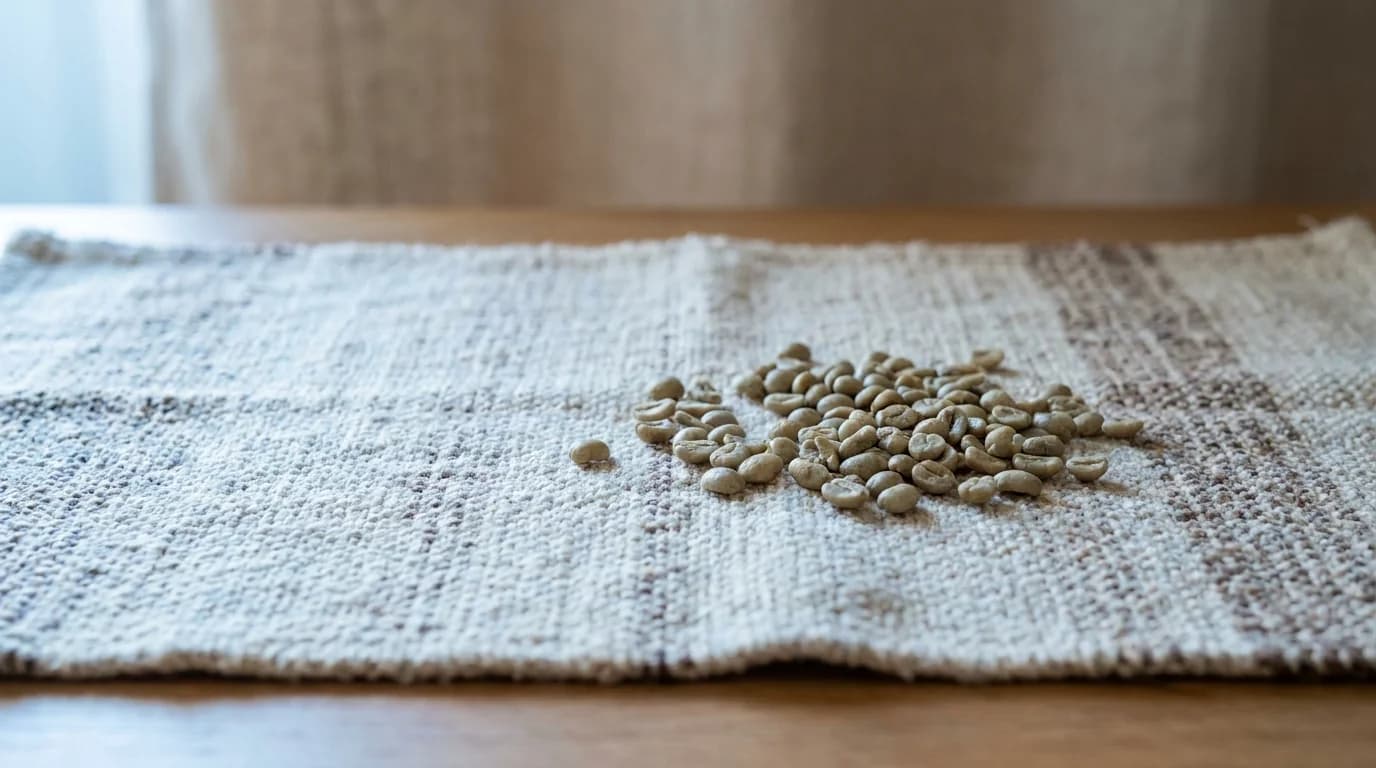
Jamaican Blue Mountain coffee occupies a specific and controversial position in specialty coffee — one of the most famous premium coffee brands in the world, one of the most expensive coffees you can buy, and simultaneously one of the most debated among specialty coffee professionals about whether its premium price reflects cup quality or brand prestige. Understanding the specifics of Blue Mountain's geography, certification, and market dynamics helps clarify what you're paying for and whether it's worth it for you.
Coffee Industry Board
Jamaica CIB certifies authentic Blue Mountain coffee — one of the world's most tightly regulated origin designations[4]
3,000+ feet elevation
Blue Mountain coffee grows in specific Jamaican parishes above 3,000 feet (910 metres) — geographic definition is strict[2]
~70-80% to Japan
Japanese buyer contracts absorb the majority of Blue Mountain production, limiting supply to other markets[5]
The Blue Mountain region
Jamaican Blue Mountain coffee comes from a strictly-defined geographic region:
Location: the Blue Mountain range in eastern Jamaica — a compact mountain system with peaks up to 7,402 feet (2,256 m, Blue Mountain Peak — Jamaica's highest point).
Certified growing parishes:
- St. Andrew (upper elevations)
- St. Thomas
- Portland
- St. Mary
Elevation requirement: coffee must be grown at 3,000 feet (910 m) or higher to qualify for Blue Mountain designation. Coffee grown in the Blue Mountains at lower elevations is designated "High Mountain" or "Prime Jamaica" — related but distinct categories at lower prices.
Total certified area: approximately 15,000 acres of Blue Mountain coffee cultivation — small compared to major producing regions.
Climate: the Blue Mountains produce coffee-favourable conditions:
- High elevation — supports quality development.
- Mist and cloud cover — the mountains generate frequent mist that provides natural shade.
- Cool temperatures — moderate coffee growth pace, supporting quality.
- Well-drained volcanic soil — rich in minerals.
- High rainfall — 1,500-2,500+ mm annually.
Geography's role: the specific microclimate created by Jamaica's mountain topography, Caribbean climate influence, and volcanic soil produces the distinctive Blue Mountain character — different from Central American, South American, or African coffees[2].
The Coffee Industry Board and certification
Jamaica has one of the world's strictest coffee origin certification systems:
The Jamaica Coffee Industry Board (CIB) is a government body established in 1948 to regulate and promote Jamaican coffee. It:
- Certifies authentic Blue Mountain coffee — only coffee that passes CIB inspection can carry the designation.
- Regulates grading — enforces bean quality standards.
- Controls export licensing — CIB approves all Blue Mountain exports.
- Manages the Blue Mountain trademark internationally.
- Enforces geographic indication — coffee grown outside the certified region cannot legally be called Blue Mountain.
Grades of Jamaican coffee:
- Jamaica Blue Mountain — from certified Blue Mountain region, 3,000+ ft elevation. Highest grade.
- Jamaica High Mountain — from lower Blue Mountain elevations or nearby mountains, roughly 1,500-3,000 ft.
- Jamaica Prime — from other coffee-growing regions in Jamaica.
- Jamaica Low Mountain / Blue Ravine — lower-elevation Jamaican coffee.
CIB export barrels: authentic Blue Mountain coffee is traditionally exported in wooden barrels (a distinctive practice; most coffee ships in burlap sacks). The barrels bear CIB certification markings.
Enforcement: CIB actively pursues counterfeit Blue Mountain products in international markets. Legal actions against fake Blue Mountain products are relatively frequent.
The Japanese connection
An unusual feature of Blue Mountain's market: Japanese buyer dominance.
Historical context
Historical context: starting in the 1960s and accelerating through the 1980s, Japanese coffee importers developed strong preference for Blue Mountain coffee. Japanese consumer market willingness to pay premium prices for perceived quality established Blue Mountain as a prestige product in Japan.
Current pattern
Current pattern:
- 70-80% of Blue Mountain production goes to Japan annually via long-term contracts with major Japanese importers.
- The remaining 20-30% is available to other markets worldwide.
- This concentration substantially limits supply outside Japan and supports premium pricing.
- Japanese Blue Mountain retail — commonly $80-150+/ lb in Japanese specialty markets.
Consequences
Consequences:
- Blue Mountain availability is limited in North America and Europe compared to production suggests.
- Non-Japanese pricing reflects scarcity as much as quality.
- Some non-Japanese specialty importers work directly with Blue Mountain farmers to secure premium lots outside the Japanese pipeline.
What Blue Mountain coffee tastes like
The classic Blue Mountain profile:
- Smooth, mild, balanced — the drink is often described as "gentle" or "refined."
- Minimal bitterness — Blue Mountain is notably low-bitter compared to many origins.
- Delicate acidity — present but not pronounced; quiet rather than bright.
- Medium body — neither light nor heavy.
- Subtle nutty-sweet character — honey, mild chocolate, hints of nut.
- Very clean finish — no lingering harshness.
Distinctive lack of aggressive character. Unlike Ethiopian coffees (floral, fruity, complex) or Kenyan coffees (intense berry, wine-like acidity) or Sumatran coffees (heavy earthy body), Blue Mountain doesn't have a strong distinctive character. It's about balance and elegance rather than distinctive flavour markers.
The debate: specialty coffee tasters have divided opinions:
Positive view: Blue Mountain is a masterclass in balance — no rough edges, no bitter finish, no overwhelming character. Suits people who want an elegant, drinkable, refined coffee.
Critical view: Blue Mountain is unremarkable given the price — many Central American or Panamanian coffees achieve similar balance at 20-30% of the price. Some specialty coffee professionals rate Blue Mountain notably below Panama Geisha, top Ethiopian, or top Kenyan coffees despite Blue Mountain's higher pricing.
Both perspectives have merit. Blue Mountain is genuinely a good coffee, just not necessarily proportional to its price premium.
Estates and roasters
Notable Blue Mountain estates:
Wallenford Estate
Wallenford Estate — one of the oldest and most prestigious Blue Mountain producers. Government-owned for many years; various ownership changes.
Old Tavern Estate
Old Tavern Estate — high-elevation single-estate producer with strong reputation.
Craighton Estate
Craighton Estate — Japanese-owned estate; produces premium Blue Mountain, much of it destined for Japanese market.
Clifton Mount Estate
Clifton Mount Estate — historical estate, one of the oldest coffee-growing properties in Jamaica.
Jamaica Standard Products — one of the major CIB- certified processors and exporters.
Notable specialty roasters offering authentic Blue Mountain:
- Direct-from-Jamaica importers (Wallenford, various estates).
- Major US specialty coffee companies: Volcanica Coffee, Coffee Bros, various boutique roasters.
- Japanese specialty coffee (Ueshima Coffee, Doutor, and others) — best selection in Japan.
Pricing
Blue Mountain pricing tiers:
- Retail 100% Blue Mountain: $40-80/lb typical.
- Premium single-estate: $80-150/lb.
- Aged Blue Mountain, competition lots: $150-300+/lb.
- Peaberry (single-bean cherries): additional premium.
Compared to other premium origins:
- Panama Geisha: $60-2,000+/lb (extreme range).
- Yemen Mocha: $60-150+/lb.
- Kona 100%: $40-100/lb.
- Ethiopian Yirgacheffe (top lots): $20-60/lb.
- Kenyan AA (top lots): $25-50/lb.
Blue Mountain sits in the upper premium range but is not the highest — Panama Geisha holds that position.
The counterfeit problem
Blue Mountain's brand recognition creates counterfeiting incentives:
Common counterfeit patterns:
- Cheaper coffee sold as "Blue Mountain" without CIB certification.
- "Blue Mountain Blend" or "Blue Mountain Style" products with minimal actual Blue Mountain content.
- Rebranded lower-grade Jamaican coffee sold as full Blue Mountain.
- Non-Jamaican coffee packaged with Blue Mountain branding.
Identifying authentic Blue Mountain:
- CIB certification on packaging.
- Specific "100% Jamaica Blue Mountain" labelling (not "Blue Mountain Blend" or "Blue Mountain Style").
- Named estate or import chain with traceability.
- Reasonable pricing — genuine Blue Mountain rarely sells below $40/lb; suspiciously cheap "Blue Mountain" is likely counterfeit.
- Wooden barrel export packaging (for green bean purchases).
Buying Blue Mountain
Where to buy:
- Specialty coffee roasters who source directly from CIB-certified estates.
- Volcanica Coffee, Coffee Bros, and other reputable online specialty retailers.
- Direct from Jamaican estate websites — some estates ship internationally.
- In Japan — best market for variety and quality.
Storage: like all specialty coffee, Blue Mountain is at peak flavour within 3-4 weeks of roasting. Buy in consumable quantities.
Brewing: Blue Mountain's subtle profile is best showcased by clean brewing methods that don't add strong character:
- Filter brewing (Chemex, V60, Kalita Wave).
- Careful French press.
- Not ideal in espresso (subtle character can be lost under strong extraction).
Common misconceptions
- "Blue Mountain is objectively the world's best coffee." Well-regarded but not universally rated as top. Many specialty tasters rate Panama Geisha, top Ethiopian, or top Kenyan coffees higher.
- "All Jamaican coffee is Blue Mountain." Only coffee from the certified Blue Mountain region above 3,000 ft qualifies. Other Jamaican coffees are High Mountain or Prime — related but less prestigious.
- "Blue Mountain isn't worth the price." Debatable. It's a good coffee; whether it justifies 5-10x the price of other premium coffees depends on your value weighting of brand, terroir, and scarcity.
- "Blue Mountain Blend is a way to try Blue Mountain cheaply." Blends often contain minimal actual Blue Mountain (varying by product). Not a meaningful way to experience Blue Mountain character.
- "Blue Mountain coffee is high-caffeine." No — it's standard arabica caffeine content (~1.2% dry weight), same as other arabica origins. The "Blue Mountain contains extra caffeine" belief is a myth.
Blue Mountain vs Kona
Two of the world's most famous premium arabica origins, often compared:
Similarities:
- Both are premium-priced Caribbean-adjacent coffees.
- Both have strong brand recognition in Western consumer markets.
- Both have limited production geography.
- Both have significant blending/counterfeit issues.
- Both produce smooth, balanced, non-aggressive coffees.
Differences:
- Origin nation: Jamaica (Blue Mountain) vs USA (Kona).
- Elevation: Blue Mountain much higher (3,000+ ft vs Kona ~500-2,500 ft).
- Climate: Blue Mountain mountainous mist; Kona volcanic coastal.
- Cup profile: Blue Mountain slightly more delicate and mild; Kona slightly nuttier and sweeter.
- Buyer market: Blue Mountain heavily Japanese- oriented; Kona US-oriented.
- Certification: Both have official certification systems (CIB and Hawaii state), but Kona's 10% Blend law creates more consumer confusion.
- Price: Blue Mountain slightly higher on average.
Try both to develop your own preference.
Practical rules
If you want to try Blue Mountain:
- Buy 100% Blue Mountain with CIB certification.
- Purchase from specialty coffee retailers, not supermarket blends.
- Try a small quantity first (4-8 oz) before committing to a full pound.
- Brew with filter method to showcase the subtle profile.
- Don't expect distinctive/exotic character — expect refined balance.
If you want the Blue Mountain "experience" at lower cost:
- Consider Jamaica High Mountain (from Blue Mountain region but lower elevation) — often 40-60% of Blue Mountain price.
- Consider premium Central American coffees (Guatemala Antigua, Costa Rica Tarrazú, Panama non-Geisha) — similar balance profiles at lower prices.
If you're a serious coffee enthusiast:
- Blue Mountain is worth trying at least once for reference and education.
- Not typically a "daily driver" coffee — too expensive for most consumption patterns.
- Fits the "special occasion" or "notable origins exploration" category.
If you're comparing to Kona:
- Both are premium; both have marketing premiums beyond strict quality justification.
- Blue Mountain is slightly more delicate; Kona slightly sweeter/nuttier.
- Try both to develop personal preference.
The honest summary
Jamaican Blue Mountain coffee is coffee grown in a strictly-defined region of the Blue Mountains of eastern Jamaica above 3,000 feet elevation, certified by the Jamaica Coffee Industry Board. The distinctive climate (high elevation, mist, cool temperatures, volcanic soil) produces smooth, mild, balanced coffee with delicate elegance rather than distinctive aggressive character. It's one of the world's most expensive coffees, driven by strict certification limits, dominant Japanese buyer contracts absorbing 70-80% of production, and premium brand recognition. Whether it justifies the $50-100+/lb price is genuinely debated — Blue Mountain is a genuinely good coffee, but similarly-quality coffees from Central America, Panama, or Ethiopia are often available at a fraction of the price. Worth trying once for the experience; not necessarily worth as a regular drinker unless you specifically love its refined balanced character.
Frequently asked questions
- What is Jamaican Blue Mountain coffee?
- Jamaican Blue Mountain coffee is coffee grown in the Blue Mountains of eastern Jamaica at elevations above 3,000 feet (roughly 910 metres), specifically in the parishes of St. Andrew, St. Thomas, Portland, and St. Mary. Only coffee grown in this defined region and certified by the Jamaica Coffee Industry Board (CIB) can legally be called Blue Mountain coffee. The strict certification and geographic origin control make it one of the most tightly regulated coffee origins in the world.
- Why is Blue Mountain coffee so expensive?
- Several converging factors. (1) Strict geographic and elevation certification limits total production to ~3-4 million pounds annually — small by global standards. (2) Historical Japanese buyer contracts absorb 70-80% of the harvest at premium prices, leaving limited supply for other markets. (3) Blue Mountain has decades of premium brand recognition supporting high consumer prices. (4) Small farms with careful hand-picking mean higher production costs than mass-market coffee. Retail prices commonly $50-100/lb for authentic Blue Mountain; some estate lots reach $200+/lb.
- What does Blue Mountain coffee taste like?
- Classic Blue Mountain profile: smooth, mild, balanced with minimal bitterness, delicate acidity (not pronounced), medium body, subtly sweet nutty character. Distinctively lacking sharp flavours — often described as 'gentle' or 'refined.' Some specialty coffee tasters find Blue Mountain excellent for its balanced elegance; others find it underwhelming compared to more distinctive origins (Ethiopian, Kenyan, Panama Geisha) at similar or lower price points.
- How can I tell if Blue Mountain coffee is authentic?
- Look for: (1) Coffee Industry Board (CIB) certification labelling — this is the Jamaican government body that certifies authentic Blue Mountain coffee. (2) Specific 'Jamaica Blue Mountain' labelling (not 'Blue Mountain Style' or 'Blue Mountain Blend'). (3) Named estate or farm origin (Wallenford, Craighton, Old Tavern, etc.). (4) Reasonable pricing — genuine Blue Mountain rarely sells below $40/lb; suspiciously cheap 'Blue Mountain' is likely counterfeit or a blend. (5) Reputable specialty coffee sellers, not generic online sources.
- Is Blue Mountain coffee worth the price?
- Genuinely debated in specialty coffee circles. Fans praise its distinctive smooth balanced elegance and appreciate the geographic terroir. Critics argue that similarly-quality coffees from Central America, Panama, or Ethiopia sell for a fraction of the price — that Blue Mountain's premium reflects marketing and Japanese buyer economics more than objective cup superiority. For coffee enthusiasts who value origin diversity and want to try famous origins, Blue Mountain is worth trying at least once. For maximum flavour-per-dollar, other premium origins often deliver better value.
References
Every factual claim in this article is drawn from the sources below. See the source library for how we grade evidence.
- [1]Coffee Varieties CatalogWorld Coffee Research · Reference work · Tier 2 · Moderate
- [2]Coffee agronomyFood and Agriculture Organization of the United Nations · Reference work · Tier 2 · Moderate
- [3]International Coffee OrganizationInternational Coffee Organization · Official dataset · Tier 1 · Strong
- [4]CoffeeEncyclopaedia Britannica · Reference work · Tier 3 · Contextual
- [5]Uncommon Grounds: The History of Coffee and How It Transformed Our World (revised edition)Basic Books (Mark Pendergrast) · 2010 · Reference work · Tier 2 · Moderate
Related reading
- Beans, Roasts & OriginsKona Coffee: Hawaii's Famous Volcanic-Grown Beans→
- Beans, Roasts & OriginsPanama Geisha Coffee: The Premium Bean Explained→
- Beans, Roasts & OriginsCoffee Origins Around the World→
- Beans, Roasts & OriginsSumatra Coffee: Wet-Hulled Beans and Earthy Depth→
- Beans, Roasts & OriginsBlack Ivory Coffee: The Elephant-Processed Cup→
- Beans, Roasts & OriginsCoffee Fermentation: Microbes, Processing, and Flavour→