Arabica Coffee: The World's Leading Coffee Species
By Coffee Studies Editorial·Published July 15, 2026·8 min read
Quick answer
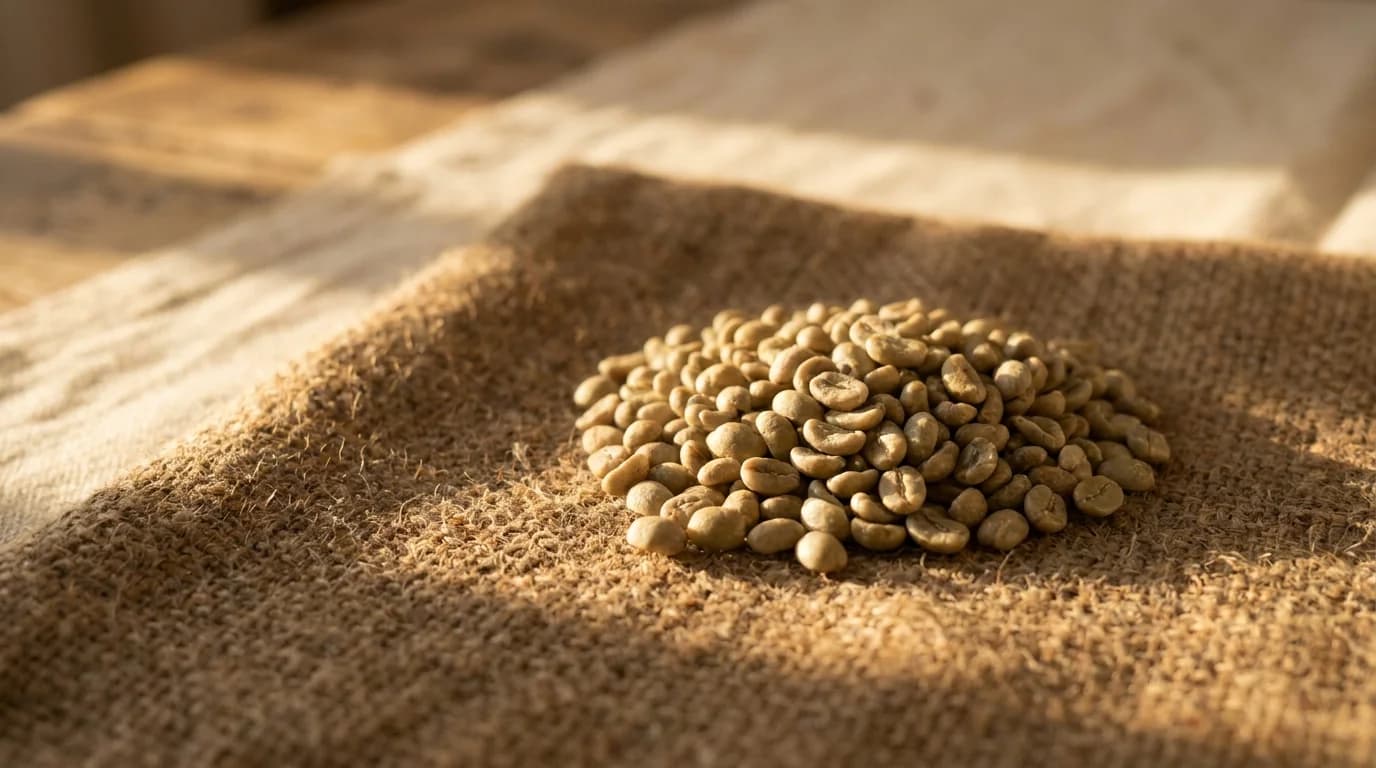
Arabica coffee is the coffee species that most drinkers have in their cup without ever thinking about it — the dominant commercial species, the entire foundation of specialty coffee, and the plant whose subtle chemistry produces virtually all the flavour variety we associate with coffee. Understanding arabica specifically (beyond just "the better coffee species") is essential coffee literacy — including its unusual genetic history, its many cultivars, and its precarious climate future.
~60% world supply
arabica's share of global coffee production; the remainder is mostly robusta (Coffea canephora)[7]
Hybrid species
Coffea arabica evolved as a natural hybrid of Coffea eugenioides and Coffea canephora in Ethiopian highlands[3]
~1.2% caffeine
arabica's dry-weight caffeine content — roughly half that of robusta[1]
The species itself
Coffea arabica is one of ~120 species in the genus Coffea, but only a handful are commercially significant. Of those, arabica dominates global production and quality markets.
Botanical characteristics:
- Small shrub or tree, typically pruned to 2-3 metres for cultivation.
- Small white flowers that bloom in clusters, self- pollinating (unlike robusta, which is cross-pollinated).
- Small red or yellow cherries ripening 6-9 months after flowering.
- Two seeds per cherry in most cases (occasional single-seed "peaberries").
- Preferred climate: cool temperatures (18-24°C average), high elevation (1,000-2,000+ metres), moderate rainfall (1,500-2,000 mm annually), well-drained soil.
Species properties that matter for coffee:
- Tetraploid genome (44 chromosomes) — twice as many as most other Coffea species. This unusual genome comes from arabica's hybrid origin (see below).
- Self-pollinating — allows uniform cultivars to breed true; also means the species has less genetic diversity than cross-pollinating species.
- Slower growth than robusta.
- More susceptible to pests and diseases, particularly coffee leaf rust (Hemileia vastatrix) — a major challenge for arabica production globally.
- Higher production costs per unit yield than robusta[1].
The genetic origin — a natural hybrid
Coffea arabica has an unusual origin story compared to most cultivated plants:
The hybridisation event. Genetic evidence indicates that Coffea arabica originated as a natural hybrid of two other coffee species — Coffea eugenioides (a diploid species native to East African highlands) and Coffea canephora (also diploid; the species we call robusta). The hybridisation occurred in Ethiopia's highland forests, producing a new fertile species with double the chromosome count of its parents (tetraploid instead of diploid)[4].
Timing. The hybridisation is estimated to have occurred tens of thousands of years ago — well before human cultivation.
Where. Genetic diversity studies point to the highland forests of southwestern Ethiopia (particularly Kaffa and Sidamo regions) as the location of the original hybridisation. Wild Coffea arabica still grows in these forests today with extraordinary genetic diversity — the signature of a species' natural birthplace.
Consequences of hybrid origin:
- Arabica inherited flavour compounds from both parent species — producing more complex chemistry than either alone.
- Arabica has a narrow "genetic bottleneck" — all cultivated arabica descends from a small number of founder plants that were originally domesticated, limiting global cultivated genetic diversity.
- Wild Ethiopian arabica retains much broader genetic diversity than cultivated arabica anywhere else — a critical reservoir for future breeding.
Arabica varieties (cultivars)
Cultivated arabica has been selected into many varieties over centuries. Major cultivars:
Typica and Bourbon lineage (the oldest branches):
- Typica — the oldest cultivar in the Americas. Descended from the Dutch/French colonial coffee transfer chain (see History of Coffee). Excellent cup quality; low yields.
- Bourbon — natural mutation of Typica discovered on Réunion (formerly Bourbon Island). More productive than Typica; similar cup character. Historically important in Central and South America.
- Yellow Bourbon — a Brazilian mutation with yellow cherries instead of red.
Mutations and derivatives:
- Caturra — natural mutation of Bourbon that's compact/dwarf, allowing denser planting. Very high yielding. Common in Colombia and Central America.
- Catuai — Bourbon-Mundo Novo hybrid bred in Brazil. Widely planted.
- Mundo Novo — natural hybrid of Typica and Bourbon discovered in Brazil in the 1940s. Very productive.
- Pacas — mutation of Bourbon; Salvadoran origin.
- Villa Sarchi — mutation of Bourbon; Costa Rican origin.
African origin varieties:
- SL28 and SL34 — Kenyan Scott Labs selections from the 1930s. Known for distinctive complex cup character including intense blackcurrant notes.
- Ruiru 11 and Batian — modern Kenyan disease- resistant varieties.
Ethiopian heirlooms:
- Thousands of distinct genetic strains grown traditionally in Ethiopia. Rarely differentiated by specific cultivar name in commerce. See Ethiopian Coffee.
Prestigious cultivars:
- Geisha (Gesha) — Ethiopian-origin variety now most famous for Panama Geisha production. See Panama Geisha Coffee.
- Pacamara — Pacas × Maragogype cross; distinctive large beans, complex cup.
- Maragogype — natural mutation with very large beans; low yields.
Disease-resistant hybrids:
- Castillo — Colombian rust-resistant variety, widely planted since 2005 release. See Colombian Coffee.
- Catimor — Timor Hybrid × Caturra crosses, various regional selections.
- Sarchimor — Villa Sarchi × Timor Hybrid crosses.
Each cultivar has distinctive agronomic properties (yield, disease resistance, elevation preference) and cup character. Modern specialty coffee increasingly differentiates by cultivar as well as by origin[2].
Arabica vs robusta
The two major coffee species differ substantially (see full comparison in Arabica vs Robusta):
| Property | Arabica | Robusta |
|---|---|---|
| Caffeine | ~1.2% | ~2.2% |
| Chlorogenic acids | Lower | Higher |
| Sugars | Higher | Lower |
| Lipids | Higher | Lower |
| Growing elevation | 1,000-2,000+ m | 200-800 m |
| Climate tolerance | Narrow | Broader |
| Disease resistance | Lower | Higher |
| Yield | Lower | Higher |
| Cup quality | Higher complexity, brightness, aromatic complexity | Stronger, more bitter, less nuanced |
| Global share | ~60% | ~40% |
| Price | Higher | Lower |
| Bean shape | Oval, curved crease | Round, straight crease |
Arabica's chemistry translates to sensory advantages: more complex aromas, brighter and more articulated acidity, sweeter body, and generally more variety in cup character. Robusta has legitimate uses in blends where its body, crema-generation, and lower cost matter — but for distinctive origin character, arabica dominates[5].
The climate challenge
Arabica's narrow climate niche makes it particularly vulnerable to climate change:
The problem. Arabica needs specific temperature and rainfall conditions — cool enough (arabica shuts down photosynthesis above ~30°C), moist enough (arabica needs 1,500+ mm rainfall annually), and stable enough (irregular seasons disrupt flowering and cherry development). Climate change is squeezing all these variables in traditional arabica-growing regions.
The projections. Multiple modelling studies project that suitable arabica cultivation land may shrink by 50%+ by 2050 under moderate warming scenarios. Some traditional growing regions (parts of Brazil, Central America) may become marginal or unsuitable for arabica within decades.
The adaptations:
- Breeding programmes drawing from Ethiopian wild genetic diversity to introduce heat tolerance, drought tolerance, and disease resistance into commercial varieties.
- Altitude migration — moving arabica cultivation to higher elevations as lower regions become too warm. Constrained by limited high-altitude plantable land.
- Agroforestry returning to shade-grown coffee models that resemble arabica's forest-origin ecology and moderate microclimate temperatures.
- New growing regions may emerge as climate zones shift.
- Cultivar substitution — increased robusta production in regions where arabica becomes marginal.
Ethiopian wild coffee is the critical genetic reservoir for these breeding efforts. Protecting Ethiopian forest coffee ecosystems has become a global coffee industry priority[8].
What arabica tastes like
Arabica cup character varies enormously by variety, origin, and processing — that's a big part of arabica's appeal. But some general family characteristics:
- Complex aromatics — floral, fruity, chocolate, nutty, spice notes.
- Bright acidity — from mild to intense depending on variety and processing.
- Sweet body — natural sugars come through in the cup.
- Origin variation — arabica from Ethiopia tastes different from arabica from Colombia, which tastes different from arabica from Sumatra, etc.
- Variety variation — Bourbon tastes different from Geisha which tastes different from SL28.
- Processing variation — washed, natural, honey, and experimental processing all produce different arabica profiles.
The vast majority of the flavour variety in coffee comes from these arabica dimensions. Robusta, by comparison, has much less range — most robusta coffees taste broadly similar.
Reading arabica labels
Coffee packages increasingly detail:
- 100% Arabica — no robusta content. A basic quality bar.
- Single origin — from one country, region, or farm.
- Variety/cultivar name — Bourbon, Caturra, Geisha, etc.
- Processing method — washed, natural, honey.
- Elevation — higher generally correlates with brighter, more complex cups.
- Cupping score — SCA scale, 80+ specialty, 85+ high specialty, 90+ exceptional.
- Roast date — critical for freshness.
Specialty coffee typically provides most or all of this information. Commercial/mass-market coffee often provides only "100% Arabica" without more detail.
Common misconceptions
- "Arabica is objectively better than robusta." Better for most specialty applications; robusta has legitimate roles in blends, espresso for crema/body, and instant coffee. Different tools for different purposes.
- "All specialty coffee is arabica." Yes, essentially. Robusta rarely reaches specialty grade, though some "fine robusta" production is emerging.
- "Arabica has less caffeine and is therefore weaker." Less caffeine per bean, but "strength" in perception depends on many factors (brew method, dose, roast). A strong-brewed arabica has plenty of coffee character.
- "Coffea arabica is native to Arabia." No — the species name comes from arabica's early cultivation in Yemen (part of the Arabian Peninsula), but the plant is native to Ethiopia. The name is a historical misnomer.
- "Arabica beans all look the same." Bean size, shape, and colour vary substantially by variety. Maragogype arabica has very large beans; Bourbon is moderate; Geisha is long and slender.
The honest summary
Arabica coffee (Coffea arabica) is the coffee species that dominates global production (~60%) and essentially all specialty coffee. Originated as a natural hybrid of Coffea eugenioides and Coffea canephora (robusta) in Ethiopian highland forests tens of thousands of years ago. Compared to robusta: lower caffeine (~1.2% vs ~2.2%), higher sugars and lipids, more complex flavour, more aromatic variety, higher production costs, lower disease resistance, narrower climate niche. Grown across a broad range of cultivars (Bourbon, Typica, Caturra, Geisha, SL28, and many others) each with distinctive character. Climate change is a serious challenge for arabica's narrow climate requirements — the future of premium coffee depends substantially on breeding programmes drawing from Ethiopian wild genetic diversity for heat and disease tolerance. For consumers: arabica is what you're drinking when coffee tastes distinctive; robusta is what you're drinking when coffee tastes strong and simple. Arabica's founding hybridisation left it with unusually narrow genetic variation, which is why the crop is so exposed to disease and heat.
Frequently asked questions
- What is arabica coffee?
- Arabica coffee refers to Coffea arabica, one of the two main coffee species used commercially (the other being Coffea canephora, commonly called robusta). Arabica accounts for approximately 60% of world coffee production and essentially all specialty coffee. It originated in the highland forests of southwestern Ethiopia and produces smaller-caffeine, higher-quality, more complex-flavoured coffee than robusta.
- Why is arabica considered better than robusta?
- Cup quality differences. Arabica produces more complex aromatic profiles, brighter acidity, sweeter character, and generally more nuanced flavour than robusta. Robusta produces stronger, more bitter, less aromatic coffee. Arabica also has lower caffeine (~1.2% vs ~2.2%) and higher sugar and lipid content. These chemical differences translate to sensory differences: arabica offers more flavour variety and refinement; robusta offers strength and body. Both have legitimate uses — arabica dominates specialty; robusta is common in espresso blends and instant coffee for body and cost.
- Where is arabica coffee grown?
- Arabica grows in a narrow tropical belt at high elevation (typically 1,000-2,000+ metres), roughly between the Tropic of Cancer and Tropic of Capricorn. Main producers: Brazil (largest), Colombia (all arabica), Ethiopia (origin country), Honduras, Peru, Mexico, Guatemala, Nicaragua, Costa Rica, Kenya. Arabica needs cool temperatures, moderate rainfall, and high elevation — the 'coffee belt' geography.
- What are arabica varieties?
- Arabica has many cultivated varieties (cultivars): Typica, Bourbon, Caturra, Catuai, Mundo Novo, Pacas, Villa Sarchi, SL28, SL34, Geisha (Gesha), Pacamara, Kent, and dozens of others including disease-resistant hybrids like Castillo, Catimor, and Sarchimor. Each variety has distinct agronomic characteristics (yield, disease resistance, elevation preference) and cup profile. Ethiopian 'heirloom' varieties represent thousands of local landrace strains.
- Is 100% arabica a quality mark?
- Kind of — but not automatically. '100% Arabica' means the coffee contains no robusta. This is a low quality bar (a mediocre arabica is still arabica) but it does exclude the sharp bitter character that robusta often adds. Specialty coffee is essentially all arabica; the '100% Arabica' label is more meaningful in mass-market context where the alternative might be an arabica/robusta blend. For specialty coffee, more specific quality indicators (cupping score, origin, variety, processing method) matter more than the arabica-vs-robusta distinction.
References
Every factual claim in this article is drawn from the sources below. See the source library for how we grade evidence.
- [1]Coffee Varieties CatalogWorld Coffee Research · Reference work · Tier 2 · Moderate
- [2]Interactive Coffee Varieties CatalogWorld Coffee Research · Reference work · Tier 2 · Moderate
- [3]Caffeine and related purine alkaloids: biosynthesis, catabolism, function and genetic engineeringPhytochemistry · 2008 · Review · Tier 2 · Moderate
- [4]Comparison of the Effectiveness of Fatty Acids, Chlorogenic Acids, and Elements for the Chemometric Discrimination of Coffee (Coffea arabica L.) Varieties and Growing OriginsJournal of Agricultural and Food Chemistry · 2008 · Observational study · Tier 2 · Moderate
- [5]Chemical Discrimination of Arabica and Robusta Coffees by Fourier Transform Raman SpectroscopyJournal of Agricultural and Food Chemistry · 2005 · Observational study · Tier 2 · Moderate
- [6]Coffee agronomyFood and Agriculture Organization of the United Nations · Reference work · Tier 2 · Moderate
- [7]International Coffee OrganizationInternational Coffee Organization · Official dataset · Tier 1 · Strong
- [8]Climate change impacts on coffee production: a systematic reviewPMC / NIH · 2023 · Systematic review · Tier 1 · Strong
- [9]CoffeeEncyclopaedia Britannica · Reference work · Tier 3 · Contextual
Related reading
- Beans, Roasts & OriginsArabica vs Robusta: Taste, Caffeine, and Differences→
- Beans, Roasts & OriginsWhere Did Coffee Originate? Ethiopia, Yemen, History→
- Beans, Roasts & OriginsCoffee Origins Around the World→
- Beans, Roasts & OriginsCoffee and Climate Change: What the Science Says→
- Beans, Roasts & OriginsWhat Is a Coffee Blend? How Roasters Mix Beans→
- Beans, Roasts & OriginsWhy Arabica Has Almost No Genetic Diversity→