Costa Rica Coffee: Tarrazú, Varieties, and Distinction
By Coffee Studies Editorial·Published July 18, 2026·4 min read
Quick answer
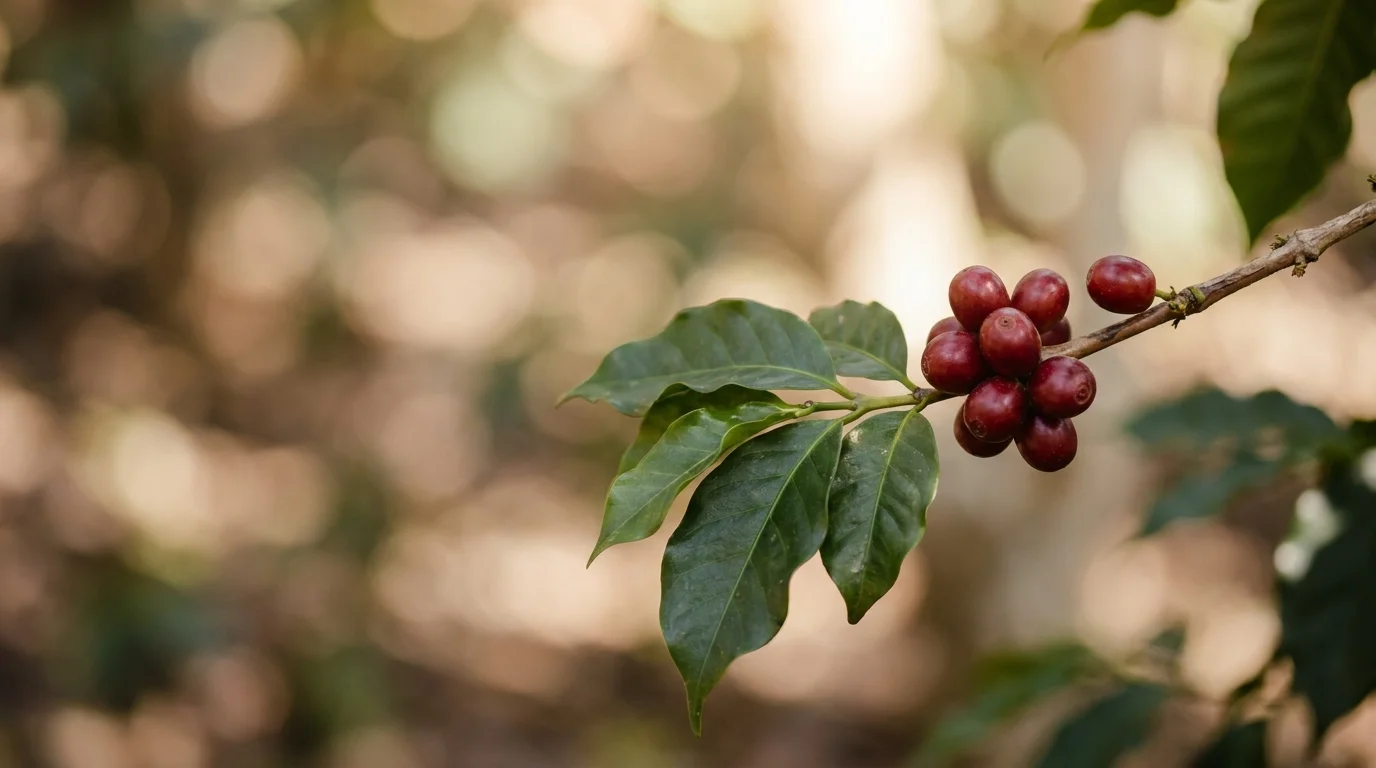
Costa Rica occupies an unusual position in the coffee world: a small producer with an outsized specialty reputation, built on a deliberate national commitment to quality over volume. The country produces a fraction of what Colombia or Brazil export, but its coffees — particularly from the Tarrazú region — are consistently among the most sought-after in specialty circles.
The most visible expression of this commitment is the law banning robusta cultivation entirely. No other coffee- producing country has gone that far.
100% arabica — robusta banned
Costa Rica is the only coffee-producing country to have legally prohibited robusta cultivation (since 1989) — the entire national crop is arabica, grown for quality and market premium rather than volume[2]
1,200–1,900 metres in Tarrazú
the Tarrazú region's high altitude creates a slow cherry development cycle that concentrates sweetness and acidity — the foundation of Costa Rica's clean, bright cup profile[3]
Honey processing pioneer
Costa Rican producers are widely credited with developing modern honey processing into a distinct specialty technique in the early 2000s — yellow, red, and black honey variants are now used globally[1]
The national quality commitment
In 1989, Costa Rica's legislature enacted a law requiring all coffee production to use arabica varieties only. Robusta — which can yield more per hectare but produces a lower-quality, more bitter cup — was prohibited[2].
This was an economic gamble: robusta would have let producers farm lower, less steep land and harvest more coffee per plant. By banning it, Costa Rica committed to the more labour-intensive, altitude-dependent arabica model and the price premium that comes with it.
The bet has largely paid off. Costa Rican coffee consistently commands higher prices than comparable Central American origins, and the country's specialty reputation is disproportionate to its volume.
Growing regions
Costa Rica has seven officially recognised coffee-growing regions, spread across the country's mountain ranges[1]:
Figure
Costa Rica coffee regions by altitude and production share
Values in metres asl (approx. midpoint)
Tarrazú in detail
The Tarrazú region — formally the Los Santos district in the Tarrazú canton — sits in the Tarrazú mountains approximately 80 km south of San José. The altitude range of 1,200–1,900 metres creates conditions where coffee cherries ripen slowly over a long development cycle[3].
Tarrazú has a clearly defined wet season (May to November) and dry season (December to April). Most coffee is harvested during the dry season when cherries are fully ripe. The combination of high altitude, distinct seasons, and well-drained volcanic soil produces beans with a hard, dense seed — the SHB (Strictly Hard Bean) classification, which indicates growth above 1,200 metres.
Tarrazú cup profile: bright, clean, structured. The typical notes are citrus (lemon, orange peel), stone fruit (peach, apricot), honey or caramel sweetness, a smooth medium body, and a clean, lingering finish. The acidity is present but well-integrated — articulate rather than sharp.
Honey processing: Costa Rica's signature technique
Costa Rica is widely credited with refining honey processing into the distinct specialty technique used today in coffee origins around the world.
In the washed (wet) process, the cherry skin and all fruit mucilage are removed before drying. In the natural (dry) process, the whole cherry dries with the fruit intact. Honey process sits between the two: the cherry skin is removed, but part of the sticky mucilage layer that surrounds the seed is left on during drying[4].
The spectrum of honey processes:
| Type | Mucilage remaining | Drying time | Cup character |
|---|---|---|---|
| Yellow honey | 25–50% | 8–10 days | Closest to washed; clean, subtle sweetness |
| Red honey | 50–75% | 12–16 days | More body, stone fruit, caramel |
| Black honey | 75–100% | 25–30 days | Most fruit-forward; syrupy, complex |
| White honey | Minimal | Short | Light, delicate; less common |
Costa Rican farms pioneered the red and black honey designations and developed the controlled drying infrastructure (raised beds, shade management) that makes them repeatable rather than accidental.
What to look for when buying
Region: Tarrazú is the most recognisable and consistently positioned. If the bag lists Tarrazú, expect clean, bright, well-structured coffee. West Valley and Tres Ríos are worth seeking out for variety.
Processing: washed Costa Rican coffee shows the origin's clean acidity and delicate fruit character most clearly. Honey process adds sweetness and body. Black honey is the most fruit-forward and can be polarising — those who prefer clean cups may find it heavy; those who like natural-process coffees will often enjoy it.
SHB grade: Strictly Hard Bean indicates altitude above 1,200 metres and dense bean development. A meaningful quality signal for Costa Rican coffee.
Roast: medium roast preserves the acidity and fruit notes that make Costa Rican coffee interesting at its best. Dark roasting flattens the brightness into generic chocolate and reduces the origin character[2].
The honest summary
Costa Rica is a small but quality-focused producer — the only country to legally require all-arabica production. The Tarrazú region produces the most internationally known coffees: clean, bright, structured, with citrus and stone- fruit acidity and a smooth body. Costa Rica is also the origin of modern honey processing, a technique now used globally that adds sweetness and body to the cup by leaving fruit mucilage on the seed during drying. When buying, the growing region and processing method are the two most useful pieces of information — and a good Costa Rican coffee at a medium roast is one of the cleaner, more elegant cups Central America produces.
Frequently asked questions
- What does Costa Rican coffee taste like?
- Costa Rican coffee is generally clean, bright, and well-structured. The most typical profile is a light-to-medium body with a clear, citrusy or stone-fruit acidity, honey or caramel sweetness, and a clean finish. Tarrazú coffees specifically are known for their brightness and clarity — a quality associated with the region's high altitude and distinct wet and dry seasons. Honey-processed Costa Rican coffees add a syrupy sweetness and more fruit-forward character compared to washed versions from the same origin.
- What is Tarrazú coffee?
- Tarrazú (formally Los Santos district of the Tarrazú region) is Costa Rica's most famous coffee-growing zone, located in the high mountains south of San José at 1,200–1,900 metres above sea level. The region's combination of altitude, distinct wet and dry seasons, and well-drained volcanic soil creates conditions suited to slow cherry development and concentrated cup character. Tarrazú coffees are typically bright, clean, and structured — a reference point for Central American specialty coffee.
- Why did Costa Rica ban robusta?
- Costa Rica banned robusta cultivation in 1989 with legislation designed to position the country's coffee as an all-arabica, quality-focused origin. Robusta is hardier and more productive than arabica but produces a harsher, more bitter cup and commands lower market prices. Costa Rica's government chose to sacrifice volume for a quality and price premium positioning. The law required all coffee production to be arabica only, reinforcing the country's specialty reputation.
- What is honey process coffee from Costa Rica?
- Honey process (also called pulped natural) is a method where the outer cherry skin is removed but part or all of the fruit mucilage is left on the seed during drying. Costa Rica is widely credited with refining and popularising modern honey processing in the early 2000s. The mucilage (a sticky, sweet layer between the skin and the seed) imparts sweetness and body during drying. Yellow honey (less mucilage) produces a cleaner cup close to washed; red and black honey (more mucilage, longer drying) produce more syrupy, fruit-forward cups.
- Where does Costa Rica rank in global coffee production?
- Costa Rica is a relatively small producer — approximately 1.5 million 60 kg bags per year, which places it outside the top 15 globally by volume. Its reputation in specialty coffee significantly exceeds its production volume. The country prioritises cup quality and premium positioning over volume, and its coffee commands higher prices on international markets relative to its output.
References
Every factual claim in this article is drawn from the sources below. See the source library for how we grade evidence.
- [1]FAOSTATFood and Agriculture Organization of the United Nations · Official dataset · Tier 1 · Strong
- [2]World Coffee Statistics DatabaseInternational Coffee Organization · Official dataset · Tier 1 · Strong
- [3]Coffee agronomyFood and Agriculture Organization of the United Nations · Reference work · Tier 2 · Moderate
- [4]Coffee Varieties CatalogWorld Coffee Research · Reference work · Tier 2 · Moderate
Related reading
- Beans, Roasts & OriginsCoffee Processing Methods Explained→
- Beans, Roasts & OriginsCoffee Origins Around the World→
- Beans, Roasts & OriginsGuatemalan Coffee: Regions, Flavour, and What to Look For→
- Beans, Roasts & OriginsArabica vs Robusta: Taste, Caffeine, and Differences→
- Beans, Roasts & OriginsRwandan Coffee: Origin, Profile, and Specialty Revival→
- Beans, Roasts & OriginsWhat Is a Coffee Blend? How Roasters Mix Beans→