Brazilian Coffee: The World's Largest Producer
By Coffee Studies Editorial·Published July 15, 2026·8 min read
Quick answer
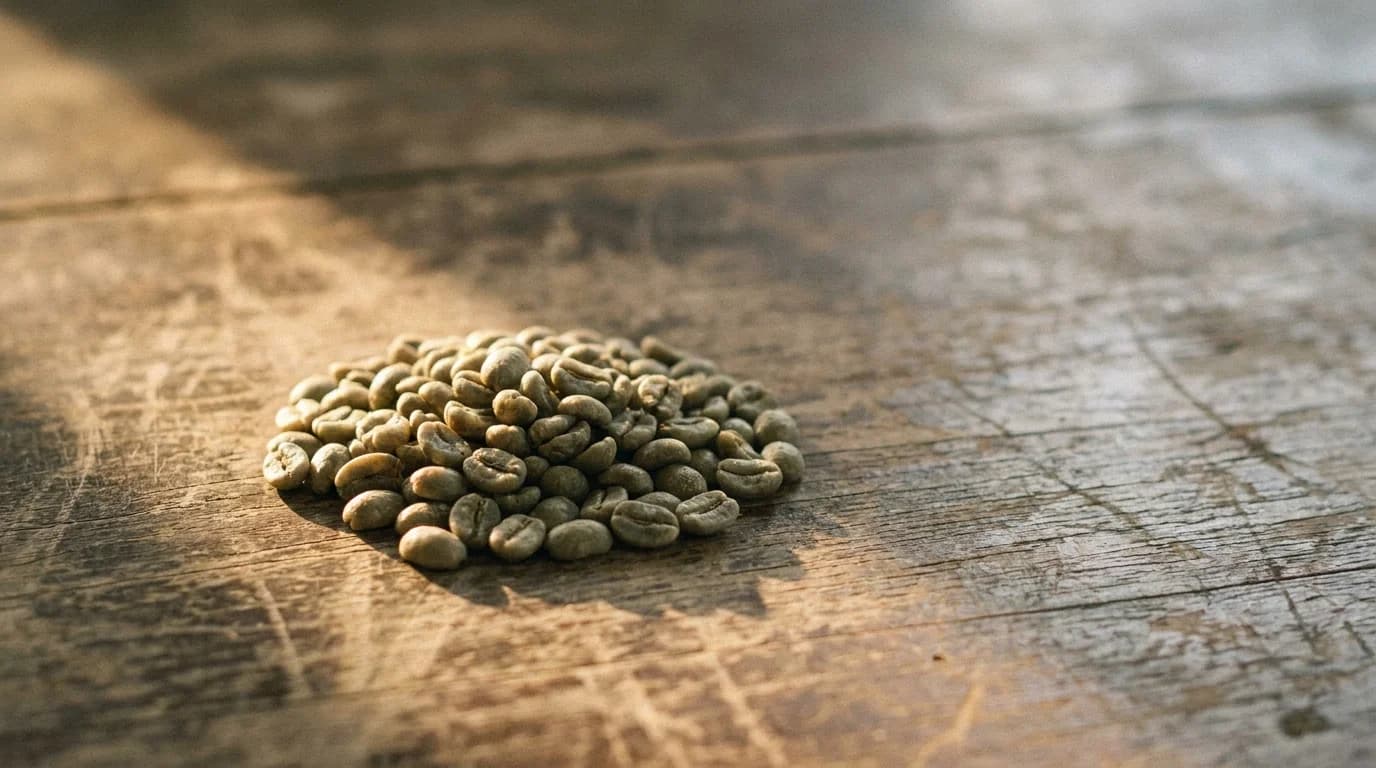
Brazil produces more coffee than any other country in the world — and it isn't close. Roughly 40% of every cup of coffee drunk on Earth started as a Brazilian coffee bean. That dominance is a 19th-century inheritance that has proven remarkably durable through the 20th and 21st centuries, and it has shaped both global coffee prices and the flavour profile of most espresso blends served worldwide. Brazilian coffee is often overshadowed by more exotic origins in specialty circles, but the quality ceiling in Brazilian production is high and Brazil's practical importance to global coffee is unrivalled.
~40% of world supply
Brazil produces roughly three times as much coffee as the second-largest producing country[4]
~3 million tons/year
typical annual Brazilian coffee production; volume varies with biennial cycle and weather[5]
Pulped natural
Brazilian invention of the honey process — the middle-ground between washed and natural processing[2]
Brazilian coffee's global weight
Brazil's dominance of coffee production is difficult to overstate:
- Largest producer since ~1850. Brazil has been the top producer for over 170 years and shows no sign of losing the position.
- ~3 million metric tons annually in typical years — compared to Vietnam's ~1.5-1.8 million tons (second) and Colombia's ~750,000 tons (third).
- Approximately 40% of global supply.
- Both arabica and robusta — the largest producer of each species that produces both. Roughly 75% of Brazilian production is arabica, 25% is robusta (called Conilon locally).
- Enormous plantations — Brazilian coffee cultivation is uniquely industrial-scale compared to smallholder- dominated production in most other origins. Large flat areas of Minas Gerais and other regions support mechanised harvesting.
- Price-setting influence — Brazilian production volumes and quality shifts effectively set the global arabica price. A Brazilian frost or drought sends arabica prices up globally; a bumper Brazilian harvest suppresses global prices[5].
The biennial cycle
One quirk of Brazilian coffee that affects global markets: arabica coffee plants naturally alternate between higher- yielding and lower-yielding years. This "biennial cycle" appears across all arabica production but has an outsized effect in Brazil due to Brazil's market share.
- "On-year" harvests produce 20-30% more coffee than "off-year" harvests.
- Global arabica prices respond noticeably to Brazilian on/off years.
- 2024/2025 was a Brazilian off-year with additional weather stress — contributed to substantial arabica price increases globally.
Some modern farming techniques (variable pruning, staggered planting) partially smooth the cycle, but the biennial pattern remains a fundamental feature of Brazilian coffee economics.
Major producing regions
Minas Gerais. Brazil's largest coffee-producing state, accounting for roughly 50% of national production. Contains several distinct sub-regions:
- Sul de Minas (southern Minas Gerais) — mountainous, higher elevation, produces classic Brazilian specialty arabica.
- Cerrado Mineiro — flat highland plateau in western Minas Gerais, 800-1,300m elevation. Highly mechanised large-farm production. PDO-recognised region. Consistent quality, distinctive nutty-chocolatey profile.
- Matas de Minas — mountainous region in Zona da Mata, smaller farms producing distinctive coffees.
São Paulo. Historically Brazil's dominant coffee state in the 19th and early 20th centuries. Still significant, though production has shifted north to Minas Gerais.
Espírito Santo. Brazil's largest producer of robusta (Conilon). Coastal state where hot lowland conditions suit robusta cultivation.
Bahia. Historically small but rapidly-growing specialty region — particularly in the Chapada Diamantina highlands. Modern quality-focused Bahian coffees have earned strong specialty reputations.
Paraná. Historically major producer; devastated by the 1975 "Black Frost" that killed most coffee trees. Production partially recovered but never returned to former levels.
Rondônia. Amazon-adjacent state, mostly robusta production.
Rio de Janeiro. Historic coffee state (the port of Santos was originally the coffee export port for Rio state coffee). Very small production today[2].
Varieties
Brazilian coffee cultivars are dominated by high-yielding selections suited to large-scale production:
Arabica cultivars:
- Bourbon — brought to Brazil in the 1850s from Bourbon (now Réunion) via Guyana. Historically dominant; still grown particularly on quality-focused specialty farms.
- Mundo Novo — a natural hybrid of Bourbon and Typica discovered in Brazil in the 1940s. Very high yielding. Backbone of Brazilian arabica for decades.
- Catuaí — bred from Mundo Novo × Caturra in the 1950s by Brazil's Instituto Agronômico de Campinas. Dwarf plant (allows denser planting), high yielding. Now the most planted variety in Brazil.
- Icatu, Obatã, Tupi — modern rust-resistant cultivars bred in Brazil.
- Bourbon Santos — historical trade name for high- quality Bourbon lots exported through the port of Santos.
Robusta (Conilon):
- Conilon — the Brazilian name for locally-cultivated robusta. Grown primarily in Espírito Santo and Rondônia. Distinct from Vietnamese robusta selections.
- Robusta Amazônica — recent hybrid selections aimed at improved quality Brazilian robusta[1].
Processing
Brazil pioneered a specific processing innovation that transformed global coffee production.
Traditional natural process was standard in Brazil for most of coffee's Brazilian history — the country's dry climate in many regions favours natural processing (cherries dry easily on patios without excessive fermentation risk).
Washed process exists but is less common than natural in Brazil.
Pulped natural (honey process) — the Brazilian invention. Developed in Brazil in the 1990s as a compromise between natural and washed methods:
- Coffee cherry skin is removed by a pulper (like washed processing).
- But instead of fermenting the beans in water to remove the sticky mucilage layer, the beans are dried with the mucilage still attached.
- Result: cleaner than natural (no cherry skin defects during drying), sweeter and heavier-bodied than washed (mucilage sugars caramelise during drying).
Categories within pulped natural:
- Yellow honey — most mucilage removed before drying; closest to washed profile.
- Red honey — moderate mucilage retained; middle profile.
- Black honey — most/all mucilage retained; closest to natural profile.
Central American producers adopted the method and renamed it "honey process" (miel = honey in Spanish, referring to the sticky honey-coloured mucilage), and it's now widely used across Costa Rica, El Salvador, Nicaragua, and other Central American origins.
What Brazilian coffee tastes like
Classic Brazilian arabica profile:
- Low acidity — bright acid notes are subtle, sometimes absent.
- Heavy body — full, thick mouthfeel.
- Sweet, nutty, chocolatey — the reference profile is "peanut butter and dark chocolate."
- Mild fruit — sometimes red apple, sometimes plum; usually subtle.
- Smooth finish — clean, no harshness.
Higher-elevation Brazilian specialty coffees (Sul de Minas, Cerrado, Bahia's Chapada Diamantina) extend this with:
- More distinct acidity — moderate bright notes.
- More expressive fruit — orange, red fruit, sometimes tropical fruit.
- More aromatic complexity.
- Refined sweetness — caramel, molasses, dark chocolate.
Brazilian coffee is often described as "smooth" and "approachable" — it's the origin that non-coffee-nerds generally like even in high specialty form. Ethiopian coffees are more challenging; Brazilian coffees are inviting.
In espresso, Brazilian coffee is prized for its body, crema production, and low-acidity foundation that supports other origins in a blend without overwhelming them.
The industry structure
Brazilian coffee production has a distinctive industrial character:
Very large plantations. Where most producing countries are dominated by smallholder farmers (0.5-5 hectares), Brazilian coffee is grown on enormous farms — many 100+ hectares, some over 1,000 hectares. Mechanised planting, mechanised harvesting, and modern agronomic techniques dominate.
Cooperative and independent producers. Both large cooperatives (like Cooxupé, Cocatrel) and independent plantation operators. Cooxupé alone has 15,000+ member producers and processes coffee from a huge portion of Minas Gerais.
Port of Santos. Historic and current primary coffee export port. Santos was so associated with Brazilian coffee that "Santos" became a generic name for exported Brazilian coffee (as in "Bourbon Santos," "Santos No. 2," etc.).
BSCA (Brazil Specialty Coffee Association). Founded 1991, the organisation representing quality-focused Brazilian coffee. Cup of Excellence competitions began in Brazil in 1999.
Cecafé (Council of Coffee Exporters). Brazilian coffee export industry association.
The Cup of Excellence
Cup of Excellence, one of the most respected specialty coffee competitions in the world, originated in Brazil in 1999. The competition:
- Farmers submit their best lots for evaluation.
- International jury cups blindly and scores.
- Highest-scoring lots (usually 87+ points) become Cup of Excellence winners.
- Winning lots auction internationally at premium prices.
Cup of Excellence has now expanded to other producing countries (Colombia, Guatemala, Honduras, Nicaragua, El Salvador, Costa Rica, Rwanda, Burundi, Ethiopia, Peru, Mexico), but Brazil remains its home and origin.
Buying Brazilian coffee
Reading Brazilian coffee labels:
- Region — Minas Gerais, Cerrado Mineiro, Sul de Minas, Bahia, etc.
- Farm name or cooperative — specialty labels emphasise this.
- Cultivar — Bourbon, Mundo Novo, Catuaí, Yellow Bourbon, etc.
- Processing — natural (default), pulped natural / honey (with sub-category), washed, experimental.
- Grade — NY-based commercial grades (Santos No. 2 screen 17/18 for classic export grade), or cupping score for specialty.
- Elevation — often noted, particularly for specialty lots.
Common misconceptions
- "Brazilian coffee is low quality." Bulk commercial Brazilian coffee is often average, but specialty Brazilian coffee is genuinely excellent — Cup of Excellence lots regularly score 90+.
- "Brazil grows mostly robusta." Roughly 75% of Brazilian production is arabica; 25% is robusta (Conilon).
- "Brazilian coffee has less caffeine because it's smooth." Caffeine content is determined by species (arabica vs robusta) not by cup profile. Brazilian arabica has similar caffeine to any other arabica.
- "Santos means quality." Historically, "Santos" meant the coffee was exported through Santos port. It's a geographic origin marker, not a quality mark.
- "Cerrado is a farm." Cerrado is a large highland region (Cerrado Mineiro is one of several sub-regions called Cerrado in Brazil).
The honest summary
Brazil is the world's largest coffee producer by a substantial margin, growing about 40% of global supply across enormous plantations in Minas Gerais, São Paulo, Bahia, and other states. Brazilian coffees are typically characterised by low acidity, heavy body, and nutty- chocolatey sweetness — the profile that makes them the backbone of most espresso blends worldwide. Brazil invented the pulped-natural (honey) processing method, now used globally. Specialty Brazilian coffee (Cerrado Mineiro, Sul de Minas, Bahian highlands) can be excellent — regularly winning international quality competitions. And because Brazil produces so much coffee, Brazilian production shifts effectively set the global arabica market — everyone in coffee pays attention to what happens in Brazil.
Frequently asked questions
- How much coffee does Brazil produce?
- Brazil produces approximately 40% of the world's coffee — around 3 million metric tons annually in typical years. This is roughly three times the output of the second-largest producer (Vietnam). Brazil has been the world's largest coffee producer since the 19th century and dominates global coffee trade in a way no other producing country matches.
- What are Brazil's main coffee regions?
- The largest producing states are: Minas Gerais (about 50% of Brazilian production — includes the famous Cerrado sub-region and the Sul de Minas mountains); São Paulo (historically dominant, still significant); Espírito Santo (largest robusta/Conilon production); Bahia (growing quality-focused specialty region); Paraná (formerly major, reduced after 1975 frost); Rondônia (Amazon-adjacent robusta region).
- What is Cerrado coffee?
- Cerrado Mineiro is a specific region in western Minas Gerais where the flat highland plateau supports large-scale mechanised coffee farming. Elevation ranges 800-1,300 metres. Cerrado coffees are known for very consistent quality, mild acidity, nutty and chocolatey flavour profile, and heavy sweet body. The region has a Protected Designation of Origin (PDO), and Cerrado is considered one of Brazil's top specialty regions.
- What is pulped natural or honey process?
- Pulped natural is a Brazilian-invented processing method that removes coffee cherry skin and part of the mucilage (like washed processing) but leaves the remaining sticky mucilage attached to the bean during drying (like natural processing). The result is a middle-ground flavour profile: cleaner than natural, sweeter and fuller-bodied than washed. Central American producers later adapted this method and renamed it 'honey process' (miel/honey referring to the sticky mucilage). Categories include yellow honey, red honey, and black honey depending on how much mucilage is retained.
- Why is Brazilian coffee popular in espresso blends?
- Brazilian coffee's flavour profile — low acidity, heavy body, nutty and chocolatey sweetness, and consistent supply at reasonable prices — is nearly ideal as an espresso base. It provides the body and sweetness that supports other origins in a blend. Roughly 60-80% of most classic Italian and modern specialty espresso blends is Brazilian coffee, with more distinctive origins (Ethiopian, Colombian, Kenyan) added for accent character.
References
Every factual claim in this article is drawn from the sources below. See the source library for how we grade evidence.
- [1]Coffee Varieties CatalogWorld Coffee Research · Reference work · Tier 2 · Moderate
- [2]Coffee agronomyFood and Agriculture Organization of the United Nations · Reference work · Tier 2 · Moderate
- [3]International Coffee OrganizationInternational Coffee Organization · Official dataset · Tier 1 · Strong
- [4]World Coffee Statistics DatabaseInternational Coffee Organization · Official dataset · Tier 1 · Strong
- [5]Coffee: World Markets and TradeUSDA · Official dataset · Tier 1 · Strong
- [6]Climate change impacts on coffee production: a systematic reviewPMC / NIH · 2023 · Systematic review · Tier 1 · Strong
- [7]Uncommon Grounds: The History of Coffee and How It Transformed Our World (revised edition)Basic Books (Mark Pendergrast) · 2010 · Reference work · Tier 2 · Moderate
- [8]CoffeeEncyclopaedia Britannica · Reference work · Tier 3 · Contextual
Related reading
- Beans, Roasts & OriginsCoffee Origins Around the World→
- Beans, Roasts & OriginsArabica vs Robusta: Taste, Caffeine, and Differences→
- Beans, Roasts & OriginsWhat Is a Coffee Blend? How Roasters Mix Beans→
- Beans, Roasts & OriginsHoney Process Coffee: Yellow, Red, and Black Honey→
- Beans, Roasts & OriginsArabica Coffee Varieties: Typica, Bourbon, and Geisha→
- Beans, Roasts & OriginsColombian Coffee: Altitude, Acidity, and Variety→