Liberica Coffee: The Third Commercial Coffee Species
By Coffee Studies Editorial·Published July 18, 2026·6 min read
Quick answer
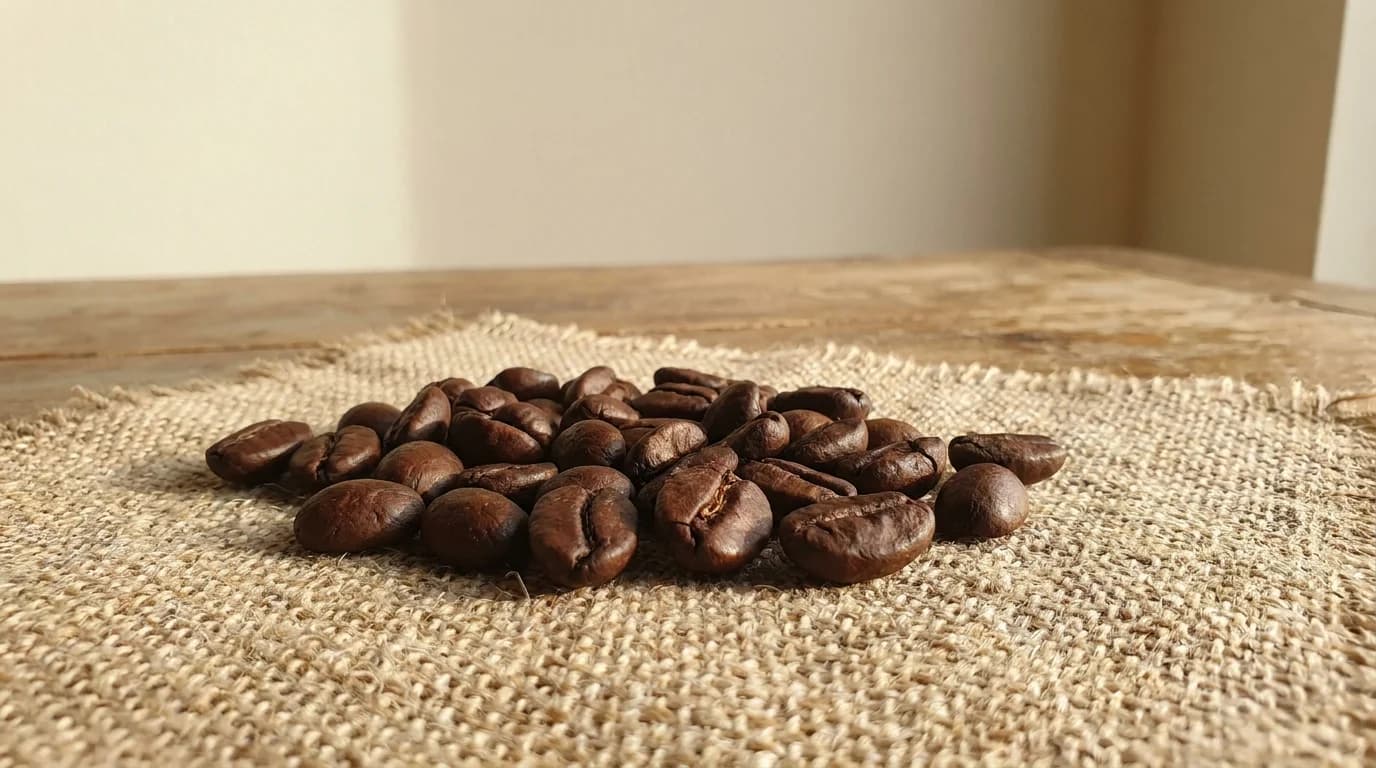
Most of the world's coffee is arabica or robusta. Together they account for roughly 98% of global production. The other 2% — a small but persistent fraction — is liberica. It is the oldest of the three species in Western cultivation, the most geographically limited, and the most unusual in the cup. In parts of Southeast Asia, it is the coffee. Everywhere else, it is barely known.
~1–2% of world production
Coffea liberica accounts for a small fraction of global coffee — a remnant of the 1880s when it briefly replaced arabica after the coffee leaf rust catastrophe[5]
Largest beans of the three species
liberica beans are noticeably bigger and more irregularly shaped than arabica or robusta — asymmetrical, with a distinctive hooked or pointed tip[1]
Barako in the Philippines
the most culturally significant liberica is Filipino Barako (Batangas and Cavite), where it is a heritage crop with a bold, smoky character deeply embedded in local coffee tradition[3]
The species and its history
Coffea liberica is native to Liberia and other parts of West and Central Africa, where it grows wild in lowland tropical forests. Unlike arabica (originally from the Ethiopian highlands) and robusta (from lowland Central Africa), liberica was identified and named by European botanists in the 1870s — right when a catastrophe was about to make it commercially essential.
The coffee leaf rust crisis: In the 1870s–1880s, Hemileia vastatrix — coffee leaf rust — devastated arabica plantations across Ceylon (Sri Lanka), then spread through Java, Sumatra, and other colonial coffee-growing territories. Arabica, which had been the dominant commercial species, was largely destroyed. Liberica, more resistant to leaf rust, was rapidly introduced as a replacement across British Malaya, the Philippines, and parts of Africa. For a brief period, liberica was a commercially significant global crop[3].
The respite was temporary. By the early 20th century, robusta — with even stronger disease resistance and higher yields — proved more commercially viable than liberica in most contexts. Liberica retreated to the regions where it had taken hold during the crisis, particularly the Philippines and Malaysia. It never recovered global commercial significance.
The plant
Coffea liberica is the largest of the three commercial coffee species — the trees grow to 9–18 metres under optimal conditions (much taller than arabica at 3–5 m or robusta at 4–6 m). Commercial cultivation keeps them pruned to manageable height.
Key characteristics:
- Altitude: grows at 0–600 m, tolerates hot lowland tropical conditions that arabica cannot.
- Temperature: adapted to higher temperatures than arabica; closer to robusta in heat tolerance.
- Pollination: self-incompatible — requires cross-pollination from other liberica plants.
- Beans: the largest of the three species, distinctively asymmetrical and irregularly shaped, with a hooked or pointed tip. Significantly larger than arabica or robusta beans.
- Yield: lower yield per tree than robusta; combined with the irregularity of the beans (harder to process uniformly), this limits commercial appeal.
- Disease resistance: more resistant to coffee leaf rust than arabica, but less resistant than robusta[1].
The flavour
Liberica's cup profile is the most distinctive of the three commercial species — and the most polarising.
Figure
Coffee species comparison: key characteristics
Values in relative index
Common descriptors for liberica:
- Woody, smoky: a characteristic earthy smokiness not found in arabica or robusta.
- Floral: some libericas, particularly Excelsa, show jasmine or frangipani-like floral notes.
- Dark fruit: plum, tamarind, dark berry can appear in well-prepared liberica.
- Heavy body: thicker mouthfeel than most arabicas.
- Low to moderate acidity: generally less bright than high-altitude arabica.
- Pungent: Filipino Barako in particular has a bold, assertive character that local drinkers describe as rich and full.
The flavour is genuinely unusual. Specialty coffee discourse, which is largely built around arabica terroir and fruit-acid complexity, has not widely embraced liberica — partly because its profile doesn't fit that framework, and partly because supply is so limited that most specialty buyers have never had access to quality lots[2].
Where liberica is grown
Production is concentrated in a handful of regions:
Philippines (Barako): The most culturally significant liberica cultivation. Primarily in Batangas and Cavite provinces in Luzon, with some in Mindanao. Barako has been grown in the Philippines since the 19th century and is a heritage crop. Production has declined sharply since the 1980s — land-use change, lower prices relative to arabica, and aging farms have reduced output. Batangas Barako is sometimes marketed internationally as a specialty product.
Malaysia (Johor): Malaysia grows significant amounts of liberica, primarily in Johor state. Some Malaysian liberica is exported, and it has a distinct regional character shaped by local processing traditions.
Indonesia: Some liberica cultivation in Kalimantan (Borneo) and Sulawesi, where it is often blended with arabica or robusta.
West Africa: Liberia (the species' namesake country), Ivory Coast, and parts of Ghana produce liberica, mostly for domestic consumption or commodity export[1].
Excelsa: liberica's close relative
Excelsa was long considered a separate species — Coffea excelsa — but taxonomic reclassification now places it as a variety of liberica: Coffea liberica var. dewevrei.
Excelsa tends to be lighter and more complex in the cup than standard liberica — it can show dark fruit, tartness, and a slightly wine-like character. It is used in blends in Southeast Asia (particularly Vietnam and the Philippines) to add complexity. Because it carries the lighter character, some specialty roasters have found it more approachable than standard liberica.
In commercial practice, "liberica" and "excelsa" are often used loosely or interchangeably, which causes some confusion — technically, both are now the same species[2].
Liberica and climate change
One reason liberica attracts occasional research attention beyond its niche: it is more heat-tolerant than arabica. As climate projections show arabica-suitable growing zones contracting with warming temperatures, liberica (and robusta) become more relevant to discussions about the future viability of coffee production in currently arabica-dominated regions.
This does not mean liberica will replace arabica. The flavour profile difference is too great for most existing markets. But in a world where growing arabica becomes significantly harder in current geographies, liberica's ability to grow in hotter, lower-altitude conditions may make it increasingly relevant — either as a crop in its own right or as a parent species for breeding heat-tolerant arabica hybrids.
Common misconceptions
- "Liberica is just bad robusta." Liberica is a distinct species with a very different flavour — woody and smoky rather than bitter and harsh. Calling it inferior misses that it is simply different, and preferred by many in the Philippines and Malaysia.
- "Excelsa is a different species from liberica." Formerly true, now taxonomically incorrect. Excelsa is Coffea liberica var. dewevrei.
- "Liberica disappeared after the 19th century." It has been continuously cultivated in the Philippines, Malaysia, and parts of Africa. It never disappeared — it just became geographically limited.
- "Liberica has more caffeine because it's stronger tasting." Liberica's caffeine content (~1.2% dry weight) is similar to arabica's, not robusta's (~2.2%). The bold flavour is not caffeine — it is chemistry of a different kind.
The honest summary
Coffea liberica is the third commercial coffee species — responsible for roughly 1–2% of global production, grown primarily in the Philippines (Barako), Malaysia, and parts of West Africa and Indonesia. Its beans are the largest of the three species, asymmetrical and irregularly shaped. The cup profile is distinctive: woody, smoky, heavy-bodied, sometimes floral, quite different from either arabica or robusta. Excelsa, now classified as a liberica variety, is lighter and more complex. Liberica matters culturally in Southeast Asia, where Barako coffee is a heritage tradition, and it attracts climate-change research interest as a heat-tolerant species. Outside these contexts, it remains a niche curiosity — a third species that most coffee drinkers never encounter.
Frequently asked questions
- What is liberica coffee?
- Coffea liberica is the third major commercial coffee species, after arabica (Coffea arabica) and robusta (Coffea canephora). It originated in Liberia, West Africa, and is now grown primarily in the Philippines, Malaysia, and parts of Indonesia and West Africa. Liberica accounts for roughly 1–2% of global production — a tiny fraction compared to arabica's ~60% and robusta's ~40%. Its beans are distinctively large, irregularly shaped, and asymmetrical with a characteristic pointed tip. The flavour is unusual — woody, smoky, often with floral or dark-fruit notes.
- What does liberica coffee taste like?
- Liberica has a distinctly different flavour profile from both arabica and robusta. Common descriptors include: woody, smoky, floral (sometimes with jasmine-like notes), dark fruit, tobacco, and a heavy, full body. Some describe it as 'wild' or 'funky.' The acidity is generally low. Filipino Barako coffee — the most widely available liberica — has a bold, pungent character that local drinkers strongly prefer over arabica. Western palates encountering liberica for the first time often find it unusual; it lacks both the fruity brightness of arabica and the straightforward bitterness of robusta.
- What is Barako coffee?
- Barako (also spelled Baraco) is the Filipino name for Coffea liberica. It is grown primarily in Batangas and Cavite provinces in Luzon. 'Barako' comes from the Tagalog word for 'wild boar' or 'stud' — reflecting the coffee's bold, assertive character. Barako has deep cultural roots in the Philippines and is often drunk with sugar, sometimes with evaporated or condensed milk. Its production has declined significantly since the 1980s as arabica cultivation expanded globally and economic pressures reduced local plantings. It is considered a cultural heritage crop in the Philippines.
- How does liberica differ from arabica and robusta?
- Liberica produces the largest beans of the three species — noticeably bigger and more irregular than arabica, asymmetrical with a pointed tip. The plant is the tallest of the three, growing 9–18 metres. Its flavour is the most unusual — woody, smoky, heavy, quite different from arabica's fruit-and-acid complexity or robusta's bitter strength. Caffeine content is intermediate, roughly similar to arabica. Liberica tolerates heat better than arabica and can grow in hot lowland tropical environments. It is self-incompatible (needs cross-pollination) like robusta.
- Is liberica better than arabica or robusta?
- Better is the wrong frame. Liberica is different — a distinct species with its own flavour profile suited to specific tastes and contexts. Filipino coffee culture built around Barako considers it superior to arabica for its boldness. Western specialty coffee traditions generally have not embraced liberica because its character (woody, smoky) doesn't fit the fruit-forward, terroir-expressive model that specialty coffee prizes. Robusta is valued for crema, caffeine, and cost; arabica for complexity and aromatics; liberica occupies a niche defined by its unusual character and cultural significance in Southeast Asia.
- What is Excelsa coffee?
- Excelsa was formerly classified as a separate species (Coffea excelsa) but is now considered a variety of Coffea liberica (Coffea liberica var. dewevrei). It is grown primarily in Southeast Asia and West Africa. Excelsa tends to have a slightly brighter, more tart, fruity flavour than standard liberica — closer to arabica in some respects — and is often used in blends for complexity. Both the 'liberica' and 'excelsa' names are still used commercially, though botanically they are now the same species.
References
Every factual claim in this article is drawn from the sources below. See the source library for how we grade evidence.
- [1]Coffee agronomyFood and Agriculture Organization of the United Nations · Reference work · Tier 2 · Moderate
- [2]Coffee Varieties CatalogWorld Coffee Research · Reference work · Tier 2 · Moderate
- [3]CoffeeEncyclopaedia Britannica · Reference work · Tier 3 · Contextual
- [4]Caffeine and related purine alkaloids: biosynthesis, catabolism, function and genetic engineeringPhytochemistry · 2008 · Review · Tier 2 · Moderate
- [5]World Coffee Statistics DatabaseInternational Coffee Organization · Official dataset · Tier 1 · Strong
Related reading
- Beans, Roasts & OriginsArabica Coffee: The World's Leading Coffee Species→
- Beans, Roasts & OriginsRobusta Coffee: Caffeine, Taste, and Uses Explained→
- Beans, Roasts & OriginsArabica vs Robusta: Taste, Caffeine, and Differences→
- Beans, Roasts & OriginsThe Coffee Plant: Biology, Growth, and Cherry Anatomy→
- Beans, Roasts & OriginsTop Coffee-Producing Countries in the World→
- Beans, Roasts & OriginsPhilippine Coffee: Kapeng Barako and Liberica→