What Is Espresso? Pressure, Extraction, the Shot
By Coffee Studies Editorial·Published July 15, 2026·6 min read
Quick answer
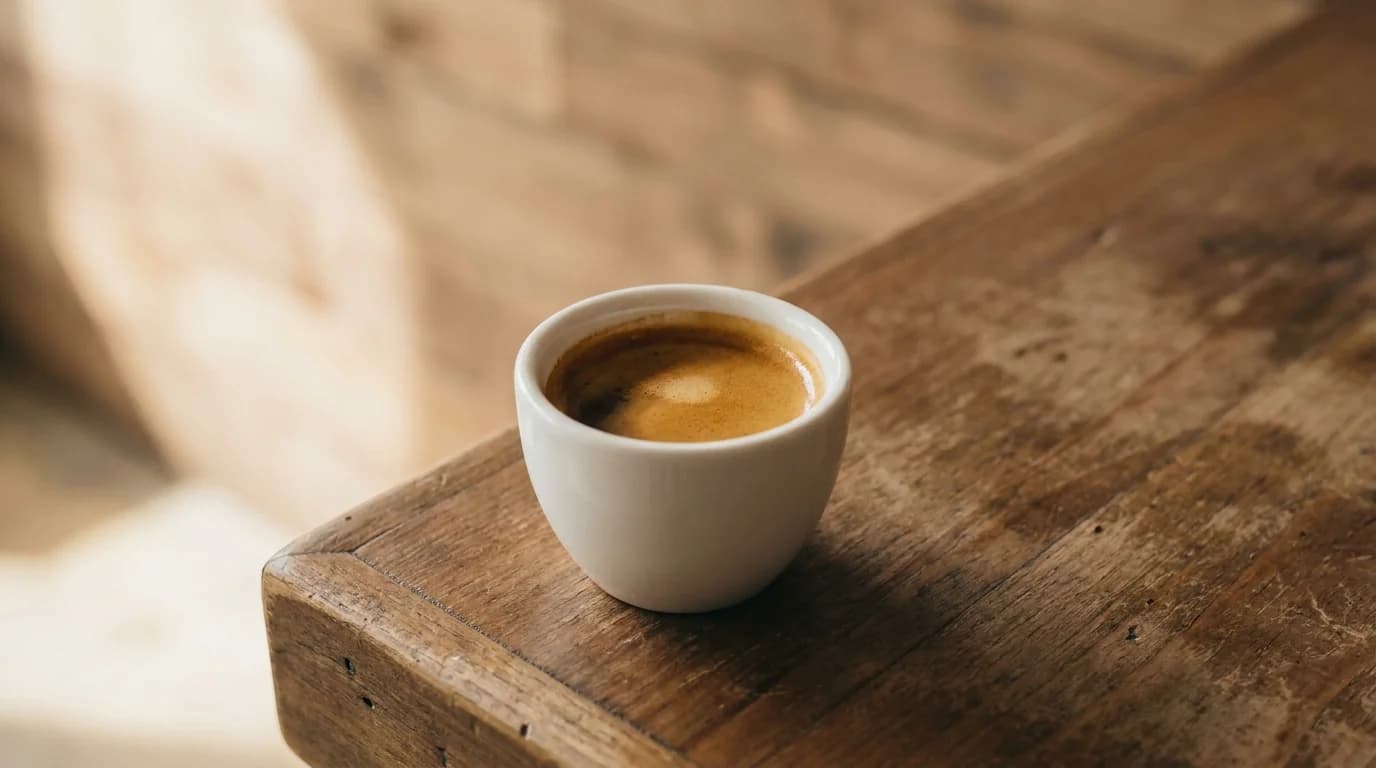
Espresso is a brewing method, not a bean or a roast. Any coffee can be brewed as espresso if the equipment can generate enough pressure and the grind is fine enough. The defining features — pressure, concentration, crema — all follow from a small set of specific brewing parameters.
~9 bar
the pressure standard for espresso extraction — roughly nine times atmospheric pressure[1]
1:2 ratio
a normal shot: 18 g of ground coffee produces about 36 g of espresso in 25-35 seconds[2]
60–65 mg
typical caffeine content of a single 1 oz espresso shot[2]
What espresso actually is
Espresso is a brewing method defined by three simultaneous constraints:
- High pressure — typically around 9 bar (9× atmospheric pressure). This is the defining variable; without pressure, it isn't espresso.
- Fine grind — much finer than drip. The fineness creates the resistance the pressure works against, producing the controlled slow extraction that concentrates the shot.
- Short contact time — 25 to 35 seconds from the pump starting to the shot being ended.
The result is a concentrated brew with dissolved solids at about 8–12% (compared to drip coffee's 1.2–1.4%) — literally an order of magnitude stronger per unit volume.
The parameters of a normal shot
Standard modern espresso targets:
| Parameter | Typical value | Notes |
|---|---|---|
| Dose (dry coffee) | 17–20 g | Depends on basket size |
| Yield (liquid espresso) | 34–40 g | Weighed on a scale |
| Ratio | ~1:2 | Dose to yield |
| Time | 25–35 seconds | Pump start to shot end |
| Water temperature | 92–96 °C | Slightly below boiling |
| Pressure | 8–10 bar | 9 bar is the classic target |
| Grind | Fine — like table salt or slightly finer | Adjusted to hit the timing |
Variants: ristretto, espresso, and lungo sit on a spectrum — ristretto is shorter (about 1:1 ratio, more concentrated, less bitter), while lungo is longer (about 1:3, more diluted, often more bitter because more compounds extract).
Why pressure matters
A 2002 Journal of Agricultural and Food Chemistry study specifically examined how water pressure affects espresso quality. Different pressures produced measurable differences in the final cup — the compounds that end up in the espresso, their concentrations, and the sensory profile all shift with pressure[1].
Pressure does three things that lower-pressure methods can't:
- Forces water through fine coffee quickly. Fine coffee packs tightly; without pressure, water can't move through it at reasonable speed. Pressure overcomes the resistance and extracts efficiently in seconds rather than minutes.
- Emulsifies coffee oils and CO2. The high pressure creates the microscopic bubbles of oils, CO2, and water that form crema. Without pressure, no crema.
- Extracts a different compound profile. The combination of fine grind, high pressure, and short time pulls out a different balance of the coffee's soluble compounds than slow steeping does — more of the fast-extracting compounds, less of the slow-extracting bitter ones.
What crema is (and isn't)
Crema is the light-brown foam layer that sits on top of a fresh espresso shot. It's made of:
- Coffee oils — emulsified into water by the high pressure
- CO2 gas — released from freshly roasted coffee under pressure
- Melanoidins — brown pigments formed during roasting
- Micro-particles — tiny bits of coffee that pass through the filter
Crema is real, but it's not a quality mark by itself:
- Fresh coffee produces more crema — CO2 dissipates over weeks after roasting, so stale coffee produces thinner, less persistent crema.
- Robusta produces more crema than arabica — more chlorogenic acids and higher CO2 retention. This is one reason traditional Italian espresso blends often include robusta.
- Thick crema isn't the same as good espresso. A very stale espresso with tons of robusta can have gorgeous crema and taste bad. Fresh single-origin arabica may have thinner crema and taste excellent.
Crema traditionally lasts about 30–60 seconds after the shot is pulled before starting to fade. Stir it in and drink; it doesn't change the flavour dramatically but does affect mouthfeel.
Extraction dynamics — dialling in a shot
Because espresso is so sensitive to grind and dose, small changes produce big differences. This is why baristas talk about "dialling in" — adjusting the grind slightly each morning as beans age and humidity changes.
Shot runs too fast (under 20 seconds):
- Grind is too coarse — water passes through with less resistance
- Extraction is incomplete — shot tastes sour, thin, weak
- Fix: grind finer
Shot runs too slow (over 40 seconds):
- Grind is too fine — water struggles to pass through
- Over-extraction pulls out bitter compounds
- Fix: grind coarser
Shot channels (water finds a fast path):
- Uneven puck preparation, poor tamping, or worn basket
- Wildly variable extraction across the puck
- Fix: better preparation technique — level the grounds, even tamp, distribute properly
Espresso vs other brewing methods
The comparison people often want to make:
| Espresso (single shot) | Drip coffee (8 oz cup) | |
|---|---|---|
| Volume | ~1 oz (30 mL) | 8 oz (240 mL) |
| Caffeine | 60–65 mg | 80–100 mg |
| Dissolved solids | 8–12% | 1.2–1.4% |
| Contact time | 25–35 sec | 4–6 min |
| Pressure | ~9 bar | Atmospheric |
| Grind | Fine | Medium |
| Concentration | Very high | Low |
| Total caffeine per serving | Less | More |
Per ounce, espresso is more caffeinated. Per serving, a full cup of drip usually delivers more caffeine. This is worth remembering if you're switching between drink styles and monitoring intake.
What equipment you need
Real espresso requires a machine that can:
- Generate and maintain ~9 bar of pressure
- Deliver stable brewing temperature (~93°C)
- Hold a portafilter with the correctly ground coffee
True espresso machines (semi-automatic, automatic, manual) range from ~$500 entry-level to $3,000+ prosumer to $10,000+ commercial.
Alternatives that make espresso-adjacent drinks (not real espresso):
- Moka pot — makes stovetop coffee at low pressure (~1.5 bar); concentrated, but not espresso.
- AeroPress with pressure caps — some accessories can produce higher pressure, but still well below true espresso.
- Nespresso and similar capsules — reach true espresso pressure via mechanical assist; the coffee is a limitation but the extraction is legitimate espresso.
- Handheld manual espresso makers (Wacaco, Flair, etc.) — can reach 9 bar with hand-pumping. Real espresso, small learning curve.
Common misconceptions
- "Espresso is a bean or a roast." No — it's a brewing method. "Espresso roast" refers to a dark roast style commonly used for espresso, but any coffee can be brewed as espresso.
- "Espresso is stronger than coffee." Per ounce yes, per serving usually no. A double espresso has less total caffeine than a large cup of drip.
- "You need robusta to make good espresso." Traditional Italian espresso often uses robusta for body and crema, but excellent espresso is made with pure arabica in specialty coffee.
- "Espresso is what makes a latte or cappuccino." True — all milk-based espresso drinks (latte, cappuccino, flat white, macchiato) are built on an espresso shot. Take away the espresso and you have hot milk.
The Portuguese word for this drink is a bica, and the acronym everyone repeats for it is a backronym — see bica.
Pulling this at home is mostly a machine question, and in practice most home setups land on one family of them — the model differences are set out in Breville espresso machines compared.
The honest summary
Espresso is a specific brewing method defined by high pressure, fine grind, and short contact time — producing a concentrated shot with a distinctive body, crema, and flavour profile. It's not a magically stronger drink; it's a different extraction of the same beans. It requires specific equipment to make properly, but what defines it is the parameters, not the equipment brand or the bean choice.
Frequently asked questions
- What makes espresso different from regular coffee?
- Pressure and ratio. Espresso uses ~9 bars of pressure to force water through very finely ground coffee in 25–35 seconds, at roughly a 1:2 ratio (much stronger than drip's 1:16). The result is a small, concentrated shot with dissolved solids far above what any drip method can achieve — plus the characteristic crema layer.
- How much caffeine is in a shot of espresso?
- A typical single 1 oz shot contains 60–65 mg of caffeine. A double shot lands around 120–130 mg. Per ounce, espresso is much more caffeine-dense than drip coffee, but per serving, a full 8 oz cup of drip coffee often delivers more total caffeine than a single espresso shot.
- What is crema and where does it come from?
- Crema is the light-brown foam layer on top of a fresh espresso shot. It forms when high-pressure brewing forces CO2 (from freshly roasted coffee) and oils to emulsify with water, creating microscopic bubbles that float. Fresh, good-quality coffee produces thicker, more persistent crema.
- How long should an espresso shot take?
- The traditional target is 25–35 seconds from when the pump starts to when you stop the shot. Too fast (under 20 seconds) usually means the grind is too coarse and the shot will taste sour and thin. Too slow (over 40 seconds) usually means the grind is too fine and the shot will taste bitter and heavy.
References
Every factual claim in this article is drawn from the sources below. See the source library for how we grade evidence.
- [1]Influence of Water Pressure on the Final Quality of Arabica Espresso CoffeeJournal of Agricultural and Food Chemistry · 2002 · Controlled trial · Tier 2 · Moderate
- [2]Brewing FundamentalsCoffee Science Foundation · Reference work · Tier 2 · Moderate
- [3]CoffeeEncyclopaedia Britannica · Reference work · Tier 3 · Contextual
Related reading
- Caffeine & HealthHow Much Caffeine Is in Coffee?→
- Brewing ScienceCoffee Grind Size Guide: Which Grind for Which Method→
- Espresso & Coffee DrinksAffogato: Espresso Poured Over Ice Cream→
- Brew MethodsBica: Portugal's Espresso, and the Acronym That Isn't True→
- Coffee EquipmentBreville Espresso Machines Compared: What Actually Differs→
- Espresso & Coffee DrinksRistretto: The Short Concentrated Espresso Shot→