Macchiato: Espresso Marked with a Spot of Milk
By Coffee Studies Editorial·Published July 15, 2026·7 min read
Quick answer
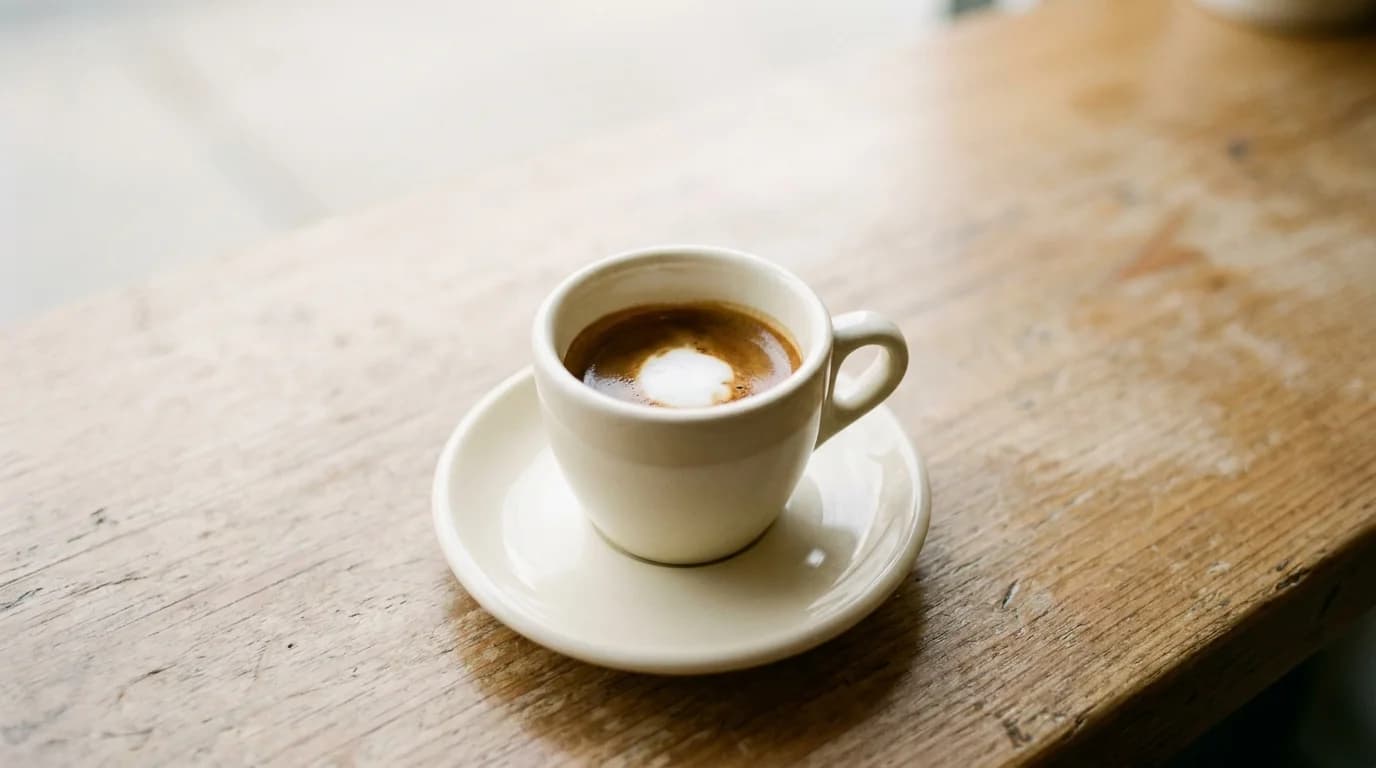
The macchiato is one of the most confused drinks in modern coffee culture — largely because Starbucks took an Italian espresso term (meaning "marked") and applied it to a caramel- syrup-drenched large milk drink that has essentially nothing in common with the traditional Italian macchiato. If you order a macchiato in Rome you'll get a small espresso with a dot of foam; if you order a macchiato at Starbucks you'll get what's basically a large caramel latte. Both use the same word. Understanding the difference is essential for coffee literacy.
'Marked'
Italian 'macchiato' means marked or stained — traditional macchiato is espresso 'marked' by a small dollop of foam[3]
40-50 mL
typical volume of a traditional Italian espresso macchiato — served in an espresso cup[1]
Different drinks
the Starbucks 'caramel macchiato' has almost nothing in common with a traditional Italian macchiato — despite the shared name[4]
The traditional Italian macchiato
The traditional Italian espresso macchiato (caffè macchiato) is one of the simplest drinks in the espresso family:
- One shot of espresso — poured into a small espresso cup (60-90 mL capacity).
- A small dollop of foamed milk — approximately a teaspoon (~5 mL) placed on top of the espresso.
- That's it.
Total volume: 40-50 mL, essentially espresso volume plus a tiny amount of milk. The milk marks (macchia) the espresso — softens the edge slightly, adds a small amount of body, and provides visual contrast — without meaningfully diluting the coffee character.
The purpose: for people who like espresso but find it too intense or bitter, the small mark of foam softens the drink just enough to be more approachable without making it a milk drink. It's still fundamentally an espresso experience.
Italian coffee culture: macchiato is a valid espresso- family drink at any time of day (unlike cappuccino, which is morning only). Ordering a macchiato at 4pm in Italy is completely normal.
Latte macchiato — the inverse
There's a second traditional macchiato:
Latte macchiato (literally "milk marked"):
- Steamed milk fills a tall glass.
- A shot of espresso is poured through the milk from above.
- The espresso creates a dark streak through the pale milk, eventually settling into layers.
- Total volume 150-200 mL.
Character: mostly milk, with a coffee mark. Traditionally served in a tall glass (Latte machiato in Italy is often called latte machiato in a tall glass with visible layered espresso and milk).
Origin: primarily a way to introduce children to coffee gently — very little coffee, mostly warm milk. Also served to adults as a milder alternative to a full latte.
The Starbucks caramel macchiato problem
The Starbucks "Caramel Macchiato" was introduced in 1996 and has become one of Starbucks's most popular drinks. It's also largely unrelated to any traditional macchiato:
Starbucks Caramel Macchiato construction:
- Vanilla syrup (2-4 pumps depending on size).
- Steamed milk (mostly).
- Espresso poured over the milk.
- Caramel sauce drizzled on top in a crosshatch pattern.
- Served in a 12-16 oz cup.
How this compares to traditional macchiato:
| Feature | Italian Espresso Macchiato | Starbucks Caramel Macchiato |
|---|---|---|
| Size | 40-50 mL | 350-500 mL |
| Milk amount | Teaspoon of foam | Mostly milk |
| Syrup | None | Vanilla + caramel |
| Character | Espresso-forward | Milk-and-syrup-forward |
| Naming intent | "Marked with milk" | Marketing name |
| Similarity | Almost none |
Effectively, the Starbucks Caramel Macchiato is a large vanilla latte with caramel drizzle. The name "macchiato" is Starbucks marketing — probably chosen because it sounded Italian and sophisticated. It stuck culturally, and now most Anglosphere consumers hear "macchiato" and think of the Starbucks drink rather than the traditional Italian one.
This creates real ordering confusion. If you order a "macchiato" at a specialty café and expect a Starbucks Caramel Macchiato, you'll be surprised by the tiny espresso-with-mark that arrives. If you order a "macchiato" at Starbucks and expect a traditional macchiato, you'll be surprised by the large syrupy milk drink.
How to order to get what you want
For a traditional Italian macchiato:
- At Italian cafés or third-wave specialty cafés: "espresso macchiato" or just "macchiato" will usually get you the traditional drink.
- At Starbucks: order "espresso macchiato" specifically — Starbucks does make this as a menu item, and specifying "espresso" clarifies you want the traditional interpretation.
For a latte macchiato:
- At Italian cafés: "latte macchiato" — usually will be a tall glass with visible layers.
- At Starbucks: "latte macchiato" is a menu item (called "Espresso Latte Macchiato" in some markets) — but it's been modified from the strict traditional version.
For a Starbucks-style caramel macchiato:
- Just order "caramel macchiato" — you'll get the Starbucks version, or an approximation of it, at most chain and many specialty cafés.
Learning the vocabulary matters — the same word gets you very different drinks in different contexts.
Espresso macchiato variations
Even within the traditional macchiato category, some regional variations exist:
"Caffè macchiato caldo" — hot macchiato, the default.
"Caffè macchiato freddo" — cold macchiato, with cold foam or cold milk marking the espresso. Less common but exists.
"Doppio macchiato" — a double espresso marked with a small amount of foam. For people who want more coffee.
"Macchiato lungo" — a lungo (longer pull) espresso marked with foam. Slightly larger, slightly milder coffee.
"Cortado" vs "macchiato" — a cortado (Spanish/Latin American drink, ~4 oz) has considerably more milk than a macchiato — approximately equal parts espresso and warm milk.
Making a traditional macchiato at home
Requirements:
- Espresso machine with steam wand.
- Small espresso cup (60-90 mL), pre-warmed.
- Fresh whole milk.
Process:
- Pull a single shot of espresso (18 g dose in, 30 mL out, 25-30 seconds) directly into the warmed espresso cup.
- Steam a small amount of milk (2-3 oz is enough for several macchiatos) to microfoam or slightly thicker foam.
- Spoon a small amount of foam (~5 mL) onto the espresso — just enough to make a visible white mark on the dark surface.
- Serve immediately.
That's it. Simplest of the espresso-family drinks besides straight espresso.
Health notes
Traditional espresso macchiato:
- ~5-10 calories (essentially just espresso plus a bit of milk).
- ~63 mg caffeine (single espresso).
- Effectively an espresso for nutritional purposes.
Starbucks Caramel Macchiato (16 oz grande):
- ~250 calories (from milk, vanilla syrup, and caramel drizzle).
- ~34 g sugar (mostly from added syrups).
- ~150 mg caffeine (double shot).
- ~7 g fat.
- Much more like a dessert drink than a coffee drink nutritionally.
The nutritional difference between traditional and Starbucks "macchiato" is enormous — one is essentially just espresso plus foam; the other is a substantial calorie/sugar hit.
Common misconceptions
- "Macchiato is a large milk drink." Only the Starbucks Caramel Macchiato is large. Traditional macchiato is small (40-50 mL) and mostly espresso.
- "Caramel macchiato is a real Italian drink." No — it's a Starbucks invention from 1996. Italy doesn't have a traditional caramel macchiato.
- "Macchiato and cortado are the same." Related but different. A macchiato has a small mark of foam on espresso. A cortado has approximately equal parts espresso and warm milk (much more milk than a macchiato).
- "You can't get a real macchiato at Starbucks." You can — order "espresso macchiato" specifically. Starbucks makes them.
- "Macchiato is stronger than cappuccino." Per volume yes (more coffee, less milk); per total caffeine no (single espresso vs single espresso).
Practical rules
If you want a real macchiato:
- Order "espresso macchiato" specifically to avoid the Starbucks-style default.
- Look for Italian-tradition cafés or specialty coffee cafés.
- Expect a small drink served in an espresso cup.
If you want the Starbucks-style drink:
- "Caramel macchiato" gets you the sweet milk-forward drink.
- It's not really a macchiato in the traditional sense but is a legitimate drink category on its own terms.
Ordering internationally:
- Italy: "un caffè macchiato" — traditional interpretation.
- Australia/UK specialty: "macchiato" usually gets traditional.
- North American chains: "macchiato" without qualifier usually gets the Starbucks-style caramel version.
- To disambiguate: "espresso macchiato" for traditional; "caramel macchiato" for the Starbucks-style.
The honest summary
A traditional Italian macchiato is a small drink — a single shot of espresso "marked" (macchiato = marked) with a small dollop of foamed milk, served in a demitasse. Total volume 40-50 mL. It's essentially an espresso with a small softening touch of milk, and it's a legitimate espresso-family drink appropriate at any time of day. The Starbucks "Caramel Macchiato" is a completely different drink — a large syrupy milk-based latte that borrows the macchiato name for marketing purposes. Both are legitimate drinks in their own categories, but they have almost nothing in common beyond the shared name. Ordering "macchiato" at different types of cafés gets you meaningfully different drinks — learning to specify (espresso macchiato vs caramel macchiato) prevents frustration.
Frequently asked questions
- What is a macchiato?
- A traditional macchiato ('caffè macchiato' or 'espresso macchiato') is a single shot of espresso marked with a small dollop of foamed milk — roughly a teaspoon of foam on top of the espresso in a small espresso cup. The name macchiato is Italian for 'marked' or 'stained' — the espresso is 'marked' by the small amount of milk. Total volume is about 40-50 mL. This is the traditional Italian version.
- Is a caramel macchiato the same as a macchiato?
- No — they're essentially different drinks. A traditional Italian macchiato is small (40-50 mL), mostly espresso, with just a mark of foam. The Starbucks 'caramel macchiato' is large (12-16 oz), mostly steamed milk with vanilla syrup, topped with espresso and caramel drizzle. It's much more like a large latte with caramel than like a traditional macchiato. The naming is Starbucks marketing rather than any coffee tradition.
- What's the difference between latte macchiato and espresso macchiato?
- They're inverse builds. An espresso macchiato is espresso first, then a small amount of milk marks it. A latte macchiato ('milk marked') is steamed milk first, then a small amount of espresso poured through the milk marks it. Latte macchiato is a taller drink (usually served in a glass) with visible layers — dark espresso threading through pale milk. Espresso macchiato is smaller and coffee-dominant.
- How much caffeine is in a macchiato?
- A traditional espresso macchiato has one shot of espresso — roughly 63 mg of caffeine, essentially the same as a straight espresso. A Starbucks caramel macchiato has similar caffeine (~75-150 mg depending on size and shot count) but much more sugar and calories. A latte macchiato has one shot (~63 mg) with more milk.
- Why is a macchiato served in an espresso cup?
- Because the traditional macchiato is essentially espresso — just with a small mark of milk to soften the taste. It doesn't need a larger cup because there's very little milk. Italian espresso bars serve macchiato in the same demitasse-sized cups (60-90 mL) they use for straight espresso.
References
Every factual claim in this article is drawn from the sources below. See the source library for how we grade evidence.
- [1]Brewing FundamentalsCoffee Science Foundation · Reference work · Tier 2 · Moderate
- [2]Influence of Water Pressure on the Final Quality of Arabica Espresso CoffeeJournal of Agricultural and Food Chemistry · 2002 · Controlled trial · Tier 2 · Moderate
- [3]CoffeeEncyclopaedia Britannica · Reference work · Tier 3 · Contextual
- [4]Uncommon Grounds: The History of Coffee and How It Transformed Our World (revised edition)Basic Books (Mark Pendergrast) · 2010 · Reference work · Tier 2 · Moderate
Related reading
- Espresso & Coffee DrinksWhat Is Espresso? Pressure, Extraction, the Shot→
- Espresso & Coffee DrinksCappuccino: The Classic Italian Espresso Drink→
- Espresso & Coffee DrinksLatte vs Cappuccino vs Flat White→
- Espresso & Coffee DrinksThe Origin of Espresso: How Italy Invented the Shot→
- Espresso & Coffee DrinksAffogato: Espresso Poured Over Ice Cream→
- Espresso & Coffee DrinksWhat Is Café Cubano? Cuban Espresso with Sugar→