Mocha: Espresso, Chocolate, and Steamed Milk
By Coffee Studies Editorial·Published July 15, 2026·8 min read
Quick answer
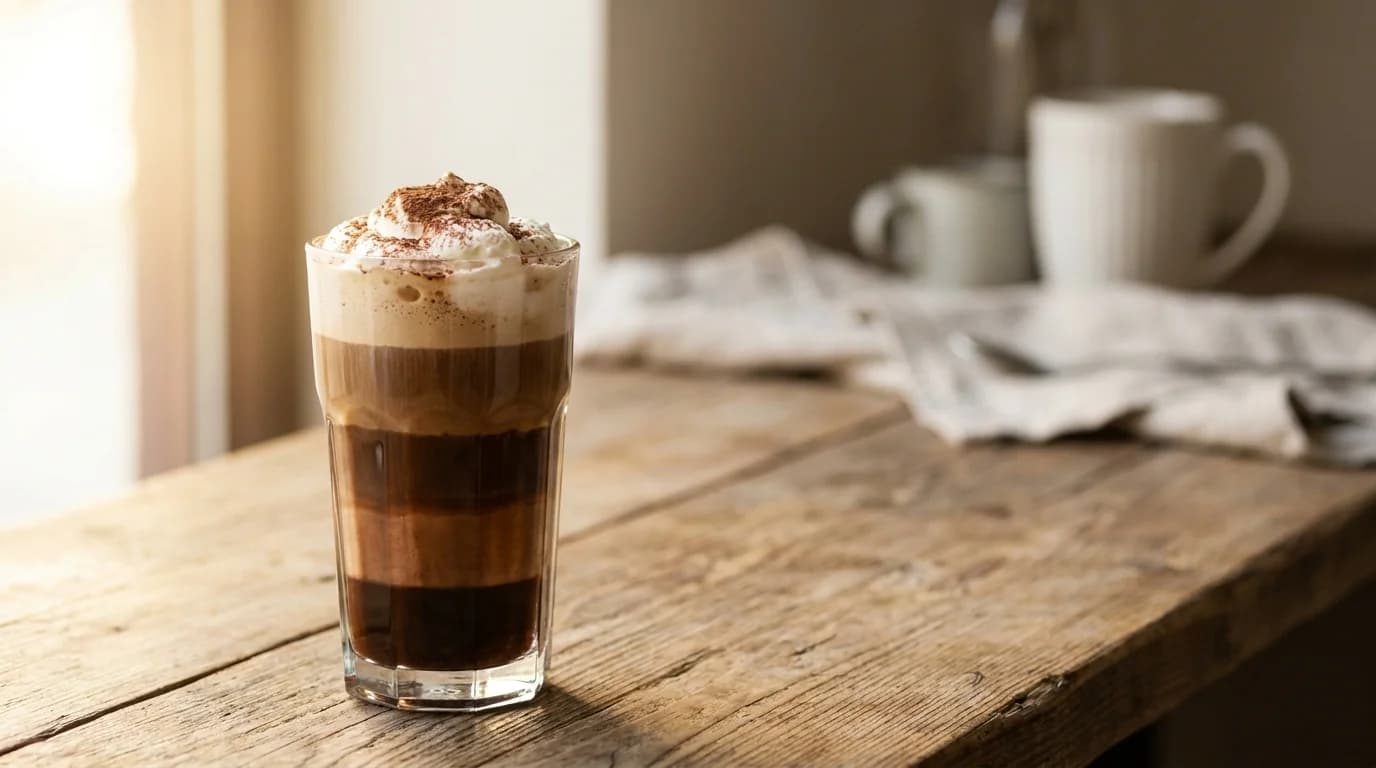
The mocha is where coffee culture meets chocolate culture — one of the sweetest and most dessert-adjacent drinks on the standard espresso menu. It's also a great case study in how coffee vocabulary has evolved. The name "mocha" traces to Yemeni coffee that historically tasted chocolatey; modern mochas use added chocolate rather than actually chocolatey Yemeni coffee, but the name stuck. Understanding both the drink and its history clarifies what you're actually ordering when a mocha shows up on a café menu.
Latte + chocolate
a mocha is essentially a latte with chocolate added — espresso + chocolate + steamed milk + optional whipped cream[1]
~130-150 mg caffeine
typical caffeine in a 12 oz mocha — similar to a latte of same size, plus tiny cocoa caffeine addition[2]
Named for Yemen
the mocha name traces to Yemeni Mocha coffee, which historically had a distinctively chocolatey flavour profile[4]
What a mocha actually is
The standard mocha construction:
- 1-2 shots of espresso at the base of the cup.
- Chocolate, in one of several forms:
- Chocolate syrup — thin, sweet, easy to blend. Common at chain cafés.
- Chocolate sauce — thicker, richer, often more genuine cocoa flavour. Common at specialty cafés.
- Cocoa powder — traditional, needs to be mixed with hot liquid; can leave undissolved bits.
- Melted chocolate — highest-end approach; specialty cafés melting real dark chocolate into the drink.
- Steamed milk (6-10 oz) integrated with the chocolate- espresso base.
- Whipped cream topping (usually).
- Optional garnish — chocolate shavings, cocoa powder, chocolate drizzle.
Total volume typically 8-12 oz. Served in a tall glass or large ceramic cup.
The finished drink has three flavour components in balance:
- Bitter espresso — coffee character, roasted notes.
- Sweet chocolate — depending on chocolate type (dark/milk/white).
- Milky body — cream and volume from steamed milk.
A well-made mocha balances these without any one dominating. Poor mochas often have too much syrup (sweetness overwhelms coffee) or too little chocolate (indistinguishable from a latte).
The name and Yemen connection
"Mocha" as a coffee-drink name traces back to the Yemeni port city of Al-Mokha, which was the world's primary coffee export port for approximately 250 years starting in the 15th century (see Yemen and the Port of Mocha).
The chocolate connection: Yemeni Mocha coffee historically had a distinctive natural chocolatey flavour profile — the combination of Yemeni terroir, traditional dry processing, and Yemeni cultivars produced coffee that tasted chocolate-like without any chocolate being added.
How the name transferred: As European and American café culture developed in the 19th-20th centuries, coffee-and- chocolate combinations were named "mocha" after this historical Yemeni association. The naming logic: Yemeni Mocha coffee = chocolatey; therefore chocolate-flavoured coffee = "mocha."
The irony: modern mochas rarely (essentially never) use actual Yemeni Mocha coffee. They use standard espresso with added chocolate. The name is a fossilised reference to a flavour profile that most drinkers now associate with the added chocolate rather than the historical coffee origin.
"Mocha java" — an older classic blend combining Yemeni Mocha with Javanese coffee — is a separate use of the term. Modern "mocha java" blends often use Ethiopian coffee (as a Yemeni substitute, since Yemen supply is limited) with Indonesian coffee (as a Javanese substitute)[4].
Making a proper mocha
Requirements:
- Espresso machine.
- Good chocolate (sauce, syrup, or high-quality cocoa powder).
- Fresh whole milk.
- 12 oz tall glass or large ceramic cup.
- Optional: whipped cream, chocolate garnish.
Process:
- Add chocolate to the bottom of the pre-warmed cup — typically 2-3 tablespoons of chocolate syrup, or 2 tablespoons of chocolate sauce, or 2-3 teaspoons of cocoa powder (with a small amount of hot water to dissolve).
- Pull espresso (1-2 shots) directly onto the chocolate. The hot espresso helps dissolve and integrate the chocolate.
- Stir briefly to fully combine espresso and chocolate.
- Steam milk to microfoam (like a latte).
- Pour milk over the espresso-chocolate mixture, integrating gradually.
- Top with whipped cream (optional but traditional).
- Garnish with cocoa powder, chocolate shavings, or drizzle.
Chocolate quality matters: the difference between a mediocre mocha and a great mocha is largely the chocolate. High-quality dark chocolate sauce (60%+ cocoa) produces sophisticated flavour depth. Cheap chocolate syrup (mostly sugar with cocoa colour) produces a candy-like sweetness without real chocolate character.
Variations
White mocha:
- Uses white chocolate instead of dark/milk chocolate.
- Sweeter, more vanilla-forward, creamier.
- Popular at Starbucks and other chain cafés.
Iced mocha:
- Cold version — chocolate mixed with espresso, poured over ice, then cold milk added.
- Sometimes with additional chocolate drizzle.
- Common summer alternative to hot mocha.
Mochaccino:
- Sometimes used interchangeably with "mocha."
- Sometimes refers specifically to a mocha with more foam (like a cappuccino).
- Regional variation — no strict definition.
Mexican mocha:
- Adds cinnamon and sometimes chili powder to the chocolate-espresso mix.
- Warmer, more complex spice profile.
- Traditional in some Latin American café cultures.
Peppermint mocha:
- Adds peppermint syrup — very popular seasonal drink at chain cafés, particularly around winter holidays.
- Chocolate + peppermint + espresso + steamed milk.
Salted caramel mocha:
- Adds salted caramel syrup to the base mocha.
- Sweet-salty-chocolate profile.
- Modern chain café menu addition.
Chocolate types compared
The chocolate used substantially affects the finished drink:
Chocolate syrup (Hershey's, Torani, similar):
- Thin, easy to pour, dissolves instantly.
- Very sweet, minimal actual cocoa flavour.
- Common at chain cafés for consistency and speed.
- Gives mocha a candy-like sweetness.
Chocolate sauce (Ghirardelli, high-end house-made):
- Thick, richer cocoa flavour.
- Less overwhelming sweetness.
- Common at specialty cafés.
- Better chocolate character in finished drink.
Cocoa powder (Dutched or natural):
- Requires dissolving in hot liquid.
- Purest chocolate character.
- Requires added sweetener (sugar or syrup).
- Traditional approach; less common in modern cafés.
Ganache or melted chocolate:
- Actual melted chocolate (often dark, 60-70% cocoa).
- Richest chocolate character.
- Complex preparation; higher-end cafés.
- Most sophisticated mocha profile.
If you're making mocha at home and care about flavour, use chocolate sauce or ganache rather than syrup — the difference is substantial.
Health notes
Standard 12 oz mocha with whole milk, syrup, and whipped cream:
- ~330-400 calories (chocolate syrup + whipped cream add substantially to latte base).
- ~15-20 g fat (from whipped cream and milk).
- ~35-45 g sugar (from chocolate syrup mostly).
- ~10 g protein.
- ~130-150 mg caffeine.
Without whipped cream: ~230-280 calories.
Modifications for lower calorie:
- Skip whipped cream — saves ~80-100 calories and 8-10g fat.
- Half chocolate — saves ~50-100 calories and 10-20g sugar.
- Skim or oat milk — saves ~40-60 calories vs whole milk.
- Dark chocolate sauce (instead of syrup) — more chocolate character, similar sugar.
Even a "modified" mocha (dark chocolate sauce, no whipped cream, oat milk) is still a substantial calorie drink compared to a plain latte or Americano. Mochas are dessert- adjacent by design.
Mocha vs hot chocolate
The critical difference:
Mocha:
- Has espresso.
- Has caffeine (~130-150 mg per 12 oz).
- Bitter-sweet flavour profile.
- Coffee character present.
Hot chocolate:
- No espresso.
- Very little caffeine (2-30 mg from cocoa alone).
- Purely sweet chocolate.
- No coffee character.
Some cafés serve "mocha" that has almost no espresso — essentially chocolate milk with a token amount of espresso. If you want the coffee character, ask for extra shot or specifically request "with a double shot."
Common misconceptions
- "Mocha coffee is chocolate coffee." The name traces to Yemeni Mocha coffee, which had chocolatey flavour without added chocolate. Modern mocha drinks use added chocolate; original Yemeni Mocha coffee was self-chocolatey.
- "Mochas are healthy because they have coffee." Coffee itself is health-favourable at moderate intake, but mochas are high-calorie, high-sugar dessert drinks regardless of the coffee content.
- "White mocha is a coffee drink." Yes — it uses espresso like standard mocha, just with white chocolate instead of dark.
- "Mocha is Italian." No — mocha as a coffee-plus- chocolate drink is not Italian traditional. It's a 20th-century Anglosphere café invention using the historical Yemeni name.
- "Cocoa in mocha has significant caffeine." No — cocoa contains ~10-20 mg caffeine per typical mocha's chocolate content. Essentially all mocha caffeine comes from the espresso.
Practical rules
Ordering:
- Standard chains — mochas will use syrup, be very sweet, usually with whipped cream.
- Specialty cafés — better chocolate, more balanced, sometimes without whipped cream by default.
- To adjust: "half chocolate" or "extra shot" or "no whipped cream" all valid modifications.
Making at home:
- Invest in real chocolate sauce or high-cocoa chocolate syrup — worth the small extra cost.
- Warm your cup first.
- Balance espresso and chocolate — 1 tbsp chocolate per shot of espresso is a reasonable starting ratio.
- Whipped cream is optional; skip if watching calories.
Health-conscious:
- Ask for half sweet or no syrup — cuts substantial sugar.
- Skip whipped cream — cuts 80-100 calories.
- Consider a straight latte instead if you want an espresso-and-milk drink without dessert-level sugar.
The honest summary
A mocha (café mocha, mochaccino) is a coffee drink combining espresso, chocolate, and steamed milk — essentially a latte with chocolate added. The name traces back to Yemeni Mocha coffee, which historically had a naturally chocolatey flavour profile — modern mochas use added chocolate rather than actually chocolatey Yemeni coffee. Standard mochas are dessert-adjacent drinks with substantial sugar and calorie content (330-400 calories with whipped cream); modifications can reduce this considerably. The quality of chocolate used (syrup vs sauce vs actual melted chocolate) substantially affects the finished drink — specialty cafés using good chocolate produce meaningfully better mochas than chain cafés using syrup. Not a low-calorie coffee drink, but a legitimately delicious one when well-made.
Frequently asked questions
- What is a mocha?
- A mocha (also called café mocha or mochaccino) is a coffee drink combining espresso, chocolate syrup or sauce, and steamed milk, typically topped with whipped cream. It's essentially a latte with chocolate added. Served in 8-12 oz cups. The chocolate can be added as syrup (thinner, sweeter), sauce (thicker, richer), powder (needs mixing), or occasionally as melted chocolate.
- Where does the name 'mocha' come from?
- The name traces back to the Yemeni port city of Mocha (Al-Mokha), which was the world's primary coffee export port for approximately 250 years starting in the 15th century. Coffee from this region had a distinctively chocolatey flavour profile. When coffee-plus-chocolate drinks became popular in the 20th century, they were named 'mocha' after this historical association — even though modern mocha drinks typically use added chocolate rather than actually chocolatey Yemeni coffee. See our Yemen coffee history article for the full origin story.
- What's the difference between mocha and hot chocolate?
- Espresso. A mocha has espresso in it (making it a coffee drink); hot chocolate has no espresso (making it a chocolate drink). A mocha combines chocolate with the caffeine and coffee flavour of espresso; hot chocolate is chocolate alone. In flavour: mochas taste bitter-sweet with clear coffee character; hot chocolate is pure chocolate without coffee notes.
- What is a white mocha?
- A white mocha uses white chocolate instead of dark or milk chocolate. It tastes sweeter, more vanilla-like, and creamier than a standard mocha. Made the same way otherwise — espresso, white chocolate syrup or sauce, steamed milk, whipped cream. Popular as a sweeter, less coffee-forward alternative to standard mochas.
- How much caffeine is in a mocha?
- Similar to a latte of the same size — one or two shots of espresso means 63-125 mg of caffeine per drink. The chocolate adds a tiny amount of additional caffeine (from cocoa) — usually 5-15 mg depending on chocolate quantity. A typical 12 oz mocha has roughly 130-150 mg total caffeine. Note this is meaningfully more caffeine than plain hot chocolate (2-30 mg from cocoa alone) but similar to other espresso drinks.
References
Every factual claim in this article is drawn from the sources below. See the source library for how we grade evidence.
- [1]Brewing FundamentalsCoffee Science Foundation · Reference work · Tier 2 · Moderate
- [2]CoffeeEncyclopaedia Britannica · Reference work · Tier 3 · Contextual
- [3]Uncommon Grounds: The History of Coffee and How It Transformed Our World (revised edition)Basic Books (Mark Pendergrast) · 2010 · Reference work · Tier 2 · Moderate
- [4]Coffee and Coffeehouses: The Origins of a Social Beverage in the Medieval Near EastUniversity of Washington Press (Ralph S. Hattox) · 1985 · Reference work · Tier 2 · Moderate
Related reading
- Espresso & Coffee DrinksWhat Is a Latte? Espresso and Steamed Milk→
- Beans, Roasts & OriginsYemen, the Port of Mocha, and Coffee's Commercial Birth→
- Espresso & Coffee DrinksCappuccino: The Classic Italian Espresso Drink→
- Espresso & Coffee DrinksIced Latte: Cold Espresso with Milk Explained→
- Espresso & Coffee DrinksCortado: Espresso Cut with Equal Warm Milk→
- Espresso & Coffee DrinksLatte Art: How to Pour Designs in Milk Foam→