Iced Latte: Cold Espresso with Milk Explained
By Coffee Studies Editorial·Published July 18, 2026·5 min read
Quick answer
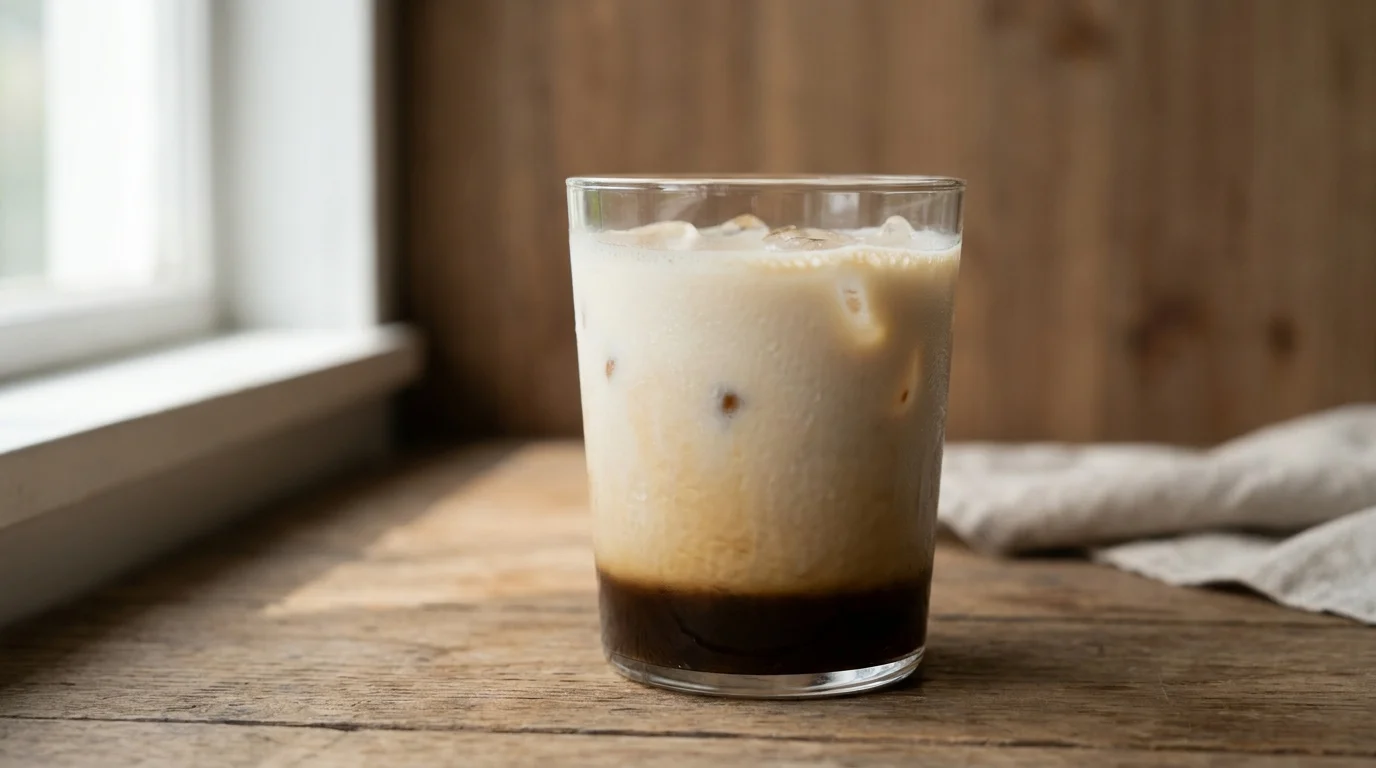
An iced latte is not a complicated drink. It is espresso, ice, and cold milk — in that order. What makes it worth its own article is the number of things it is confused with: cold brew, iced coffee, Frappuccino-style blended drinks, and generic "coffee over ice." Each of those is different, and the difference matters to how the drink tastes.
Espresso base — not cold brew
an iced latte uses hot espresso rapidly chilled by ice — not cold-extracted coffee; the flavour profile is espresso-forward, brighter, and more intense than cold brew[1]
1:3 to 1:4 espresso to milk
a standard single-shot iced latte is 30 mL espresso to 120–150 mL cold milk over ice — similar ratio to a hot latte but assembled cold rather than steamed[1]
Not blended
an iced latte is built over ice and served as-is — it is not blended, not whipped, and does not have the uniform texture of a Frappuccino-style drink[2]
What makes an iced latte different
The defining characteristic of an iced latte is the coffee base: espresso, extracted hot under pressure, poured over ice. This distinguishes it from:
Cold brew: cold water steeped for 12–24 hours. Cold brew has a fundamentally different flavour — lower acidity, smoother, less sharp, with a more mellow coffee character. An iced latte tastes like a latte; cold brew tastes like cold brew.
Iced coffee: drip or pour-over coffee brewed hot (sometimes double-strength) and poured over ice. Less concentrated than espresso; different extraction chemistry. Many cafés serve generic "iced coffee" as a drip brew over ice; a latte specifically uses espresso.
Blended coffee drinks (Frappuccinos etc.): ice is blended into the drink, producing a uniform slushy texture. An iced latte has distinct ice cubes, layers of espresso and milk, and a liquid consistency.
| Iced latte | Cold brew | Iced coffee | Blended | |
|---|---|---|---|---|
| Coffee base | Espresso (hot extracted) | Cold steep 12–24h | Drip/pour-over (hot) | Usually cold brew or coffee |
| Temperature | Hot coffee + cold milk/ice | Cold throughout | Hot coffee + ice | Blended with ice |
| Texture | Liquid, over ice cubes | Liquid, over ice | Liquid, over ice | Slushy/blended |
| Flavour intensity | High (espresso-forward) | Medium (mellow) | Medium | Variable |
| Milk | Cold milk added | Usually added | Optional | Blended in |
How to make an iced latte
Standard method (espresso machine):
- Fill a tall glass (300–400 mL) with ice cubes.
- Pull one or two shots of espresso — standard 30 mL per shot — directly over the ice. The ice rapidly chills the espresso.
- Pour 120–180 mL of cold milk over the espresso. Whole milk is traditional; oat milk is the most popular plant alternative.
- Stir gently or leave layered. Serve immediately.
Order of operations: pouring espresso onto ice (rather than ice into espresso) chills the shot quickly and minimises dilution. If you pour ice into hot espresso, the espresso has time to extract further and some ice melts immediately, over-diluting the drink.
Shaken iced latte: some cafés shake the espresso with ice in a cocktail shaker before adding milk. This aerates the espresso, creates a light froth on top, and produces a more uniform cold temperature throughout. The flavour is slightly different — rounder and less sharp[1].
Figure
Iced latte: typical composition by volume
Without an espresso machine
A true iced latte requires espresso or an espresso substitute. Options at home:
Moka pot: produces a strong, concentrated coffee that works well as an espresso substitute in this context. Use a 3-cup moka pot (produces ~100 mL of strong coffee), pour over ice, add cold milk.
AeroPress (inverted, fine grind): 15–18 g of coffee ground fine, 60–80 mL of water, steep 1–2 minutes, press hard. Produces a concentrated brew close enough to espresso for an iced latte.
Nespresso / pod machine: the closest domestic substitute. A lungo-format capsule brewed short (espresso setting) works well over ice.
Instant espresso powder: dissolve 1–2 teaspoons in 30–60 mL of hot water, pour over ice. Not the same as fresh espresso but a workable substitute.
Regular drip coffee or French press is too dilute — the resulting drink is iced coffee rather than an iced latte in character.
Flavoured iced lattes
Vanilla iced latte: add 1–2 pumps of vanilla simple syrup (or homemade: 1:1 sugar and water simmered with a vanilla bean) to the glass before the espresso. The most popular café variation.
Brown sugar iced latte: brown sugar syrup stirred into the espresso before pouring over ice; slightly more molasses character than vanilla.
Sweeteners: granulated sugar does not dissolve well in cold coffee. Simple syrup (pre-dissolved sugar in water) or liquid sweeteners (maple syrup, honey thinned with warm water) integrate cleanly into cold drinks[2].
Calories
A 300 mL iced latte with whole milk and no added sweetener contains roughly 100–130 calories — primarily from the milk. The espresso contributes minimal calories (under 5 kcal). With oat milk, roughly 80–110 calories. With added flavour syrup (typical café serving: 2–4 pumps), add 40–80 calories[3].
By comparison, a typical Frappuccino-style blended drink with whipped cream runs 300–500+ calories.
Common misconceptions
- "An iced latte is just coffee over ice." It is espresso over ice with milk — a specific drink with a specific espresso base.
- "It's the same as cold brew." Different base coffee, different extraction, different flavour. Cold brew is not espresso.
- "The milk needs to be foamed." No — the milk in an iced latte is cold and poured, not steamed. Microfoam and latte art are for hot lattes only.
- "Double shots are optional." At most specialty cafés, double shots are the default for any medium or large iced latte. Single-shot versions exist but can taste weak given the milk volume.
The honest summary
An iced latte is hot-extracted espresso poured over ice with cold milk — typically 30–60 mL of espresso to 120–180 mL of milk in a large glass. It is not cold brew (which uses cold extraction), not iced coffee (which uses drip brew), and not a blended drink. The espresso is brewed hot and chilled rapidly by the ice; the result is an espresso-forward cold drink with the flavour character of a latte. At home, a moka pot or AeroPress produces a close-enough espresso substitute. Flavour variations (vanilla, brown sugar) use simple syrups that dissolve into cold liquid without the graininess of granulated sugar.
Frequently asked questions
- What is an iced latte?
- An iced latte is espresso — one or two shots — poured over ice cubes in a tall glass, then topped with cold milk (typically whole or 2%, though plant milks are widely used). The result is a cold, mildly coffee-flavoured drink similar in character to a hot latte but served over ice. The standard ratio is 1 shot (30 mL) of espresso to roughly 120–180 mL of cold milk, served in a 300–400 mL glass with ice.
- What is the difference between an iced latte and cold brew?
- The coffee base is entirely different. An iced latte uses espresso — coffee extracted with hot water under pressure — that is then cooled by ice. Cold brew uses coffee steeped in cold water for 12–24 hours, which produces a different flavour profile: less acidic, smoother, less sharp than espresso. An iced latte tastes like a cold version of a latte; cold brew tastes like cold-extracted coffee with a distinct, mellow character. Both are cold coffee drinks but they are not the same.
- What is the difference between an iced latte and iced coffee?
- Iced coffee is brewed coffee (drip or pour-over) poured over ice, sometimes brewed double-strength to compensate for ice dilution. An iced latte uses espresso — more concentrated and differently extracted — over ice with milk. The espresso base gives an iced latte more coffee intensity per volume than most iced coffee. In practice, many cafés use the terms loosely; in technical terms, the base coffee differs.
- Does an iced latte have more caffeine than a hot latte?
- No — the caffeine depends on the number of espresso shots used, which is the same as in a hot latte. A standard single-shot iced latte contains roughly 60–70 mg caffeine; a double-shot contains roughly 120–140 mg. The cold format does not add or remove caffeine. Some iced lattes at coffee shops use more milk and therefore taste milder per sip, which can create the impression of less caffeine, but the shot count is what determines the total.
- How do you make an iced latte at home without an espresso machine?
- The closest substitutes for espresso in an iced latte are: (1) a moka pot — produces a strong, concentrated coffee similar enough to espresso for this purpose; (2) an AeroPress with a fine grind and short steep, using a small amount of water; (3) a Nespresso or pod machine. Regular drip coffee or French press is too weak in concentration to produce the espresso-forward character of a latte — it produces iced coffee, not an iced latte. Instant espresso powder dissolved in a small amount of hot water is a practical shortcut.
- What milk is best for an iced latte?
- Whole milk gives the richest, most traditional character. Oat milk is the most popular plant-milk choice for iced lattes — it has a mild sweetness and creamy texture that works well with cold espresso. Almond milk is lighter; soy milk is slightly richer than almond. The cold temperature means microfoam is not relevant — any milk works structurally. The choice is flavour preference.
References
Every factual claim in this article is drawn from the sources below. See the source library for how we grade evidence.
- [1]Brewing FundamentalsCoffee Science Foundation · Reference work · Tier 2 · Moderate
- [2]CoffeeEncyclopaedia Britannica · Reference work · Tier 3 · Contextual
- [3]FoodData CentralU.S. Department of Agriculture · Official dataset · Tier 1 · Strong
Related reading
- Espresso & Coffee DrinksWhat Is a Latte? Espresso and Steamed Milk→
- Brew MethodsCold Brew Coffee Guide: Ratios, Steep Time, Technique→
- Brew MethodsCold Brew vs Iced Coffee: The Real Difference→
- Espresso & Coffee DrinksWhat Is Espresso? Pressure, Extraction, the Shot→
- Espresso & Coffee DrinksFlat White: The Antipodean Espresso Drink→
- Espresso & Coffee DrinksMocha: Espresso, Chocolate, and Steamed Milk→