What Is a Latte? Espresso and Steamed Milk
By Coffee Studies Editorial·Published July 15, 2026·8 min read
Quick answer
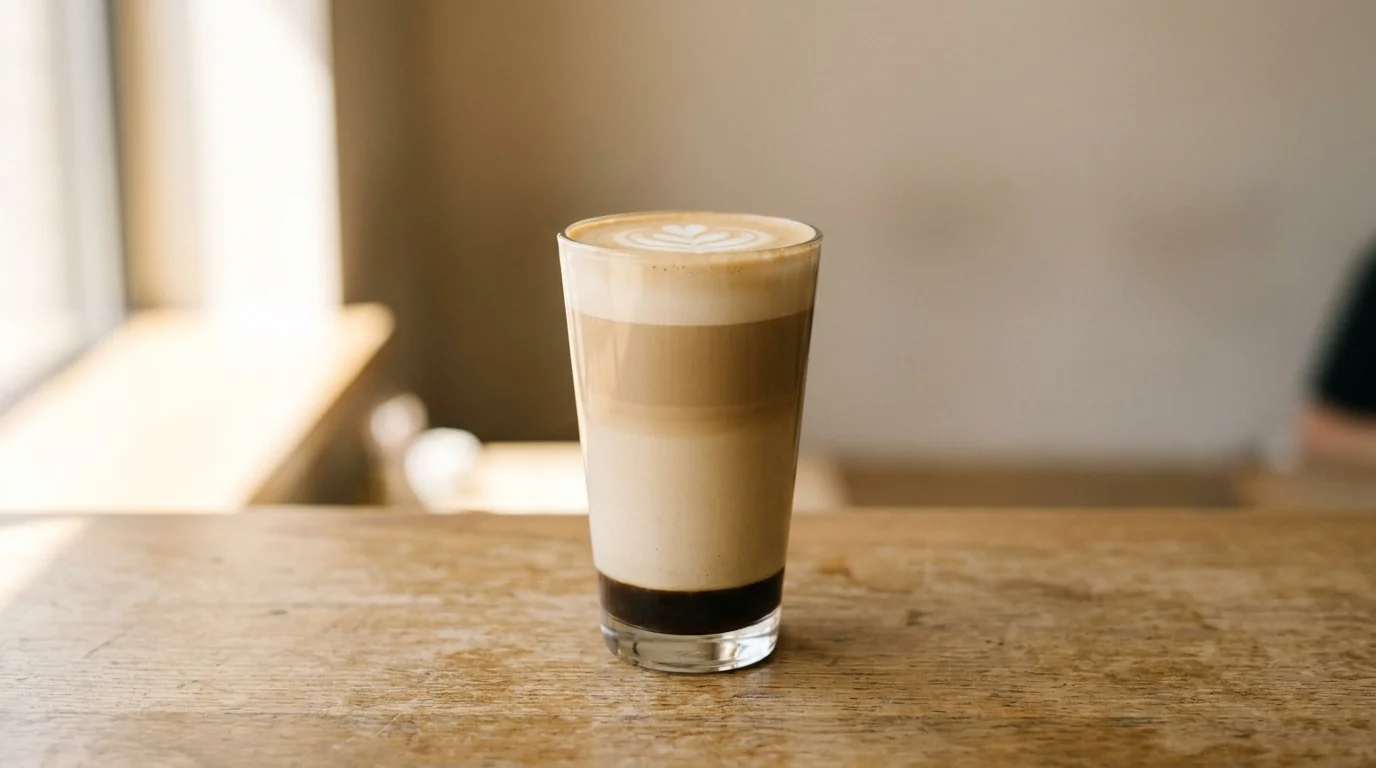
The latte is by far the most consumed espresso-based drink in the world — the workhorse of chain café menus, the default "coffee with milk" order that has spread from Italian espresso bars to essentially every café worldwide. It's also the most customised espresso drink, with countless flavour variations, milk alternatives, and size options. Understanding the latte means understanding both what a traditional caffè latte is and how modern café culture has evolved the drink into an entire category of milk-based coffee beverages.
8-12 oz
typical latte size — much larger than cappuccino or flat white, reflecting the high milk-to-coffee ratio[1]
Thin microfoam
latte foam is a thin (~1 cm) layer of silky microfoam on top — not the thick cap of a cappuccino[3]
'Latte' = milk
in Italian, 'latte' means milk — the coffee drink is properly 'caffè latte' in Italian[4]
What a latte actually is
The specifications:
- 1-2 shots of espresso (30-60 mL) at the base.
- 6-10 oz of steamed milk (180-300 mL) poured over the espresso.
- A thin layer of microfoam (~1 cm) on top of the milk.
- Total volume 8-12 oz in a tall glass, mug, or bowl- shaped ceramic cup.
- Milk-to-coffee ratio typically 8:1 to 12:1 — much higher than a cappuccino (~4:1) or flat white (~2:1).
The drink is dominated by milk. Coffee character is present but muted — you can taste espresso, but it doesn't dominate. The result is a smooth, mild, drinkable-in-larger-quantities beverage that's fundamentally different from the intense espresso-forward experience of a cappuccino or flat white.
The Italian origin — and the Anglosphere transformation
Caffè latte in Italy:
- Traditionally a breakfast drink at home rather than something ordered at cafés.
- Made in a home tazza (bowl) or tall glass.
- Espresso poured over hot milk, sometimes with sugar.
- Consumed with breakfast (bread, pastries) especially by children and older adults.
- Rarely ordered at Italian espresso bars, where cappuccino and various espresso drinks dominate.
Latte in the Anglosphere:
- Became a café menu standard in the 1980s-90s as espresso drinks proliferated globally.
- Standardised into an 8-12 oz drink served in specific cups.
- Adapted with countless flavour variations.
- Became the default "coffee with milk" order in many markets.
- Grew to become the volume-largest espresso-based drink worldwide.
The word "latte" in most English-speaking contexts now implicitly means "caffè latte" — the espresso drink, not plain milk. In Italy this shorthand doesn't work, and ordering "un latte" gets you a glass of milk[4].
Making a proper latte
Requirements:
- Espresso machine with steam wand.
- Fresh whole milk (or barista oat as best non-dairy).
- 8-12 oz tall glass or large ceramic cup, pre-warmed.
Process:
- Pull espresso (1-2 shots) directly into the pre-warmed cup. Two shots for a stronger latte; single shot for a milder one.
- Steam milk — 6-10 oz depending on cup size, textured to silky microfoam (integrated air throughout the milk, glossy surface).
- Pour milk in a controlled stream over the espresso, starting high (to sink through crema into the espresso) then lowering the pitcher as the cup fills (to bring microfoam to the surface).
- Latte art optional — hearts, rosetta, tulip patterns are traditional in specialty cafés.
- Serve immediately.
Key technique details:
- Cup temperature matters — cold cups cool the drink and break the foam.
- Milk temperature target: 60-65°C (steaming beyond ~70°C degrades milk proteins and creates flat foam).
- Pour immediately after steaming — waiting more than 30 seconds allows foam to separate from liquid.
- Whole milk is standard; low-fat milk produces stiffer foam that's harder to integrate.
Latte art
The latte's large surface area of pale microfoam makes it the classic canvas for latte art — poured designs formed in the microfoam as the milk is added. Popular patterns:
- Heart — simplest; single centre pour with a wiggle to finish.
- Rosetta — leaf pattern from side-to-side pouring.
- Tulip — layered heart shapes.
- Swan, phoenix, dragon — advanced multi-layer designs.
- Etched art — patterns drawn or stencilled onto the surface after pouring.
Latte art is aesthetic — it doesn't change the drink's flavour. Beautiful latte art doesn't guarantee good coffee, and no latte art doesn't mean bad coffee. But latte art quality is a barista skill signal — it requires proper microfoam and pouring technique, and a well-executed pour generally correlates with careful drink preparation overall.
Flavour lattes and syrup culture
Flavour syrups are one of the biggest developments in latte culture:
Common syrups:
- Vanilla — most popular, mild sweetness with vanilla aroma.
- Caramel — sweet, buttery, dessert-like.
- Hazelnut — nutty, warm, cozy.
- Chocolate/mocha — see Mocha.
- Almond — nutty, sweet.
- Cinnamon — warm spice.
- Chai — spice blend (though "chai latte" is usually tea-based, not coffee-based).
- Pumpkin spice — pumpkin flavour blend, iconic autumn drink at Starbucks (see below).
Sugar content: Flavour syrups are essentially sugar syrups with flavourings — each pump of standard syrup adds roughly 5g of sugar. A tall latte with 2 pumps of vanilla syrup adds ~10g of sugar; a large caramel or pumpkin spice latte can have 40-60g+ of added sugar.
Nutritional consequences: Unsweetened latte is a reasonably-balanced calorie/protein/fat drink. Flavour lattes approach or exceed dessert-level sugar content — worth knowing if you drink them daily.
Pumpkin Spice Latte (a cultural phenomenon)
Special mention for one specific flavour latte:
Origin: Starbucks introduced the Pumpkin Spice Latte in 2003. It became a cultural phenomenon by the mid-2010s, marking the beginning of autumn for many consumers and generating billions in Starbucks revenue.
Ingredients: Pumpkin spice syrup (originally vanilla- sweetened pumpkin puree with cinnamon, ginger, cloves, and nutmeg — earlier versions were closer to actual pumpkin; 2015+ versions contain real pumpkin puree after consumer pressure), steamed milk, espresso, whipped cream topping, pumpkin pie spice dust.
Nutrition: A 16 oz Starbucks PSL contains approximately 390 calories, 50g of sugar, and 14g of fat. It's essentially a dessert drink with an espresso base — closer to a milkshake than a coffee.
Cultural significance: Beyond the drink itself, PSL became a symbol of fall consumerism, chain café culture, and lifestyle marketing. It also demonstrated the power of seasonal limited-availability marketing in the café industry.
Iced latte
The cold version:
- Espresso poured over ice in a tall glass.
- Cold milk (not steamed) added on top.
- Sometimes with a small amount of cold foam.
- Not the same as iced coffee (which is brewed coffee chilled) — iced latte specifically uses espresso.
- Very popular in warm weather; year-round in many markets.
- Total volume typically 12-16 oz.
Iced lattes are a genuine espresso experience served cold — different from cold brew or cold coffee. See Cold Brew vs Iced Coffee for the broader cold coffee context.
Latte vs cappuccino vs flat white
Quick differentiator (full comparison in Latte vs Cappuccino vs Flat White):
Latte:
- 8-12 oz, mostly milk, thin microfoam.
- Milk-forward, mild coffee character.
- Best for: people who want a mild, milky, larger drink.
Cappuccino:
- 5-6 oz, equal thirds, thick foam cap.
- Balanced with prominent foam texture.
- Best for: coffee-with-foam experience in Italian tradition. See Cappuccino.
Flat white:
- 5-6 oz, double espresso, silky integrated microfoam.
- Coffee-forward, silky texture.
- Best for: espresso character with just enough milk to soften. See Flat White.
Choose based on how coffee-forward you want the drink and how much total volume you want.
Health notes
Standard 12 oz latte with 2 shots espresso and whole milk:
- ~180-220 calories (mostly from milk).
- ~9-11 g fat.
- ~10-12 g protein.
- ~15-18 g carbohydrates (natural milk sugars, unsweetened).
- ~125 mg caffeine (double shot).
- ~350 mg calcium.
Non-dairy latte varies substantially — oat milk latte is similar to whole milk; almond milk latte much lower calorie but also less protein.
Sweetened latte adds substantial calories and sugar. Two pumps of syrup ~ +40-50 calories and 10-12g sugar; a full- sweetened flavoured latte can double the calorie content.
Common misconceptions
- "'Latte' means the coffee drink in Italian." No — "latte" means milk in Italian. The coffee drink is "caffè latte."
- "A latte has more caffeine than a cappuccino." Depends on shot count. A single-shot latte has the same caffeine as a single-shot cappuccino (~63 mg). A double-shot latte has more than a single-shot cappuccino.
- "Lattes are healthier than sweeter coffee drinks." Unsweetened lattes are reasonably-balanced. But sweetened lattes with flavour syrups can be very high in sugar — often more than soft drinks.
- "Latte art means better coffee." Latte art is an aesthetic and skill signal, but the actual coffee quality depends on the espresso, milk, and technique — not the surface pattern.
- "You can't make a proper latte at home." You can, with an espresso machine (not a Moka pot — different extraction) and practice with milk steaming.
Practical rules
Ordering:
- Specialty cafés — expect proper microfoam, latte art possible.
- Chain cafés — bigger sizes, more flavour options, less latte art focus.
- Italy — order "caffè latte" specifically to get the coffee drink.
At home:
- Espresso machine required for proper latte (Moka pot and pour-over don't produce the same extraction).
- Whole milk or barista oat for best microfoam.
- Pre-warm the cup.
- Practice milk steaming technique.
Nutrition-conscious:
- Unsweetened lattes are reasonable calorie-wise.
- Half-sweet or unsweetened versions of flavour lattes cut substantial sugar.
- Non-dairy options vary widely — oat is closest to whole milk; almond much lighter.
The honest summary
A latte (caffè latte) is an espresso-based drink combining one or two shots of espresso with 6-10 oz of steamed milk topped with a thin layer of microfoam, in an 8-12 oz cup. The high milk-to-coffee ratio makes lattes the mildest and most drinkable of the classic espresso drinks — smooth, milky, coffee-flavoured but not coffee-dominant. Endless flavour variations (vanilla, caramel, hazelnut, seasonal options like pumpkin spice) are standard in modern café culture, though not traditional. Unsweetened lattes are reasonably balanced calorie-wise; sweetened flavour lattes can approach dessert-level sugar content. In Italy, order "caffè latte" specifically — "un latte" gets you plain milk.
Frequently asked questions
- What is a latte?
- A latte (properly caffè latte in Italian) is an espresso drink combining one or two shots of espresso with a large amount of steamed milk (typically 6-10 oz) topped with a thin layer of microfoam. Total volume is 8-12 oz, served in a tall glass or large ceramic cup. The high milk-to-coffee ratio makes lattes the mildest of the classic espresso drinks.
- What's the difference between a latte and a cappuccino?
- Size and foam. A cappuccino is small (5-6 oz) with a thick foam cap; a latte is larger (8-12 oz) with only a thin layer of microfoam on top. Cappuccinos taste more strongly of espresso; lattes are milkier and milder. Both use similar espresso and milk, but the ratios and cup sizes produce meaningfully different drinks.
- How many calories in a latte?
- Depends on size and milk. A 12 oz latte with whole milk has roughly 180-220 calories; with 2% milk about 150-180; with skim about 120-140; with oat milk about 180-220. Flavour syrups add substantially — a vanilla latte adds ~40-80 calories from the syrup; a caramel latte or pumpkin spice latte can add 100-200+ calories from syrup and toppings. Unsweetened lattes are relatively moderate; sweetened ones can approach dessert-level calories.
- Can I order 'a latte' in Italy?
- You'll get a glass of milk. In Italian, 'latte' means milk — the full name of the coffee drink is 'caffè latte' or 'latte macchiato' if you want a lighter version. In Italy, order 'un caffè latte' or 'un cappuccino' depending on what you actually want. English-speaking cafés outside Italy have adopted 'latte' as shorthand for the coffee drink, but this is not correct Italian usage.
- What is a flavour latte (vanilla, caramel, etc.)?
- A flavour latte is a latte with syrup added — vanilla, caramel, hazelnut, mocha (chocolate), and seasonal flavours like pumpkin spice. Syrups are typically added to the espresso before milk is poured in, or mixed in during preparation. They dramatically change the calorie and sugar content and are not traditional Italian preparations, but they've become standard in chain café culture and are widely available.
References
Every factual claim in this article is drawn from the sources below. See the source library for how we grade evidence.
- [1]Brewing FundamentalsCoffee Science Foundation · Reference work · Tier 2 · Moderate
- [2]Influence of Water Pressure on the Final Quality of Arabica Espresso CoffeeJournal of Agricultural and Food Chemistry · 2002 · Controlled trial · Tier 2 · Moderate
- [3]CoffeeEncyclopaedia Britannica · Reference work · Tier 3 · Contextual
- [4]Uncommon Grounds: The History of Coffee and How It Transformed Our World (revised edition)Basic Books (Mark Pendergrast) · 2010 · Reference work · Tier 2 · Moderate
Related reading
- Espresso & Coffee DrinksLatte vs Cappuccino vs Flat White→
- Espresso & Coffee DrinksCappuccino: The Classic Italian Espresso Drink→
- Espresso & Coffee DrinksFlat White: The Antipodean Espresso Drink→
- Espresso & Coffee DrinksVietnamese Egg Coffee: The Hanoi Original→
- Espresso & Coffee DrinksWhat Is an Americano? Espresso with Water, Explained→
- Espresso & Coffee DrinksLungo: The Long Espresso Shot Explained→