Vietnamese Egg Coffee: The Hanoi Original
By Coffee Studies Editorial·Published July 18, 2026·9 min read
Quick answer
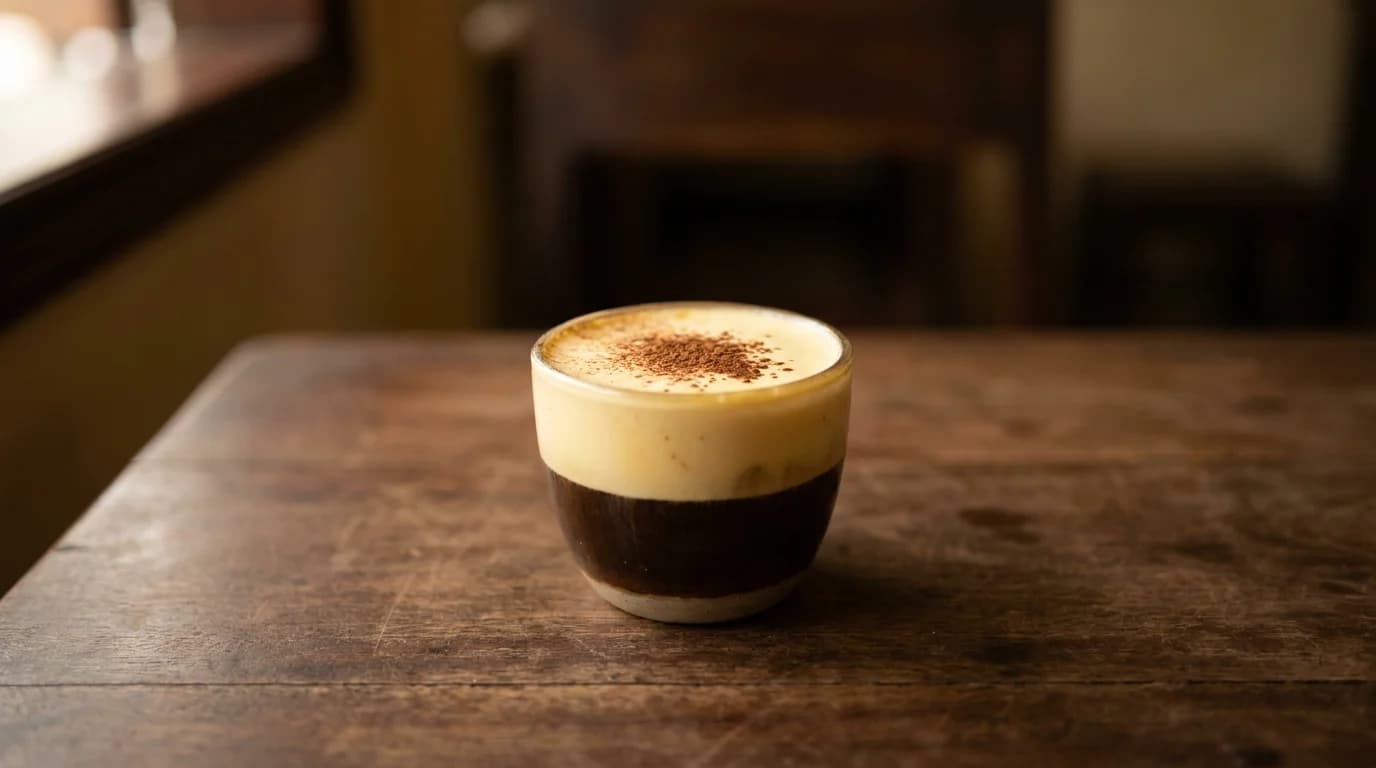
Vietnamese egg coffee is one of the more unusual drinks to come out of mid-twentieth-century Southeast Asia: a small cup of dark, strong coffee topped with a thick layer of egg yolk foam whipped with sweetened condensed milk. It is served in Hanoi, it originated in a single café, and its creation was driven by scarcity rather than invention for its own sake. The result is a drink unlike anything else in coffee.
1946
the year Nguyen Van Giang created cà phê trứng at Giang Café in Hanoi — during a wartime milk shortage under French occupation[2]
Egg yolk + condensed milk
the foam, not the coffee — the two components whipped into a dense custard-like layer that sits on top of the drink[3]
Hot or cold
two distinct versions: hot foam over hot coffee in a small cup; or chilled foam spooned over iced coffee in a tall glass[3]
The origin story
In 1946, Hanoi was under French colonial administration and wartime supply disruptions had made fresh cow's milk scarce and expensive. Nguyen Van Giang was working as a bartender at the Sofitel Legend Metropole hotel when he began experimenting with egg yolk as a milk substitute for coffee drinks[2]. The substitution worked well enough that he eventually left to open his own establishment — Giang Café, on Hang Gai Street — where the drink became the house speciality.
What began as a practical solution to a supply problem became a signature. The egg yolk, whipped vigorously with sweetened condensed milk (itself a shelf-stable alternative to fresh milk in the region), produced a foam that was richer, denser, and more flavourful than anything steam could achieve with scarce fresh milk. Giang Café has operated continuously since, and the same family still runs it[1].
The café remains on Hang Gai Street in the Old Quarter of Hanoi, with a second location in Ba Dinh. The original upstairs room — small, wood-panelled, with low tables — is where the drink is still served in the form Nguyen Van Giang devised.
The foam: what makes it different
The foam in cà phê trứng has nothing in common with the steamed milk foam of a cappuccino, nor with the whipped cream on an Irish coffee. It is a semi-cooked egg preparation: yolks and condensed milk whipped at high speed until they reach the ribbon stage — pale, glossy, and thick enough to hold a figure-eight trail from the beaters before it folds back in.
The Italian culinary equivalent is zabaione (also spelled zabaglione): egg yolks whisked with sugar and wine or marsala over gentle heat into a foamy custard. Vietnamese egg coffee foam achieves a similar texture without heat, using condensed milk in place of sugar and wine. Both are foam structures built on egg yolk proteins and fat rather than on air-in-milk emulsions[3].
The practical consequence is density. Cappuccino foam is mostly air — fine bubbles of steamed milk protein that collapse within minutes and sink into the espresso. Egg foam is substantially heavier, richer, and more stable. It sits on top of the coffee like a layer of thick cream, does not dissolve into it, and is meant to be consumed slowly as the coffee beneath it is sipped through or alongside it.
The flavour of the foam itself is intensely sweet and eggy, with the cooked-milk character of condensed milk. Against the dark, bitter robusta coffee below, the contrast is sharp and deliberate.
Cà phê trứng vs other coffee drinks
| Cà phê trứng | Affogato | Cappuccino | Café au lait | |
|---|---|---|---|---|
| Coffee base | Strong Vietnamese robusta, phin or espresso | Espresso (hot, poured over) | Espresso | Drip or French press |
| Topping type | Egg yolk + condensed milk foam | Gelato / ice cream | Steamed milk microfoam | None (milk combined) |
| Topping texture | Dense, custard-like, stable | Solid then melting | Light, airy, collapsing | No separate layer |
| Temperature | Hot (or cold version available) | Cold base, hot pour | Hot throughout | Hot throughout |
| Sweetness source | Condensed milk in foam | Ice cream | Optional added sugar | Optional |
| Eaten with | Spoon and cup | Spoon | Cup | Cup |
The affogato is perhaps the closest structural relative — a two-component drink where coffee and something creamy coexist — but the resemblance is superficial. An affogato is a dessert built on contrast between hot and cold; egg coffee is a coffee drink built on contrast between bitter and sweet[1]. See Affogato for a full treatment.
How to make egg coffee at home
The coffee base
The coffee should be very strong — closer to espresso concentration than drip. Traditional Vietnamese coffee uses robusta beans, which are higher in caffeine and bitterness than arabica, brewed through a phin (a small drip filter that sits on top of the cup and produces a slow, concentrated 50–60 mL brew over 4–6 minutes)[5].
If you do not have a phin, a moka pot or espresso machine both work well. The goal is 50–60 mL of concentrated, dark coffee. Drip coffee will produce a too-dilute base; the foam will overwhelm it rather than complement it.
Pre-warm the serving cup — a small ceramic cup, roughly 80–100 mL capacity — by filling it with hot water and emptying it just before pouring the coffee. The coffee should be hot when the foam goes on.
The foam
You will need:
- 2 egg yolks (from large eggs; pasteurised for safety)
- 2 tablespoons sweetened condensed milk
- Optional: a small pinch of vanilla extract or powder
Combine the yolks and condensed milk in a bowl or the cup of a hand mixer. Beat with an electric hand mixer on high speed for 3–5 minutes. The target is the ribbon stage: the mixture should be pale yellow, doubled or tripled in volume, glossy, and thick enough that a trail lifted from the beaters holds its shape for two or three seconds before folding back in.
A balloon whisk and vigorous hand whisking for 8–10 minutes achieves the same result but requires effort. A standard stand mixer works. Do not use a blender — it over-aerates and breaks the structure.
Assembly
Pour the hot coffee into the pre-warmed cup. Spoon the foam carefully on top — starting at the centre and working outward — so it sits in a dome rather than draping over the sides. The foam should float; if it sinks immediately, the coffee base is too dilute or the foam was not whipped enough.
Serve immediately. The drink is traditionally consumed by drinking the coffee through the foam, allowing both to mix in the mouth with each sip, rather than stirring them together beforehand.
Figure
Cà phê trứng: approximate build by volume
The cold version
Iced cà phê trứng is a separate preparation, not simply the hot version chilled. The coffee base is brewed at the same concentration, then poured over ice in a tall glass and allowed to chill before the foam is added. The foam is made the same way but the condensed milk should be very cold (straight from the refrigerator) before whipping, which produces a firmer, colder foam that holds better over the iced coffee[3].
The cold version has a noticeably different character: the coffee is milder in perceived bitterness when cold, and the foam is stiffer and more defined. It drinks more like a cold dessert drink than the hot version, which is warmer and creamier throughout. Both are legitimate; the hot version is the original.
The egg safety question
Raw egg yolk carries a genuine food safety risk. The principal concern is Salmonella enteritidis, a bacterium that can be present inside intact eggs — not just on the shell surface. The risk depends on egg source, storage, and handling. In Vietnam, where the drink originated, eggs are typically sold and consumed fresh and quickly; the risk in that context is low but not zero[4].
For home preparation in countries where egg pasteurisation is available, pasteurised eggs are the correct choice. Pasteurisation kills Salmonella while leaving the yolk's functional properties — its ability to foam, emulsify, and hold structure — largely intact. The taste difference is negligible.
The sweetness and acidity of condensed milk, and the practice of consuming the drink immediately rather than storing it, do partially mitigate risk but cannot be relied upon as safety controls. If food safety is a consideration for you or anyone being served, use pasteurised eggs.
Where to try it
Giang Café (Cà Phê Trứng Giảng) on Hang Gai Street in Hanoi's Old Quarter is the original. It also has a second location in Ba Dinh. Both serve the drink in the style Nguyen Van Giang developed in 1946: small cups, upstairs seating, unhurried[2].
Other established Hanoi spots include Café Dinh (on Dinh Tien Hoang, one of the city's oldest egg coffee addresses), and a number of newer cafés in the Old Quarter that have adopted the drink as the city has developed a wider specialty coffee culture.
Outside Vietnam, cà phê trứng appears in Vietnamese diaspora cafés in cities with large Vietnamese communities — notably in California, Texas, and Australia — as well as in specialty coffee shops worldwide that have adopted the drink as a curiosity. Quality varies considerably; the foam texture and the coffee-to-foam ratio are the clearest indicators of whether a café has taken it seriously.
Common misconceptions
- "It's like a cappuccino with egg." Cappuccino foam is steamed milk protein and air, light and collapsing. Egg foam is egg yolk fat and protein, dense, stable, and custard-like. They are different substances with different textures, different flavours, and different behaviour in the cup.
- "The condensed milk makes the raw egg safe." It does not. Pasteurised eggs are the correct response to the safety concern, not acidic or sweet ingredients that cannot reliably kill Salmonella.
- "You need Vietnamese robusta to make it correctly." Robusta is traditional and does produce the right bitterness to contrast with the sweet foam. A medium- to-dark arabica espresso also works well. The critical variable is concentration — the coffee must be strong enough to hold its presence against the foam.
- "It's a dessert drink." In Hanoi, it is consumed as a morning or afternoon coffee, not as a dessert. Outside Vietnam, it tends to be categorised as a specialty or novelty; the Vietnamese framing is simply coffee.
- "The foam needs to be warm." For the hot version, the foam can be room temperature or slightly warm; it does not need to be hot. For the cold version, a cold foam is preferable and holds structure better.
The honest summary
Cà phê trứng is a Hanoi original — a drink invented in 1946 at Giang Café out of wartime necessity, where egg yolk and condensed milk replaced fresh milk that was no longer available. What remained was a foam closer to zabaione than to anything a steam wand produces: dense, rich, eggy-sweet, stable, and flavourful in its own right. It sits over a small cup of very strong Vietnamese robusta coffee, and the two are meant to be consumed together rather than stirred. The cold version is its own preparation, not simply a chilled variation. At home, the only real barriers are whisking time (use an electric hand mixer) and egg safety (use pasteurised eggs). The coffee should be strong, the cup should be small and pre-warmed, and the foam should hold a ribbon before it goes on. The drink rewards patience at the whisk and punishes shortcuts in either direction.
Frequently asked questions
- What is egg coffee?
- Egg coffee — cà phê trứng in Vietnamese — is a Hanoi specialty made by whipping egg yolks with sweetened condensed milk into a thick, custard-like foam and spooning it over a small cup of very strong Vietnamese dark coffee. The drink was created around 1946 at Giang Café in Hanoi, where bartender Nguyen Van Giang developed it as a substitute for fresh milk during a wartime shortage. The result is a two-layer drink: dense, sweet, eggy foam sitting on top of bitter, robust coffee beneath.
- What does egg coffee taste like?
- The foam tastes rich and intensely sweet — similar to a thin sabayon or zabaione, with the fat and sulphurous warmth of egg yolk softened by condensed milk. The coffee beneath is very strong and bitter, closer to espresso than drip. Eating them together produces a combination of dense cream and dark, roasty bitterness — sweet against bitter, rich against sharp. The condensed milk gives the foam a cooked-milk sweetness that is distinct from fresh cream.
- Is egg coffee safe to eat? The egg yolk is raw.
- The raw egg yolk concern is legitimate. Egg yolks used in cà phê trứng are not cooked, which means there is a small risk of Salmonella from contaminated eggs. In Vietnam, fresh local eggs are used and consumed the same day; the risk is low but not zero. For home preparation, using pasteurised eggs eliminates the risk entirely. The condensed milk and immediate serving do not reliably make raw yolk safe — pasteurised eggs are the correct solution if food safety is a concern.
- How is egg coffee different from an affogato?
- An affogato is hot espresso poured over a scoop of cold gelato or ice cream — the contrast is temperature, the base is ice cream, and the topping is the coffee. Vietnamese egg coffee reverses this: the topping is the egg foam, the base is the coffee, and both are warm. The egg foam is also fundamentally different from gelato — it is not frozen, not dairy cream, and does not melt. Egg coffee is eaten with a spoon or drunk through the foam; an affogato is eaten as a dessert and disappears once the gelato melts.
- How do you make egg coffee at home?
- Brew 50–60 mL of very strong coffee using a Vietnamese phin filter, espresso machine, or moka pot. Pre-warm a small ceramic cup in hot water. For the foam, whisk 2 egg yolks with 2 tablespoons of sweetened condensed milk (and an optional pinch of vanilla) using an electric hand mixer on high speed for 3–5 minutes, until the mixture is pale, thick, and holds a ribbon when the beaters are lifted. Spoon the foam over the hot coffee. The foam should sit on top without sinking. Serve and drink immediately.
References
Every factual claim in this article is drawn from the sources below. See the source library for how we grade evidence.
- [1]CoffeeEncyclopaedia Britannica · Reference work · Tier 3 · Contextual
- [2]Uncommon Grounds: The History of Coffee and How It Transformed Our World (revised edition)Basic Books (Mark Pendergrast) · 2010 · Reference work · Tier 2 · Moderate
- [3]Brewing FundamentalsCoffee Science Foundation · Reference work · Tier 2 · Moderate
- [4]FoodData CentralU.S. Department of Agriculture · Official dataset · Tier 1 · Strong
- [5]World Coffee Statistics DatabaseInternational Coffee Organization · Official dataset · Tier 1 · Strong
Related reading
- Brew MethodsVietnamese Coffee Guide: Phin, Cà Phê Sữa, Robusta→
- Espresso & Coffee DrinksAffogato: Espresso Poured Over Ice Cream→
- Espresso & Coffee DrinksCafé au Lait: French Coffee with Warm Milk→
- Espresso & Coffee DrinksCappuccino: The Classic Italian Espresso Drink→
- Espresso & Coffee DrinksStanding Egg Coffee: The Korean Viral Drink Explained→
- Espresso & Coffee DrinksIced Latte: Cold Espresso with Milk Explained→