Lungo: The Long Espresso Shot Explained
By Coffee Studies Editorial·Published July 18, 2026·5 min read
Quick answer
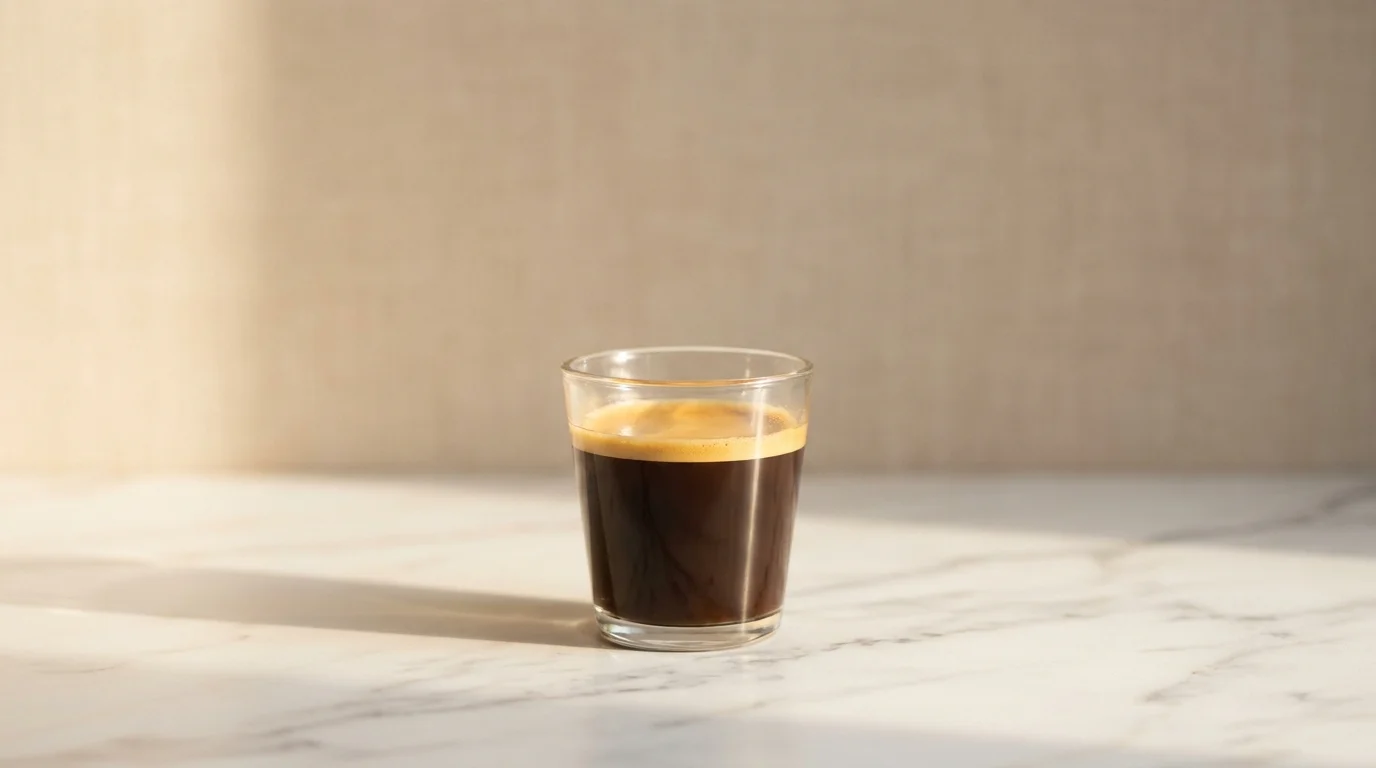
Lungo is one of those espresso terms that sounds more complicated than it is. The Italian means simply "long." A lungo is an espresso pulled long — more water through the same puck, producing more volume. Everything else is a consequence of that one change.
The confusion arises because lungo is often conflated with Americano, a drink that looks similar in a glass but is made very differently and tastes noticeably different.
50–60 mL
standard lungo output volume — roughly double the 25–30 mL of a regular espresso, using the same coffee dose and grind[1]
More extraction, less concentration
a longer pull extracts more total dissolved solids but dilutes them across more water — concentration (TDS%) is lower than espresso; bitterness is higher[3]
Not an Americano
an Americano adds hot water after extraction; a lungo passes more water through the puck during extraction — different process, different flavour[1]
What changes when you pull long
An espresso machine pushes hot water (88–94 °C) through a coffee puck at approximately 9 bar pressure. What you taste in the cup is a function of which compounds dissolved at which point in the extraction.
Early in the pull (first 10–15 mL): sugars, organic acids, and aromatic compounds dissolve first. These contribute sweetness, brightness, and aromatic complexity.
As extraction continues: higher molecular weight compounds — bitter melanoidins, astringent chlorogenic acid degradation products — dissolve more slowly. Pulling the shot longer pulls more of these.
A lungo deliberately extends into this later phase, which is why it tastes more bitter and less sweet than a standard espresso from the same coffee[3].
Figure
Espresso family: extraction output volume (mL)
Values in mL output
Lungo vs Americano
This is the most useful distinction to understand.
Lungo: water passes through the coffee puck during extraction. The same pressure, the same temperature, for a longer time. Compounds extracted later in the pull — including bitter ones — end up in the cup. The coffee never becomes concentrated and then diluted; it extracts directly into the larger volume.
Americano: a standard espresso shot (25–30 mL) is pulled at normal parameters, then hot water is added to the cup. The espresso concentrates normally, then is diluted. The early-extraction compounds — sweetness, aromatics — are preserved in the concentrated shot; adding water doesn't un-extract them.
The result: an Americano tastes more like a dilute version of the espresso it was made from — sweetness and aromatics survive in diluted form. A lungo tastes more bitter, less sweet, because the longer pull physically extracted those bitter compounds that stopped short in a normal espresso[2].
| Ristretto | Espresso | Lungo | Americano | |
|---|---|---|---|---|
| Output volume | ~15 mL | ~30 mL | ~50–60 mL | ~150–200 mL |
| Water through puck | Less | Standard | More | Standard |
| Post-extraction water | No | No | No | Yes (~120–170 mL) |
| Bitterness vs espresso | Lower | Standard | Higher | Lower (diluted) |
| Sweetness vs espresso | Higher | Standard | Lower | Preserved but diluted |
| Crema | Thicker, darker | Standard | Thinner, lighter | Thin / absent |
When a lungo actually makes sense
Most specialty espresso orthodoxy treats the lungo with suspicion — the longer extraction runs into bitter territory, and the same result can be achieved more controllably with an Americano. But there are legitimate contexts where a lungo is the better choice:
Certain roasts and coffee origins have a flavour profile that benefits from longer extraction. Some lighter-roasted coffees, particularly those with bright acid and floral character, develop more complexity at slightly longer ratios. A lungo ratio (roughly 1:2 to 1:2.5 coffee-out to water-out) can open up notes that a tight ristretto or standard espresso compresses. Many specialty cafés now refer to this not as "lungo" but as an "extended espresso" or dial in by output ratio rather than a fixed volume rule.
Nespresso and capsule espresso use lungo as a product category — the lungo capsule is formulated for a larger water volume, with a lighter grind and lower dose calibrated for that extraction. In that context, lungo is not a standard espresso pulled long; it is a different product.
When no milk or water is desired but a larger coffee is needed — some drinkers prefer lungo over Americano because it is a single-step process and avoids the taste of separately added water[1].
How to make a lungo
On a semi-automatic or manual espresso machine:
- Dose and grind as you normally would for espresso.
- Start the shot and allow it to run until roughly 50–60 mL of liquid collects in the cup — typically 40–50 seconds rather than the usual 25–30 seconds.
- Stop the shot. No additional water.
Grind adjustment: the longer extraction time may or may not require adjustment. If the lungo tastes excessively bitter or astringent, try grinding very slightly coarser — this increases flow rate and reduces the late-extraction bitter compounds. If it tastes thin and acidic, grind slightly finer.
Pressure profiling machines: a lungo is a natural candidate for pressure profiling — dropping pressure in the latter part of extraction can reduce bitterness while achieving the target volume.
Nespresso: select a lungo-labelled capsule and use the lungo (large cup) programme button. Do not use an espresso capsule on the lungo programme — the capsule was not formulated for that volume.
Caffeine in a lungo
Caffeine extraction follows a specific curve: it is among the first compounds to dissolve and most caffeine is extracted within the first 25–30 mL[3]. Running to 60 mL captures most of the remaining caffeine, but the incremental gain is modest.
Figure
Approximate caffeine by espresso type (single dose)
Values in mg caffeine (approximate)
Common misconceptions
- "A lungo is just a big espresso." It is a longer extraction — volume is the consequence, not the mechanism. The extraction chemistry differs from a standard espresso.
- "Lungo and Americano taste the same." They are made differently and taste different — longer extraction versus post-extraction dilution produce different flavour profiles.
- "Nespresso lungo is a real lungo." Nespresso's lungo capsules are a separate product formulation, not a standard espresso capsule extracted long.
- "A lungo has much more caffeine than espresso." Marginally more — perhaps 10–20 mg — not dramatically so. The same coffee dose has the same total caffeine.
- "Lungo is always too bitter." This depends heavily on the coffee and roast. Some beans are well-suited to longer ratios; others are not. The bitterness claim is most true of commodity dark roasts.
The honest summary
A lungo is an espresso pulled with approximately double the water volume — 50–60 mL from a standard dose rather than 25–30 mL — using the same pressure and grind. More water through the puck extracts more total solids, including bitter late-extraction compounds, producing a larger but more bitter and less sweet cup than standard espresso. It is not an Americano (which dilutes espresso after extraction) and not simply "weak espresso." In the right context — certain lighter roasts, capsule systems, or drinkers who want more volume without added water — it is the intended choice. In most specialty contexts, the same result can be achieved more deliberately with a calibrated longer ratio shot rather than a strict "lungo" volume target.
Frequently asked questions
- What is a lungo?
- Lungo is Italian for 'long.' In espresso, it refers to a shot pulled with approximately double the water of a standard espresso — roughly 50–60 mL output from the same coffee dose that would produce 25–30 mL for a regular espresso. The machine settings (dose, grind, pressure) remain the same; only the volume of water passed through the puck increases. This produces a larger, slightly weaker, more bitter cup than a standard espresso.
- What is the difference between a lungo and an Americano?
- The key difference is when and how the water is added. A lungo uses more water during extraction — water passes through the coffee puck for a longer time under pressure, extracting more compounds. An Americano is a standard espresso shot to which hot water is added after extraction. The result is different: an Americano dilutes the concentrated espresso with water (typically 1:1 to 1:3 espresso to water); a lungo extracts over a longer time, pulling different compounds and producing a larger but distinctly different flavour profile — more bitter, less sweet, with a different aromatic character than a diluted espresso.
- Is a lungo stronger than espresso?
- Larger volume, but lower concentration. A lungo at 60 mL has more total dissolved solids than a 30 mL espresso from the same dose — the longer extraction pulls more soluble material. But the concentration (TDS as a percentage) is lower because the same mass of compounds is spread through more water. It is stronger in total caffeine and extracted mass; weaker in concentration and flavour intensity per sip.
- How do you make a lungo?
- On a standard espresso machine: use your normal espresso dose and grind setting, but allow the shot to run until you reach 50–60 mL of output rather than stopping at 25–30 mL. No other adjustments are strictly required for a traditional lungo, though the longer extraction time may reveal bitterness that prompts you to grind slightly coarser. On a Nespresso, lungo-labelled capsules use a lower dose formulated for the 110 mL lungo programme — they're a separate product, not a standard espresso capsule extracted long.
- Does a lungo have more caffeine than espresso?
- Slightly more, yes. Caffeine is among the first compounds extracted from coffee grounds. A longer extraction pulls more caffeine from the same dose, though the gains diminish quickly — most caffeine is out within the first 25–30 mL. A lungo from a single dose contains perhaps 10–15% more caffeine than a standard single espresso, but the difference is modest and highly variable by roast and dose.
- What is a Nespresso lungo?
- Nespresso's lungo programme runs 110 mL of water through a capsule designed with a lower coffee dose than their espresso capsule. This is not a traditional lungo — it is a different product with a different formulation, calibrated for the larger volume. Running a standard espresso capsule to 110 mL on a Nespresso will taste harsh and over-extracted because the capsule dose was not designed for that water volume.
References
Every factual claim in this article is drawn from the sources below. See the source library for how we grade evidence.
- [1]Brewing FundamentalsCoffee Science Foundation · Reference work · Tier 2 · Moderate
- [2]Influence of Water Pressure on the Final Quality of Arabica Espresso CoffeeJournal of Agricultural and Food Chemistry · 2002 · Controlled trial · Tier 2 · Moderate
- [3]Coffee extraction kinetics in a well mixed systemJournal of Mathematics in Industry · 2016 · Review · Tier 2 · Moderate
Related reading
- Espresso & Coffee DrinksRistretto: The Short Concentrated Espresso Shot→
- Espresso & Coffee DrinksWhat Is Espresso? Pressure, Extraction, the Shot→
- Espresso & Coffee DrinksWhat Is an Americano? Espresso with Water, Explained→
- Espresso & Coffee DrinksCortado: Espresso Cut with Equal Warm Milk→
- Espresso & Coffee DrinksSpanish Coffee: The Flambéed Rum Cocktail→
- Espresso & Coffee DrinksCafé au Lait: French Coffee with Warm Milk→