Spanish Coffee: The Flambéed Rum Cocktail
By Coffee Studies Editorial·Published July 16, 2026·11 min read
Quick answer
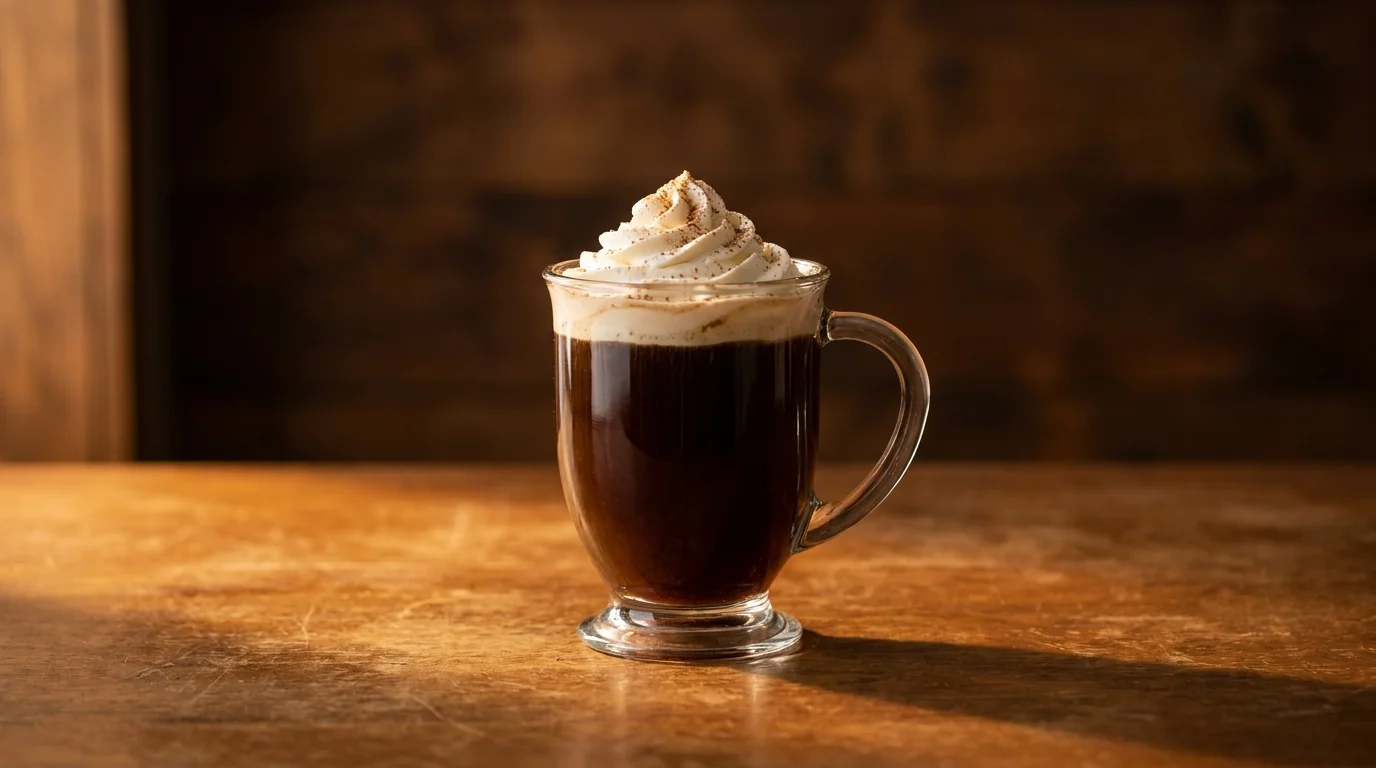
Spanish coffee is one of the more theatrical drinks in North American cocktail culture — a flambéed hot coffee concoction where 151-proof rum ignites tableside for a dramatic flame effect before the drink is finished with Kahlua, coffee, and floated whipped cream. Its home is Huber's Cafe in Portland, Oregon (America's oldest continuously-operating restaurant, since 1879), where it has been served for decades. Despite the name, it has less connection to Spain than you might think — actual Spanish coffee traditions look quite different.
Flambéed cocktail
151-proof rum and triple sec are ignited tableside for a dramatic flame presentation before the drink is finished[1]
Huber's Cafe Portland
America's oldest continuously-operating restaurant (since 1879) is closely associated with the modern Spanish coffee[2]
Not really Spanish
despite the name, this specific flambéed cocktail is American; actual Spanish café culture includes different traditional drinks[1]
What Spanish coffee actually is
The Huber's-style Spanish coffee:
Ingredients:
- 3/4 oz (22 mL) 151-proof rum (Bacardi 151 traditionally; now often other high-proof rums since Bacardi 151 was discontinued).
- 3/4 oz (22 mL) triple sec (Cointreau or similar).
- 1 oz (30 mL) Kahlua (coffee liqueur).
- 4-6 oz hot coffee (drip brewed, strong).
- 1-2 oz freshly-whipped cream.
- Nutmeg for garnish (freshly grated).
- Sugar for glass rim.
Equipment:
- Footed heat-safe glass (Irish coffee glass or similar).
- Long lighter or match.
- Small dish for sugar rim.
- Small pitcher or shaker for whipped cream.
Process (traditional Huber's tableside):
- Rim the glass with sugar — dip the rim in triple sec or water, then dip in sugar to create a sugar crust.
- Add 151-proof rum — pour 3/4 oz into the rimmed glass.
- Add triple sec — pour 3/4 oz into the glass with the rum.
- Ignite the alcohol — using a long lighter, ignite the rum. Immediately begin rotating/tilting the glass so the flames circle inside, caramelising the sugar rim.
- Continue rotating for 15-30 seconds as flames burn. The sugar rim will darken and caramelise; the alcohol will partially burn off.
- Add Kahlua — 1 oz. This may temporarily suppress the flames or continue burning briefly.
- Add hot coffee — pour to fill the glass. This will fully extinguish any remaining flames.
- Top with whipped cream — float lightly-whipped cream on top (Irish-coffee-style — not stiff peaks, pourable).
- Grate nutmeg over the cream.
- Serve immediately — traditionally consumed through the cream layer.
Total volume: approximately 6-8 oz plus cream layer.
Alcohol content: approximately 15-20% ABV overall depending on burn-off. Substantial alcohol content — roughly 1.5 standard drinks per serving.
The Huber's Cafe origin
Huber's Cafe, Portland, Oregon — America's oldest continuously-operating restaurant.
History
History:
- Founded 1879 by W.L. Lightner. Originally called The Bureau Saloon.
- 1891: Restaurant taken over by Frank Huber, whose family gave it the current name.
- Turkey specialty: Huber's became famous for its turkey dinners, remaining a signature dish today.
- Prohibition era (1920-1933): Huber's continued as a restaurant despite alcohol prohibition.
- Post-Prohibition: Bar service returned; Huber's developed cocktail traditions.
- Modern era: Located in Portland's Old Town district in the same historic space it has occupied since 1911; still owned and operated by the Louie family who took over from Huber's descendants.
The Spanish coffee tradition
The Spanish coffee tradition:
- The specific flambéed Spanish coffee developed at Huber's during the mid-20th century.
- Various sources credit different individual bartenders with the specific recipe development.
- Became Huber's signature drink alongside their turkey dinner.
- Currently, Huber's serves reportedly thousands of Spanish coffees per year — one of the highest-volume Kahlua accounts in America.
- Tableside preparation with flaming presentation is standard.
Cultural spread
Cultural spread:
- Portland residents grew up with Huber's Spanish coffee as a signature local experience.
- Travel media coverage spread awareness of the drink.
- Various Portland restaurants and bars added Spanish coffee to menus over the years.
- Some Pacific Northwest and West Coast restaurants adopted the drink.
- The drink remained more regional than national; Huber's remains the reference version[2].
The Bacardi 151 discontinuation
A specific product change affected Spanish coffee production:
Bacardi 151: for decades, Bacardi 151-proof rum was the standard rum for Spanish coffee. Its very high alcohol content (75.5% ABV) supports the flambé technique.
Discontinued 2016: Bacardi Corporation announced they were discontinuing Bacardi 151. Reasons cited included safety concerns (flammability), regulatory pressures, and declining sales.
Modern substitutes:
- Cruzan 151 — Caribbean-produced 151-proof rum; most common current substitute.
- Gosling's 151 — Bermuda 151-proof; another common substitute.
- Lemon Hart 151 — historical rum brand.
- Some producers of other 100-151 proof rums — Cadiz gold rums, various craft distillers.
For home Spanish coffee: any 151-proof rum substitutes for Bacardi 151. Higher-proof (140+) is required for the flambé effect. Standard rum (40% ABV) won't reliably flambé.
The taste
Spanish coffee produces a distinctive flavour profile:
Base flavours:
- Coffee bitterness — strong hot coffee as backbone.
- Sweetness — from Kahlua, caramelised sugar rim, and cream.
- Citrus notes — from triple sec (orange liqueur).
- Rum character — spirit warmth, molasses notes (particularly from Caribbean rums).
- Cream body — floated whipped cream on top adds richness.
Textural experience:
- Hot bitter/sweet coffee below.
- Cool cream layer on top.
- Sugared rim adds sensory element.
- Consumed through the cream layer (Irish coffee style).
The flambé effect on flavour:
- Some alcohol burns off during flambé (typically 25-40% of alcohol content, though this varies).
- Sugar caramelisation adds toasted flavour.
- Some smoke/toasted notes.
- Presentation impact is substantial — the flavour experience is enhanced by the theatrical preparation.
Spanish coffee vs Irish coffee
Both are hot coffee cocktails with floated cream. Key differences:
| Feature | Spanish Coffee | Irish Coffee |
|---|---|---|
| Base spirit | 151 rum + triple sec | Irish whiskey |
| Coffee liqueur | Kahlua added | None (whiskey only) |
| Preparation | Flambéed | No flame; stirred |
| Sweetener | Sugar rim + Kahlua sweetness | Brown sugar dissolved in coffee |
| Origin | American (Huber's, Portland) | Irish (Foynes/Buena Vista) |
| Alcohol content | Higher (15-20% ABV) | Lower (~5-6% ABV) |
| Volume | ~6-8 oz | ~6 oz |
| Theatre | High (flame presentation) | Low |
| Ordering venue | Bars, some restaurants | Bars, cafes broadly |
See Irish Coffee for the Irish coffee comparison.
Actual Spanish café tradition
The "Spanish coffee" cocktail has little relationship to actual Spanish café culture. Traditional Spanish coffee drinks:
Café solo
Café solo: the Spanish name for espresso — small strong coffee, no milk. Standard morning and afternoon drink.
Café cortado
Café cortado: small espresso "cut" with a small amount of warm milk. Similar to macchiato but with more milk. See Cortado. This is genuinely Spanish.
Café con leche
Café con leche: larger espresso with substantial hot milk (roughly 1:1 espresso to milk). Similar to café au lait. Common Spanish breakfast drink.
Café bombón
Café bombón: distinctive Spanish drink combining espresso poured over sweetened condensed milk in a small clear glass. The two layers are visible (dark coffee on top, thick white condensed milk on bottom) before being stirred to combine into a very sweet coffee drink. Popular in Valencia and Alicante.
Carajillo
Carajillo: coffee (usually espresso) with a shot of brandy, whisky, rum, or another spirit added. Popular Spanish and Latin American drink, particularly after meals. Sometimes with a small sugar rim (particularly "carajillo quemado" — burned/flambéed carajillo — which is closer to the American Spanish coffee in preparation).
Sombra: the inverse — mostly milk with a small amount of coffee added. A very mild coffee drink sometimes given to children or those who don't want much caffeine.
None of these traditional Spanish coffees are flambéed — the theatrical flame presentation is an American development.
Related flambéed coffee cocktails
The "flambéed coffee cocktail" category includes several international variations:
Caribbean coffee
Caribbean coffee — variations across Caribbean bars with different spirit combinations (dark rum, coconut rum, orange liqueur).
Café diablo
Café diablo — flambéed coffee drink with brandy, citrus, cloves, and cinnamon. Traditional Mexican and Southwest US restaurants.
Café Brûlot
Café Brûlot — Louisiana Creole flambéed coffee drink combining coffee, cognac, orange, lemon, cinnamon, cloves, and sugar. New Orleans specialty; often served in specific footed brûlot cups.
Flaming coffee (generic) — various regional variations of the theme.
All share the flambé theatre; specific ingredient combinations vary by tradition.
Making Spanish coffee at home
Safety first:
Requirements:
- Heat-safe glass (Irish coffee glass or similar footed glass rated for hot liquids).
- Long lighter or long matches.
- Clear workspace with nothing flammable nearby.
- Lid or small plate to smother flames if needed.
- Have all ingredients ready before starting.
Ingredients per drink:
- 3/4 oz 151-proof rum (Cruzan 151, Gosling's 151, or similar).
- 3/4 oz triple sec.
- 1 oz Kahlua.
- 6 oz fresh hot strong coffee (French press or drip).
- Whipped cream (lightly whipped).
- Sugar for rim.
- Triple sec (or water) for rim wetting.
- Freshly-grated nutmeg for garnish.
Process:
- Prep the coffee. Brew fresh strong coffee. Keep hot in a thermal carafe or on a warmer.
- Prep the cream. Lightly whip heavy cream to pourable-thick consistency (not stiff peaks).
- Rim the glass. Dip rim in triple sec (or water), then in sugar to create a sugar rim.
- Add spirits. Pour 3/4 oz 151-proof rum into the rimmed glass, then 3/4 oz triple sec.
- Light and tilt. Ignite the spirits with a long lighter. Immediately tilt and rotate the glass to caramelise the sugar rim. Keep hands away from flame path.
- Add Kahlua. Once you've had the flame effect for 15-30 seconds, pour Kahlua slowly — it may briefly sustain or extinguish flames.
- Add coffee. Pour hot coffee into the glass, filling to about 1 inch below the rim. This should fully extinguish any remaining flames.
- Float cream. Gently pour whipped cream over the back of a spoon to create a floated layer (Irish coffee technique).
- Grate nutmeg. Freshly grated nutmeg over the cream.
- Serve immediately.
Safety notes:
- The flame can be higher than expected — clear workspace essential.
- Don't lean over the glass while igniting.
- Have a plan for smothering flames if needed (small plate/lid).
- Don't touch the glass exterior during flambé — it becomes very hot.
- Don't add cold liquid until flames are out.
- If uncomfortable with fire, skip the flambé step — the drink still tastes fine, just without the theatre.
Simplified home version (no flame):
- Skip the ignition step.
- Combine 151-proof rum, triple sec, Kahlua, and hot coffee in the glass.
- Top with whipped cream and nutmeg.
- Same flavour, less theatre, no safety concerns.
Nutrition and alcohol
Standard Spanish coffee (Huber's-style):
- Alcohol: ~1.5 standard drinks (accounting for some burn-off during flambé).
- Calories: ~300-400 total (from spirits, Kahlua, cream, sugar rim).
- Caffeine: approximately equivalent to a strong cup of coffee (~120-150 mg).
- Sugar: substantial from Kahlua and sugar rim (15-25g).
Comparison:
- Higher alcohol than Irish coffee (~5-6% ABV) — Spanish coffee reaches 15-20% ABV.
- Higher calorie than Irish coffee due to Kahlua and higher-proof spirits.
- More sugar than Irish coffee due to sugar rim plus Kahlua.
Health considerations:
- The alcohol + caffeine combination masks intoxication perception without reducing actual impairment. Drink accordingly.
- Not a low-calorie drink.
- Late-day consumption can meaningfully affect sleep due to both alcohol and caffeine.
Common misconceptions
- "Spanish coffee is a traditional Spanish drink." The specific flambéed cocktail is American (Huber's Cafe, Portland). Actual Spanish café tradition includes different drinks (café bombón, carajillo, cortado).
- "The flame is just for show — it doesn't affect flavour." Some alcohol burns off; sugar caramelises; smoke notes develop. Meaningful flavour effect from the technique.
- "You need Bacardi 151 specifically." Any 151- proof rum works. Bacardi 151 was discontinued in 2016; Cruzan 151 and Gosling's 151 are common substitutes.
- "Spanish coffee is easy to make at home." Mostly yes, but the flambé technique requires care. First- time flambé at home warrants extra caution.
- "Spanish coffee is just coffee with rum." Multiple specific ingredients (rum + triple sec + Kahlua + coffee + cream) plus the flambé technique distinguish it from generic spiked coffee.
Practical rules
When ordering out:
- Look for specialty cocktail bars or restaurants with serious drink menus.
- Huber's Cafe in Portland is the reference version if you're travelling there.
- Some Pacific Northwest and West Coast restaurants do a proper version.
- Ask before ordering — not all bars can properly do the flambé.
When making at home:
- Prioritise safety over theatre.
- Consider making the non-flambé version if uncertain about handling fire.
- Have all ingredients ready before starting.
- Use a proper heat-safe glass.
- Practice pouring the cream layer before serving to guests.
When to enjoy:
- After-dinner drink is traditional context.
- Cold weather appropriate.
- Special occasion / dessert alternative.
- Not for driving — substantial alcohol content.
When to avoid:
- Combined with substantial other alcohol (caffeine masks intoxication without reducing impairment).
- Late at night if caffeine sensitivity affects sleep.
- If you don't like sweet drinks (this is a sweet drink).
The honest summary
Spanish coffee is a flambéed hot coffee cocktail combining 151-proof rum, triple sec, Kahlua, hot coffee, and floated whipped cream — with the rum and triple sec ignited tableside for a dramatic flaming presentation. The specific modern version is closely associated with Huber's Cafe in Portland, Oregon — America's oldest continuously-operating restaurant (since 1879). Despite the name, the drink has less connection to Spain than you might think; actual Spanish café tradition includes different drinks (café bombón, carajillo, cortado) that aren't flambéed. It's a theatrical, alcohol-forward, sweet dessert-cocktail experience rather than a coffee purist's drink. Worth trying at Huber's if you're in Portland; workable to make at home with proper safety attention (or skip the flame for a simpler version).
Frequently asked questions
- What is Spanish coffee?
- Spanish coffee is a flambéed hot coffee cocktail — a footed heat-safe glass rimmed with sugar, filled with 151-proof rum and triple sec (which are ignited briefly for the dramatic flame effect), then Kahlua or another coffee liqueur added, filled with hot coffee, and topped with whipped cream and often nutmeg or cinnamon. The most famous version is served at Huber's Cafe in Portland, Oregon. Similar drinks exist under other names (Spanish coffee variants, Caribbean coffee), but the flaming preparation is the signature.
- Where does Spanish coffee come from?
- The specific flambéed Spanish coffee is most closely associated with Huber's Cafe in Portland, Oregon — America's oldest continuously-operating restaurant, founded 1879. Their Spanish coffee has been served since roughly the mid-20th century and became a signature drink. The recipe was popularised nationally by various cocktail books and travel writing about Portland. The name 'Spanish' apparently references the use of Spanish rum tradition (though 151 rum is typically not Spanish origin). The drink has less connection to Spain itself than the name suggests.
- How is Spanish coffee made at Huber's?
- Traditional Huber's technique: a footed heat-safe glass is rimmed with sugar (dip glass in triple sec, then in sugar). 3/4 oz of 151-proof rum and 3/4 oz of triple sec are added and ignited (tableside for dramatic effect). The bartender tilts and rotates the flaming glass to caramelise the sugar rim. When flames subside, 1 oz Kahlua is added and the glass is filled with fresh hot coffee. Whipped cream is floated on top (Irish-coffee-style). Nutmeg is grated over the cream. Served immediately.
- Is Spanish coffee actually Spanish?
- Not really — despite the name. The flambéed cocktail version is American, closely associated with Portland's Huber's Cafe. Actual Spanish café culture includes different drinks: café bombón (espresso layered over sweetened condensed milk), carajillo (coffee with brandy or another spirit, popular in Spain and Latin America), café cortado (small espresso with milk — a genuinely Spanish creation), and café con leche (larger espresso with milk). None of these traditional Spanish drinks are flambéed. The 'Spanish coffee' name for the American cocktail is somewhat historically inaccurate.
- Is it safe to make Spanish coffee at home?
- Requires care but yes. Basic safety: (1) Use a heat-safe glass — regular glassware can crack from the alcohol flame temperature. (2) Have a lid or plate ready to smother flames if needed. (3) Keep the flame away from hair, clothing, and anything flammable. (4) Don't lean over the glass. (5) Don't add cold liquid (coffee, cream) until flames have fully subsided. (6) Consider making it in a professional environment first before home. Many home versions skip the flame element and simply mix the ingredients — safer but less dramatic.
References
Every factual claim in this article is drawn from the sources below. See the source library for how we grade evidence.
- [1]CoffeeEncyclopaedia Britannica · Reference work · Tier 3 · Contextual
- [2]Uncommon Grounds: The History of Coffee and How It Transformed Our World (revised edition)Basic Books (Mark Pendergrast) · 2010 · Reference work · Tier 2 · Moderate
- [3]Brewing FundamentalsCoffee Science Foundation · Reference work · Tier 2 · Moderate
Related reading
- Espresso & Coffee DrinksIrish Coffee: Whiskey, Cream, and Hot Coffee→
- Espresso & Coffee DrinksCortado: Espresso Cut with Equal Warm Milk→
- Espresso & Coffee DrinksWhat Is an Americano? Espresso with Water, Explained→
- Espresso & Coffee DrinksMocha: Espresso, Chocolate, and Steamed Milk→
- Espresso & Coffee DrinksCafé au Lait: French Coffee with Warm Milk→
- Espresso & Coffee DrinksWhat Is Café Cubano? Cuban Espresso with Sugar→