What Is Café Cubano? Cuban Espresso with Sugar
By Coffee Studies Editorial·Published July 18, 2026·6 min read
Quick answer
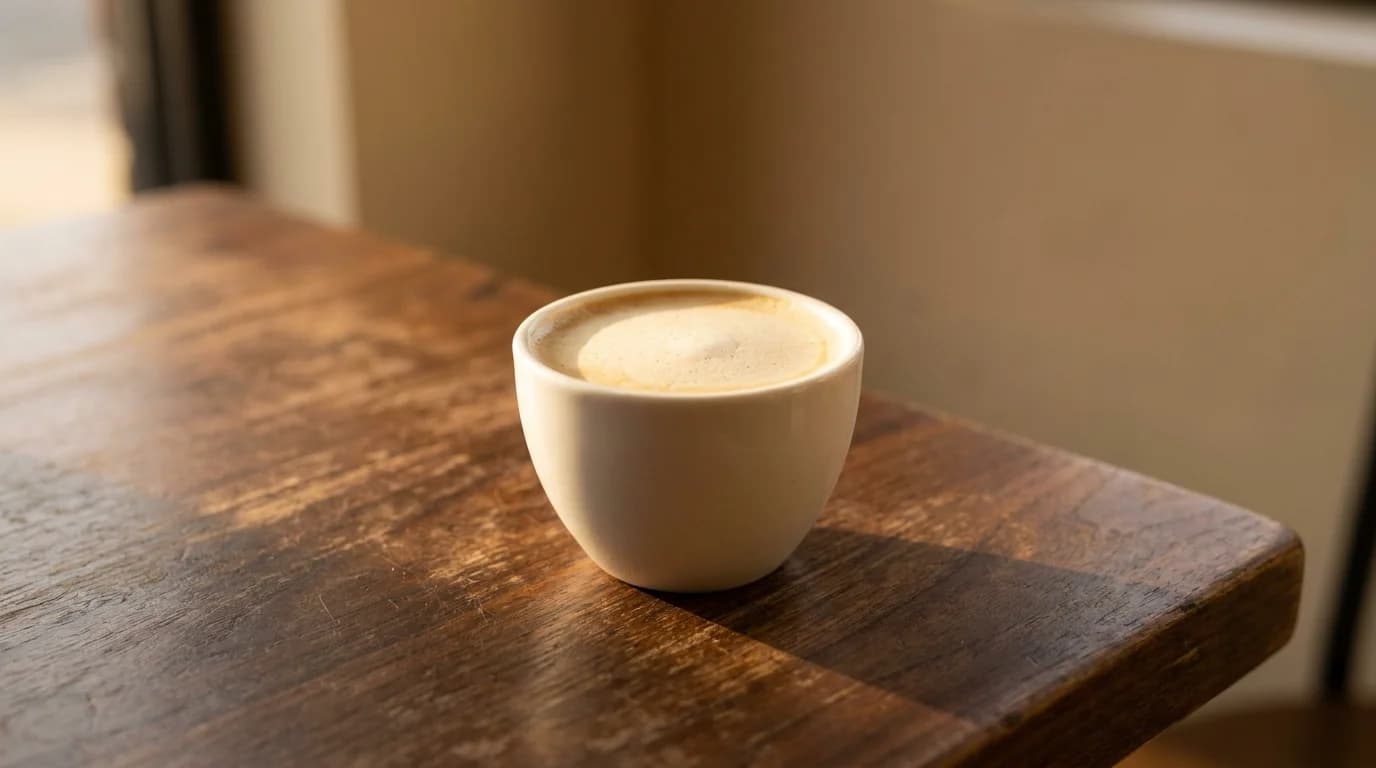
Café cubano is not espresso with sugar stirred in. That distinction — obvious to anyone who has had both — is the entire point. The sugar is whipped with the first drops of espresso before the rest of the shot is pulled, creating a foam that cannot be achieved by adding sugar to finished espresso. The espumita is what makes café cubano, and making espumita is a technique.
Espumita is everything
the pale caramelised foam made by whipping sugar with first-pull espresso drops is the defining element of café cubano — without it, the drink is just sweet espresso[3]
Colada: the social form
a colada is a large shared café cubano served with small thimble cups — passed around the ventanita (counter window) as a workplace or street social ritual, particularly in Miami[2]
Always sweetened
sweetness is not optional in café cubano — the sugar and espumita are part of the recipe itself, not a modification; an unsweetened café cubano is a different drink[1]
The origin
Coffee arrived in Cuba in the mid-18th century, introduced by José Antonio Gelabert, who brought plants from the French colony of Santo Domingo. Cuba's climate was well-suited to coffee cultivation, and by the 19th century Cuba was a significant coffee producer. The island developed a coffee culture that fused Spanish espresso tradition with local taste — particularly a preference for strong, sweet coffee[2].
The specific espumita technique — whipping sugar with the first drops of espresso — became the signature of Cuban coffee. When the Cuban Revolution of 1959 led to significant emigration to Miami and other US cities, this coffee tradition came with the diaspora. Miami's Little Havana became the centre of Cuban-American coffee culture, with the ventanita — the walk-up counter window serving café cubano and coladas — a defining feature of the neighbourhood.
The two dominant brands in the Cuban-American market — Café Bustelo and Café Pilon, both dark-roasted espresso blends — were already established in New York's Latino communities and became the default choice for making café cubano at home and in Cuban restaurants.
The espumita technique
Espumita is the non-negotiable element of café cubano. Making it requires attention.
What it is: a pale, tan-coloured foam formed when raw or demerara sugar is combined with the first hot drops of espresso and whipped vigorously. The heat of the espresso partially dissolves and slightly caramelises the sugar; the proteins and oils in the espresso emulsify with the sugar; the vigorous whipping incorporates air. The result is a foam that is thicker, sweeter, and more stable than espresso crema, with a characteristic pale golden-brown colour[3].
What it is not: whipped cream, steamed milk foam, or sugar stirred into finished espresso. Those do not produce espumita.
The technique:
- Place 1–2 teaspoons of raw or demerara sugar in a small cup or container.
- Pull the first 5–10 mL of espresso (the first drops of the extraction, which are the most concentrated) directly onto the sugar — pause the shot.
- Whip the sugar and espresso vigorously with a small spoon for 30–60 seconds until pale, creamy, and voluminous. The mixture should triple in volume and turn from dark brown to a pale tan. It should hold a ribbon when the spoon is lifted.
- Pull the remaining espresso into a separate small cup — or resume the shot.
- Pour the espresso over the espumita (or spoon the espumita onto the espresso). The foam floats on top.
The whipping is the critical step. Under-whipping produces a granular, dark sugar slurry rather than true espumita. The correct espumita is pale, smooth, and holds its form on top of the finished drink.
How to make café cubano
Equipment: an espresso machine (or moka pot — see below). The espumita technique works with either.
Ingredients (per serving):
- 1 shot espresso (30 mL), pulled dark and strong
- 1–2 teaspoons raw or demerara sugar (white sugar also works but produces a slightly less complex espumita)
Steps:
- Warm the serving cup.
- Place sugar in a small separate cup (a shot glass or espresso cup works).
- Start pulling the espresso. After the first 5–10 mL flows, redirect it onto the sugar (or pull a separate short shot, use the first mL, and discard or save the rest for another drink).
- Whip immediately and vigorously for 30–60 seconds until pale and foamy.
- Finish pulling the full espresso shot into the serving cup.
- Spoon or pour the espumita on top.
- Serve immediately in a small cup — café cubano is not a large drink.
With a moka pot: this is how most Cuban households make café cubano. Fill the moka pot as usual (dark ground coffee, medium-fine grind). Place the sugar in the serving cup. When the first dark concentrated drops emerge from the spout, redirect them onto the sugar and whip immediately. Then let the rest of the moka pot coffee flow into the cup. The moka pot produces a more robust espumita than espresso machines for some because its first drops are particularly concentrated.
The colada
A colada is a large shared café cubano — typically made by brewing 4–8 oz of café cubano in a moka pot or by pulling multiple espresso shots with the espumita technique at scale. It is served in a to-go cup (the classic is a small styrofoam cup) alongside a sleeve of small thimble-sized plastic cups.
The ritual: you pour small amounts for each person in the group. In Miami's ventanitas and Cuban-American workplaces, ordering a colada is a social act — sharing it rather than drinking alone is the tradition. It is one of the more distinctive coffee social rituals in American coffee culture[2].
Café con leche
Café con leche (coffee with milk) is the Cuban counterpart to a latte: a shot of café cubano (or strong dark espresso) combined with an equal or greater volume of warm whole milk. In Cuban tradition, the milk is scalded (heated to near-boiling) rather than steamed to microfoam. The ratio is typically 1:1 to 1:2 espresso to milk.
Café con leche is a breakfast drink — usually paired with Cuban toast (pan cubano buttered and pressed) or a pastry. It is milder than a straight cafecito but retains the sweetness of the espumita.
Figure
Café cubano family: volume by type
Common misconceptions
- "Café cubano is just espresso with sugar." The espumita technique — whipping sugar with the first drops of espresso — produces a fundamentally different result from sugar stirred into finished espresso. The foam, texture, and flavour integration are different.
- "It only works with specific Cuban coffee brands." Any dark-roasted espresso works. Café Bustelo and Café Pilon are traditional choices with cultural significance; the technique functions with any dark espresso.
- "You need an espresso machine." A moka pot produces excellent café cubano and is historically more common in Cuban households than espresso machines.
- "It is just a strong, sweet espresso." The sweetness is integral (not optional), and the espumita is what makes it café cubano rather than sweetened espresso. The technique matters.
The honest summary
Café cubano is Cuban espresso made with the espumita technique: raw sugar whipped with the first concentrated drops of espresso into a pale, thick foam, then finished with the remaining shot. The espumita floats on top and provides the characteristic sweetness and texture of the drink. It is always sweet — that is the recipe, not a modification. The colada is the shared form, served at Miami's ventanitas with small thimble cups for a group. The moka pot is the traditional home preparation method. Café con leche is the breakfast format, extending the same espresso base with warm whole milk. Understanding café cubano means understanding that the espumita is a technique, not an add-on.
Frequently asked questions
- What is café cubano?
- Café cubano (also called cafecito, meaning 'little coffee') is Cuban espresso prepared with a distinctive technique: raw or demerara sugar is placed in the serving cup, the first few drops of espresso are pulled directly onto the sugar, and the mixture is whipped rapidly into a thick, pale tan foam called espumita. The remaining espresso is then poured in, and the espumita floats on top. The result is a small (1–2 oz), intensely strong, and very sweet espresso. It is the everyday coffee of Cuban culture and the foundation of Cuban-American coffee tradition.
- What is espumita?
- Espumita (Spanish for 'little foam') is the caramelised sugar foam that is the defining element of café cubano. It is made by vigorously whipping raw or demerara sugar with the first few drops of espresso until it becomes pale, creamy, and tripled in volume — similar in concept to an Italian crema but made with sugar rather than coffee oils. The espumita provides sweetness, texture, and visual identity. A café cubano without espumita is just sweet espresso; the espumita is what makes it café cubano.
- What is the difference between café cubano and cafecito?
- They refer to the same drink. Café cubano is the full name; cafecito ('little coffee') is the affectionate diminutive commonly used in Cuban and Cuban-American communities. Both describe the small, sweet espresso with espumita foam. Some people use cafecito specifically for the single-serving version and café cubano for the general preparation, but the terms are interchangeable.
- What is a colada?
- A colada is a larger, shared version of café cubano — typically 4–8 oz of café cubano served in a to-go cup with several small plastic thimble cups alongside it. It is a social drink: the colada is ordered at the ventanita (counter window) and passed around among friends or colleagues, each person pouring a small amount into a thimble cup. The colada is particularly associated with Miami's Little Havana and the Cuban-American workplace coffee ritual.
- What coffee is used for café cubano?
- Traditionally, café cubano uses a dark-roasted espresso — historically in Cuba made with robusta blends, post-revolution often with commercial dark-roast arabica. In the US, the most traditional brands are Café Bustelo and Café Pilon, both dark-roasted espresso-style coffees popular in the Cuban-American community. These are available in most US supermarkets. Any dark-roasted espresso will work for the technique, though the traditional character comes from a bold, slightly oily, intensely roasted coffee.
- How is café cubano different from regular espresso?
- Three differences: the espumita foam (sugar whipped with first espresso drops, not present in standard espresso), the sweetness (café cubano is always sweetened — that is part of the recipe, not an option), and the serving size (typically smaller than an Italian espresso, served in a tiny cup). The coffee itself is standard espresso in terms of extraction; the sugar and espumita technique are what make it café cubano.
References
Every factual claim in this article is drawn from the sources below. See the source library for how we grade evidence.
- [1]CoffeeEncyclopaedia Britannica · Reference work · Tier 3 · Contextual
- [2]Uncommon Grounds: The History of Coffee and How It Transformed Our World (revised edition)Basic Books (Mark Pendergrast) · 2010 · Reference work · Tier 2 · Moderate
- [3]Brewing FundamentalsCoffee Science Foundation · Reference work · Tier 2 · Moderate
Related reading
- Espresso & Coffee DrinksWhat Is Espresso? Pressure, Extraction, the Shot→
- Espresso & Coffee DrinksCortado: Espresso Cut with Equal Warm Milk→
- Espresso & Coffee DrinksCarajillo: The Spanish Coffee Cocktail→
- Espresso & Coffee DrinksMacchiato: Espresso Marked with a Spot of Milk→
- Espresso & Coffee DrinksRistretto: The Short Concentrated Espresso Shot→
- Espresso & Coffee DrinksEspresso Tonic: The Sparkling Coffee Drink→