Espresso Tonic: The Sparkling Coffee Drink
By Coffee Studies Editorial·Published July 16, 2026·9 min read
Quick answer
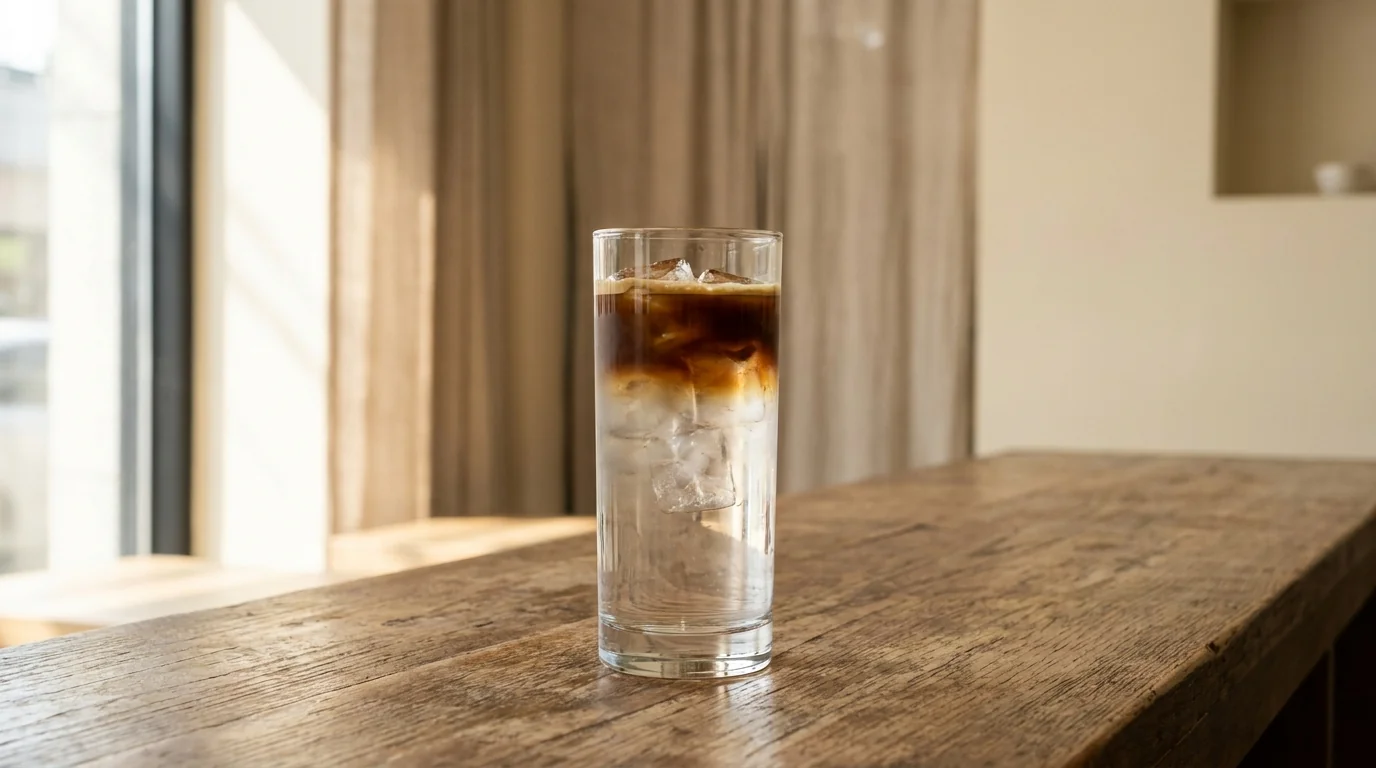
Espresso tonic is one of the few genuinely new drinks in modern coffee culture — a specialty coffee-era invention that has become standard on third-wave café menus worldwide. The concept sounds unlikely (espresso + gin's mixer?) but works surprisingly well, exploiting complementary bitterness between tonic's quinine and coffee's roasted character. It's also one of the easiest café drinks to make at home, requiring only espresso equipment plus a bottle of decent tonic water.
Late 2000s Koppi
popularised by Swedish specialty coffee bar Koppi in Helsingborg; spread globally through third-wave coffee culture from ~2010-2015[3]
Bitterness complements
tonic's quinine and coffee's bitterness are complementary rather than clashing — this is why the drink works[1]
Highball format
served in a tall glass with plenty of ice — refreshing summer alternative to hot coffee or heavier cold coffee drinks[1]
What espresso tonic actually is
The build:
- Ice — filling a tall highball glass. Larger cubes are preferable (slower melting).
- Tonic water — 5-6 oz of cold tonic water poured gently over the ice.
- Optional citrus — a lemon, lime, or orange twist for aromatic accent.
- Espresso — 1 shot (30 mL) or 2 shots (60 mL) of fresh espresso poured slowly on top.
Total volume: approximately 8-10 oz in the glass (depending on ice), served immediately.
The pour matters: the espresso is poured last and slowly, ideally creating a temporary two-layer visual effect (dark espresso on top of clear tonic) before gradual mixing. Some baristas pour the espresso over the back of a spoon to maximise the layering effect.
The drinking experience:
- Initial taste: espresso-forward (top layer).
- Middle: mixed, with tonic effervescence and coffee body.
- Bottom: mostly tonic with coffee accents.
- Dynamic — the drink evolves as you consume it.
The origin story
Modern espresso tonic traces to Sweden and the third- wave specialty coffee movement:
Koppi, Helsingborg, Sweden — a specialty coffee bar founded in 2007 by Anne Lunell and Charles Nystrand — is generally credited as the modern popularizer. In the late 2000s Koppi baristas experimented with espresso in various beverages beyond traditional milk drinks, and the espresso tonic emerged as a distinctive Koppi menu item.
Earlier antecedents: some coffee historians note that various café traditions had experimented with espresso + carbonated water combinations earlier (particularly in Italy and some Australian cafés), but these were scattered practices without codification. Koppi's version — specific highball glass, quality tonic emphasis, careful pour technique — established what became the standard modern approach.
Global spread:
- 2010-2012: the drink spreads through Scandinavian and Northern European specialty coffee culture.
- 2013-2015: major specialty coffee cities (Copenhagen, Berlin, London, New York, Melbourne) add espresso tonic to menus.
- 2015-2020: standard menu item at third-wave cafés globally.
- 2020+: appears at some chain cafés (Blue Bottle, various Starbucks Reserve locations, others).
The drink's rapid adoption reflects specialty coffee culture's willingness to experiment beyond traditional espresso preparations, and consumers' interest in cold coffee alternatives beyond iced lattes and cold brew[4].
Why the combination works
The espresso-tonic combination succeeds through several complementary dynamics:
Complementary bitterness
Complementary bitterness: tonic water contains quinine, a naturally-bitter compound extracted from cinchona bark. Quinine's bitterness is different in character from coffee's bitterness (which comes from chlorogenic acids and Maillard-reaction compounds). The two bitternesses complement rather than clash — creating complex bitterness that's more interesting than either alone.
Sweetness balance
Sweetness balance: most tonic waters contain cane sugar or similar sweeteners (typically 8-10g sugar per 8 oz). This sweetness balances coffee's bitterness without adding heaviness. Unlike sugary sodas or sweetened creamers, tonic sweetness is moderate.
Effervescence enhances aromatics
Effervescence enhances aromatics: carbonation releases volatile aromatic compounds — the CO₂ bubbles carry espresso aroma to the drinker's nose more effectively than still liquid. Coffee aromatics that would fade in a still cold drink stay perceptible in the fizzy espresso tonic.
Temperature and refreshment
Temperature and refreshment: ice-cold serving transforms espresso from a warm intense sip into a refreshing summer beverage. The physical experience is completely different from hot espresso.
Citrus lift: optional citrus peel adds floral, brightening notes that pair well with both quinine and lighter espresso profiles.
Layered drinking experience: as noted above, the drink evolves through consumption — from espresso-forward to tonic-forward — providing a dynamic taste experience[1].
Making a proper espresso tonic
Equipment:
- Espresso machine capable of good espresso.
- Tall highball glass (~10 oz capacity).
- Ice (larger cubes preferable).
- Cold tonic water (quality brands recommended).
- Optional: citrus peeler for garnish.
Ingredients per drink:
- 5-6 oz cold tonic water (quality brand).
- Ice (enough to fill glass ~3/4).
- 1-2 shots fresh espresso (30-60 mL).
- Optional: lemon, lime, or orange peel twist.
Step by step:
- Chill everything. Cold glass, cold tonic, ice all ready before starting.
- Fill glass with ice. Use large clear cubes if available; they melt more slowly. Fill 3/4 full.
- Add tonic water. Pour gently, tilting the glass slightly, to preserve carbonation. Fill to about 5-6 oz level (not to the very top — leave room for espresso).
- Add citrus if using. A twist of lemon or orange peel adds aromatics.
- Pull fresh espresso. Time this so the espresso is ready right when you need it — freshness matters.
- Pour espresso gently and slowly onto the tonic. Try to pour over the back of a spoon or slowly from very close to the surface to create the layered effect. The espresso will float briefly on the tonic before mixing.
- Serve immediately. Present with a straw and a small spoon so the drinker can either sip the layers separately or stir to combine.
Practical notes:
- Don't stir before serving — let the drinker choose to stir or not.
- Warm espresso hitting cold tonic can produce a distinctive appearance (some crema separation).
- If the espresso sinks immediately instead of layering, your pour was too aggressive or the tonic was too vigorously carbonated.
The espresso matters
Espresso tonic showcases the espresso rather than masking it. Espresso quality substantially affects the finished drink:
Best-suited espressos
Best-suited espressos:
- Fruit-forward light-medium roast — bright acidity and fruit character shine with tonic's brightness.
- Ethiopian yirgacheffe or single-origin — floral, citric character complements citrus garnish.
- Kenyan — bright blackcurrant character pairs well with quinine.
- Panama Geisha (if you're feeling extravagant) — the tea-like character is stunning in this format.
- Newer/experimental processing (anaerobic, carbonic maceration) — distinctive character comes through.
Less-suited espressos
Less-suited espressos:
- Very dark roasts — bitter/burnt character can overwhelm and clash with tonic.
- Very old beans (>3 months from roast) — stale espresso is unforgiving in this format.
- Traditional Italian dark espresso blends — designed for milk drinks; can taste muted in tonic.
- Some heavy chocolate/nut profiles — dominated by tonic rather than complementary.
Espresso extraction matters:
- Under-extracted (sour, thin) espresso produces disappointing tonic.
- Over-extracted (bitter, dry) espresso adds harshness to already-bitter tonic combination.
- Well-extracted espresso is essential.
The tonic matters
Tonic water quality substantially affects the finished drink. Not all tonics are equal.
Premium tonic brands
Premium tonic brands (recommended):
- Fever-Tree — the gold standard; several varieties (Indian, Mediterranean, elderflower).
- Q Mixers — high-quality, well-carbonated.
- Fentimans — botanical, complex.
- Franklin & Sons — British premium.
- Betty Buzz — modern natural approach.
- Thomas Henry — European premium.
Standard tonic brands
Standard tonic brands:
- Schweppes — the classic; adequate for espresso tonic but distinctly less complex than premium brands.
- Canada Dry — similar tier to Schweppes.
Avoid for espresso tonic
Avoid for espresso tonic:
- Diet/zero-sugar tonics — lack the sweetness balance that makes the drink work.
- Very old/flat tonic — carbonation matters.
- Very cheap generic tonic — often uses artificial flavours and quinine substitutes.
Specialty tonic variations:
- Mediterranean tonic (Fever-Tree particularly) — with additional botanicals; produces more complex espresso tonic.
- Elderflower tonic — adds floral notes; interesting with Ethiopian espressos.
- Cucumber tonic — some brands; unusual pairing.
- Grapefruit tonic — some brands; bright combination with fruity espressos.
Try 2-3 different quality tonic brands with the same espresso to appreciate how much tonic affects the result.
Variations
Basic espresso tonic: as described above.
Double espresso tonic: 2 shots instead of 1; more coffee-forward, less tonic-dominant.
Long espresso tonic: larger glass, more tonic (8-10 oz), 1 shot espresso; lighter and more refreshing.
Ristretto tonic: ristretto shots (shorter, more concentrated) instead of standard espresso; more intense coffee character.
Cold brew tonic: substitute cold brew concentrate for espresso. Different profile — smoother, less bright, more chocolatey.
Nitrogen tonic: nitro cold brew + tonic; extra creamy mouthfeel.
With flavour syrup: small amount of vanilla, orange, or elderflower syrup added; adds sweetness/complexity.
Alcoholic espresso tonic: small amount (1/2 oz) of gin, vodka, or coffee liqueur added; becomes a cocktail. Genuinely popular at some cocktail bars.
Nutrition and caffeine
Standard espresso tonic (1 shot + 6 oz tonic):
- ~85 calories (mostly from tonic sugar).
- ~20g sugar (from tonic).
- ~63 mg caffeine (single espresso).
- 0g fat, ~0g protein.
Double espresso tonic:
- ~85-95 calories.
- ~20g sugar.
- ~125 mg caffeine.
Compared to other cold coffee drinks:
- Lower calorie than iced latte.
- Similar caffeine to iced latte or standard cold brew.
- Higher sugar than plain iced coffee (from tonic).
- More refreshing/light than heavier cold drinks.
Diet consideration: the tonic sugar means this isn't a low-carb/keto drink. If you want the espresso tonic experience without the sugar, some sugar-free tonic brands work adequately (Fever-Tree Refreshingly Light is a popular option), though the sweetness balance is different.
Common misconceptions
- "Espresso tonic is a cocktail." No alcohol (unless you add it). It's a non-alcoholic coffee drink.
- "Any tonic water works fine." Tonic quality substantially affects the drink. Fever-Tree or similar premium brands are meaningfully different from generic supermarket tonic.
- "It should taste like coffee with a splash of soda." The drink is more complex than that — quinine, sweetness, and carbonation all add specific character.
- "Stir before drinking." Optional. The layered drinking experience is part of the design — try both stirred and unstirred.
- "It's just a trendy fad." It's been on specialty café menus for 15+ years and shows no signs of disappearing. Increasingly standard rather than trendy.
Practical rules
Ordering at cafés:
- Specialty cafés almost universally do good espresso tonic now.
- Chain cafés — variable quality; some do it well.
- Best at bright warm days as a coffee alternative to iced latte.
Making at home:
- Invest in premium tonic (Fever-Tree, Q Mixers).
- Use fresh espresso (within 30 seconds of pull).
- Use plenty of ice (large cubes if possible).
- Pour espresso slowly to layer.
For coffee professionals:
- Espresso tonic showcases espresso quality; use good beans.
- Consider pairing specific espressos with specific tonic varieties for menu development.
- Popular summer offering.
For coffee enthusiasts:
- Great way to experience an espresso beyond hot format.
- Fruit-forward light-medium roasts particularly shine.
- Different tonic brands = different drinks; try several.
Caffeine ceiling:
- Same 400 mg/day general limit applies — a couple of double espresso tonics reaches typical daily intake.
The honest summary
Espresso tonic is a specialty-coffee-era invention combining a shot (or two) of fresh espresso poured over ice and tonic water in a tall glass. Popularised by Swedish specialty coffee bar Koppi in the late 2000s and now standard on third-wave café menus worldwide. The drink works because tonic's quinine bitterness and coffee bitterness complement rather than clash, tonic sweetness balances espresso, carbonation enhances aromatics, and cold temperature creates a genuinely refreshing coffee experience unlike hot espresso or heavier cold coffee drinks. Best with fruit-forward light-medium roast espresso and quality tonic water (Fever-Tree, Q Mixers, Fentimans). Easy to make at home, hard to make badly with decent ingredients, and one of the more distinctive cold coffee drinks in modern café culture. If you haven't tried it, do — particularly with an interesting single- origin espresso.
Frequently asked questions
- What is espresso tonic?
- Espresso tonic (sometimes 'espresso and tonic') is a cold drink combining a single or double shot of espresso poured over ice and tonic water, served in a tall clear glass. The typical build is: fill a highball glass with ice, add tonic water to ~5-6 oz level, gently pour a fresh espresso shot on top, optionally garnish with citrus (lemon or lime twist, orange peel). The espresso layers over the tonic initially before combining. Bitter quinine in tonic and espresso's coffee bitterness complement each other; tonic's sweetness and effervescence add complexity.
- Where did espresso tonic come from?
- The modern espresso tonic drink was popularised by Koppi, a specialty coffee bar in Helsingborg, Sweden, in the late 2000s. Some earlier examples of espresso + tonic exist in various café traditions, but Koppi's version — highball glass, quality tonic, careful pour — established the modern specialty coffee approach that spread globally from around 2010-2015. Now standard on third-wave café menus worldwide, particularly in warmer months.
- Why does espresso and tonic taste good together?
- Several complementary flavour dynamics. Tonic water's quinine bitterness echoes and softens coffee's bitterness rather than clashing. The sweetness in tonic water (from cane sugar in most brands) balances espresso without adding syrupy heaviness. Carbonation extends and elevates coffee aromatics, making the flavour experience more dynamic. Ice keeps the drink refreshingly cold. The result is a light, complex, refreshing drink that showcases high-quality espresso in an unusual context.
- How do you make a proper espresso tonic?
- Standard technique: (1) Fill a tall highball glass (~10 oz capacity) with ice, preferably large clear cubes that melt slowly. (2) Add 5-6 oz cold tonic water. Pour gently to preserve carbonation. (3) Optionally add citrus peel/twist for aromatics. (4) Pull a fresh single shot (30 mL) or double shot (60 mL) of espresso directly into the glass. Pour gently and slowly so the espresso layers on top of the tonic rather than instantly mixing. (5) Serve immediately with a straw and optionally a small spoon for stirring.
- Which tonic water works best?
- Higher-quality tonic waters (Fever-Tree, Q Tonic, Fentimans, Franklin & Sons, Betty Buzz) produce noticeably better espresso tonics than generic supermarket tonic. Look for real quinine (not artificial), real sugar or moderate sweetening, and pronounced carbonation. Some specialty tonic varieties (Mediterranean tonic, elderflower tonic) produce distinctive espresso tonic variations. Avoid diet/zero-sugar tonics for the classic drink — they lack the sweetness balance.
References
Every factual claim in this article is drawn from the sources below. See the source library for how we grade evidence.
- [1]Brewing FundamentalsCoffee Science Foundation · Reference work · Tier 2 · Moderate
- [2]Influence of Water Pressure on the Final Quality of Arabica Espresso CoffeeJournal of Agricultural and Food Chemistry · 2002 · Controlled trial · Tier 2 · Moderate
- [3]CoffeeEncyclopaedia Britannica · Reference work · Tier 3 · Contextual
- [4]Uncommon Grounds: The History of Coffee and How It Transformed Our World (revised edition)Basic Books (Mark Pendergrast) · 2010 · Reference work · Tier 2 · Moderate
Related reading
- Espresso & Coffee DrinksWhat Is Espresso? Pressure, Extraction, the Shot→
- Espresso & Coffee DrinksWhat Is Crema? The Golden Foam on Espresso→
- Brew MethodsCold Brew vs Iced Coffee: The Real Difference→
- Espresso & Coffee DrinksLungo: The Long Espresso Shot Explained→
- Espresso & Coffee DrinksMacchiato: Espresso Marked with a Spot of Milk→
- Espresso & Coffee DrinksThe Origin of Espresso: How Italy Invented the Shot→