Breville Espresso Machines Compared: What Actually Differs
By Coffee Studies Editorial·Published October 12, 2026·5 min read
Quick answer
Breville sells enough espresso machines that the line reads as a ladder, and the prices invite you to assume the expensive ones make better coffee. They mostly do not. What changes as you go up is how many of the jobs the machine does instead of you.
There are four such jobs, and every model in the line is a different combination of them.
The four switches
Does it grind? A built-in grinder makes the machine a complete setup in one footprint. It also means the grinder is sized to fit inside an espresso machine, and that when either half fails you lose both.
Does it tamp? On most models you press the coffee yourself. Tamping unevenly is the most common reason a home shot runs too fast and tastes thin and sour, because water takes the easiest path through the puck rather than passing through all of it.
Does it texture the milk? Either you hold a jug under a steam wand and learn to read it, or the machine does it to a set temperature and foam level and stops.
One boiler or two? A single boiler brews, then switches to steam, then switches back. A dual boiler does both at once.
That is the entire line. Everything else — screens, colours, dials — is interface.
Model by model
Bambino. No grinder, manual steam wand, on-demand heating. The cheapest route to a genuinely good shot if you already own a grinder, and a poor buy if you do not.
Bambino Plus. The Bambino with automatic milk texturing. You set temperature and foam and it stops when it gets there.
Barista Express. The one most people picture. Built-in conical burr grinder, manual tamp, manual steam wand, and a warm-up period before the first shot. The cheapest complete setup in the line and the steepest learning curve, because it hands you both of the manual jobs at once.
Barista Express Impress. The Express with assisted tamping and dosing. Aimed directly at the single most common home mistake.
Barista Pro. The Express with on-demand heating instead of the warm-up wait, and a digital display instead of the dial. Same grinder, same manual tamp, same manual wand.
Barista Touch. The Pro with automatic milk and a touchscreen.
Dual Boiler. Two boilers, so brewing and steaming happen together. No grinder.
Oracle and Oracle Touch. Dual boiler plus built-in grinder plus automatic tamping — every switch set to "the machine does it".
What none of them fix
Across the Barista models the brew hardware is broadly comparable, and espresso quality is governed by pressure at the puck, grind size, dose and the coffee itself[1]. Sensory quality tracks extraction rather than equipment tier[4], and grind is the variable doing most of the work, which is also the one most affected by the grinder rather than the brew group[2].
Two practical consequences:
- A cheaper machine with a good separate grinder usually beats a more expensive one with its built-in grinder set badly. If you are choosing between the Barista Express and a Bambino plus a dedicated grinder at the same total, the second is the better cup and the worse kitchen footprint.
- Stale coffee defeats all of them. No automation compensates for beans roasted three months ago[3].
How to choose
Four questions, in this order:
- Do you already own a burr grinder? If yes, look at the Bambino models first and keep the saving.
- Is your tamping the problem? If your shots are inconsistent and run fast, the Impress is sold to fix precisely that.
- Does the warm-up wait bother you? That is the Pro and above.
- Do you want to learn milk? If not, Bambino Plus at the low end or Barista Touch at the higher one.
Notice that none of those questions is "how much espresso quality do I want". That is not what the ladder sells.
The line, cheapest to dearest
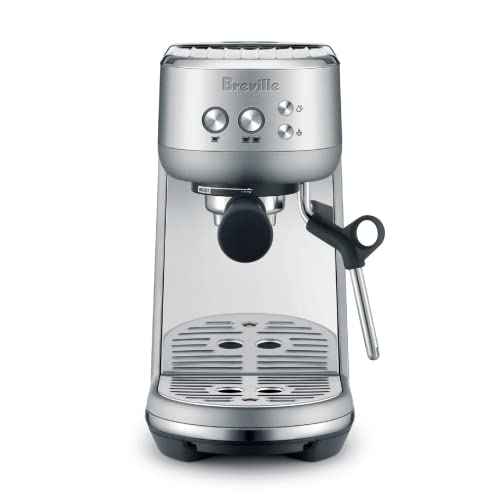 No grinder, manual steam wandBreville BES450BSS Bambino Espresso Machine, Brushed Stainless SteelThe entry point, and the one that assumes you already own a grinder. Heats in a few seconds rather than minutes because it heats water on demand instead of keeping a boiler hot. You texture the milk yourself.amazon.com $249.95 USDamazon.ca $449.99 CADPrice and availability as of View on Amazon
 No grinder, automatic milkBreville BES500BSS Bambino Plus Espresso Machine, Brushed Stainless SteelThe Bambino with the milk decision taken off you: set temperature and foam level and it textures to that, then stops. Still no grinder, so the same caveat applies and the money you save goes into one.amazon.com $399.95 USDamazon.ca $649.99 CADPrice and availability as of View on Amazon
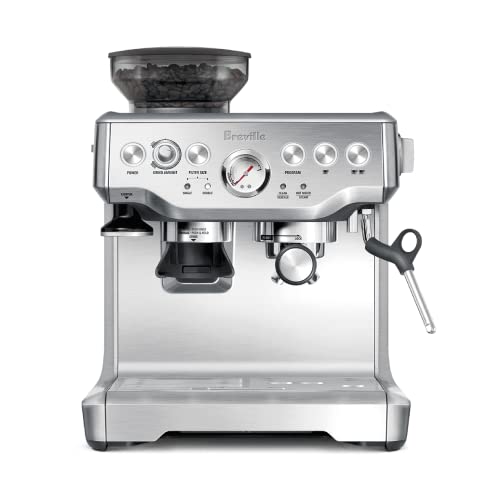 Built-in grinder, you tamp, you textureBreville BES870XL Barista Express Espresso Machine, Brushed Stainless SteelThe one most people mean by "a Breville". Grinder, dose and tamp in one footprint, with both the tamping and the milk left to you, which is the reason it is both the cheapest way into a complete setup and the one with the steepest learning curve.amazon.com $499.95 USDamazon.ca $749.99 CADPrice and availability as of View on Amazon
 Built-in grinder, assisted tampBreville BES876BSS Barista Express Impress, Brushed Stainless SteelThe Barista Express with the tamping assisted rather than freehand, which is aimed squarely at the single most common reason a home shot comes out wrong. Milk is still yours to texture.amazon.com $649.95 USDamazon.ca $1,149.99 CADPrice and availability as of View on Amazon
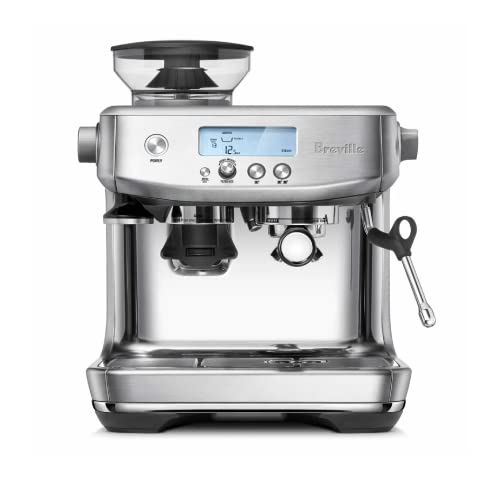 Built-in grinder, fast heat, you textureBreville BES878BSS Barista Pro Espresso Machine, Brushed Stainless SteelThe Barista Express with on-demand heating instead of a warm-up wait, and a digital display in place of the dial. Same manual tamp, same manual steam wand. Buy it for the heat-up time, which is the difference you will feel every morning.amazon.com $629.95 USDamazon.ca $1,199.99 CADPrice and availability as of View on Amazon
 Built-in grinder, automatic milk, touchscreenBreville BES880BSS Barista Touch Espresso Machine, Brushed Stainless SteelThe Barista Pro with milk texturing automated and the controls moved to a screen. Worth the step only if the milk is the part you do not want to learn; the shot itself is not meaningfully different.amazon.com $799.95 USDamazon.ca $1,559.00 CADPrice and availability as of View on Amazon
 Two boilers, no grinderBreville BES920XL Dual Boiler Espresso Machine, Brushed Stainless SteelThe structural change rather than a feature one: two separate boilers, so it brews and steams at the same time instead of switching between them. That matters when you are making several drinks in a row and not much otherwise. No grinder.amazon.com $1,599.95 USDamazon.ca $2,399.99 CADPrice and availability as of View on Amazon
Product prices and availability are accurate as of the date/time indicated and are subject to change. Any price and availability information displayed on Amazon at the time of purchase will apply to the purchase of this product. Certain content that appears on this site comes from Amazon. This content is provided ‘as is’ and is subject to change or removal at any time.
What we have and have not checked
The specifications above are Breville's own, read from their published model descriptions as of October 2026. We have not bench-tested these machines, we do not publish shot timings or temperature traces, and nothing here is a ranking. What this page does is map which model takes which job off you, because that is the question the model names do not answer.
Whichever you end up with, the thing that will actually degrade it over the first year is scale and old coffee oil, not the machine: see cleaning an espresso machine and coffee machine descaler.
Common misconceptions
"The dearer models pull better shots." They take more jobs off you. The extraction hardware across the Barista line is broadly comparable.
"A built-in grinder saves money." It saves counter space. It puts a grinder budget inside an appliance budget, and it ties the two lifespans together.
"Automatic milk is for beginners." It is for people who do not want to learn milk, which is a preference rather than a skill level. It is also the one job on the list that is genuinely hard to do well by hand.
The honest summary
Breville's espresso line is one machine with four switches: grinder or no grinder, you tamp or it assists, you texture milk or it does, one boiler or two. Price tracks how many of those are flipped toward the machine, not how good the espresso can be. Decide which jobs you want to keep, buy the cheapest model that matches, and put whatever you save into the grinder and fresher coffee, which are the two things that do change the cup.
Frequently asked questions
- What is the difference between the Breville Barista Express and the Barista Pro?
- Heating, mainly. The Barista Express uses a thermocoil that needs a warm-up period before the first shot; the Barista Pro heats water on demand and is ready in seconds. The Pro also replaces the Express's dial with a digital display. Both have the same built-in conical burr grinder, both leave tamping to you, and both have a manual steam wand, so the shot you can make on them is the same. You are paying for the wait, which is the difference you notice every morning rather than in the cup.
- What does the Barista Express Impress add over the Barista Express?
- Assisted tamping and assisted dosing. On the standard Express you tamp freehand, and inconsistent tamping is the most common reason a home shot runs fast and tastes sour. The Impress applies the tamp for you with a lever mechanism and helps get the dose right first. Everything else — grinder, steam wand, heating — is the Express. If your shots are inconsistent and you suspect your tamp, that is what the Impress is sold to fix.
- Which Breville espresso machine should I buy?
- Work through four questions rather than a ranking. Do you already own a burr grinder? If yes, the Bambino models are the cheapest way to a good shot. Do you want help tamping? That is the Impress. Do you want the machine ready instantly? That is the Pro or anything above it. Do you want the milk handled for you? That is the Bambino Plus at the low end or the Barista Touch at the high end. Nothing on this list makes better espresso than the others at the same grind and dose.
- Do the more expensive Breville machines make better espresso?
- Not in a way you could taste from the brew group alone. Across the Barista line the extraction hardware is broadly similar, and what rises with price is automation and convenience — faster heat, assisted tamping, automatic milk, a second boiler. The variables that actually change the cup are grind size, dose, and the freshness of the coffee, which is why a cheaper machine with a good separate grinder usually beats a more expensive one with its built-in grinder set badly.
- Is the Dual Boiler worth it over the Barista Touch?
- Only for a specific problem. A dual boiler has one boiler for brewing and one for steam, so it does both at once instead of switching and waiting. That matters when you are making several milk drinks back to back and matters very little if you make one or two. It also has no built-in grinder, so budget for one separately. It is a change in how the machine is built rather than another feature on top.
- Do Breville machines need a separate grinder?
- The Bambino, Bambino Plus and Dual Boiler have no grinder and need one. The Barista Express, Impress, Pro and Touch have one built in. A built-in grinder is a genuine convenience and a genuine compromise: it is sized to fit inside the machine, so a dedicated grinder at the same money will usually be more consistent, and when either half fails you lose both.
References
Every factual claim in this article is drawn from the sources below. See the source library for how we grade evidence.
- [1]Influence of Water Pressure on the Final Quality of Arabica Espresso CoffeeJournal of Agricultural and Food Chemistry · 2002 · Controlled trial · Tier 2 · Moderate
- [2]The effect of bean origin and temperature on grinding roasted coffeeScientific Reports · 2016 · Controlled trial · Tier 2 · Moderate
- [3]Brewing FundamentalsCoffee Science Foundation · Reference work · Tier 2 · Moderate
- [4]Effects of brew strength, brew yield, and roast on the sensory quality of drip brewed coffeeJournal of Food Science · 2020 · Controlled trial · Tier 2 · Moderate
Related reading
- Brewing ScienceEspresso Machine Buying Guide: Choosing the Right Type→
- Coffee EquipmentHow to Clean an Espresso Machine: The Full Guide→
- Coffee EquipmentHow Much to Spend on a Coffee Grinder→
- Coffee EquipmentCoffee Machine Descaler: What It Is and What It Fixes→
- Coffee EquipmentCold Brew Coffee Makers: What You Are Actually Buying→
- Coffee EquipmentPour-Over Coffee Makers: Cone, Flat Bottom, or Chemex→