Bica: Portugal's Espresso, and the Acronym That Isn't True
By Coffee Studies Editorial·Published July 19, 2026·4 min read
Quick answer
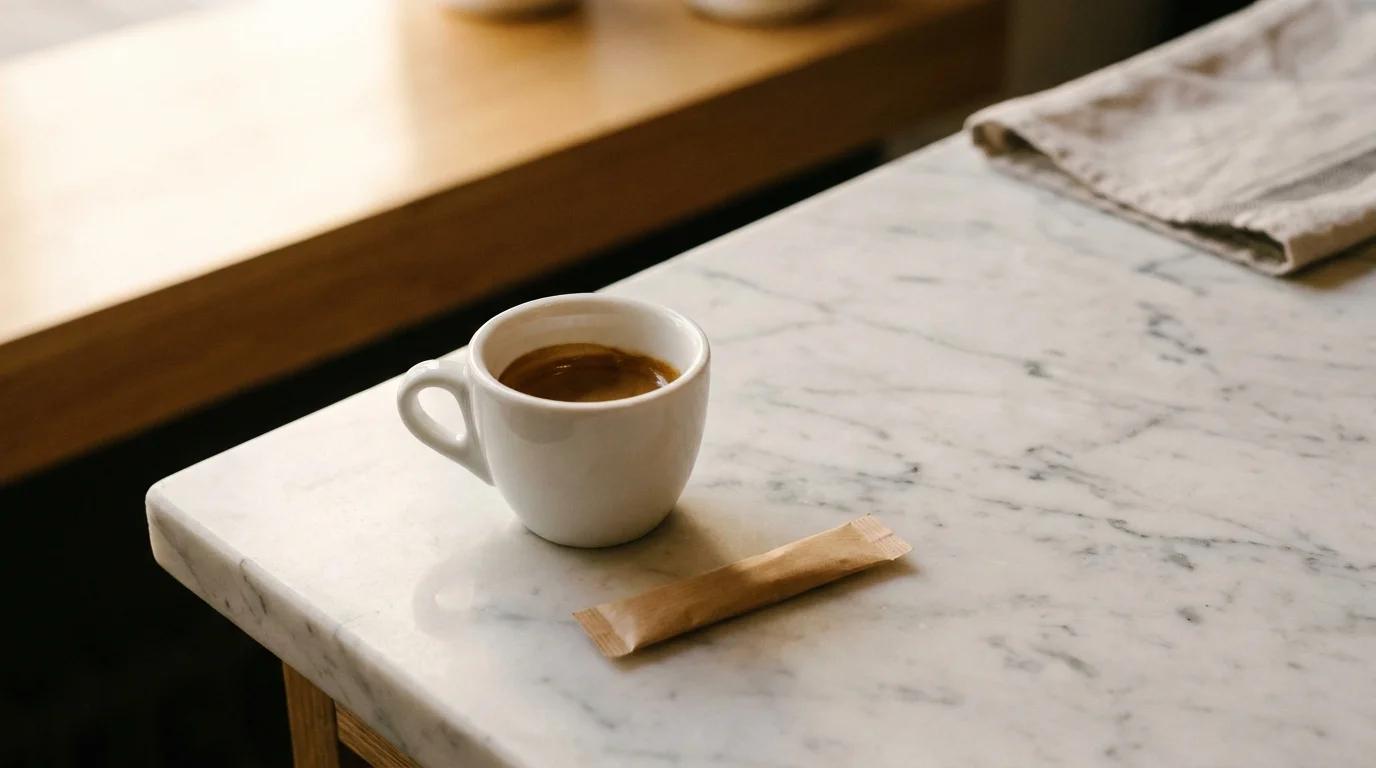
Portugal drinks more coffee per capita than most of Europe and has built one of the most cohesive café rituals on the continent — yet its coffee tradition is almost invisible in the international specialty conversation. The bica at a Lisbon counter, consumed in 90 seconds with a packet of sugar, is a cultural act as codified as the Viennese coffee house or the Japanese kissaten, just considerably less photographed.
Bica — most likely from the Portuguese word for a spout
the popular acronym etymology ('Beba Isto Com Açúcar' — Drink This With Sugar) is almost certainly apocryphal; bica more plausibly derives from the Portuguese word for a water tap or spout, referring to the pour of coffee from an espresso machine — a usage consistent with older Portuguese[4]
Porto calls it cimbalino — named after the La Cimbali machine
in Porto and the north of Portugal, the short espresso is called a cimbalino, derived from the La Cimbali brand of Italian espresso machines that were standard equipment in northern Portuguese cafés; the name reflects the machine rather than the drink, an unusual regional divergence from Lisbon's bica[1]
Galão: always in a glass, always 3:1 milk to espresso
the galão is Portugal's characteristic milky coffee — always served tall in a glass, not a cup, with roughly three parts hot foamed milk to one part espresso; it occupies the same cultural position as the Italian latte or French café au lait but is structurally distinct from both[2]
Coffee's arrival in Portugal
Coffee reached Lisbon through Portugal's position as an Atlantic trading power with connections to the Arabian Peninsula, East Africa, and South America from the early 16th century[1]. Portuguese merchants were operating in the same regions where coffee cultivation was developing — Yemen, Ethiopia, and later Brazil, which became Portugal's primary colony and the dominant source of its coffee supply.
The first Portuguese coffeehouses followed the model established across Europe: places of news, business, and political conversation. Lisbon's Café Brasileira, opened in 1905, became one of the most famous, associated with the poet Fernando Pessoa, whose bronze statue now sits permanently at one of its outdoor tables.
Portugal's colonial relationship with Brazil shaped its coffee supply chain in a way that persists. Brazilian coffee — typically dark-roasted robusta or arabica blends — became the default, establishing the roast profile and flavour expectation that characterised Portuguese café culture through the 20th century[4].
The Portuguese coffee vocabulary
Figure
Portuguese café coffee drinks: approximate cultural frequency
Values in relative order frequency (schematic)
The ritual of the counter
The bica is not a drink to linger over. The standard Portuguese coffee ritual:
- Enter the café
- Stand at the counter (balcão)
- Order — "uma bica, se faz favor" (a bica, please)
- The bica arrives immediately on a saucer with a packet of sugar
- Add sugar, stir, drink in a few sips
- Pay at the counter and leave
The whole transaction takes 2–5 minutes. This is not a café culture of laptops and three-hour sittings. Many Portuguese have a bica mid-morning, another after lunch, and possibly a third in the afternoon — brief, frequent social caffeine rituals spaced through the working day.
The counter ritual has a practical reinforcement: in many Portuguese cafés, the counter price is explicitly lower than the seated table price, creating an economic incentive to drink standing[1].
Roast character
Portuguese coffee is dark-roasted by international specialty standards — comparable to Italian espresso roasts or slightly heavier. This produces:
- High body, heavy mouthfeel
- Low perceived acidity
- Pronounced bitterness in the finish
- Resilience to milk or sugar addition without the coffee flavour being overwhelmed
The dark roast tradition reflects historical practicality: darker roasts are more forgiving of green bean inconsistency and equipment variation, relevant considerations in a culture where a consistent quick cup matters more than origin transparency[2].
Portugal's specialty scene — which does exist, particularly in Lisbon — tends toward lighter roasts and single-origin sourcing for a younger, internationally-aware café audience, but the bica culture it exists alongside is largely unchanged.
Galão, meia de leite, garoto
Portuguese café vocabulary distinguishes milky coffees precisely by container, ratio, and volume:
Galão: Always in a tall glass. Three parts hot foamed milk to one part espresso, filling a 200–250 mL glass. Consumed at breakfast or mid-morning. The glass distinguishes it instantly from anything served in a cup.
Meia de leite: "Half milk." Equal parts coffee and hot milk, served in a ceramic cup. Similar to a French café au lait. Weaker than a bica, milkier than a garoto.
Garoto: A small bica with a dash of milk — the Portuguese macchiato, served in a cup. The milk softens the bitterness without diluting to a galão[2].
The honest summary
The bica is Portugal's short, dark espresso — consumed standing at a café counter, typically with sugar, in under five minutes. The "Beba Isto Com Açúcar" acronym etymology is almost certainly apocryphal; bica more plausibly derives from the Portuguese word for a spout. In Porto, the drink is called a cimbalino after the La Cimbali espresso machines historically standard in northern cafés. Portuguese café culture is built around the bica and the galão — a tall glass of three-to-one milk and espresso. The coffee is dark-roasted, bold, and designed for fast consumption rather than tasting-note analysis. The counter ritual, the sugar, and the brief pause in the working day constitute one of Europe's most cohesive but least-documented café traditions.
Frequently asked questions
- What is a bica?
- A bica is the Portuguese term for a small, short espresso — approximately 25–30 mL of strong coffee served in a ceramic cup. It is the standard coffee order in Lisbon and southern Portugal. In Porto and the north, the same drink is called a cimbalino, named after the La Cimbali espresso machines once common in northern Portuguese cafés. The bica is made by forcing pressurised water through finely ground, dark-roasted coffee — mechanically similar to Italian espresso but typically with a darker roast and a cultural ritual (standing counter, quick consumption, sugar added) that is distinctively Portuguese.
- What does bica stand for?
- The popular explanation — that bica is an acronym for 'Beba Isto Com Açúcar' (Drink This With Sugar) — is a folk etymology associated with Lisbon's Brasileira café, which supposedly posted this phrase to encourage customers reluctant to drink bitter coffee without sweetening. Linguists and coffee historians regard this story as apocryphal. The word bica most likely derives from the Portuguese word for a tap or spout (bica also means a water spout in Portuguese), referring to the drip or pour of coffee from the machine — a usage consistent with older Portuguese.
- What is a galão?
- A galão is a tall Portuguese coffee drink served in a glass, made with approximately three parts hot foamed milk to one part espresso. It is the Portuguese equivalent of a latte but traditionally served in a tall glass rather than a ceramic mug and commonly somewhat sweeter. The galão is distinct from the meia de leite (half milk, half coffee, in a cup) which is shorter and in a cup. Galão is typically served at breakfast or mid-morning.
- How does Portuguese coffee differ from Italian espresso?
- The mechanical process is similar — pressurised water through finely ground coffee — but several elements differ. Portuguese coffee is typically roasted darker, producing a heavier, more bitter cup with less emphasis on acidity or origin character. Sugar is added more routinely (packets are automatically placed on the saucer in most cafés). The social ritual is different: consumption is expected to be quick, standing at the counter, rather than seated. Portuguese café culture is closer to the Italian standing espresso bar than to the sit-down café tradition of France or the UK.
- What are the main Portuguese coffee drinks?
- The main Portuguese café orders are: bica (short espresso, ~30 mL), cimbalino (the Porto name for bica), café cheio (longer pull, more water, weaker — 'full coffee'), meia de leite ('half milk' — coffee with equal milk in a cup), galão (tall milky coffee in a glass, ~3:1 milk to espresso), abatanado (espresso diluted with hot water, similar to Americano), and garoto (small coffee with a dash of milk — similar to macchiato).
References
Every factual claim in this article is drawn from the sources below. See the source library for how we grade evidence.
- [1]Uncommon Grounds: The History of Coffee and How It Transformed Our World (revised edition)Basic Books (Mark Pendergrast) · 2010 · Reference work · Tier 2 · Moderate
- [2]Brewing FundamentalsCoffee Science Foundation · Reference work · Tier 2 · Moderate
- [3]Coffee and Coffeehouses: The Origins of a Social Beverage in the Medieval Near EastUniversity of Washington Press (Ralph S. Hattox) · 1985 · Reference work · Tier 2 · Moderate
- [4]CoffeeEncyclopaedia Britannica · Reference work · Tier 3 · Contextual
Related reading
- Brew MethodsGreek Coffee: The Briki, the Frappe, and the Freddo→
- Brew MethodsHow to Make Turkish Coffee: Cezve, Grind, and Serving→
- Beans, Roasts & OriginsFika: The Swedish Coffee Culture→
- Espresso & Coffee DrinksWhat Is Espresso? Pressure, Extraction, the Shot→
- Beans, Roasts & OriginsKissaten: Japan's Historic Coffee Shop Culture→
- Brew MethodsNitro Cold Brew: How Nitrogen Makes Coffee Creamy→