Café de Olla: Mexico's Traditional Spiced Coffee
By Coffee Studies Editorial·Published July 19, 2026·5 min read
Quick answer
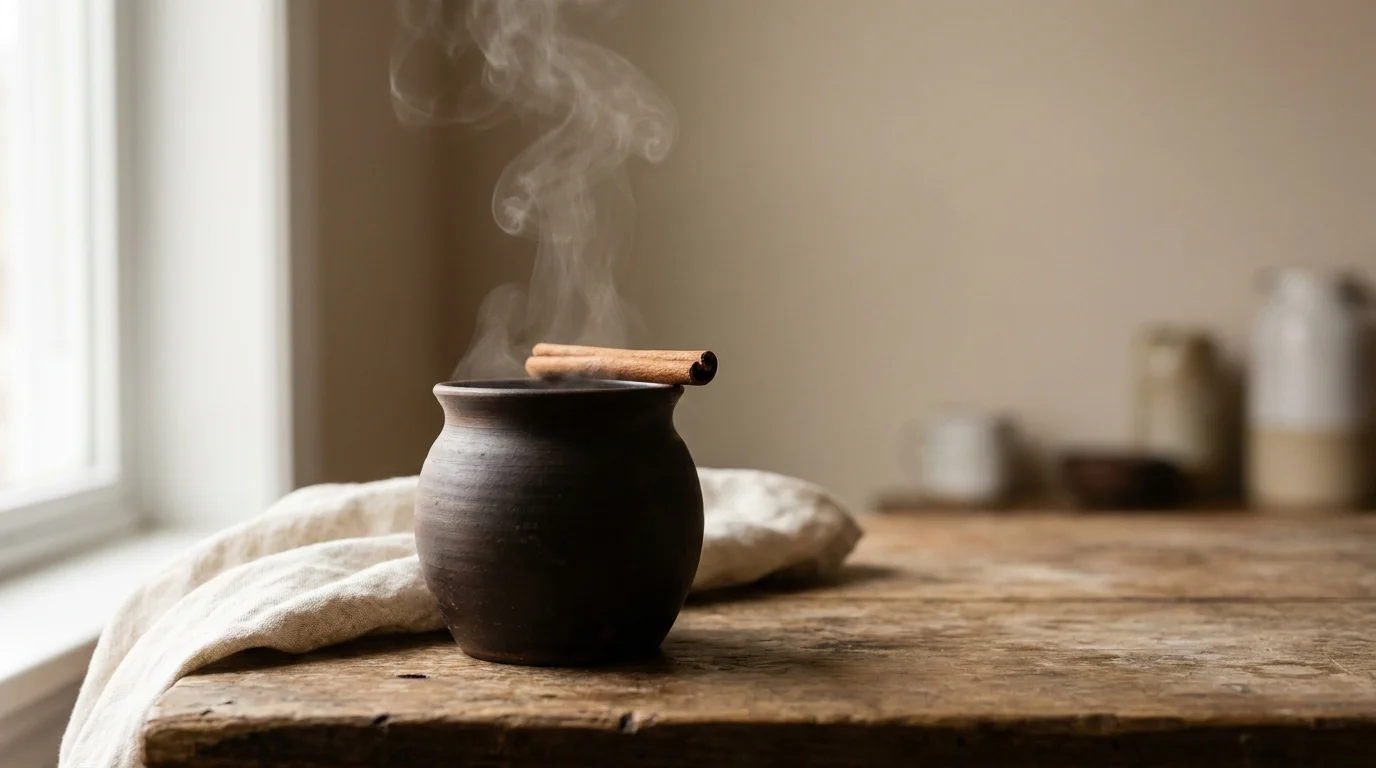
Before Starbucks arrived in Mexico in 1992, before the specialty micro-roasters of Colonia Roma, before the French- press and pour-over cafés of contemporary Mexico City, there was the olla. A clay pot on a wood fire. Piloncillo dissolving in cinnamon-scented water. Coarsely ground coffee added, the mixture simmering until the kitchen smelled of sugar and spice and earth. Café de olla is the coffee Mexico developed for itself — not imported from Europe, not a colonial imposition, but a Mexican synthesis of an Old World crop with New World ingredients.
Piloncillo — unrefined cane sugar, more complex than brown sugar
piloncillo is raw cane sugar compressed into a cone shape, retaining molasses that give it a deeper, earthier sweetness than refined brown sugar; it dissolves directly in the brewing water, flavouring the coffee before any pouring — the sweetness is brewed in, not stirred in at the cup[3]
Canela (Ceylon cinnamon) — softer, sweeter than cassia
traditional café de olla uses Mexican canela — Ceylon cinnamon (Cinnamomum verum), which is softer, more fragrant, and less harsh than the cassia cinnamon common in the United States; the distinction matters: canela infuses the brew with a delicate sweetness while cassia's higher coumarin content would produce a more medicinal flavour[2]
Clay pot alkalinity — thought to soften bitterness
the alkaline mineral content of traditional barro negro or red clay ollas is thought by practitioners to interact with brewing water, reducing perceived bitterness and affecting extraction character; this is consistent with known water chemistry effects on coffee extraction, where alkalinity buffers acidity and moderates bitterness[2]
Coffee in Mexico's history
Coffee was introduced to Mexico during Spanish colonial rule, first cultivated in Veracruz state in the late 18th century[1]. The crop found favourable conditions in the highland regions of Veracruz, Oaxaca, and Chiapas, where altitude, volcanic soil, and rainfall patterns suited arabica cultivation.
Café de olla emerged as coffee moved from colonial estates into domestic Mexican cooking. The clay pot was already central to Mexican cuisine — ollas are used for beans, soups, pozole, and a range of traditional preparations. Applying the olla to coffee was a natural adaptation, and the addition of piloncillo and cinnamon reflected existing flavour traditions in Mexican cooking where unrefined sugar and aromatic spices feature heavily.
The tradition solidified during the 19th century as coffee became more widely available to non-elite households. By the time of the Mexican Revolution (1910–1920), café de olla was already associated with the countryside and the ranchero tradition — the coffee of the rancher, the farmer, the soldadera[3].
The recipe and method
Figure
Café de olla: ingredient proportions for a 1-litre batch
Values in approximate quantity
Step by step:
-
Bring water to a simmer in the clay olla with the piloncillo and cinnamon. Stir until the piloncillo is fully dissolved. If using cloves or anise, add them now.
-
Add coarsely ground coffee to the simmering water. Stir once to ensure even wetting.
-
Simmer gently for 3–5 minutes, not at a full rolling boil. The goal is a steady simmer that extracts the coffee without over-extracting or burning off the aromatics. Watch the temperature — if it boils hard, reduce heat.
-
Remove from heat and rest for 1–2 minutes, allowing the grounds to settle to the bottom of the pot.
-
Strain through a fine metal strainer or a clean cloth (a manta de cielo, or cheesecloth) into cups or a separate serving pot.
-
Serve immediately. Café de olla is best consumed hot, shortly after brewing. It does not improve with extended standing[2].
The cinnamon question: canela vs cassia
The cinnamon used in café de olla matters. Traditional Mexican recipes call for canela — Ceylon cinnamon (Cinnamomum verum), which is the softer, more fragrant species distinct from the cassia (Cinnamomum cassia or C. aromaticum) sold in most US supermarkets.
The differences[3]:
Ceylon cinnamon (canela): Thin, delicate, papery bark with a sweet, light, nuanced flavour. Lower coumarin content than cassia. Infuses brew with a subtle warmth without dominating. Powders easily.
Cassia: Thicker, harder bark with a sharper, more medicinal flavour and higher coumarin content. More commonly available in the United States. Can overpower café de olla if substituted directly.
Canela is widely available in Mexican grocery stores and online. Using cassia will produce a recognisably different and generally less balanced result.
Clay pot chemistry
The use of a clay olla is not purely traditional — it has functional implications for the coffee[2]:
Alkalinity: Unglazed clay contains alkaline mineral compounds — primarily calcium, magnesium, and silicates — that can leach slightly into the brewing water. Alkaline water chemistry buffers acidity and reduces the extraction of bitter phenolic compounds, which may explain the common description of clay-pot coffee as "smoother" or "less bitter" than coffee brewed in metal or glass.
Heat retention: Clay has a high heat capacity and retains heat more evenly than thin metal, moderating temperature fluctuations during simmering.
Seasoning: A well-used clay pot absorbs residual coffee and spice compounds over time, developing a patina that practitioners describe as adding character to subsequent brews — similar to how a seasoned cast-iron pan or clay mole pot develops flavour over time.
Café de olla in contemporary Mexico
Café de olla persists alongside Mexico's growing specialty coffee scene without much overlap between the two. The specialty cafés of Mexico City's Condesa and Roma neighbourhoods serve Chiapas and Veracruz single-origins in AeroPresses and V60 pour-overs. At the same time, in the same city, street stalls and traditional fondas (small family restaurants) serve café de olla from large clay pots to office workers and market vendors at breakfast[1].
The drinks serve different functions. Specialty coffee is about origin, terroir, and craft. Café de olla is about warmth, tradition, and the flavour of Mexican mornings.
The honest summary
Café de olla is a traditional Mexican coffee brewed in a clay pot with piloncillo (unrefined cane sugar cone) and Ceylon cinnamon (canela), sometimes with cloves or anise. The ingredients are simmered together — not poured — and the coffee is strained and served black. The clay pot is functional as well as traditional: its alkaline mineral content affects water chemistry, and clay retains heat differently than metal. The tradition predates modern espresso culture in Mexico and is associated with rural kitchens, family meals, Day of the Dead altars, and street market breakfasts. It coexists alongside Mexico's growing specialty café scene as a distinct cultural institution with different social contexts, different flavour goals, and a 200-year history that no pour-over technique can replicate.
Frequently asked questions
- What is café de olla?
- Café de olla is a traditional Mexican brewed coffee made in a clay earthenware pot (olla de barro). The method involves simmering water in the clay pot with piloncillo (a cone of unrefined brown cane sugar), a cinnamon stick (canela), and coarsely ground coffee — sometimes with additional spices like cloves (clavo), anise seed (anís), or orange peel. The mixture is brought to a simmer, the coffee steeps for several minutes, and the pot's contents are strained through a fine strainer or cloth into cups. The coffee is served black; the piloncillo and cinnamon are already incorporated during brewing.
- What is piloncillo?
- Piloncillo is unrefined raw cane sugar compressed into a cone or truncated cone shape. It is darker than refined white sugar — ranging from golden to dark brown depending on how much molasses is retained — and has a complex, slightly molasses-like flavour more pronounced than standard brown sugar. In café de olla, piloncillo is added to the brewing water before the coffee, where it dissolves and infuses the brew. The result is coffee sweetened with an earthy, caramel-toned sugar rather than plain sucrose, which contributes to the distinctive flavour profile. Piloncillo is available in Mexican and Latin American grocery stores internationally.
- Why is the clay pot important?
- The clay olla is not merely traditional; it affects the brew in several ways. The clay is slightly alkaline and porous, and its mineral content is thought to interact with the water — some practitioners describe the clay as 'softening' the coffee's bitterness, similar to how mineral content in water affects extraction. The clay also retains heat differently from metal, maintaining a more even, lower temperature that avoids rapid boiling. The porous surface absorbs a small amount of the coffee and spice aromatics over time, so a well-seasoned olla develops its own character with use.
- How is café de olla different from other Mexican coffee?
- Mexico also has a specialty espresso café culture (primarily in Mexico City, Guadalajara, and Oaxaca) and a commercial drip coffee culture, but café de olla is the pre-modern tradition — the coffee of the campo (countryside), the home kitchen, and the street market. It is consumed throughout Mexico but most strongly associated with rural and traditional contexts. The specialty café scene and café de olla coexist without much overlap: the specialty world focuses on single-origin Chiapas or Veracruz arabica with precision brewing; café de olla uses a blend or medium-quality ground coffee with spices in a clay pot.
- When is café de olla served?
- Café de olla is served at breakfast — especially with tamales, pan dulce (sweet bread), or atole — and is associated with communal gatherings, family occasions, and rural hospitality. It appears on Day of the Dead (Día de los Muertos) altars as an offrenda (offering) for deceased family members who enjoyed it in life. At markets and food stalls, café de olla is sold from large clay pots or clay-inspired vessels. In contemporary Mexican restaurants, it is often served as an expression of culinary heritage or alongside traditional dishes.
References
Every factual claim in this article is drawn from the sources below. See the source library for how we grade evidence.
- [1]Uncommon Grounds: The History of Coffee and How It Transformed Our World (revised edition)Basic Books (Mark Pendergrast) · 2010 · Reference work · Tier 2 · Moderate
- [2]Brewing FundamentalsCoffee Science Foundation · Reference work · Tier 2 · Moderate
- [3]CoffeeEncyclopaedia Britannica · Reference work · Tier 3 · Contextual
Related reading
- Beans, Roasts & OriginsMexican Coffee: Chiapas, Oaxaca, and Cup Profile→
- Brew MethodsHow to Make Turkish Coffee: Cezve, Grind, and Serving→
- Espresso & Coffee DrinksWhat Is Café Cubano? Cuban Espresso with Sugar→
- Beans, Roasts & OriginsThe Ethiopian Coffee Ceremony: Jebena, Ritual, and Culture→
- Espresso & Coffee DrinksIrish Coffee: Whiskey, Cream, and Hot Coffee→
- Brew MethodsPhin Coffee: How Vietnam's Single-Cup Filter Works→