Coffee Oil for Skin: Oil, Extract and Caffeine Explained
By Coffee Studies Editorial·Published November 3, 2026·3 min read
Quick answer
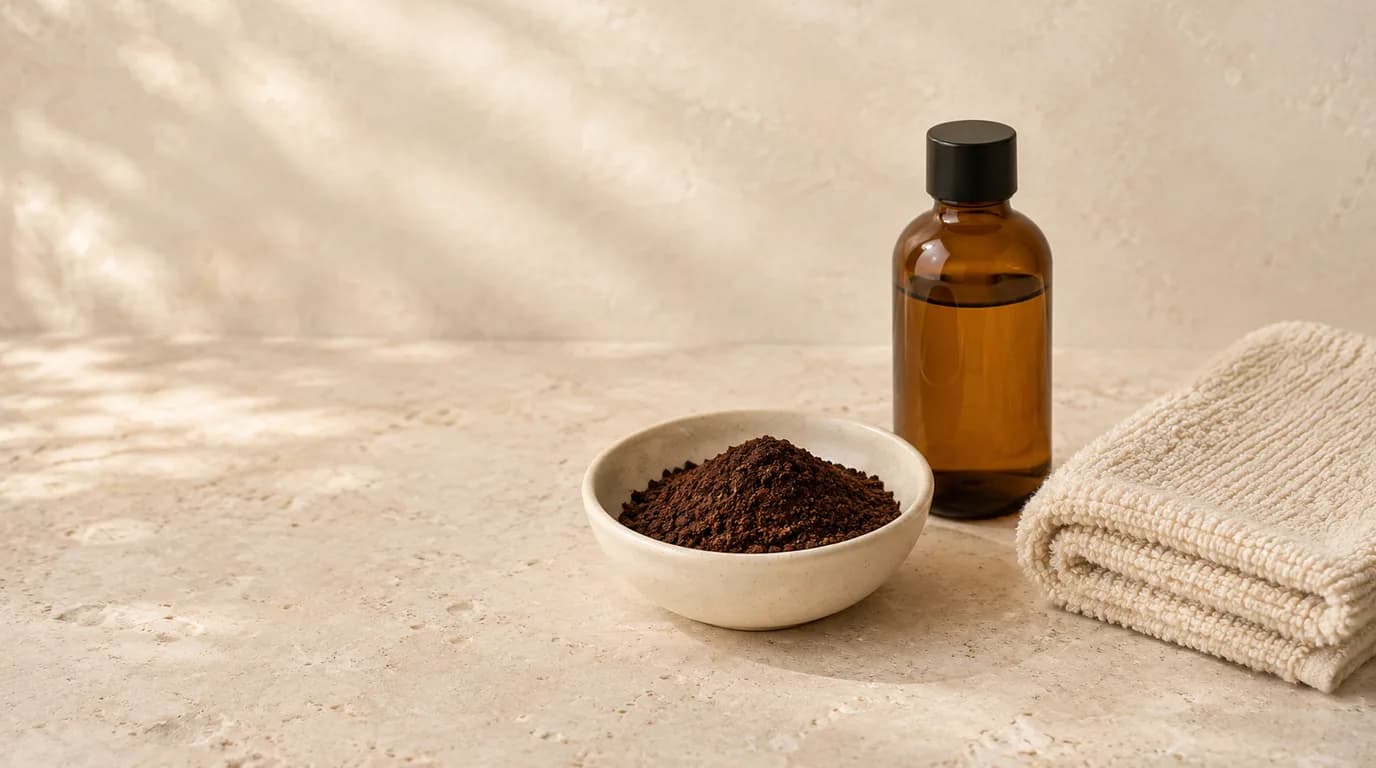
A bottle can say “coffee” and still be very different from the product beside it. One contains oil from the bean. Another contains an extract. A third lists caffeine separately.
Before comparing benefits, turn the bottle over. Finding the ingredient's actual name is more useful than choosing the most enthusiastic description on the front.
Three ingredients to keep separate
| Label wording | What to check next |
|---|---|
| Coffea arabica seed oil | Is this a single oil or one ingredient in a finished cream or oil blend? |
| Coffee seed extract | Does the manufacturer explain the extract or disclose a standardized composition? |
| Caffeine | Is the concentration disclosed, and is the product intended for the area you want to use it on? |
Origins, for example, lists both coffee seed oil and caffeine in its GinZing eye cream. That is a practical reminder not to treat those label terms as synonyms.[1]
An ingredient list is a starting point, not a complete chemical analysis. We would not infer a caffeine percentage simply from the presence of coffee oil or extract.
What the oil research tells us
A 2009 study examined green coffee oil in cultured human skin cells and an ex vivo skin model. It found changes involving extracellular-matrix components and water-channel expression. These were laboratory findings, not a trial showing that people applying a retail face oil developed fewer wrinkles.[2]
A later study assessed the compatibility of cosmetic formulations containing green coffee oil and reported good compatibility under its experimental conditions. That supports further formulation work; it does not establish that every coffee oil is suitable for every person's skin.[3]
If you see those studies used to promise “collagen rebuilding,” ask whether the seller has moved from a laboratory result to a much stronger consumer claim. The study setting matters as much as the ingredient name.
How to compare a face oil without overcomplicating it
Start with the intended use. A cosmetic face oil, a fragrance product and a food ingredient are different purchases. Check whether the bottle is a pure oil or a blend, how much you receive, and the manufacturer's directions.
Then ask a personal question: do you want an oil step at all? If you already like your routine, a new coffee ingredient is not automatically something missing from it. Buying a smaller size can be more sensible than committing to a large bottle because the cost per milliliter looks attractive.
We have not selected an Amazon coffee oil for this guide yet. The eye-care options in cream versus serum are finished products with a different purpose; do not buy one as a substitute for a face oil just because both mention coffee.
Coffee oil is not sunscreen
Do not count a coffee oil as sun protection because the description mentions antioxidants. The AAD recommends choosing a sunscreen with broad-spectrum protection, SPF 30 or higher and water resistance.[4]
Likewise, do not transfer findings about drinking coffee to a topical oil. The coffee and skin guide separates those questions.
Where to go next
For a physical exfoliant, read coffee scrub benefits. For a coffee-themed eye cream, see the 100% PURE ingredient guide. Each product needs to earn its place on its own terms; “contains coffee” is a connection, not a verdict.
References
Every factual claim in this article is drawn from the sources below. See the source library for how we grade evidence.
- [1]GinZing Brightening Eye Cream with Vitamin C and Niacinamide: product informationOrigins · 2026 · Reference work · Tier 3 · Contextual
- [2]Effect of green Coffea arabica L. seed oil on extracellular matrix components and water-channel expression in in vitro and ex vivo human skin modelsJournal of Cosmetic Dermatology / UNESP repository · 2009 · Reference work · Tier 2 · Moderate
- [3]Integrated approach in the assessment of skin compatibility of cosmetic formulations with green coffee oilInternational Journal of Cosmetic Science · 2015 · Reference work · Tier 2 · Moderate
- [4]How to select a sunscreenAmerican Academy of Dermatology · 2026 · Agency guidance · Tier 1 · Strong
Related reading
- Caffeine SkincareDoes Caffeine Eye Cream Work? What to Expect→
- Coffee BeautyCoffee Scrub Benefits: Smoother Skin, Realistic Expectations→
- Caffeine SkincareCaffeine Eye Cream vs Serum: Choosing a Formula→
- Coffee Beauty100% PURE Coffee Bean Eye Cream: What to Check→
- Coffee BeautyCoffee Body Scrubs: Choosing the Right Format→
- Coffee BeautyCoffee Skin Benefits: Drinking It vs Applying It→