Coffee Shop Equipment List: What You Need, and What You Don't
By Coffee Studies Editorial·Published October 13, 2026·5 min read
Quick answer
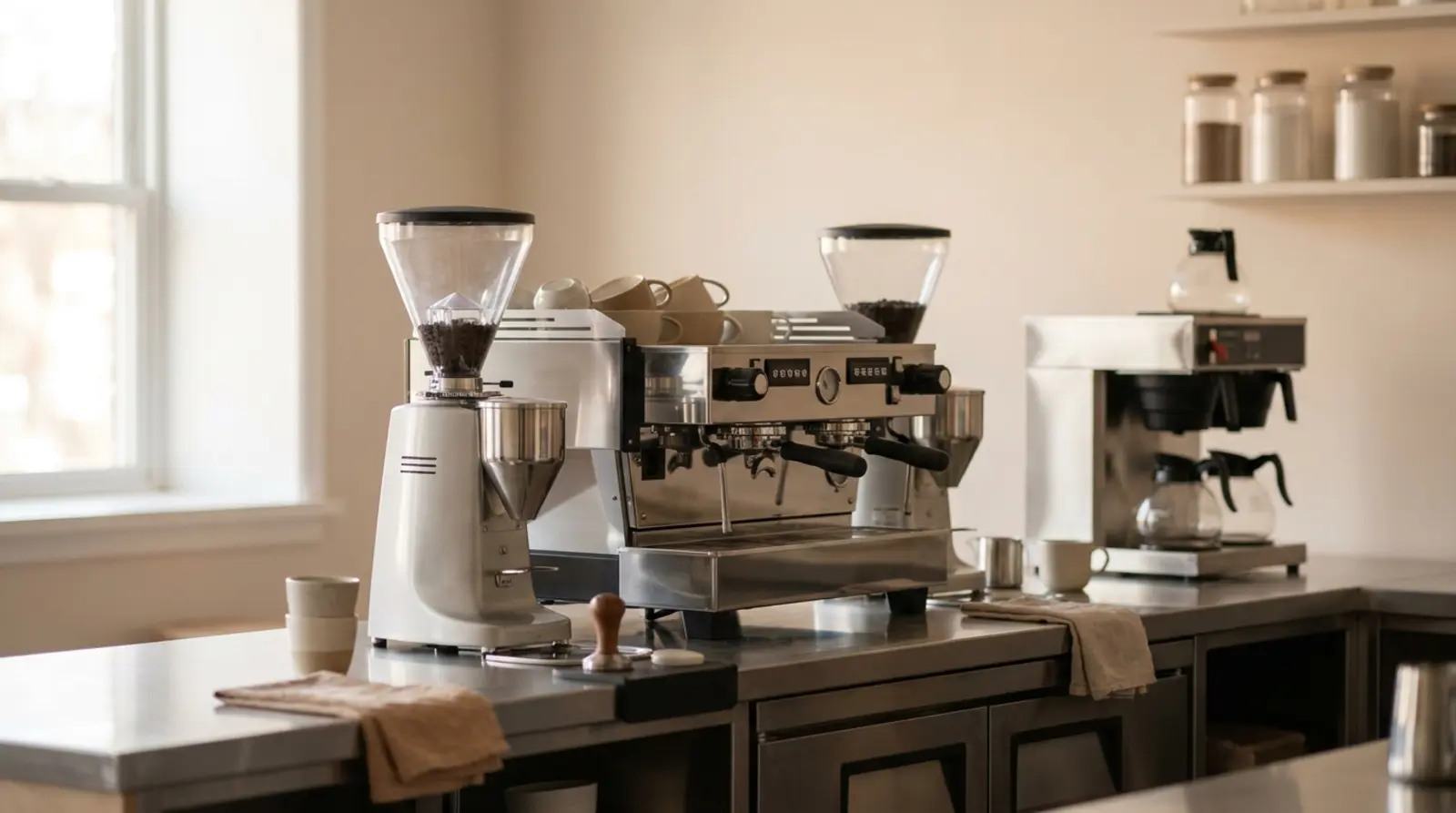
Most equipment lists for a cafe are a shopping list with prices attached. The prices are the least useful part, because they move and because the real decisions are elsewhere.
Two things actually shape the list: who you have to buy each item from, and what your building will physically allow.
The split that matters: dealer or ordinary purchase
Through a dealer: espresso machine, espresso grinders, refrigeration, ice machine, anything plumbed or hard-wired.
Not because online is dearer. Because of what you are buying alongside the metal. A two-group machine wants a water line, a drain and usually a dedicated circuit. On most commercial machines the warranty is void if it was not commissioned by an authorised technician. And when it fails mid-service on a Saturday, what you need is a phone number and someone who stocks the part, which is the half of the purchase that never appears on the invoice.
Ordinary purchase: smallwares, knock boxes, pitchers, tampers, scales, cleaning chemicals, blenders, and the bottom tier of batch brewing. No installation, no commissioning, no service contract. Paying dealer margin here is money lit on fire.
The split moves if you have no plumbing. A cart or kiosk buys almost everything itself, which is the real reason that format starts an order of magnitude cheaper — see mobile coffee carts.
The list, station by station
Espresso bar
- Espresso machine, two-group for most shops: $8,000–$25,000 new
- Espresso grinders, two: $1,200–$3,000 each
- Knock box, tamper, distribution tool, pitchers, thermometers
Brewed coffee
- Batch brewer: $1,500–$4,000 plumbed; a few hundred for a decanter brewer
- Airpots or thermal servers
- A manual brew bar, if the menu justifies one
Cold
- Blender, if you serve blended drinks
- Cold brew vessel, or a nitro tap if you are committing to it
- Ice machine, which is plumbed and therefore a dealer item
Refrigeration
- Under-counter reach-in behind the bar for milk: $2,000–$5,000
- Display fridge for food, if you sell it
Front of house
- POS, card terminal, receipt printer, cash drawer
- Scales for dosing
Water
- Filtration or treatment, sized to your supply
The part of the list you simply buy
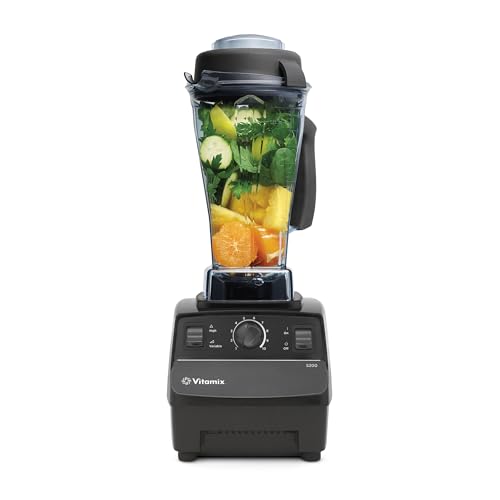 Bar blender for frozen and blended drinksVitamix 5200 Professional-Grade Blender, 64 oz. Container, BlackThe blender most cafes end up with, because the motor survives being run forty times a day and the container is cheap to replace when it eventually goes. A domestic blender does not last a service in a commercial bar.amazon.com $444.99 USDamazon.ca $729.95 CADPrice and availability as of View on Amazon
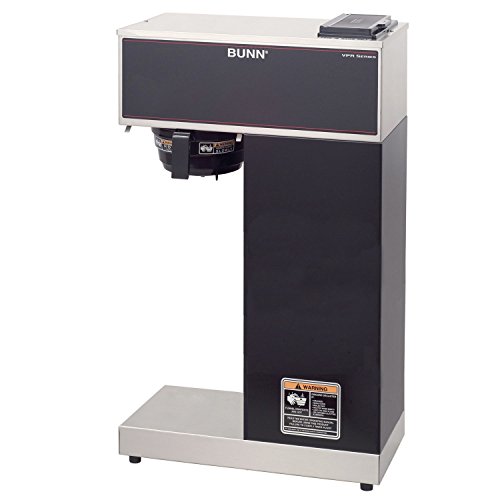 Pour-over batch brewer, two warmersBUNN 33200.0010 VPR APS Commercial Pour Over Air Pot Coffee Brewer (120V/60/1PH)The low end of real commercial brewing: a decanter brewer you fill by hand rather than a plumbed machine. It is the brewer a cart, kiosk or office runs on, and the one tier of batch brewing you can actually buy online instead of through a dealer.amazon.com $490.00 USDamazon.ca $1,117.35 CADPrice and availability as of View on Amazon
 Floor-standing knock box for a working barHOMEE 18L Floor Standing Espresso Coffee Knock Box with 25 Garbage BagsA counter knock box fills in an hour on a real bar. The floor-standing version is the one that survives a shift, and it is smallware you buy online rather than from an equipment dealer.amazon.com $66.99 USDamazon.ca $85.99 CADPrice and availability as of View on Amazon
 Scale with a timer, 0.1gMaestri House S2 Espresso Coffee Scale with Timer 0.1g Precision Shot ScaleDose and ratio are the two variables you can fix for free, and neither is fixable by eye: a scoop of beans varies by several grams depending on bean size and how it was filled. A timer on the same device means you are reading one instrument instead of two.amazon.com $30.39 USDamazon.ca $49.99 CADPrice and availability as of View on Amazon
 Bulk cleaning powderUrnex Espresso Machine Cleaning Powder - 566 grams - Cafiza Professional Espresso Machine CleanerThe same detergent commercial bars backflush with, in a quantity that lasts a home machine years. Cheaper per clean than tablets if you are backflushing weekly, and it is the powder most machine manuals name as an accepted alternative.amazon.com $19.89 USDamazon.ca $47.52 CADPrice and availability as of View on Amazon
Product prices and availability are accurate as of the date/time indicated and are subject to change. Any price and availability information displayed on Amazon at the time of purchase will apply to the purchase of this product. Certain content that appears on this site comes from Amazon. This content is provided ‘as is’ and is subject to change or removal at any time.
The two limits that decide it before budget does
These are the ones discovered late and expensively.
Electrical. A standard 15-amp 120-volt circuit carries 1,800 watts at absolute maximum, and codes derate continuous loads to 80% of that — about 1,440 usable watts. A two-group espresso machine alone commonly draws several thousand, on 208 or 240 volts, which is a different circuit entirely. Grinders, a blender, refrigeration and an ice machine all want their own supply. What your panel can deliver determines your menu, and upgrading service in a leased unit is slow, expensive and sometimes refused by the landlord.
Water. Scale destroys boilers, and hardness varies enormously between municipalities and even between buildings. Treatment is not optional in a hard-water area; it is the difference between a machine lasting a decade and a machine needing a boiler at year three. Have the supply tested before specifying the machine, not after.
Neither of these appears on a shopping list, and both can invalidate one.
New or used
Used is the largest controllable saving available to a first-time owner, commonly 40 to 60 percent off the equipment line, and the stock comes from cafe closures and restaurant liquidators.
Where used is sensible: espresso machines and grinders. These are built to be rebuilt, parts are available for decades, and a technician can tell you in an hour what a machine needs. Budget for a service immediately on purchase and treat that as part of the price.
Where used is a false economy: refrigeration. A compressor near the end of its life fails during a heatwave, takes your milk with it, and can fail an inspection. The saving is small and the downside is a day of lost trade.
What you can open without
First-time owners routinely buy ahead of the menu. A blender, a second grinder, a nitro tap, a display fridge and an ice machine can usually all wait until demand justifies them, and deferring them keeps cash for the thing that actually determines survival, which is having enough runway to trade through a slow first year[2].
What cannot wait is anything an inspector will look for: a handwash sink, refrigeration that holds temperature, and water treatment where the supply demands it.
The industry's own cost structure makes this point for you. Coffee shops run thin, with the margin sitting in labour and rent rather than in the drinks[1], so equipment bought before it earns is working capital you no longer have.
Common misconceptions
"A bigger machine makes better coffee." A three-group machine makes more coffee at once. It does not make better espresso than a well-maintained two-group, and it costs more to buy, power and service.
"Buy everything new so nothing breaks." New equipment fails too, and a serviced used machine from a reputable technician is often more reliable than a new one nobody has commissioned properly.
"The espresso machine is the decision." The grinder is at least as determining for what ends up in the cup, and the electrical supply determines both.
"Smallwares are a rounding error." Pitchers, cups, lids, sleeves and cleaning chemicals commonly run $2,000–$5,000 at open, and the consumables among them recur forever.
The honest summary
Read the list by who you buy from, not by price. The espresso machine, the grinders and the refrigeration come through a dealer because commissioning, warranty and service are most of what you are paying for. Everything else is an ordinary purchase and should be priced like one.
Then check the two things that can invalidate the whole plan before you specify anything: what the electrical panel will carry, and what the water will do to a boiler. Both are cheap to establish early and ruinous to discover late.
For what the rest of the build costs around this list, see how to open a coffee shop.
Frequently asked questions
- What equipment do you need to open a coffee shop?
- The core list is an espresso machine (two-group for most shops), two espresso grinders so you are not regrinding between beans, a batch brewer for drip, under-counter refrigeration for milk, a blender if you serve cold drinks, a POS with a card terminal, water filtration, and smallwares — pitchers, tampers, a knock box, scales, cups. A shop can open without the blender and without a second grinder; it cannot open without refrigeration, water treatment or a POS.
- How much does coffee shop equipment cost?
- For a small independent cafe, the equipment line usually runs $20,000 to $60,000 new, inside a total build of roughly $80,000 to $300,000. The espresso machine and grinders are typically half of it. Buying used from a cafe closure or restaurant liquidator commonly cuts the equipment line by 40 to 60 percent, which is the single largest controllable saving available to a first-time owner.
- What coffee shop equipment can you buy online?
- Smallwares, knock boxes, pitchers, tampers, scales, cleaning chemicals, blenders and the bottom tier of batch brewing — anything with no installation and no service contract. What should not be bought online is the espresso machine, the grinders and the refrigeration: those need commissioning, and on most commercial machines the warranty is void if an authorised technician did not install it.
- Do you need two grinders in a coffee shop?
- If you run a second bean — a decaf, or a single origin alongside your espresso blend — then yes, because the alternative is purging the grinder between every pair of drinks, which wastes coffee and time at exactly the moment you have neither. A shop running one bean can open with one grinder and add the second when the menu grows.
- What is the most expensive piece of coffee shop equipment?
- The espresso machine, usually by a wide margin: $8,000 to $25,000 new for a two-group, and more for a three-group or a machine with pressure profiling. Grinders are next at $1,200 to $3,000 each. Together they are commonly half the equipment budget, which is why the used market for both is so active.
- What coffee shop equipment can you skip at opening?
- More than most first-time owners expect. A blender, a second grinder, a nitro tap, a display fridge and an ice machine can all usually wait until the menu justifies them. What cannot wait is anything that fails an inspection — a handwash sink, refrigeration that holds temperature, and water treatment if your supply demands it.
References
Every factual claim in this article is drawn from the sources below. See the source library for how we grade evidence.
- [1]Coffee & Snack Shops — US Industry Report (IBISWorld, NAICS 722515)IBISWorld · 2024 · Industry report · Tier 3 · Contextual
- [2]Small Business Facts: Survival RatesU.S. Small Business Administration Office of Advocacy · 2023 · Government data · Tier 3 · Contextual
Related reading
- Coffee BusinessHow to Open a Coffee Shop: Costs, Steps, What to Expect→
- Coffee BusinessCoffee Shop Profit Margin: What the Numbers Show→
- Coffee BusinessMobile Coffee Cart: Costs, Formats, and What to Expect→
- Coffee BusinessHow to Start a Coffee Roastery→
- Coffee BusinessWhy Coffee Got So Expensive→
- Coffee BusinessCoffee Shop Franchise vs. Independent: Cost and Trade-offs→