Mobile Coffee Cart: Costs, Formats, and What to Expect
By Coffee Studies Editorial·Published July 18, 2026·7 min read
Quick answer
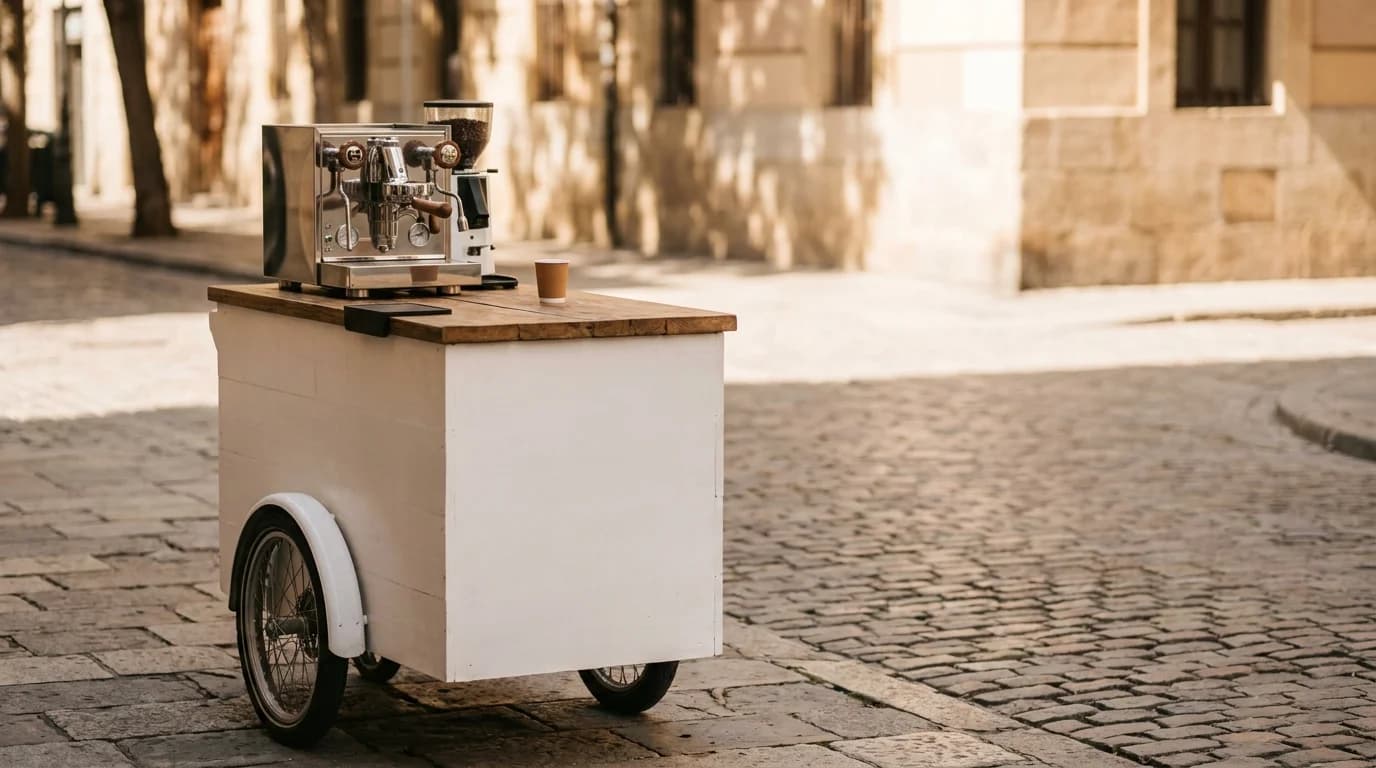
A mobile coffee business solves the biggest fixed cost of a brick-and-mortar café: rent. Instead of committing to a long-term lease in a specific location, you go where customers are. The trade-off is lower equipment capacity, weather exposure, permit complexity, and the constant problem of finding and securing good locations.
The "mobile coffee" category has three meaningfully different formats: carts, kiosks, and trucks. They differ in cost, flexibility, capacity, and operational requirements.
$5k–$20k
startup cost for a mobile coffee cart setup — the lowest entry point in the coffee business, with meaningful income possible from a well-positioned cart in high foot traffic[1]
Location is everything
a coffee cart in a high-foot-traffic location (office tower lobby, transit hub, farmers market, event venue) can generate $300–$500/day; the same cart in a low-traffic spot may not cover costs[3]
$75k–$200k for a truck
a fully equipped coffee truck is a much larger investment than a cart or kiosk — the business case depends on consistent access to high-revenue events or a strong catering client base[1]
The three formats
Cart
A coffee cart is a portable unit — typically a push cart, bike cart, or small trailer — that can be transported to different locations. They range from a simple folding table with a portable espresso machine to a purpose-built stainless cart with a built-in espresso station.
What you need: cart ($800–$5,000), compact commercial espresso machine ($2,000–$8,000), grinder ($800–$2,000), thermos for hot water, cooler for milk, generator or access to power, serving supplies.
Who this works for: farmers markets, festivals and events, office buildings (with landlord permission), outdoor markets, pop-up residencies. The cart format works best as an events business or a seasonal operation rather than a daily fixed location (for which a kiosk is better suited).
Key limitation: equipment capacity. A cart cannot run at the volume of a café or kiosk. Milk storage is limited to a cooler, power may depend on a generator, and a single operator can typically serve 40–80 drinks per hour.
Kiosk / drive-through cabin
A coffee kiosk is a small, semi-permanent structure built for a specific location — often a standalone drive-through cabin in a parking lot, a small unit in a transit station, or a leased space in a food hall or office tower lobby.
What you need: kiosk structure ($15,000–$60,000 for a purpose-built unit), commercial espresso equipment ($12,000–$25,000), refrigeration, electrical and plumbing connection to the building or a utility hookup, POS system.
Who this works for: operators who want the lower overhead of a small footprint with the stability of a fixed location. A drive-through kiosk in a well-trafficked commercial or suburban location is a viable business model — lower rent than a full café, lower startup cost than a truck, but plumbing and power make it significantly better-equipped than a cart.
Key advantage: consistent location means consistent customer base. Regulars build habits. Revenue is more predictable than an event-based model.
Truck
A coffee truck is a fully equipped food truck converted or purpose-built for coffee service. It can park at different locations, drive to events, and potentially hold a permanent licensed spot in a municipality that allows food trucks.
What you need: truck or van ($20,000–$80,000 for the vehicle), conversion/build-out ($30,000–$100,000), commercial espresso equipment, plumbing and electrical, generator or shore power connection, wrap/branding, commissary kitchen agreement (required in most jurisdictions — food trucks must have a licensed commercial kitchen for prep and cleaning).
Who this works for: event-focused operators with a strong catering client list (corporate events, weddings, festivals), or as a brand extension for a roastery or café that wants mobile presence. A coffee truck as a standalone primary business is challenging — events are irregular, the vehicle requires maintenance, and the investment is significant.
Startup cost comparison
Figure
Mobile coffee format startup costs (approximate CAD)
Values in CAD
What a cart actually runs on
A cart is the one coffee format where you buy essentially everything yourself, because there is nothing to plumb and nothing to commission. That is the real reason the cart tier starts an order of magnitude below a shop build-out: you are not paying for installation, and you are not paying dealer margin on equipment that needs a service contract.
What that leaves you sourcing:
- Brewing. If you are pulling espresso, a compact commercial machine is still a dealer purchase on warranty grounds. If you are serving batch coffee, a decanter brewer with its own warmers is the whole machine, and it is bought like any other appliance.
- Grinding. A conical burr grinder. On a cart the constraint is usually power draw rather than throughput — see grinder tiers.
- Blended drinks, if you serve them. The motor is what you are paying for; domestic blenders do not survive a service.
- Smallwares. Pitchers, a knock box, a scale, cleaning chemicals. Unglamorous, and the category where paying dealer prices is pure waste.
Power is the constraint that decides the list. A generator or a single 15-amp draw will not run a two-group machine and a grinder and a blender at once, which is why many carts settle on batch brew plus one blended option rather than a full espresso bar.
Choosing the machine itself, and why a cart is the one place a single-group crossover makes sense, is covered in choosing an espresso machine for a small coffee shop.
The cart build, minus the espresso machine
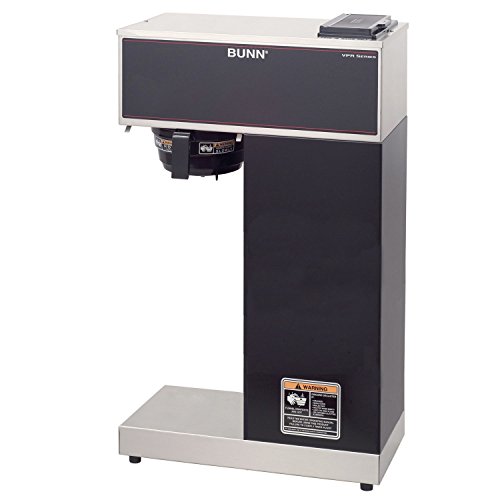 Pour-over batch brewer, two warmersBUNN 33200.0010 VPR APS Commercial Pour Over Air Pot Coffee Brewer (120V/60/1PH)The low end of real commercial brewing: a decanter brewer you fill by hand rather than a plumbed machine. It is the brewer a cart, kiosk or office runs on, and the one tier of batch brewing you can actually buy online instead of through a dealer.amazon.com $490.00 USDamazon.ca $1,108.32 CADPrice and availability as of View on Amazon
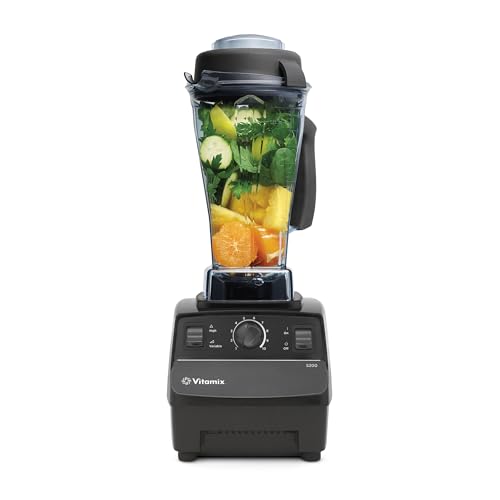 Bar blender for frozen and blended drinksVitamix 5200 Professional-Grade Blender, 64 oz. Container, Black | Kitchen Appliance for Smoothies, Soups and More, Variable Speed, Self-Cleaning, High Speed Switch, Stainless BladesThe blender most cafes end up with, because the motor survives being run forty times a day and the container is cheap to replace when it eventually goes. A domestic blender does not last a service in a commercial bar.amazon.com $474.99 USDamazon.ca $729.95 CADPrice and availability as of View on Amazon
 Manual burr grinderCEVING Mini Manual Coffee Grinder With 40 Adjustable Settings, Black | Portable Hand Coffee Bean Mill with Ceramic Conical Burrs, 30g Capacity, Ideal for Travel, Camping, French Press, Pour OverA hand grinder gets you real burrs for the price of a blade grinder, with the trade that you turn the handle. For one or two cups a day the time cost is under a minute and the particle distribution is in a different class from a blade.amazon.com $17.99 USDamazon.ca $24.25 CADPrice and availability as of View on Amazon
 Floor-standing knock box for a working barHOMEE 18L Floor Standing Espresso Coffee Knock Box with 25 Garbage BagsA counter knock box fills in an hour on a real bar. The floor-standing version is the one that survives a shift, and it is smallware you buy online rather than from an equipment dealer.amazon.com $70.99 USDamazon.ca $85.99 CADPrice and availability as of View on Amazon
 Scale with a timer, 0.1gMaestri House S2 Espresso Coffee Scale with Timer 0.1g Precision Shot Scale | USB-C Rechargeable, Dual Timing Modes, 2kg/0.1g Digital Scale with Borosilicate Glass Top for Espresso and Pour-Over BrewingDose and ratio are the two variables you can fix for free, and neither is fixable by eye: a scoop of beans varies by several grams depending on bean size and how it was filled. A timer on the same device means you are reading one instrument instead of two.amazon.com $30.39 USDamazon.ca $34.19 CADPrice and availability as of View on Amazon
Product prices and availability are accurate as of the date/time indicated and are subject to change. Any price and availability information displayed on Amazon at the time of purchase will apply to the purchase of this product. Certain content that appears on this site comes from Amazon. This content is provided ‘as is’ and is subject to change or removal at any time.
Permits and regulations
Mobile food businesses typically require more permits than a fixed café, not fewer. The portability creates jurisdictional complexity.
What you need (typical Canadian requirements):
- Business licence from the municipality where you're based (and potentially from each municipality where you operate regularly)
- Food premises permit or mobile vendor permit: your cart, kiosk, or truck is the food premises and must be inspected before you can operate
- Food handler certification for yourself and any staff
- Commissary agreement for trucks and some carts — a licensed commercial kitchen where you do prep and cleaning; required in most jurisdictions
- Event/market vendor permits: many farmers markets, festivals, and events have their own permit/licence requirements on top of municipal permits
- Vehicle permits for trucks: commercial vehicle registration, potentially fire inspection for propane if using it
The permit process typically takes four to eight weeks and costs $500–$2,000 in fees, not counting commissary rental ($300–$800/month in most markets)[3].
Location: the defining variable
The difference between a profitable and an unprofitable mobile coffee operation is almost entirely location. Equipment, products, and service level are table stakes — location determines traffic.
High-value cart locations:
- Office tower lobbies (permission from building management required; often a revenue split or flat fee)
- Transit stations (transit authority permits; competitive)
- Farmers markets (weekend volume can be very high)
- University campuses (requires institutional approval)
- Business parks during commute hours
High-value kiosk locations:
- Suburban drive-through pads (requires leased land or parking lot agreement)
- Gas station or convenience store lots
- High-traffic commercial intersections
High-value truck scenarios:
- Corporate event catering (booked directly with companies)
- Wedding and event catering
- Festivals (apply through event organisers)
- Recurring weekly lunch spots (some municipalities have designated food truck zones)[2]
Revenue expectations
A realistic revenue model for a well-positioned cart operated by the owner:
- Daily customers: 80–150
- Average ticket: $5.50–$7.00
- Daily revenue: $440–$1,050
- Days operated per week: 5–6
- Monthly revenue: $8,800–$25,200
After ingredient costs (28–33%) and permits/overheads (10–15%), gross income to the operator of $45,000–$120,000 annually in a good location. From this, the operator covers their own labour and any equipment costs. A cart operated by the owner alone in a good market is a viable solo income — it is not a passive business.
A cart buys almost all of this itself. For the full build including the parts a fixed shop has to source through a dealer, see the coffee shop equipment list.
The honest summary
A mobile coffee cart is the lowest-cost entry into the coffee business — $5,000–$20,000 to set up, no long-term lease, flexibility to move. The trade-off is lower capacity, weather exposure, permit complexity, and total dependence on securing good locations. A drive-through kiosk sits between cart and full café in cost ($25,000–$100,000) and is the most stable of the mobile formats, combining a fixed location with lower overhead than a full café. A coffee truck ($75,000–$200,000) is an events and catering business more than a daily-service business, and requires consistent event bookings to justify the investment. All three formats require food service permits and food handler certification before operating.
Frequently asked questions
- How much does a mobile coffee cart cost?
- A basic mobile coffee cart setup costs $5,000–$20,000. This includes the cart itself ($1,000–$5,000 for a simple push cart or trailer), an espresso machine ($2,000–$8,000 for a compact commercial unit), a grinder ($800–$2,000), milk refrigeration, and initial supplies. At the low end, a second-hand cart with used espresso equipment can be assembled for under $5,000. At the high end, a purpose-built branded cart with new commercial equipment and a generator runs $15,000–$20,000.
- How much money can a coffee cart make?
- A well-positioned coffee cart with consistent foot traffic can generate $200–$500 per day in revenue. At $300/day for 6 days per week, that is roughly $7,200/month. After ingredient costs (~25–30%), $5,000–$5,500 in gross profit. After the owner's labour, permit fees, equipment depreciation, and vehicle/transport costs, a solo-operated cart in a good location nets $2,000–$4,000 per month for the operator — comparable to a modest employed wage, with the advantages and risks of self-employment.
- Do you need a permit for a coffee cart?
- Yes. Virtually every jurisdiction requires a business licence and a food service or mobile vendor permit to operate a coffee cart or coffee truck commercially. In most Canadian provinces, you also need to pass a public health inspection of your setup (the cart or vehicle is inspected as the food premises). Some municipalities have specific zones where mobile food vendors are or are not permitted. Parks, farmers markets, and events may have their own separate permit requirements. Budget 4–8 weeks for the permit process and $500–$2,000 in fees.
- What is the difference between a coffee cart and a coffee kiosk?
- A coffee cart is a portable unit that can be moved — pushed or towed to different locations. A coffee kiosk is a semi-permanent or permanent small structure, often a drive-through cabin or standalone booth, fixed to a specific location. Kiosks are less flexible but can be better equipped (plumbing, electrical hookup, more counter space) and typically generate more revenue due to consistent presence at one location. Carts have lower startup cost and flexibility; kiosks have higher startup cost but more operational capacity.
- Is a coffee truck a good business?
- A coffee truck is a higher-investment, higher-revenue model than a cart. Startup costs of $75,000–$200,000 are significant. Revenue potential at events, festivals, and high-traffic locations can be $1,000–$3,000+ per event. The business model depends on booking high-quality events consistently and having enough operational flexibility to move to where demand is. Coffee trucks work well as event-focused businesses or as a complement to a roastery or café brand; they are harder as a standalone primary business without strong event relationships.
References
Every factual claim in this article is drawn from the sources below. See the source library for how we grade evidence.
- [1]Coffee & Snack Shops — US Industry Report (IBISWorld, NAICS 722515)IBISWorld · 2024 · Industry report · Tier 3 · Contextual
- [2]Small Business Facts: Survival RatesU.S. Small Business Administration Office of Advocacy · 2023 · Government data · Tier 3 · Contextual
- [3]National Coffee Data Trends 2024National Coffee Association (NCA) · 2024 · Industry survey · Tier 3 · Contextual
Related reading
- Coffee BusinessHow to Open a Coffee Shop: Costs, Steps, What to Expect→
- Coffee BusinessCoffee Shop Profit Margin: What the Numbers Show→
- Coffee BusinessCoffee Shop Franchise vs. Independent: Cost and Trade-offs→
- Coffee BusinessCoffee Shop Equipment List: What You Need, and What You Don't→
- Coffee BusinessHow to Start a Coffee Roastery→
- Coffee BusinessChoosing an Espresso Machine for a Small Coffee Shop→