Why Coffee Got So Expensive
By Coffee Studies Editorial·Published September 30, 2026·8 min read
Quick answer
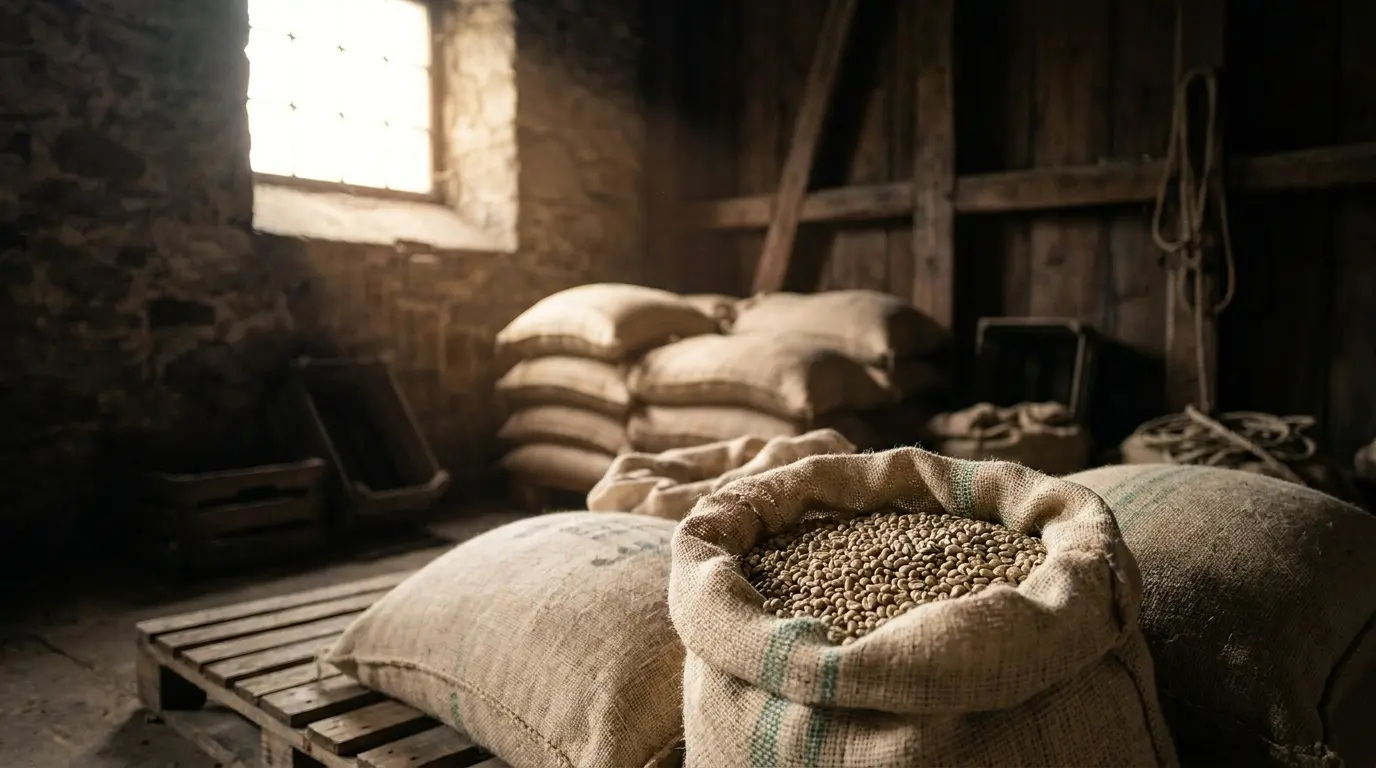
Between 2020 and 2025, the price of coffee roughly tripled. If you noticed it at the supermarket, at your café, or in your roastery's cost of goods, you were not imagining it, and the explanation is more interesting than "inflation."
All figures below come from the monthly International Coffee Organization and IMF indicator series published by FRED, which means you can check them[1][2]. Prices are US cents per pound.
Arabica, 2019-20 average
Peak
July 2026
The scale of it
Annual averages make the shape clear. Coffee did not spike and revert. It stepped up repeatedly over five years.
Figure
Arabica coffee, annual average price, 2018-2026
Two details in that series are worth pausing on.
2023 was a false dawn. Prices fell from 255 back to 206, and plenty of commentary at the time called the top. Then 2024 returned to 255 and 2025 went to 383. Anyone who timed purchasing on the 2023 dip got hurt.
2026 is lower but not low. The partial-year average of 333 is well below 2025 and well above every year before 2021.
How the price is actually set
Most people have no reason to know this, and it explains a lot about why the number moves the way it does.
The world benchmark for arabica is the Coffee C contract on ICE, ticker KC. It is a physical delivery contract, not an abstraction: each one covers 37,500 pounds of washed arabica, deliverable from any of 19 named origin countries into licensed warehouses at specified US and European ports, with set premiums and discounts by origin and port. It quotes in cents per pound and its minimum tick is 5/100 of a cent, worth $18.75 per contract. Delivery months are March, May, July, September and December[3].
Robusta trades separately, on a London contract quoted in dollars per tonne. The two markets move together but not in lockstep, which matters more than usual in this episode.
Three consequences follow from that structure:
Deliverable stock is the pressure valve. Because the contract settles in physical coffee, the volume of exchange-certified coffee sitting in licensed warehouses is what stands between a bad harvest and a price spike. When those inventories are full, a poor crop is absorbed. When they are near empty, it is not.
Only some coffee counts. Washed arabica from 19 origins is deliverable. A great deal of world production is not, including most natural-process Brazilian and all robusta. So the benchmark can move sharply on conditions in a subset of the market.
The benchmark is not what a farmer receives. Producers are paid the C price plus or minus a differential for origin, quality and certification. A rising C price does not automatically mean a proportionally better farmgate price, which is covered in our fair trade article.
What actually drove the run
Four things, stacked. No single one would have done this alone.
1. Brazil, twice
Brazil grows roughly 40% of the world's coffee, so Brazilian weather is world coffee weather. Consecutive seasons of drought damaged harvests, with reported production declines around 20% in the worst affected period, and below-average rainfall during the flowering stage, which sets the following year's crop rather than the current one[4].
That last mechanism is why the run lasted. Drought during flowering damages a crop you will not harvest for another year, so bad weather today prices in a shortfall that is a year out, and the market cannot wait to find out.
2. Vietnam, and the robusta squeeze
Vietnam dominates robusta, and it had drought followed by storms, with reported production declines of around 20% in 2023/24. Vietnamese export prices rose sharply through 2024.
This produced the most under-reported fact of the whole episode. Robusta rose further than arabica in relative terms. Against a 2019-2020 base of about 71 cents per pound, robusta peaked near 263 cents in February 2025, roughly 3.7 times its baseline, against arabica's 2.9 times[2].
The cheap species got expensive faster than the premium one. That has a direct consumer consequence: robusta is what goes into instant coffee and most supermarket blends, so the products marketed as budget options absorbed the larger proportional shock. If your cheap coffee went up more than your nice coffee, this is why.
3. Inventories at multi-decade lows
The buffer ran out. Exchange-monitored arabica stocks fell to multi-year lows during the run, and global ending stocks for 2024/25 dropped around 6.6% to roughly 20.9 million bags, reported as a 24-year low[5].
This is the part that converts a supply problem into a price event. With full warehouses, a 20% Brazilian shortfall is a story about next year's margins. With warehouses near empty, it is a scramble.
4. A tariff scare
In April 2025 US tariff threats hit coffee, and although coffee was ultimately exempted, the shock priced through before the exemption arrived. Brazilian exports to the US reportedly fell about 46% in August 2025.
Worth noting as a mechanism rather than a one-off: coffee cannot be grown at commercial scale in the continental United States, so a tariff on coffee is a tax with no domestic substitute. Markets price that immediately.
Why your supermarket price moved differently
A common and reasonable complaint: futures eased from late 2025, so why did the shelf price keep climbing?
Retail lags and then sticks. Roasters buy forward, often months ahead, so a futures spike reaches the shelf late. Once there it tends to stay, because nobody reprices downward eagerly. US packaged coffee prices rose about 21% year on year in August 2025, reported as the fastest such move in roughly three decades, well after the futures run had begun.
Green coffee is only part of the cost. Roasting, packaging, freight, labour and retail margin all rose over the same window. In a supermarket bag, green coffee is a minority of the price. In a $5 café drink it is a small minority, which is why café prices rose proportionally less than bag prices.
Cafés absorb differently from roasters. A café's dominant costs are labour and rent. A roaster's dominant cost is green coffee. That is why wholesale roasting margins were hit far harder than café margins, a dynamic covered in our profit margin article.
Is this the new normal?
The honest answer is that the floor has moved and the volatility has not gone away.
Downward pressure now exists. Brazil's 2026/27 crop is forecast at a record, with USDA's Foreign Agricultural Service projecting around 71.9 million bags, up about 14% year on year, and Brazil's own Conab raising its estimate to a record 66.7 million bags[4]. Vietnam's production is recovering too. Inventories are rebuilding from very low levels. Arabica dipped to about 308 cents in June 2026 before recovering to 359 in July[1].
The structural pressure has not changed. Arabica is a narrowly adapted, genetically uniform crop, for reasons covered in our article on its genetic diversity, and modelling has consistently projected shrinking suitable area as the climate warms[6][7]. A crop with no genetic slack meeting more frequent weather extremes is a market that will keep repricing risk.
And a new cost arrives at the end of 2026. EU deforestation rules require plot-level traceability for coffee entering the EU, with compliance for large operators from 30 December 2026. Whatever its merits, it adds cost and administrative burden to a supply chain that has just been through a shock.
So: supply looks materially better than it did, prices have come off the peak, and the conditions that produced the run are structural rather than resolved. Treat anyone forecasting a return to 141 cents with the scepticism they have earned.
What to do about it, practically
If you buy coffee to drink. Instant and supermarket blends took the larger proportional hit because robusta rose more, so the price gap between cheap and good coffee narrowed. That makes trading up cheaper in relative terms than it was in 2019. Buying whole bean and grinding also stretches a bag further than pre-ground, which stales faster.
If you run a café. Green coffee is a small share of a drink price, so a doubling of the C market is a smaller shock to you than to your roaster. Your exposure is in wholesale bag prices, and it is worth asking a roaster whether they are pricing on forward contracts or spot.
If you roast. You already know. The people who suffered most in this episode were roasters holding fixed retail prices against a doubling input cost, and the lesson most of them drew was to shorten the gap between green purchasing and retail repricing.
The short version
Arabica went from about 141 cents a pound in 2019-2020 to a peak near 410 in November 2025, and sat at 359 in July 2026. Four causes stacked: repeated Brazilian drought hitting flowering as well as harvest, Vietnamese drought and storms, exchange inventories at multi-decade lows, and a tariff scare.
Robusta rose further proportionally than arabica, at 3.7 times its base against 2.9, which is why cheap coffee got expensive fastest. Retail moved later and stickier than futures because roasters buy forward and green coffee is only part of a bag's cost.
Prices have eased. The floor is higher than it was, and the crop's underlying fragility is unchanged.
Frequently asked questions
- Why is coffee so expensive right now?
- Several supply shocks landed on top of each other rather than one cause. Brazil, which produces roughly 40% of world coffee, had consecutive drought-damaged harvests. Vietnam, the dominant robusta producer, was hit by drought and then storms. Exchange-monitored inventories fell to multi-decade lows, which removes the buffer that normally absorbs a bad season. A US tariff threat in April 2025 added a further shock. Arabica peaked near 410 cents per pound in November 2025 against a 2019-2020 average of about 141.
- What is the C market?
- The Coffee C contract on ICE, ticker KC, is the world benchmark price for washed arabica. Each contract is 37,500 pounds of green coffee, deliverable from any of 19 named origin countries into licensed warehouses at specified US and European ports, with set premiums and discounts by origin and port. It trades in cents per pound with a minimum tick of 5/100 of a cent, worth $18.75 per contract. Robusta trades on a separate London contract in dollars per tonne.
- Did coffee prices come back down?
- Partly, and not to where they were. Arabica eased from its November 2025 peak near 410 cents to around 359 cents by July 2026, having dipped to about 308 in June. That is still roughly two and a half times the 2019-2020 average. Forecasters generally describe the current situation as a higher floor with continuing volatility rather than a return to prior levels.
- Why did my supermarket coffee go up more than the futures price suggests?
- Retail lags and smooths the futures market rather than tracking it. Roasters buy forward, so a spike takes months to reach the shelf and then tends to stay once it arrives. Green coffee is also only part of a retail price: roasting, packaging, freight, labour and retail margin all rose over the same period. US packaged coffee prices jumped about 21% year on year in August 2025, the fastest such move in roughly three decades, well after the futures peak had begun.
- Is climate change the reason coffee is expensive?
- It is the reason the shocks keep coming, rather than the direct cause of any single price move. Arabica is narrowly adapted and genetically uniform, so heat and drought hit it hard, and modelling has consistently projected shrinking suitable growing area. The immediate cause of the 2024 to 2025 run was specific weather in specific places. The reason such weather keeps recurring, and why the market now prices a permanent risk premium, is structural.
- Will coffee prices fall in 2027?
- Nobody knows, and be sceptical of anyone confident. What is knowable: Brazil's 2026/27 crop is forecast at a record, which is downward pressure, and inventories are rebuilding from very low levels. Against that, arabica remains climate-exposed and EU deforestation rules add compliance cost from the end of 2026. The honest answer is that supply looks better than it did, and the structural risks that produced this run have not gone away.
References
Every factual claim in this article is drawn from the sources below. See the source library for how we grade evidence.
- [1]Global price of Coffee, ArabicaFederal Reserve Bank of St. Louis (FRED) · Official dataset · Tier 1 · Strong
- [2]Global price of Coffee, RobustaFederal Reserve Bank of St. Louis (FRED) · Official dataset · Tier 1 · Strong
- [3]Coffee C Futures contract specificationsIntercontinental Exchange (ICE) · 2026 · Reference work · Tier 1 · Strong
- [4]Coffee — commodity dataUSDA Foreign Agricultural Service · Official dataset · Tier 1 · Strong
- [5]Coffee: World Markets and TradeUSDA · Official dataset · Tier 1 · Strong
- [6]A bitter cup: climate change profile of global production of Arabica and Robusta coffeeClimatic Change · 2014 · Observational study · Tier 2 · Moderate
- [7]The genome and population genomics of allopolyploid Coffea arabica reveal the diversification history of modern coffee cultivarsNature Genetics · 2024 · Official dataset · Tier 1 · Strong
Related reading
- Coffee BusinessCoffee Shop Profit Margin: What the Numbers Show→
- Beans, Roasts & OriginsWhy Arabica Has Almost No Genetic Diversity→
- Beans, Roasts & OriginsWhat Is Fair Trade Coffee? Certification Explained→
- Beans, Roasts & OriginsTop Coffee-Producing Countries in the World→
- Beans, Roasts & OriginsArabica vs Robusta: Taste, Caffeine, and Differences→
- Coffee BusinessHow to Start a Coffee Roastery→