Choosing an Espresso Machine for a Small Coffee Shop
By Coffee Studies Editorial·Published October 17, 2026·6 min read
Quick answer
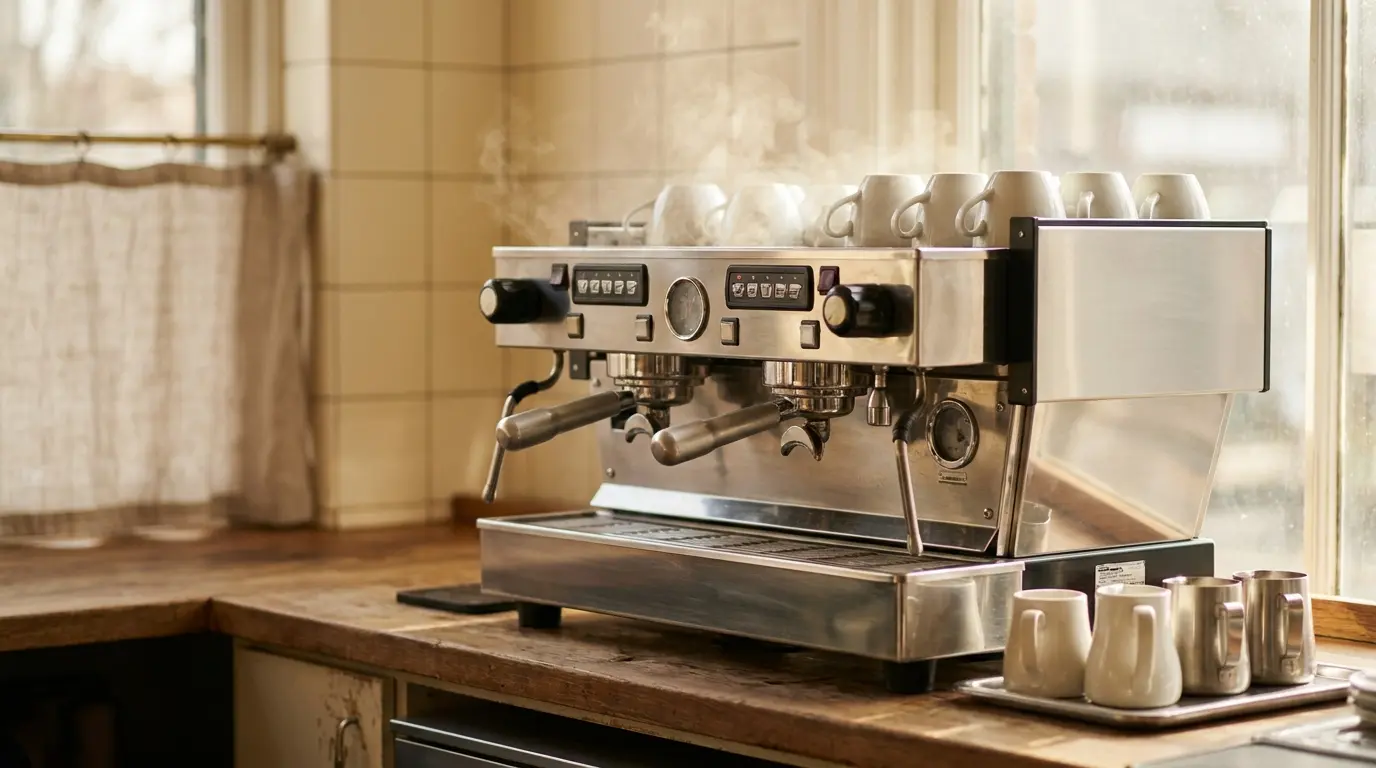
The espresso machine is the most photographed object in a cafe and one of the easiest to size wrongly. Shops buy for the daily total, or for the budget, or for the look of the thing on the back bar, and then discover the constraint is a twenty-minute window on a Tuesday when four people are waiting and one group is tied up steaming milk.
This is how to size it, in the order the decisions actually bind.
Start with the rush
Count the drinks in your busiest twenty minutes, not the drinks in a day. A shop making two hundred drinks spread evenly is a different machine from a shop making eighty with half of them between eight and nine.
As a working figure, a single group sustains roughly a drink a minute once you include steaming, locking in, and knocking out. A second group does not double that exactly, but it comes close in practice, because the real gain is that one barista can pull a shot on one group while steaming the milk for the previous drink. The group stops being the thing everyone waits for.
One group suits a cart, a kiosk, a bakery or deli where coffee is secondary, a shop with low steady traffic, or a second machine at the end of a bar. Two groups is the default for a shop where a queue forms at any point in the day.
The common mistake is buying one group to protect the opening budget in a shop that clearly has a morning rush, then replacing it within the year. The replacement costs more than the difference would have.
Volumetric or semi-automatic
A semi-automatic machine runs water until somebody presses stop. A volumetric machine measures the water and stops itself at a programmed volume, so every member of staff gets the same shot length from the same button.
If one person makes every drink, semi-automatic is fine and cheaper. The moment you have staff, volumetric removes the largest source of variation between two people working the same machine with the same coffee, which is how long they let the shot run. In a shop where consistency is part of what people are paying for, that is worth the difference.
Neither changes the ceiling on the cup. Pressure at the puck governs extraction[1] and both deliver it; volumetric governs who decides when to stop.
Power and water decide more than price
This is the part that derails installations.
Commercial machines generally expect a dedicated electrical circuit, frequently at a higher current or a different supply than an ordinary socket provides, and the requirement rises sharply from one group to two. It must be confirmed against the actual unit you are fitting out, before a model is chosen, because it is not always economic to bring in a new supply.
They also expect to be plumbed in, with water treatment in front of them. Scale is what kills commercial boilers, and in a hard-water area an untreated machine becomes a maintenance line on your P&L rather than an asset. Treatment is cheap relative to a boiler.
Treat the electrician and the plumber as part of the machine purchase, not as something to arrange afterwards. More small fit-outs are delayed by this than by the machine's lead time.
The machines
One group, commercial, volumetric. The standard small-shop answer. A one-group Appia-class machine is built to run all day, plumbs in, doses volumetrically and is serviced by technicians who already know it. This is the right machine for a kiosk or a low-volume shop that wants commercial reliability.
Prosumer-commercial crossover. The Nuova Simonelli Oscar II is the machine a great many carts and kiosks run: commercial manufacturer, single group, available with a tank or plumbed. It is a sound choice for a mobile coffee cart and a risky one for a shop with a real queue, because steam capacity through a sustained rush is exactly what it gives up.
Two group. The default for a cafe proper. The jump in price is real, and so is the jump in what one barista can serve.
One group, the cart-sized crossover, and the two-group step up
 One-group commercial, volumetricNuova Simonelli Appia Volumetric 1 Group Espresso Machine Mappia5Vol01Nd003The standard answer for a kiosk or a low-volume shop: built to run all day, plumbs in, and doses by programmed volume so every member of staff pulls the same length of shot. Needs a dedicated circuit and treated water; confirm both against the site before choosing a model.amazon.com $5,550.00 USDamazon.ca $6,900.00 CADPrice and availability as of View on Amazon
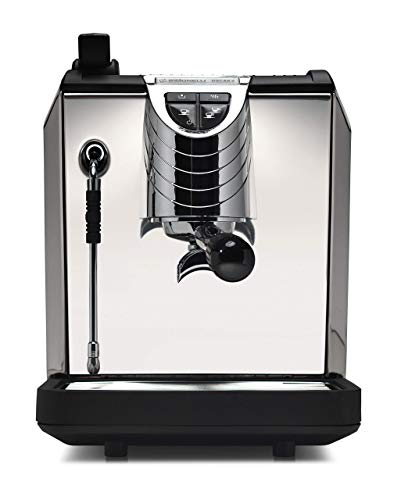 Commercial heat exchanger, single groupNuova Simonelli Oscar II Espresso MachineCafe engineering in a counter-sized body: a boiler of around three litres, a 58 mm commercial group and steam that does not sag across a run of drinks. Sold in a tank version and a plumb-in version. Confirm the electrical requirement of the exact version before buying.amazon.com $1,995.00 USDamazon.ca $3,385.36 CADPrice and availability as of View on Amazon
 Two-group commercial, volumetricNuova Simonelli Appia Life Auto Volumetric 2 Group Espresso MachineTwo groups let one barista pull a shot while steaming the milk for the previous drink, which is the throughput difference that decides most small cafes. The step up in price is real and so is the step up in what one person can serve through a rush.amazon.com $9,550.00 USDnot sold on amazon.caPrice and availability as of View on Amazon
Product prices and availability are accurate as of the date/time indicated and are subject to change. Any price and availability information displayed on Amazon at the time of purchase will apply to the purchase of this product. Certain content that appears on this site comes from Amazon. This content is provided ‘as is’ and is subject to change or removal at any time.
Budget the grinder in the same breath
A cafe machine behind a weak grinder is money spent in the wrong order. Grind consistency drives extraction ahead of anything the machine contributes[2], and in a shop the grinder also has to keep up with the machine, hold a setting through a busy hour, and be adjustable by staff without drama.
Two-group shops commonly run a second grinder for decaf rather than re-dialling between orders. That is a line on the budget people forget and then improvise around badly.
The rest of the fit-out, split by what needs a dealer and what you simply buy, is in the coffee shop equipment list.
New or refurbished
Commercial machines are built to be rebuilt, which makes the used market genuinely viable in a way it is not for domestic machines. A refurbished two-group from a dealer who has replaced the seals and tested it, with some warranty attached, is often better value than a new one group. A private sale with no history is a gamble on parts you cannot see.
The test is not age, it is whether somebody competent has been inside it recently and will stand behind it.
Common misconceptions
"Start with one group and upgrade later." Reasonable for a cart, expensive for a shop with a rush. The upgrade costs more than the original gap.
"A better machine makes better coffee." A bigger machine makes more coffee without flagging. Better coffee comes from the grinder, the beans and the barista.
"Commercial means no maintenance." Commercial means maintenance is expected, scheduled and possible. That is the feature.
"The machine is the big cost." It is the visible cost. Fit-out, power, water treatment, the grinder and service often add up to more.
What we have and have not checked
Throughput figures here are working rules of thumb from how these machines are used, not measurements we have taken. Group counts, volumetric dosing and the general requirement for a dedicated circuit and a plumbed, treated water supply are characteristics of commercial machines as a class; we deliberately give no specific electrical figures, because they vary by model, configuration and region, and the only number that matters is the one for the unit you are installing in the site you have. The product cards show live prices.
The honest summary
Size the machine by your busiest twenty minutes. One group for a cart, a kiosk or a shop where coffee is secondary; two groups anywhere a queue forms. Choose volumetric the moment more than one person makes drinks. Confirm the electrical supply and the water before you choose a model, because those stop installations more often than budgets do. Then put as much thought into the grinder as into the machine, because that is where the coffee is actually made.
Frequently asked questions
- Do I need a one group or two group espresso machine?
- Size by the rush, not the day. One group sustains roughly a drink a minute once steaming is included, which works for a kiosk, a cart, a bakery where coffee is secondary, or a shop with steady low traffic. Two groups let one barista pull a shot while steaming milk for the previous drink, which roughly doubles throughput and is the default for any shop where a queue forms. Most small cafes that buy one group to save money buy two within a year.
- What is a volumetric espresso machine?
- A volumetric machine measures the water it sends through the puck and stops at a programmed volume, so every staff member pulls the same length of shot from the same button. A semi-automatic machine runs until somebody stops it. Volumetric costs more and is the sensible choice anywhere more than one person makes drinks, because it removes the most common source of variation between baristas on an otherwise identical setup.
- How much should a small cafe spend on an espresso machine?
- Enough that it is not the bottleneck, and no more. A one-group commercial machine and a two-group machine are separated by several thousand, and a shop that needs two groups will lose more in queue time than the difference. Budget the grinder alongside it rather than afterwards: grind consistency governs the cup more than the machine does, and a cafe machine behind a weak grinder is money spent in the wrong order.
- Does a commercial espresso machine need plumbing and special power?
- Nearly always. Commercial machines are designed to be plumbed into a water line with treatment in front of them, and most need a dedicated electrical circuit, often at a higher current or voltage than a normal socket. This is the detail that most often stops an installation, and it needs confirming against the actual site before any model is chosen. Treat the electrician and the plumber as part of the purchase.
- Can I use a prosumer machine in a coffee shop?
- For low volume, sometimes. A machine like the Nuova Simonelli Oscar II is built by a commercial manufacturer and runs carts, kiosks and offices successfully. What you give up against a true commercial machine is steam capacity through a sustained rush, a second group, and in many cases the service relationship that keeps a shop running when something fails on a Saturday. It is a reasonable choice for a cart and a risky one for a shop with a morning queue.
- What else do I need besides the machine?
- A grinder matched to the machine, and for a two-group setup often a second grinder for decaf; water treatment appropriate to your supply; a knock box; tampers and baskets; and a service arrangement. The full picture, including what needs a dealer and what you simply buy, is in the coffee shop equipment list. The machine is the most visible line on the budget but it is not the only one that decides whether service runs smoothly.
References
Every factual claim in this article is drawn from the sources below. See the source library for how we grade evidence.
- [1]Influence of Water Pressure on the Final Quality of Arabica Espresso CoffeeJournal of Agricultural and Food Chemistry · 2002 · Controlled trial · Tier 2 · Moderate
- [2]Brewing FundamentalsCoffee Science Foundation · Reference work · Tier 2 · Moderate
Related reading
- Coffee BusinessCoffee Shop Equipment List: What You Need, and What You Don't→
- Coffee BusinessHow to Open a Coffee Shop: Costs, Steps, What to Expect→
- Coffee BusinessMobile Coffee Cart: Costs, Formats, and What to Expect→
- Coffee EquipmentNuova Simonelli Oscar II: A Cafe Machine Shrunk to a Counter→
- Coffee BusinessCoffee Shop Profit Margin: What the Numbers Show→
- Brewing ScienceEspresso Machine Buying Guide: Choosing the Right Type→